Skip to content >

- Quick Answer
- Introduction
- Key Takeaways
- Is a Home Elevator Worth It?
- How Reliable Are Home Elevators?
- How Long Does a Home Elevator Last?
- What Does a Home Elevator Cost, and Is the Investment Worth It?
- Do Home Elevators Add to Property Value?
- Which Home Elevator Type Offers the Best Long-Term Value?
- Is It Worth Installing an Elevator If You’re Not Elderly?
- Ready to See What Fits Your Home?
- Frequently Asked Questions
Quick Answer
Yes, a home elevator is worth it for most buyers planning to stay in a multi-story home long-term, support aging in place, or improve daily accessibility. Modern residential elevators are also highly reliable, with expected service lives of 20 to 30 years or more. Pneumatic vacuum elevators, in particular, use fewer mechanical parts than traditional systems, which lowers maintenance and extends everyday reliability.
Introduction
Adding an elevator to a home is a real decision, not a small one. The cost is significant, the installation touches your floor plan, and the value depends heavily on how you actually plan to live in the house over the next decade or two.
This guide answers the two questions most buyers ask before they commit: is it worth it, and how reliable are home elevators once they’re installed? We’ll cover the buyers who benefit most, expected service life, ongoing maintenance, honest cost-versus-value tradeoffs, and how the different types of home elevators compare on long-term ownership.
Key Takeaways
- A home elevator is worth it when you plan to stay in the home long-term, support aging in place, or move heavy items between floors daily.
- Modern residential elevators are highly reliable, with typical service lives of 20 to 30 years or more.
- Pneumatic vacuum elevators have fewer moving parts than hydraulic or traction systems, which lowers maintenance and reduces failure points.
- Property value impact varies by market; the strongest returns usually come from daily use and aging in place rather than resale.
- Ownership costs are more predictable with pneumatic designs because there is no hydraulic fluid, no counterweights, and no machine room to service.
- Choosing the right elevator type for your home matters more than any single feature.
Is a Home Elevator Worth It?
For most buyers who fit the profile, yes. The clearest returns show up for three groups:
- Homeowners planning to age in place, who want to avoid stairs as mobility changes over time.
- Multi-generational households, where different family members have different mobility needs under one roof.
- Owners of multi-story homes who move heavy items between floors regularly — groceries, laundry, luggage, or work equipment.
A home elevator is less likely to be worth the investment if you own a single-story home, expect to move within the next few years, or are considering an elevator primarily for resale rather than daily use. In tighter-budget renovations, a stairlift may solve the same accessibility problem at a lower cost.
The strongest way to think about the decision is not “will this add value at resale” but “will this make our home usable for the next 15 to 30 years.” That’s where a home elevator earns its cost.
How Reliable Are Home Elevators?
Modern residential elevators are engineered to be highly reliable, but reliability varies by elevator type. In general, systems with fewer moving parts have fewer failure points over time.
Pneumatic vacuum elevators use air pressure to lift the cab and gravity to lower it. That design eliminates cables, counterweights, hydraulic fluid, and the machine room — all common sources of wear in traditional systems. Fewer components mean fewer repairs and fewer unexpected service calls.
Hydraulic residential elevators are also reliable but require periodic checks on hydraulic fluid, seals, and cylinder integrity. Traction elevators, more common in commercial buildings, rely on cables, pulleys, and counterweights that need regular inspection over the elevator’s life.
Every elevator type includes multiple layers of safety systems. Automatic gravity descent, mechanical brakes, door interlocks, and overload sensors are standard on modern residential models. During a power outage, pneumatic vacuum elevators gently lower to the nearest floor without operator intervention — one reason they’re often chosen for households where reliability matters most. For more on how these systems work, see the residential elevator safety guide.
How Long Does a Home Elevator Last?
With routine maintenance, a well-built residential elevator typically lasts 20 to 30 years or more. The specific number depends on the elevator type, usage volume, and how consistently the system is serviced. A deeper look at how long home elevators last covers the ranges by system type.
Pneumatic vacuum elevators are designed for long service intervals. Seal replacement is the main scheduled service item, typically after several years or around 15,000 lifts, depending on the model. There are no cables to inspect, no fluid to change, and no counterweight system to align.
Consistent residential elevator maintenance is what extends any elevator’s life the most. Skipping service intervals is the fastest way to shorten it, regardless of elevator type.

What Does a Home Elevator Cost, and Is the Investment Worth It?
Cost varies significantly by elevator type, number of stops, home layout, and how much construction the installation requires. A full breakdown of home elevator cost walks through the ranges and what drives each line item.
In general, retrofit installations in existing homes carry different cost profiles than elevators planned into new construction. Pneumatic vacuum elevators tend to reduce construction cost because they don’t require a shaft, pit, or machine room. Traditional shaft-based systems often cost more to install in an existing home than in a new build, since the shaft and support structure need to be added later.
Long-term ownership cost is where the value picture becomes clearer. Energy consumption on pneumatic vacuum elevators is minimal on descent, since the cab lowers by gravity rather than powered motion. Maintenance is lighter than hydraulic or traction systems because there are fewer wear points. Homeowners exploring financing options for a home elevator often find that predictable lifetime costs make budgeting more straightforward than expected.
Do Home Elevators Add to Property Value?
Property value impact varies by market and buyer expectations. In neighborhoods where accessibility features are increasingly expected — luxury markets, multi-generational communities, and areas with older homeowners — a home elevator can strengthen a home’s appeal. In markets where the feature is less common, the resale premium may be smaller.
The takeaway most experienced buyers land on: the strongest returns from a home elevator come from daily use and long-term livability, not from resale. When resale value increases, it’s usually a bonus rather than the primary reason to install.
Which Home Elevator Type Offers the Best Long-Term Value?
Long-term value depends on how the elevator will actually be used, the home’s layout, and how much construction the installation requires. The three most common residential elevator types compare as follows:
| Elevator Type | Reliability | Lifetime Maintenance | Installation Impact | Best Long-Term Value For |
| Pneumatic vacuum | High — fewest moving parts | Low — seal replacement at set intervals | Minimal — no shaft, pit, or machine room | Retrofits, aging in place, compact spaces |
| Hydraulic | High with regular service | Moderate — fluid, seals, cylinder checks | Higher — requires pit and equipment space | New construction, larger cab requirements |
| Traction (cable) | High in commercial use; more parts residentially | Higher — cables, pulleys, counterweights | Higher — shaft and overhead space required | New construction with dedicated elevator space |
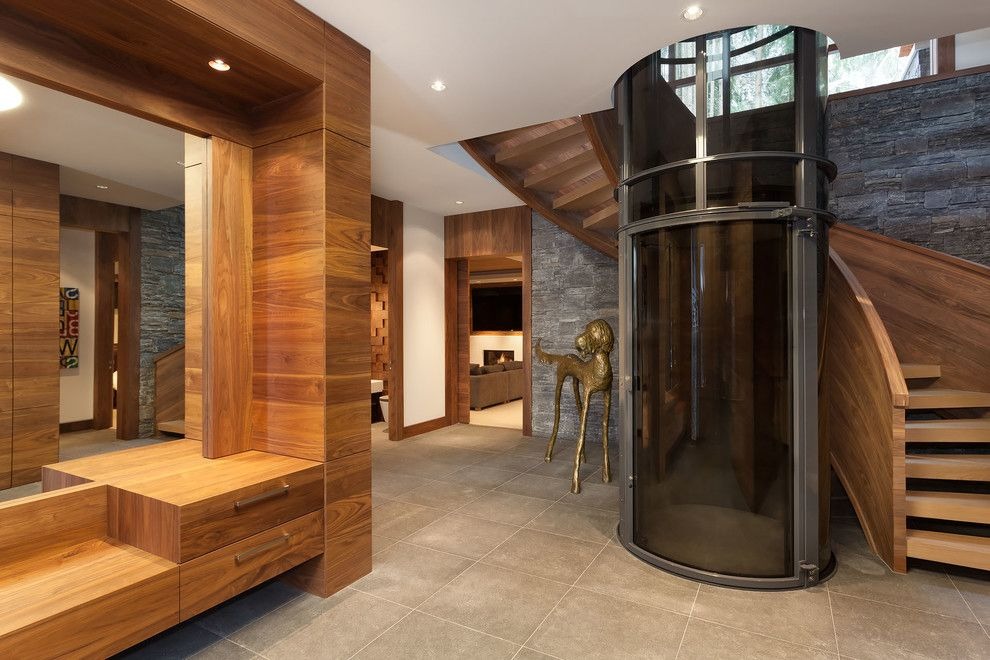
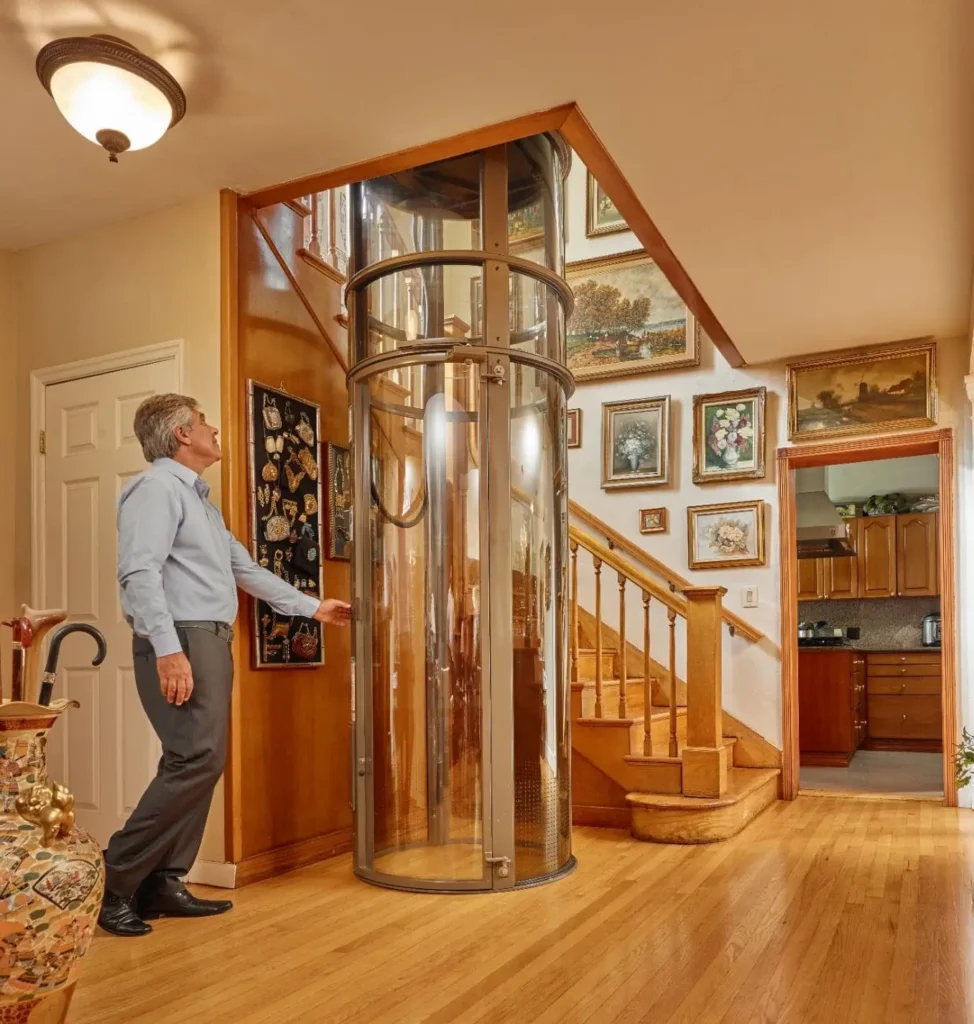
PVE offers four residential home elevator models designed for different homes and mobility needs. The PVE30 is a single-passenger, space-saving option with a 30-inch exterior diameter and 350-pound capacity. The PVE37 is a popular two-passenger retrofit choice. The PVE52 is wheelchair accessible and holds up to three passengers. The Cube is the first pneumatic vacuum elevator with a square design, giving homeowners another footprint option to work with.
Is It Worth Installing an Elevator If You’re Not Elderly?
Yes, for many homeowners. Aging in place is one reason to install a home elevator, but it’s not the only one.
- Multi-story homes make daily tasks harder than most people realize: groceries, laundry baskets, work equipment, and luggage all move up and down.
- Multi-generational households benefit even when the current owners are fit and healthy, since visiting parents or extended family may have different mobility needs.
- Buyers who plan to stay in a home for decades often view an elevator as future-proofing rather than a present-day accessibility fix.
For buyers in this group, the value shows up over years of daily convenience and one-time installation cost that doesn’t need to be repeated later.

Ready to See What Fits Your Home?
The clearest way to know whether a home elevator is worth it for your specific home is a site evaluation. An authorized PVE dealer can review your layout, confirm which model fits your space, and outline what installation would actually involve.
Frequently Asked Questions
Are home elevators worth it?
For homeowners planning to stay in a multi-story home long-term, support aging in place, or move heavy items daily, a home elevator is typically worth the investment. The clearest returns come from years of daily use rather than resale premium.
How reliable are home elevators?
Modern residential elevators are highly reliable, especially pneumatic vacuum designs that eliminate cables, counterweights, and hydraulic fluid. Every modern residential elevator includes multiple safety systems, and pneumatic models automatically lower to the nearest floor during a power outage.
How long do home elevators last?
With routine maintenance, a residential elevator typically lasts 20 to 30 years or more. Service life varies by elevator type and how consistently the system is maintained.
Do home elevators require a lot of maintenance?
Pneumatic vacuum elevators require the least ongoing maintenance because they have fewer moving parts. The main scheduled service item is periodic seal replacement, typically after several years or around 15,000 lifts. Hydraulic and traction systems have more service points.
Do home elevators increase property value?
Property value impact varies by market. In neighborhoods where accessibility is increasingly expected, a home elevator can strengthen resale appeal. In markets where the feature is less common, the premium may be smaller. For most owners, daily livability is the stronger reason to install.
Are home elevators safe during a power outage?
Yes. Modern residential elevators include emergency systems that engage during a power loss. Pneumatic vacuum elevators lower to the nearest floor automatically, allowing passengers to exit safely without operator intervention.
Is a home elevator worth it for a single-story home?
Usually not. Home elevators are designed to solve multi-story access, so single-story homes rarely see the same value. Buyers in single-story homes with mobility concerns typically find better returns from other accessibility upgrades.