Skip to content >

- Key Takeaways
- Quick Answer: How Long Does a Home Elevator Last?
- What Determines the Lifespan of a Home Elevator?
- Comparing Lifespan by Home Elevator Type
- How Maintenance, Use & Environment Affect Elevator Life Expectancy
- Signs Your Home Elevator May Need Repair, Modernization, or Replacement
- Repair vs. Modernization vs. Replacement: How to Decide
- Practical Homeowner Checklist to Help Extend the Life of Your Elevator
- Why Many Homeowners Choose Low-Maintenance PVE Vacuum Elevators
- Frequently Asked Questions About Home Elevator Lifespan & Replacement
- Next Steps: Talk to an Expert About Your Elevator’s Lifespan
Key Takeaways
- How long does a home elevator last? Many residential elevators can last 20–30+ years with proper maintenance, but lifespan varies by elevator type, usage, environment, installation quality, and access to replacement parts.
- Well-maintained home elevators often last for decades before major modernization or replacement is needed, while poorly maintained systems may require significant repairs much sooner.
- Pneumatic/vacuum home elevators, like those from Pneumatic Vacuum Elevators (PVE), have fewer wear items because they do not rely on hydraulic oil, cables, counterweights, or a traditional machine room.
- Regular inspections, timely repair, and authorized service are the best ways to extend the life of your elevator and protect safety features.
- This guide compares elevator types, signs of wear and tear, replacement timing, and a practical checklist to keep your residential elevator in good working condition.
Quick Answer: How Long Does a Home Elevator Last?
Most home elevators can operate for 20–30 years or more with proper maintenance, but there is no guaranteed lifespan for every model. Some systems may need modernization around the 20-year mark, while well-maintained elevators with quality components may continue operating longer.
With exceptional care, high-quality components, and strategic modernization, some residential lifts can safely last 35 years or more. Elevators rarely break down all at once; instead, individual parts age on separate timelines, making partial modernization at the 20-year mark a cost-effective solution.
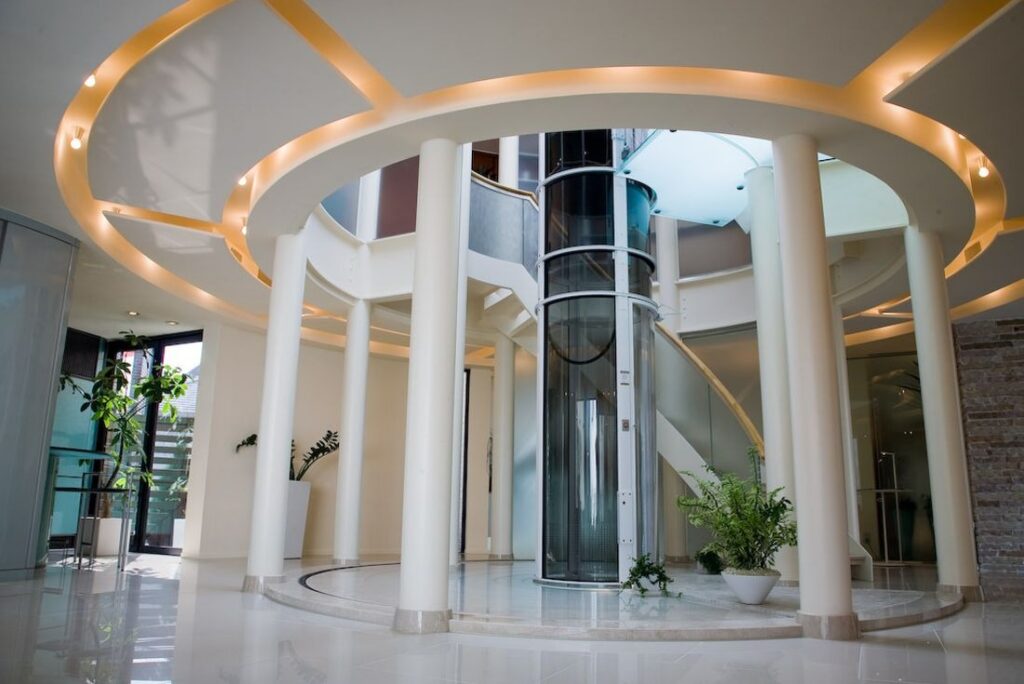
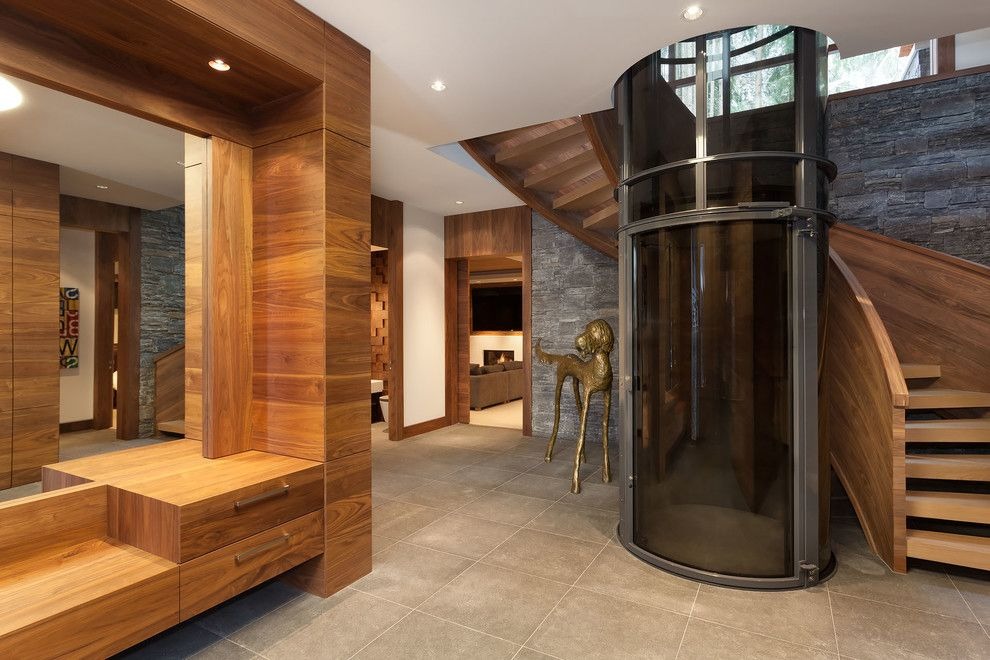
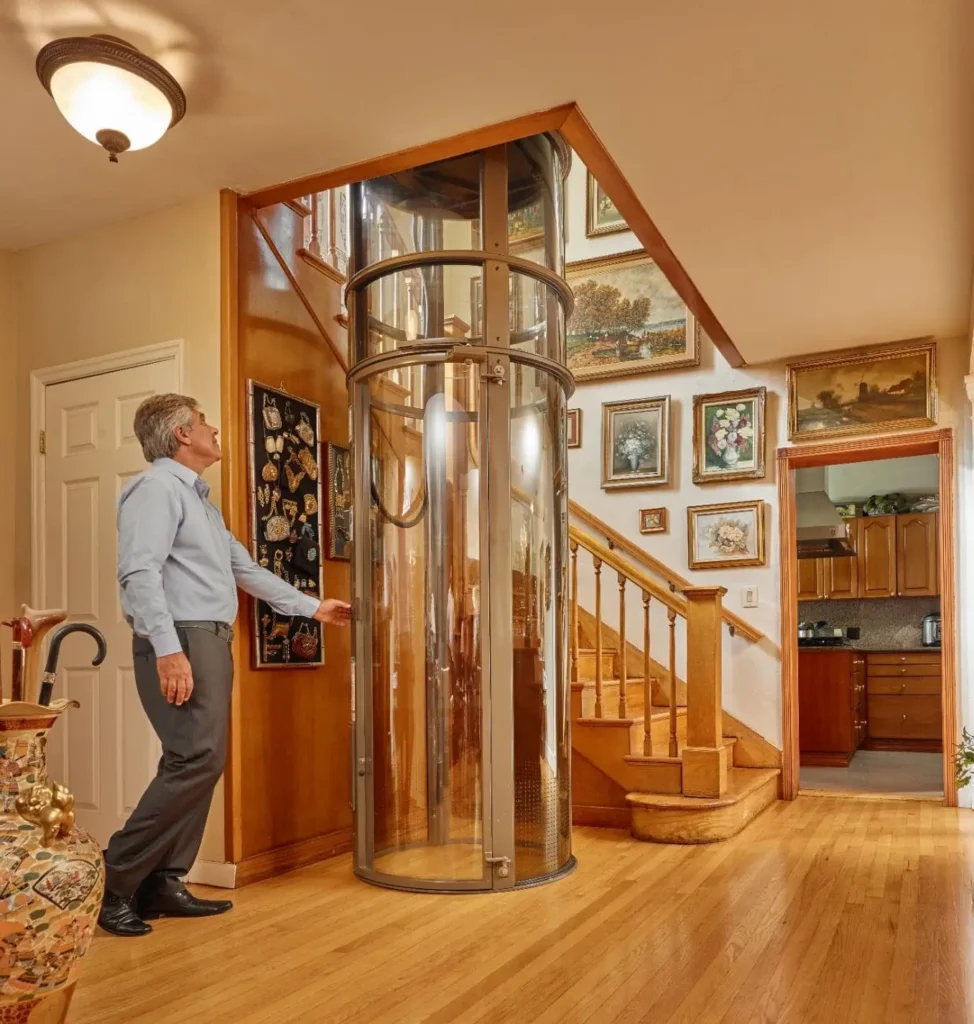
PVE vacuum home elevators are designed for long-term residential use and can last for many years with proper maintenance. Because PVE systems are air-driven, self-supporting, and do not require a pit, elevator shaft, hydraulic oil, or machine room, they avoid several issues that shorten traditional equipment life.
What Determines the Lifespan of a Home Elevator?
An elevator’s life expectancy is not based on age alone. Several factors work together, and two identical units can age very differently.
- Installation: proper installation, mechanical alignment during setup, correct clearances, strong electrical wiring, and setup by a reputable professional are critical to preventing premature strain on the lift’s motor and moving parts.
- Elevator system: hydraulic elevators, traction elevators, pneumatic/vacuum models, MRL elevators, and screw drive systems all age differently.
- Use: Daily trip frequency, passenger load, and how closely the elevator is used within its rated capacity can affect long-term wear on components.
- Environment: elevators in highly humid or coastal environments face accelerated oxidation and rust compared to those in dry, climate-controlled environments. Extreme temperatures and temperature fluctuations can also impact the lifespan of a home elevator by causing wear and tear on its components.
- Maintenance: routine preventative maintenance is the single most important variable affecting the longevity of a residential elevator. Lack of regular maintenance can significantly shorten a residential elevator’s lifespan, leading to more frequent breakdowns and costly repairs.
- Parts support: as the elevator ages, controllers, fixtures, and proprietary elevator equipment may become harder to source. A good elevator company or elevator service company can explain whether elevator parts remain available.
Understanding these factors helps you plan ahead for maintenance, budgeting, and eventual modernization before major issues appear.
Comparing Lifespan by Home Elevator Type
Different technologies age differently, and the life of your elevator depends heavily on the drive system.
| Elevator Type | Lifespan Considerations | Maintenance Notes | Best For |
| Pneumatic / Vacuum | Designed with fewer traditional wear items; seals, controls, and turbines need periodic review | No hydraulic oil, cables, counterweights, pit, or traditional machine room | Retrofits, panoramic design, compact residential spaces |
| Hydraulic Elevators | Often used for long-term residential service, but oil, seals, valves, and pit conditions can affect lifespan | Hydraulic fluid, seals, valves, leaks, and pit conditions require attention | Homes needing strong lifting capacity |
| Traction Elevators | Can provide long service life when ropes, pulleys, controls, and brakes are maintained | Ropes, sheaves, bearings, brakes, and controls need scheduled service | Taller homes and smooth ride priorities |
| Screw Drive / Traditional Systems | Lifespan depends heavily on lubrication, alignment, usage, and part availability | Lubrication, alignment, nut wear, and vibration checks matter | Compact retrofits and smaller residential settings |
These are general rule observations, not guarantees. Actual elevator lifespan depends on the brand, installation, daily use, and service history.
Pneumatic/Vacuum Home Elevators
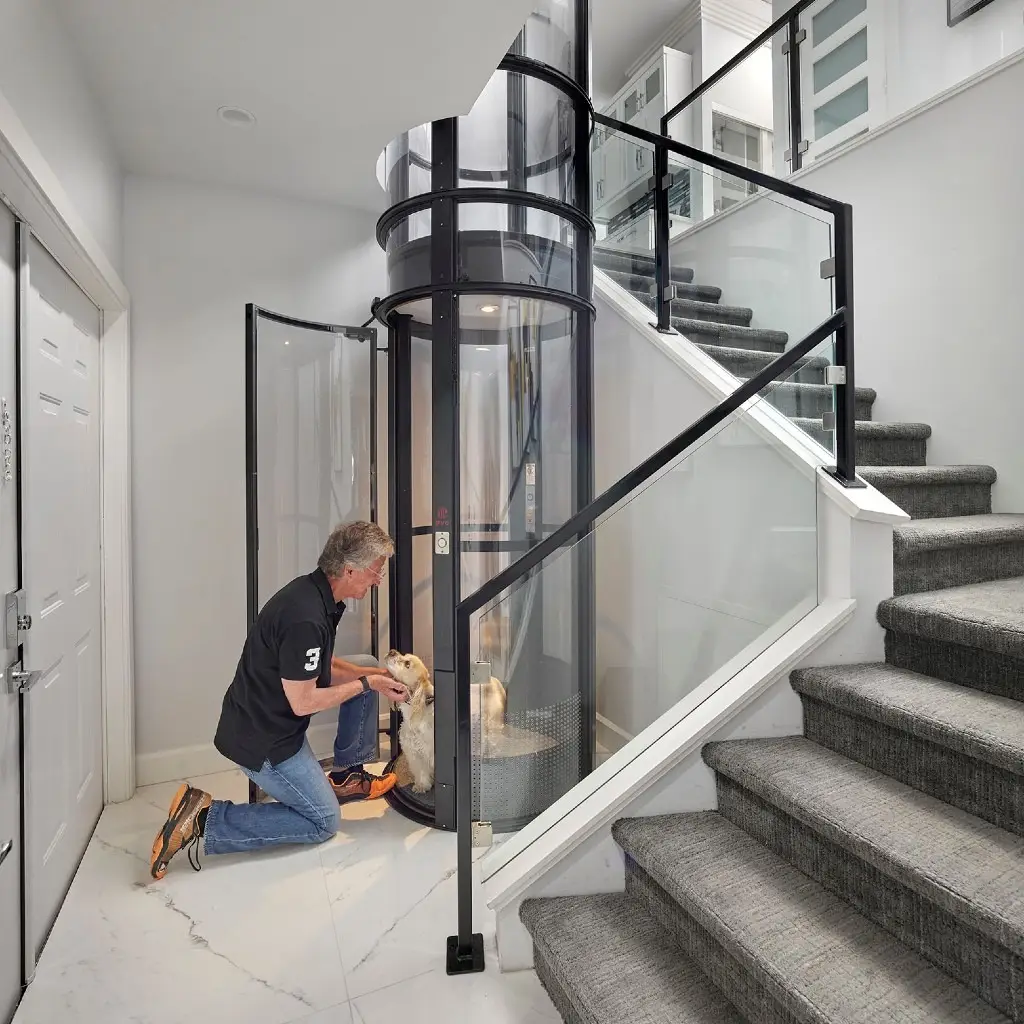
PVE elevators use air pressure in a vertical tube to move the elevator cab, rather than cables or hydraulic pistons. Their self-supporting, shaftless design can install on an existing floor with minimal structural modification.
Because there is no hydraulic oil, buried cylinder, counterweight system, or traditional machine room, PVE removes several common sources of long-term failure. Still, PVE elevators require routine maintenance, seal checks, inspections, and authorized service technician support.
Hydraulic Home Elevators
Hydraulic systems use a pump to move oil into a cylinder. With proper maintenance and modernization, many hydraulic systems can operate 20–25+ years before major overhaul or replacement is considered.
Common wear points include oil degradation, leaks, seals, valves, and corrosion around pits. Environmental rules and code changes may also affect older underground hydraulic equipment.
Traction Home Elevators
Traction elevators use ropes, pulleys, a motor, and counterweights. As a general rule, traction systems can have a long life expectancy, often 25–30 years or more.
They require precise alignment and frequent maintenance of ropes, sheaves, bearings, doors, and controls. Traditional hydraulic, traction, machine-room-less, and pneumatic vacuum elevators each have different maintenance needs and component timelines. Actual lifespan depends on the specific model, installation quality, usage, environment, and service history.
Screw Drive & Other Traditional Residential Elevators
Screw drive systems use a motor-driven screw and nut assembly. They can be compact and easy to install, but vibration, misalignment, and lack of lubrication can shorten life expectancy.
Machine-room-less (MRL) elevators, which do not require a separate room for machinery, have an average life expectancy of 20-25 years and are suitable for homes with limited space.

How Maintenance, Use & Environment Affect Elevator Life Expectancy
Think of a home elevator like a car: two systems from the same year can age very differently depending on how often they are used, where they are installed, and how consistently they are maintained.
- Follow the maintenance schedule in your manual. Routine service helps catch small issues before they become more expensive repairs.
- Work with authorized technicians or dealers. A maintenance agreement or service program can help keep inspections, adjustments, and replacement parts on schedule.
- Respect the elevator’s weight limit. Avoid overloading the cab, forcing doors, or using the elevator to move heavy construction materials unless the system is rated for that use.
- Protect the elevator from harsh conditions. Moisture, salt air, dust, poor ventilation, and overheating can affect controls, finishes, seals, and mechanical components.
- Keep a simple service log. Record inspections, repairs, unusual noises, error codes, and performance changes so a technician can spot recurring issues sooner.
- Report changes quickly. Strange sounds, slower travel, door issues, or vibration should be reviewed before they turn into larger problems.
Annual professional inspections and routine maintenance can help catch minor component wear before it becomes a larger repair. For elevator systems that require it, regular lubrication can also help reduce friction and wear on moving parts.
Following these habits can help extend the lifespan of a home elevator and keep it operating more reliably for aging in place, daily mobility, and long-term residential use.
Signs Your Home Elevator May Need Repair, Modernization, or Replacement
Early warning signs can keep minor issues from turning into larger repairs. If your home elevator starts behaving differently, it is worth scheduling a professional inspection before the problem becomes more expensive or affects safety.
Watch for signs such as:
- unusual noises or strange sounds
- jerky starts or stops
- doors that stick, hesitate, or do not close smoothly
- slower travel between floors
- error codes or recurring alerts
- vibration during operation
- changes in ride comfort or overall elevator performance
- more frequent service calls
Modernization may be appropriate when service calls become more frequent, electronics are unsupported, replacement parts are harder to find, or safety features no longer meet current expectations.
Replacement may be worth discussing if the elevator has significant corrosion, obsolete equipment, repeated breakdowns, or repair estimates that begin to rival the cost of a new elevator. An authorized technician can help determine whether the issue calls for a simple repair, a larger modernization, or full replacement.
Repair vs. Modernization vs. Replacement: How to Decide
Elevator equipment does not expire on one fixed date. The right decision depends on safety, reliability, repair costs, parts availability, and your long-term plans for the home.
Repair usually makes sense for isolated issues when replacement parts are available and the rest of the elevator system is in good condition.
Modernization may be a better option when major components are aging, but the full elevator does not need to be replaced. This can include updating controllers, door operators, fixtures, safety circuits, or drive components to help extend the elevator’s useful life.
Replacement may be worth discussing when major components are near the end of their service life, parts are unavailable, repairs are becoming frequent, or the elevator no longer supports the household’s mobility, accessibility, or aging-in-place needs.
For some homeowners, replacing an older system with a compact PVE vacuum elevator may offer a fresh look, lower-maintenance design, and less construction disruption than some traditional elevator replacements. An authorized PVE dealer can help determine whether repair, modernization, or replacement is the best fit for the home.
Practical Homeowner Checklist to Help Extend the Life of Your Elevator
Use this checklist between professional visits:
- Listen monthly for new noises and check that doors open and close smoothly.
- Check that lights, controls, and emergency communication features appear to be working as expected.
- Keep the elevator clean and the area around access panels clear.
- Do not attempt DIY repairs on safety systems, controls, doors, or drive equipment.
- Keep a written record with manuals, permits, inspection reports, service notes, and warranty papers.
- Call for service quickly if anything changes.
- Remember: professional maintenance complements homeowner observation; it does not replace it.
Following these steps can help extend the elevator’s lifespan and keep a mechanical device dependable for aging in place.
Why Many Homeowners Choose Low-Maintenance PVE Vacuum Elevators
Pneumatic Vacuum Elevators has designed and manufactured air-driven residential elevators since 2002. PVE models use patented vacuum technology in a panoramic tube and are supported by authorized dealers.
For lifespan and maintenance planning, the key advantage is simplicity: no oil to change, no cables to re-rope, no counterweights, and no pit or traditional machine room. PVE elevators use power mainly when traveling up, making them energy-efficient for many residential uses.
PVE is not maintenance-free, and no elevator is perfect for every building. But for homeowners comparing a new home elevator, replacing older elevator equipment, or evaluating a home’s elevator system during renovation, a PVE dealer can explain model-specific service needs.
Frequently Asked Questions About Home Elevator Lifespan & Replacement
How long does a home elevator last?
Many home elevators can last 20–30 years or more with proper maintenance, but lifespan varies by elevator type, installation quality, usage, environment, and service history. An authorized technician can help assess the condition of an older residential elevator and whether repair, modernization, or replacement makes sense.
How often should a home elevator be serviced to maximize its lifespan?
Many manufacturers recommend at least annual service for lightly used home elevators. Heavier-use systems may need semi-annual or more frequent maintenance. Always follow the model-specific schedule from the manufacturer.
Can modernizing my existing elevator really extend its life, or is replacement always better?
Modernization can extend the life of many residential elevators by updating controls, doors, fixtures, and selected drive components. Replacement is not always better; compare both options with a qualified technician.
Does installing a home elevator affect my home’s resale value or insurance?
A residential elevator can be attractive in aging-in-place, luxury, and multigenerational homes, but resale impact varies by market. Some insurers may request inspection or service records, so confirm requirements with your provider.
Is there anything I can safely do myself to help my elevator last longer?
Yes. Keep the elevator clean, avoid overloading, watch for unusual noises, and report changes quickly. Do not adjust safety systems, controls, or drive equipment yourself.
When does it make sense to replace a traditional elevator with a vacuum home elevator like PVE?
Consider PVE if an older system has recurring leaks, damp pit issues, bulky machinery, or rising service needs. An authorized PVE dealer can evaluate your home, budget, and accessibility goals.
Next Steps: Talk to an Expert About Your Elevator’s Lifespan
How long does a home elevator last depends on technology, maintenance, installation, environment, and use. Regular maintenance can significantly extend the lifespan of a home elevator, allowing it to function efficiently for decades beyond its average lifespan.
Before calling, gather service records and note recurring problems. Then contact Pneumatic Vacuum Elevators or an authorized PVE dealer to discuss maintenance, modernization, repair, replacement, or whether a new elevator is the right investment for your home.