Skip to content >

- Key Takeaways
- Introduction: Home Elevator vs. Stairlift – The Direct Answer
- Quick Comparison: Home Elevator vs. Stairlift at a Glance
- What Is a Stairlift?
- What Is a Home Elevator?
- Home Elevator vs. Stairlift: Key Differences
- Installation and Planning Considerations
- Safety, Accessibility, and Daily Use
- Impact on Space, Layout, and Home Aesthetics
- Resale Value, Property Value, and Long-Term Investment
- Which Is Better for Aging in Place?
- When a Stairlift May Make Sense
- When a Home Elevator May Be the Better Long-Term Choice
- How Pneumatic Vacuum Elevators (PVE) Fit into the Decision
- Final Thoughts: Home Elevator vs. Stairlift
- FAQs
Key Takeaways
- A stairlift may work well for one person who can safely sit, stand, and transfer independently.
- A home elevator may be the better long-term choice for wheelchair users, multigenerational households, and homeowners planning to age in place.
- Stairlifts use the existing staircase, while home elevators provide a separate way to move between floors.
- Home elevators can carry people, mobility devices, groceries, laundry, and luggage, depending on the model.
- The best option depends on the homeowner’s mobility needs, home layout, available space, installation requirements, and long-term plans.
Introduction: Home Elevator vs. Stairlift – The Direct Answer
When comparing a home elevator vs. stairlift for long-term use, a home elevator often offers more flexibility, accessibility, and whole-home convenience. A home elevator can accommodate wheelchair users, carry everyday items like groceries, laundry, and luggage, serve multiple family members, and preserve the staircase for everyone else. A stairlift can be sensible for temporary needs or for one person who can safely sit, stand, and transfer, but it has limitations that may become more noticeable as mobility needs change.
This article is written for homeowners who want to age in place and are deciding between a stairlift and a home elevator, whether they live in a two-story home, townhome, or multigenerational household. We’ll look at this decision from practical angles, including installation, safety, space requirements, daily convenience, aesthetics, and long-term accessibility.
Pneumatic Vacuum Elevators (PVE) manufactures space-saving, shaftless home elevators that require no traditional elevator shaft, pit, or machine room. Throughout this article, we’ll compare stairlifts, traditional shafted elevators, and vacuum-powered home elevators to give you a clearer picture of which option may fit your home and long-term needs.
Quick Comparison: Home Elevator vs. Stairlift at a Glance
Before diving into details, here’s a side-by-side comparison to help you see the key factors at a glance.
| Factor | Stairlift | Home Elevator |
| Best fit | One seated rider who can transfer safely | One or more passengers, wheelchair users, walkers, and mobility devices |
| Daily use | Helps one person move along the stairs | Provides floor-to-floor access without using the stairs |
| Carrying items | Limited ability to carry items | Can transport groceries, laundry, luggage, and other household items, depending on the model |
| Space Requirements | Rail along stairs; reduces stair width | Dedicated elevator location; compact and shaftless options can reduce space needs |
| Installation considerations | Usually requires less structural planning | Varies by elevator type, home layout, and site preparation needs |
| Stair access | Uses part of the staircase | Keeps stairs fully usable for other household members |
| Long-Term Suitability | Often works best for temporary or single-user needs | Supports aging in place, wheelchair access, and multigenerational living |
What Is a Stairlift?
A stairlift is a motorized chair mounted on an existing staircase that transports a person up and down the stairs. Sometimes called a “stair chair” or one of the common chair lifts, this mobility solution travels along a rail attached to the stair treads.
Key design features include:
- Seat with armrests and footrest
- Safety belt for secure travel
- Call/send controls at each landing
- Rail mounted directly to stair treads
- Platform stairlifts for wheelchairs, though these require more stair space
Stairlifts typically include safety features such as seat belts, armrests, footrests, and controls designed for seated travel. They work best for someone who can still sit, stand, and transfer independently but finds climbing stairs difficult.
Common types include:
- Straight stairlifts for simple stair runs
- Curved or custom stairlifts for U-shaped, L-shaped, or spiral staircases
A few advantages include relatively simple installation, minimal structural changes, and the ability to remove the system later if it is no longer needed. However, most stairlifts are limited to a single seated user, cannot transport most wheelchairs, and still require transfers at the top and bottom landings.
What Is a Home Elevator?
A home elevator is a vertical mobility solution that carries people, and often wheelchairs or household items, between floors inside the home without using the stairs. Home elevators typically move in an enclosed cab through a shaft or, in some compact designs, through a more open floor plan.
Main categories include:
- Traditional shafted elevators, such as hydraulic, traction, cable-driven, or machine-room-less systems
- Modern shaftless home lifts, such as vacuum-powered elevators and compact residential lifts
Traditional systems usually require a shaft, pit, and sometimes a machine room. Shaftless solutions like PVE pneumatic vacuum elevators are self-supporting and require no traditional shaft, pit, or machine room, making them a practical option for many retrofit projects in existing homes.
Home elevators can be designed to support wheelchair access, serve two or more levels, and carry everyday items such as laundry, groceries, or luggage. Depending on the system, safety features may include door interlocks, obstruction sensors, emergency stop controls, backup lighting, or communication features.
For homeowners comparing a home elevator vs. stairlift, the biggest difference is flexibility. A home elevator can support more users, more mobility needs, and more daily tasks than a stairlift, especially in homes planned for aging in place or multigenerational living.
Home Elevator vs. Stairlift: Key Differences
Let’s break down the home elevator vs. stairlift comparison into a few practical factors.
Capacity and users: Stairlifts are designed for one seated user and require the person to transfer in and out of the chair. Home elevators can support wheelchair users, more than one passenger depending on the model, and everyday items such as pets, laundry baskets, groceries, or luggage.
Accessibility and transfers: Stairlifts work best for users who can safely stand, sit, and transfer independently. For wheelchair users or people who use rolling walkers, a home elevator may offer easier access because it can allow the user to roll in and out without transferring to a separate seat.
Impact on the staircase: Stairlifts use part of the staircase and may reduce usable stair width for other household members. A home elevator provides a separate way to move between floors, which keeps the stairs available for children, guests, caregivers, and others in the home.
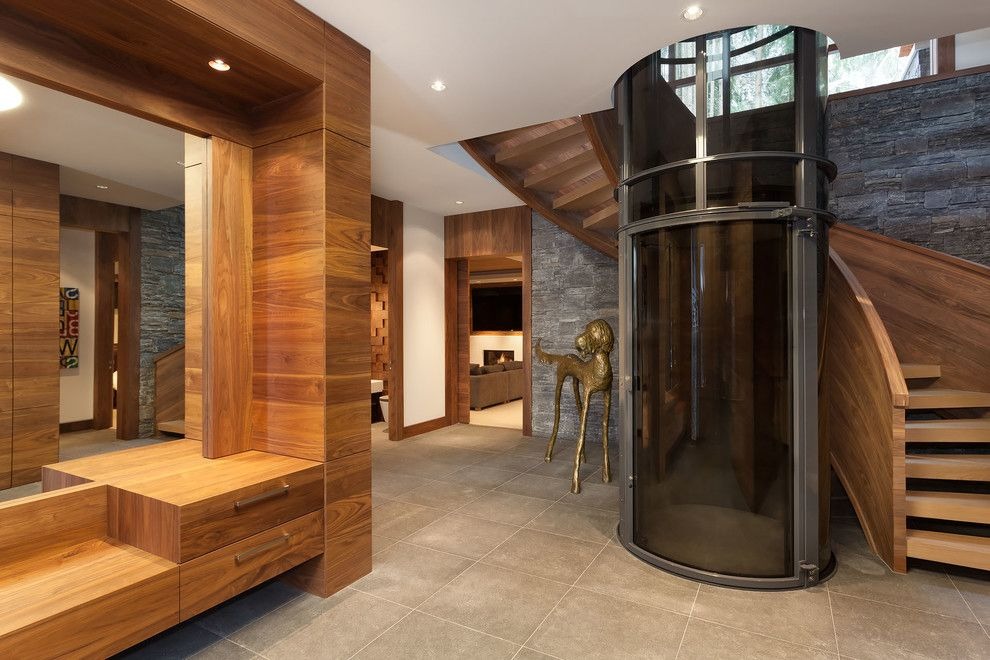
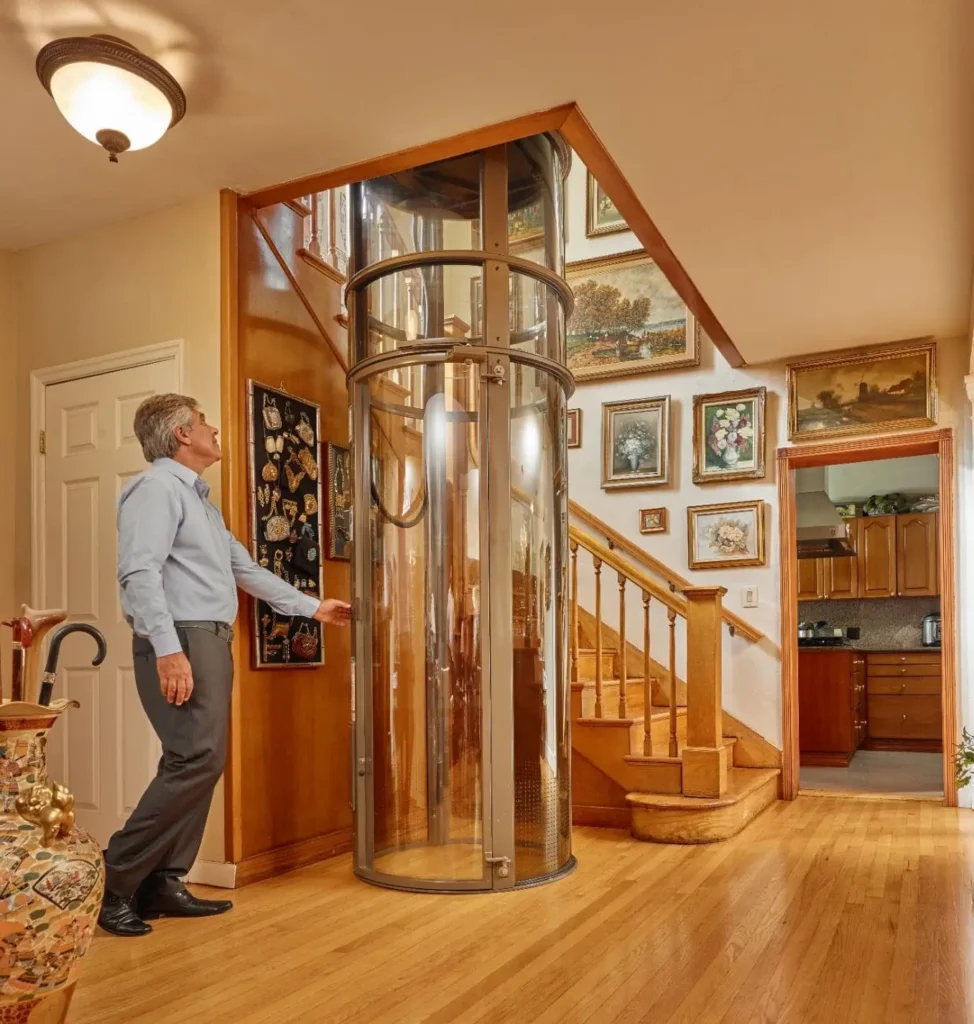
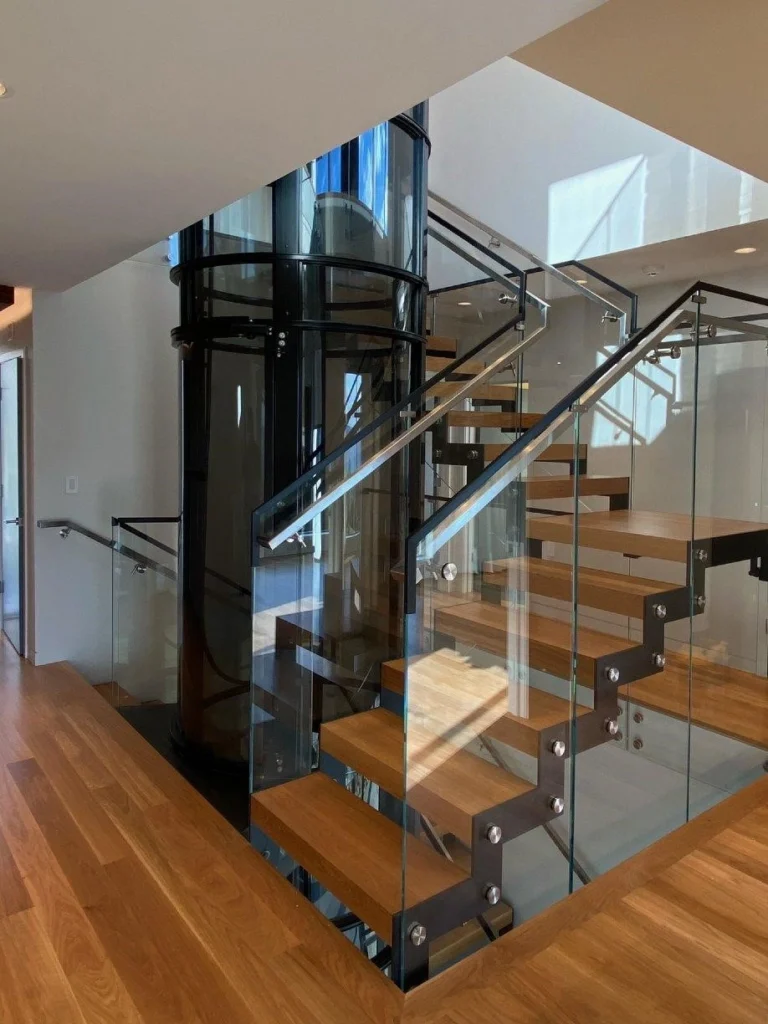
Aesthetics: Stairlifts are visible along the stairs and often have a more functional appearance. Home elevators can be designed to better integrate with the home’s layout and interior style. Pneumatic vacuum elevators, for example, have a transparent cylindrical design that can work well in visible areas without requiring a traditional shaft.
Installation and Planning Considerations
Upfront planning, construction work, and installation requirements are often the first concerns for homeowners choosing between a stairlift and a home elevator.
Stairlifts are generally less complex to install because they attach to the existing staircase and usually do not require major structural changes. This can make them a practical option when one person needs help using the stairs and the home layout does not support a larger accessibility upgrade.
Home elevators require more planning because they need a dedicated location between floors. Traditional shafted elevators may require a hoistway, pit, and equipment space, which can add construction complexity in an existing home.
Pneumatic elevators, such as PVE vacuum elevators, do not require a traditional shaft, pit, or machine room. Their compact, self-supporting design can reduce structural disruption compared with many traditional elevator systems, especially in retrofit projects.
Long-term ownership should also be considered. A stairlift may meet a short-term or single-user need, while a home elevator can support broader accessibility needs over time, including wheelchair access, caregiver support, and everyday household use.
Safety, Accessibility, and Daily Use
Long-term safety for seniors, wheelchair users, and family members is one of the most important factors when comparing a stairlift vs. home elevator.
Stairlift safety: Stairlifts often include safety features such as seatbelts, obstruction sensors, and swivel seats for safer transfers. However, daily use still requires the rider to sit down, stand up, and transfer safely at the top and bottom of the stairs. For wheelchair users, this transfer process may require extra effort or caregiver support.
Home elevator safety: Modern residential elevators may include door interlocks, emergency stop buttons, backup lighting, safety sensors, emergency lowering, and communication features. For pneumatic vacuum elevators, gravity-assisted descent helps support safe lowering during a power outage.
Accessibility differences: Home elevators provide level access for walkers and wheelchairs, allow standing or seated travel depending on the model, and can reduce the need for transfers. This can make daily movement between floors easier for people with changing mobility needs.
Family-wide use:
- Home elevators can serve seniors, children, guests, caregivers, and multigenerational households.
- Stairlifts are primarily designed for one seated user, while everyone else continues to use the stairs and move around the equipment.
Both stairlifts and home elevators should be maintained according to the manufacturer’s recommendations and any local requirements to support safe, reliable operation.
Impact on Space, Layout, and Home Aesthetics
Space requirements and how the system looks in your finished home matter to many homeowners, especially when planning for long-term use.
Stairlift space impact: Stairlifts require only a portion of stair width and can be custom-curved around landings to fit certain stair layouts. They can fold up when not in use, but they remain visible, reduce usable stair width, and may require railing adjustments on narrow stairways.
Home elevator space: Home elevators require a dedicated vertical location between floors. Traditional models often need a shaft, pit, and machine room, which can add complexity in an existing home. Compact shaftless options like PVE pneumatic vacuum elevators require no traditional shaft, pit, or machine room, which can make them easier to plan around tighter floor plans.
Design options: Home elevators can include glass, panoramic designs, clean modern finishes, or more traditional details that blend with the home. Pneumatic elevators are designed to remain visible and can integrate into the room as part of the overall layout rather than being hidden behind walls.
Planning locations: A compact home elevator may be positioned in corners of living rooms, through stacked closets, near stair openings, or close to a primary bedroom suite. Stairlifts are installed along the staircase, so their location is determined by the existing stair layout.
Resale Value, Property Value, and Long-Term Investment
Many homeowners consider how a mobility solution will affect the way their home functions over time, especially if they plan to age in place or support multigenerational living.
A well-integrated home elevator may appeal to future buyers who value accessibility, convenience, and long-term usability. The impact on resale depends on the local market, the quality of installation, the home’s layout, and buyer priorities.
A stairlift can be useful for a specific mobility need, but it is usually viewed as more temporary and user-specific. Some homeowners choose to remove a stairlift before selling, especially if the next buyer does not need it.
A home elevator is a more permanent accessibility feature. For homeowners planning to stay in a multistory house long term, it can support changing mobility needs, reduce reliance on stairs, and make more areas of the home usable over time.
Which Is Better for Aging in Place?
Aging in place means staying in your home safely and comfortably as you grow older. Long-term planning matters when comparing home elevator vs. stairlift options.
Stairlifts can work well in the early stages of reduced mobility, especially when the user can still sit, stand, and transfer safely. However, they may become less practical if wheelchair use, caregiver assistance, or more frequent mobility support becomes necessary.
Home elevators, particularly wheelchair-accessible models, can support a wider range of mobility needs over time. They can make caregiving easier, reduce the need for transfers, and help keep bedrooms, laundry areas, and main living spaces more accessible.
Homeowners should also consider future household needs, including multigenerational living, visiting family members, or changes in mobility over time.
For many homeowners planning to stay in a multi-level home long term, a home elevator may be the more adaptable mobility solution.
When a Stairlift May Make Sense
While home elevators often provide more long-term flexibility, stairlifts can be the right choice in certain situations:
- Short-term needs: For temporary mobility support during recovery
- Single user: When one person needs help using the stairs and can transfer safely
- Limited space: When there is no practical location for a home elevator
- Planning to move: When the homeowner does not need a long-term accessibility upgrade
In very tight or historic stairwells where structural changes are limited and elevator space is not available, a stairlift may be the most realistic indoor mobility option.
Stairlifts are typically less complex to install than home elevators, which can make them useful when mobility needs change suddenly. Homeowners choosing a stairlift should still plan for routine maintenance and consider whether the system can be removed cleanly if their needs change later.
When a Home Elevator May Be the Better Long-Term Choice
For many homeowners evaluating home elevator vs. stairlift as a long-term decision, a home elevator may offer more flexibility as mobility needs change.
Consider a home elevator when:
- You or a family member uses a wheelchair or may need one in the future
- More than one person in the household may eventually need mobility support
- Multigenerational family members share the home
- You are planning a major remodel or new construction
- You need access across more than one level, such as from a basement to a second floor
- You want to carry groceries, laundry, luggage, or other household items between floors
Home elevators can support more comfortable daily use, reduce the need for transfers, and keep the staircase available for children, guests, caregivers, and emergency access.
PVE pneumatic vacuum elevators are one example of a compact, shaftless, energy-efficient home elevator. Because they do not require a traditional shaft, pit, or machine room, they can be a practical option for many existing homes where space and construction disruption are important concerns.
How Pneumatic Vacuum Elevators (PVE) Fit into the Decision
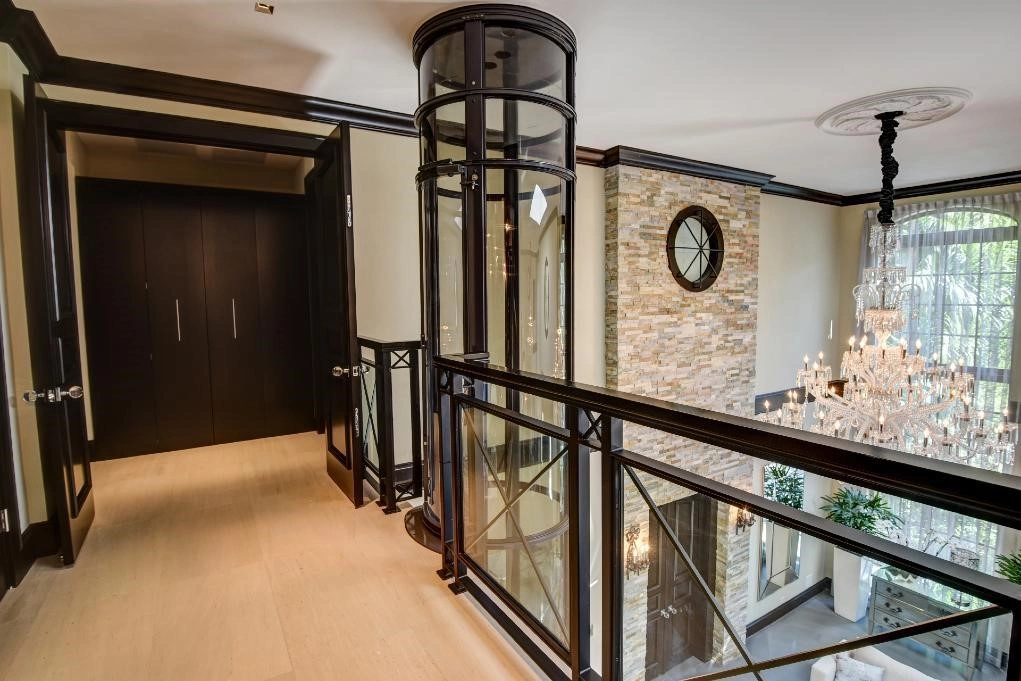
PVE specializes in air-driven, panoramic home elevators designed for residential retrofits and new builds. For homeowners comparing a home lift with a stairlift, PVE pneumatic vacuum elevators offer a compact option for existing homes where space, layout, and construction disruption matter.
How PVE differs from traditional shafted elevators:
- Self-supporting cylinders that require no traditional elevator shaft
- No pit or machine room needed
- Compact footprint for homes with tighter space requirements
- Lower construction impact than many traditional shafted systems
Model options include:
- Single-passenger units for individual use
- Two-passenger models for at least a couple or caregiver support
- Wheelchair-friendly cabins that accommodate mobility devices, depending on model
PVE elevators use air pressure rather than hydraulic oil. They consume power primarily during ascent, while gravity assists with descent. Like both stairlifts and home elevators, they still require routine service and yearly maintenance guidance should be confirmed with an authorized dealer.
For homeowners who want the long-term benefits of a home elevator but are concerned about space requirements or construction disruption, a PVE pneumatic vacuum elevator can be a practical small elevator option worth considering. Its compact design, built-in safety features, and lack of a traditional shaft, pit, or machine room make it especially relevant for many retrofit projects.
Final Thoughts: Home Elevator vs. Stairlift
Choosing between a home elevator and a stairlift depends on the person using it, the home layout, and long-term accessibility goals. A stairlift can be a practical option for one person who can transfer safely and needs help using the stairs.
A home elevator may offer more flexibility for wheelchair users, multigenerational households, caregivers, and homeowners planning to age in place. For existing homes where space and construction disruption are concerns, a compact pneumatic vacuum elevator can provide a practical alternative to traditional shafted systems.
The best next step is to review your home layout, mobility needs, and available space with an authorized elevator professional.
FAQs
Is a home elevator or stairlift better for seniors living alone?
Both stairlifts and home elevators can support people with limited mobility, but the safer choice depends on the person’s mobility needs and ability to transfer. A stairlift uses a motorized chair, so the rider must sit down, stand up, and transfer safely at each landing. A home elevator may reduce transfer-related challenges because the rider can remain standing, seated, or in a wheelchair, depending on the model. For a senior living alone or a loved one with changing mobility needs, this can make daily movement between floors easier to manage.
Will a home elevator increase my home’s resale value?
A well-integrated residential elevator may support home value by making the property more accessible and appealing to potential buyers who value aging-in-place features. The impact depends on the local market, installation quality, home layout, and buyer priorities. Unlike temporary chair lifts, a home elevator is usually viewed as a more permanent accessibility feature.
Can I start with a stairlift now and add a home elevator later?
Yes. Some homeowners start with a stairlift for short-term mobility needs and later add a home elevator as their long-term plans change. If that may be an option, think ahead about possible elevator locations. A future home elevator may need access between more than one floor, enough landing space, and a layout that supports safe movement between levels.
How much maintenance do home elevators and stairlifts require?
Both systems should be maintained according to the manufacturer’s recommendations and any local requirements. Stairlifts and chair lifts typically need routine checks for the rail, seat, controls, and safety features. Home elevators may require service for door systems, brakes, controls, safety sensors, emergency features, and overall operation. Compact pneumatic elevators do not use hydraulic oil, which may simplify some maintenance needs compared with hydraulic systems.
How do I choose the right mobility solution for my specific home?
Start by looking at the user’s current and future mobility needs, available space, stair layout, number of floors, and comfort with transfers. Key factors include whether someone uses a wheelchair, whether more than one person may need the system, and whether the solution needs to carry groceries, laundry, or mobility devices. A stairlift may work well when one person can use a seated chair safely. A home elevator, wheelchair lift, platform lift, or other vertical mobility solution may be better when wheelchair access, caregiver support, or long-term aging in place is the priority.
What is the difference between a stairlift and a vertical platform lift?
A stairlift carries one seated rider along the staircase using a rail-mounted chair. A vertical platform lift moves a person or wheelchair vertically between levels, usually over a shorter travel distance than a full home elevator. Vertical platform lifts can be useful in some accessibility situations, but they are not the same as residential elevators. The right option depends on the home layout, travel distance, safety requirements, and the user’s mobility needs.