Skip to content >

- What are the Minimum Elevator Space Essentials for a Home Elevator?
- Space Requirements by Elevator Type: Side-by-Side Comparison
- 4 Key Considerations for a Residential Elevator Space
- Types of Residential Elevators and Size Constraints
- Optimal Elevator Space Dimensions and Technical Specifications
- Why You Should Consider a Pneumatic Vacuum Elevator Installation
- Conclusion
- Home Elevator Space Requirements: FAQs
The space needed for a home elevator depends on the system, the number of floors, and how the elevator will be installed. A home elevator requires space for the cab, entry clearance, and, in some cases, a shaft or mechanical components. Most residential elevators require between 12 and 25 square feet of floor space, though compact systems can work in smaller areas.
Understanding these requirements is the first step in determining where an elevator can fit and which type is best suited for your home. This guide breaks down minimum space needs, system differences, and key considerations for both new construction and existing homes.
What are the Minimum Elevator Space Essentials for a Home Elevator?
A home elevator installation typically requires more space for traditional systems, often including additional structural elements such as a pit. Many designs also require around 8 inches of pit depth, depending on the type you choose.
The total space required depends largely on the elevator system, with traditional models needing more structural space and newer designs offering more compact installation options.
Pneumatic vacuum elevators, including single-passenger pit-less models, are designed without a pit, making them one of the most space-efficient options for existing homes. They can often be installed in smaller footprints, sometimes around 3′ x 4′, because they do not require a shaft or machine room.
Standard residential elevator cabs typically measure approximately 3 feet wide by 4 feet deep and require a hoistway of at least 4 feet by 5 feet.
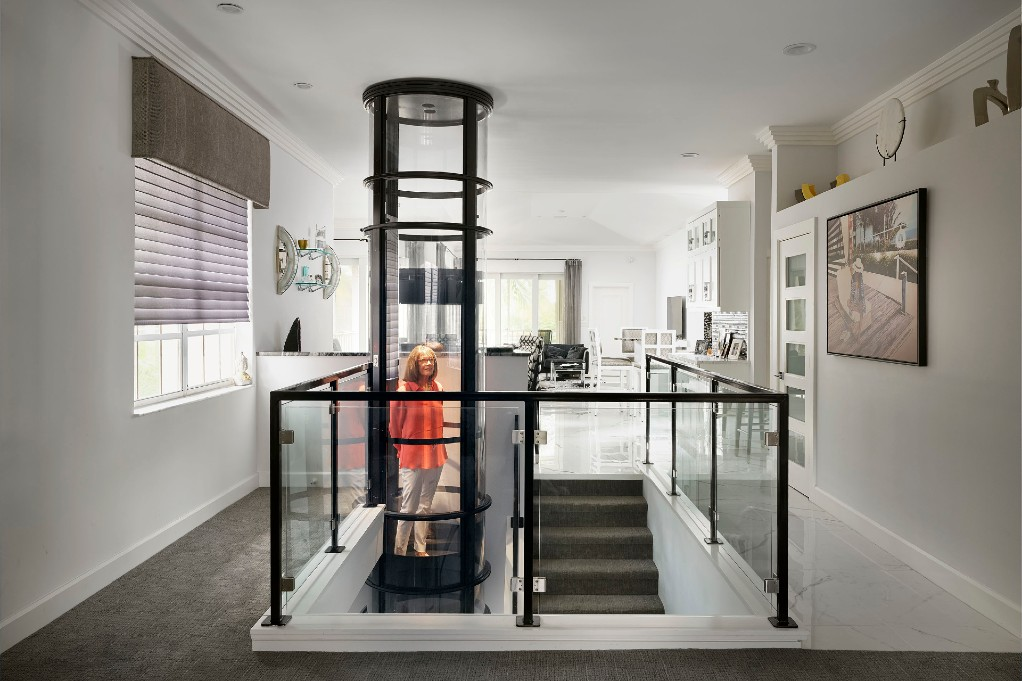
In contrast, smaller home elevators, such as the PVE30, may measure just 3 feet by 3 feet (approximately 9 square feet). These compact designs are ideal for tight spaces but may not accommodate a wheelchair or multiple passengers comfortably.
Space Requirements by Elevator Type: Side-by-Side Comparison
The table below compares the four main residential elevator types across key space requirements. Use it to quickly identify which systems fit your available space before exploring specific models in more detail.
| Space Factor | Pneumatic / Vacuum | Hydraulic | Corner | In-Line Drive (MRL) |
|---|---|---|---|---|
| Minimum floor space | 7–9 sq ft (circular footprint) | 20–25 sq ft | 12–16 sq ft | 15–20 sq ft |
| Pit required? | No (pit-less) | Yes 8 inches min | Yes, 8 inches min | Yes, 6–12 inches |
| Machine room required? | No | Yes, a separate room | No | No (in-shaft) |
| Shaft / hoistway required? | No, self-supporting tube | Yes | Yes | Yes |
| Overhead clearance needed | 80 inches above the top floor | 92+ inches | 80–90 inches | 80–90 inches |
| Min cab size | 30″ dia (PVE30) to 52″ dia (PVE52) | 36″ × 48″ typical | 36″ × 36″ typical | 36″ × 48″ typical |
| Wall mounting needed? | No | Yes | Corner walls | Yes |
| Best for | Existing homes, tight spaces, retrofits | New construction, high weight capacity | Homes with corner alcoves | Mid-range existing homes |
For the full ANSI A17.1 specifications, interior diameter measurements, and shaft clearance requirements by drive system, see the detailed residential elevator dimensions and shaft specifications.
4 Key Considerations for a Residential Elevator Space
For a smooth installation and reliable long-term operation, consider several factors when planning a residential elevator. Here are four key considerations:
1. Shaft Size and Location
Shaft Dimensions:
Start by confirming the shaft has adequate internal space. Traditional residential elevators typically require a shaft of at least 5 feet by 5 feet, while more compact models, such as pneumatic home elevators, can fit into spaces as small as 4 feet by 4 feet, offering greater flexibility for retrofit projects.
Optimal Placement:
Focus on a suitable location that minimizes structural alterations and maximizes convenience. This location is often near stairs or in an existing closet space.
2. Door and Cab Dimensions
Door Width:
Standard elevator doors are about 32 to 36 inches wide to accommodate a wheelchair. However, some compact models may have doors as slim as 21 inches wide.
Cab Size:
It’s important to consider the internal dimensions of the elevator cab. Standard sizes are typically around 3 feet by 4 feet, but the right choice depends on your mobility needs and available space. Select a cab size that balances comfort and functionality while fitting within the overall layout of your home.
3. Pit Depth and Overhead Clearance
Pit Depth:
A pit depth of 6 to 12 inches is generally required to house the elevator’s mechanical components and ensure safe operation.
Overhead Clearance:
Sufficient space above the top floor is required to accommodate the elevator cab, housing, and operating components. Most residential systems need between 8 and 10 feet of overhead clearance, depending on the model.
This space allows the doors to open fully, ensures smooth operation, and provides safe entry and exit for passengers while meeting required safety standards.
4. Space for Drive Components
When planning a home elevator installation, consider not only the shaft but also the space needed for electrical systems and drive components. Some systems require additional room for mechanical equipment, while others are more self-contained.
For users with mobility needs, wheelchair-accessible models, such as three-passenger elevators, require slightly more floor space than single-passenger units. However, pneumatic systems can accommodate this without the need for a separate machine room or shaft.
Types of Residential Elevators and Size Constraints
The type of home elevator you choose can influence its size. It might be the minimum or maximum size you can get. Some elevators are designed for smaller homes, while others are built for larger residences. Remember that the maximum allowed size for a home elevator is 15 ft2 per code.
Hydraulic Elevators
Hydraulic elevators are typically larger than other residential systems and are not suited for compact installations. They are often used in models designed for higher weight capacities.
These systems usually require a minimum pit depth of around 8 inches and overhead clearance of at least 92 inches, along with space for a machine room. As a result, they require more space and are generally better suited for new construction or homes with fewer layout constraints.
Corner Elevators
A corner elevator is the best space-saving home elevator. It is designed to fit neatly into the corner of a room. Being a popular choice among homeowners for its compact design, you can add accessibility without taking up too much room.
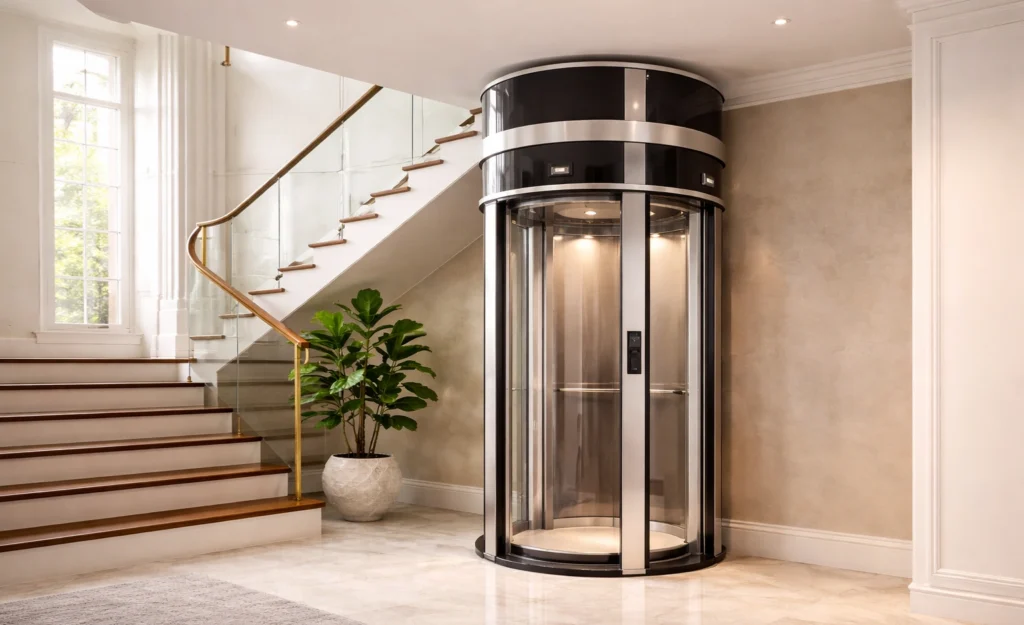
Corner elevators are often sleek and modern and blend perfectly with the home’s decor. Moreover, they provide a stylish and practical solution for moving between floors, especially for those with mobility issues. It will make the home elevator entry relatively smooth.
In-Line Drive Elevators
An in-line drive elevator is a type of residential elevator system that operates without the need for a separate machine room, helping save space and simplify installation. Unlike traditional designs that must be installed along a wall, glass and “birdcage” style elevators, such as pneumatic vacuum elevators, are self-supporting and can be placed in the center of a room. This means you only need sufficient floor space, not wall space, giving homeowners greater flexibility in layout and design.
Pneumatic Elevators
Some residential elevators have an external cylinder size of 30 inches and a door opening of 21.5 inches, as seen in models like the PVE37. These elevators can facilitate one person standing, but they are unsuitable for a seat or a wheelchair.
In addition, pneumatic elevators, which can be installed through balconies or floor landings, are generally more modern than traditional elevators. These elevators do not require a shaft or separate space for a drive mechanism, making them more flexible for installation.
Optimal Elevator Space Dimensions and Technical Specifications
Efficient elevator design requires considering both passenger comfort and space utilization. Here’s a breakdown of optimal elevator space dimensions and technical specifications:
| Specifications | Minimum Dimensions | Maximum Dimensions |
|---|---|---|
| Floor Space Require | 20 square feet | 25 square feet |
| Pit Space Requirement | 0 inches (for pit-less models) | 8 inches |
| Cab Dimensions | 3 feet wide by 3 feet deep | 3 feet wide by 4 feet |
| Hoistway Dimensions | 3.5 feet wide by 3.5 feet deep | 4 feet wide by 5 feet deep |
| Elevator Type | Pneumatic Vacuum Elevator | Traditional Cable Elevator |
| Customization Options | Door, Trim, and Flooring | Door, Trim, and Flooring |
| Potential Home Value Increase | Up to 10% | Up to 10% |
Why You Should Consider a Pneumatic Vacuum Elevator Installation
Pneumatic vacuum elevator installation offers numerous advantages, from enhancing mobility to increasing home value. Here are key reasons to focus on adding one to your home:
1. Enhanced Mobility and Safety:
Pneumatic vacuum elevators offer a smooth, gentle ride between floors, making them especially well-suited for individuals with mobility challenges who need a comfortable alternative to stairs. Their air-powered design eliminates the need for traditional cables and pulleys, reducing mechanical complexity and the risk of wear-related issues.
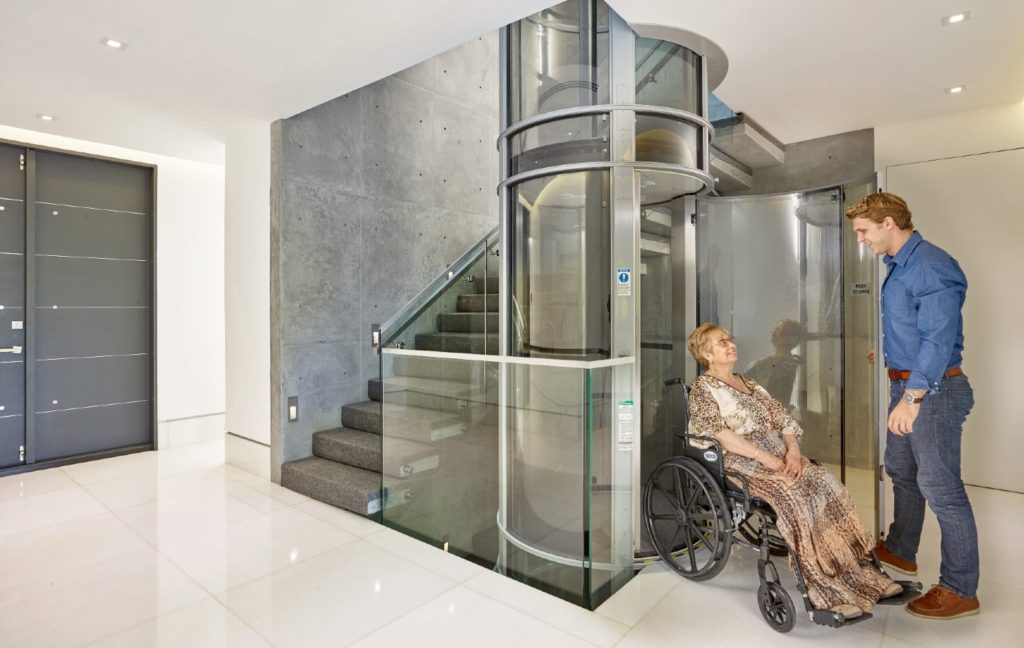
As a result, homeowners benefit from reliable, low-maintenance performance, while built-in features such as automatic brakes and emergency descent systems enhance safety without compromising everyday convenience.
2. Customized to Fit Your Home’s Decor and Style
There are various elevators, so not all look the same. Despite the variety, you can customize your home elevator to match your home’s style and decor. A PVE includes transparent or opaque cabins, elevator voice features, different door styles, and customizable interior finishes. A well-designed home elevator can blend perfectly with your home, as the elevator integrates seamlessly into your home’s design.
3. Efficient Space Utilization:
One of the key advantages of pneumatic vacuum elevators is their minimal footprint, making them an excellent choice for homes with limited space. Unlike traditional systems that require a dedicated shaft and machine room, these elevators are self-supporting and can often be installed through existing floor openings with minimal structural impact.
As a result, they help maximize usable living space while offering greater flexibility in home design. Their compact form also allows for installation in unconventional areas, such as tight corners or small alcoves, without sacrificing functionality, comfort, or accessibility.
4. Increased Home Resale Value
A home elevator can be expensive to install initially, but it can also significantly upgrade your home’s resale value. The cost of a pneumatic elevator varies based on custom options, location, size, taxes, and drive system.
Additionally, an elevator can enhance your property’s value by up to 10% despite the upfront cost. This helpful addition enhances your home’s equity, which attracts potential buyers who can see themselves living there long-term.
Conclusion
Choosing the right home elevator starts with understanding how much space you have available and how much construction you’re willing to take on.
A well-planned installation can significantly improve accessibility, safety, and long-term comfort, especially for multilevel homes. While traditional systems often require 20–25 square feet of space along with a pit and additional structural components, newer solutions offer more flexible, space-efficient options.
From compact pneumatic models to more traditional systems, today’s residential elevators can be tailored to fit a wide range of layouts and design styles. With the right approach, a home elevator can also support aging in place and increase overall property value.
For many homeowners, installing an elevator is not just a convenience but a practical way to stay in the home they love longer, without the need for major relocation or renovation.
If you’re exploring options, connecting with a qualified expert can help you determine the best solution for your space and needs.
Home Elevator Space Requirements: FAQs
How much space do you need for a home elevator?
Most home elevators require between 12 and 25 square feet of space, depending on the system. Compact models, such as pneumatic elevators, can be installed in smaller footprints.
Do all home elevators require a residential elevator?
The minimum size for a residential elevator is typically around 3 feet by 3 feet (9 square feet) for compact models. Larger sizes are needed for multiple passengers or wheelchair accessibility.
What size elevator is needed for wheelchair access?
Wheelchair-accessible elevators generally require a cab size of at least 48 inches by 60 inches and a door width of 32 to 36 inches to meet accessibility standards.
Where are elevator controls located?
Elevator controls are usually located inside the cab and at each landing, near the elevator doors, allowing for easy access and operation.
Do home elevators have voice features?
Some modern home elevators include voice or audio features to announce floors and improve accessibility, though this depends on the model and customization options.
What is the standard elevator size for four people?
A typical four-person residential elevator requires approximately 12 to 16 square feet of space, depending on the design and weight capacity..