Skip to content >

Choosing a home elevator is a two-part decision. First you decide what kind of elevator makes sense for your house, then you decide which brand builds the best version of it.
This guide walks through both. We’ll start with the main elevator technologies so you understand what you’re comparing, then get into the specific brands worth knowing. Commercial elevator brands (Otis, Schindler, KONE) get their own section further down.
Quick Answer
The best home elevator brands are Pneumatic Vacuum Elevators (PVE), Stiltz, Savaria, Inclinator, Bruno, and Nationwide Lifts. PVE and Stiltz specialize in retrofits without shafts or pits. Savaria and Inclinator focus on customization and traditional cab designs. Bruno emphasizes accessibility, and Nationwide Lifts offers the widest range of technologies from a single source.
Understanding Elevator Types
Home elevators come in a handful of different drive technologies, and the right one depends on your house, your budget, and how much construction you’re willing to take on.
Pneumatic Vacuum Elevators
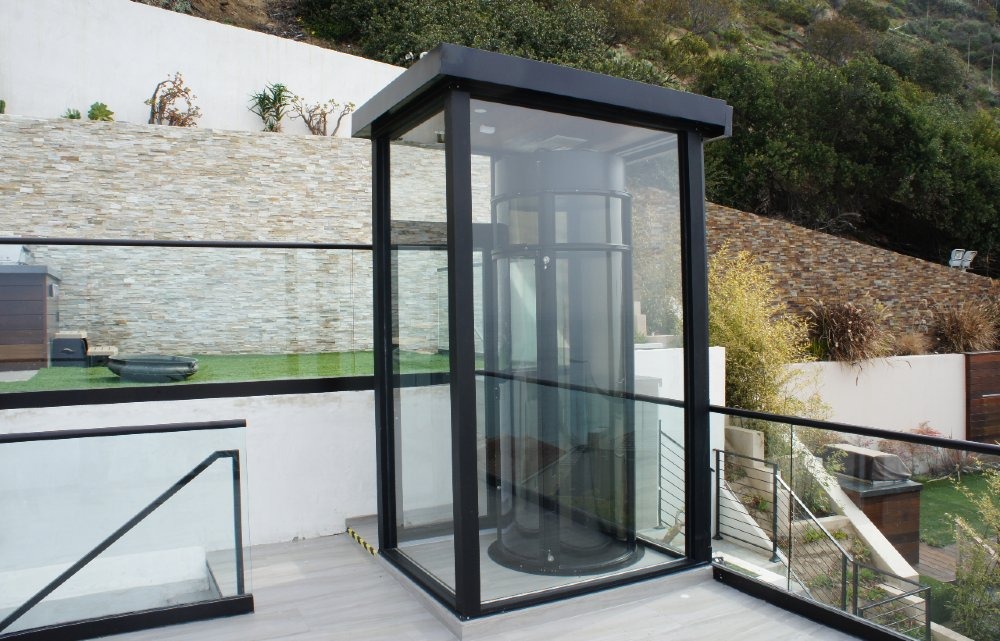
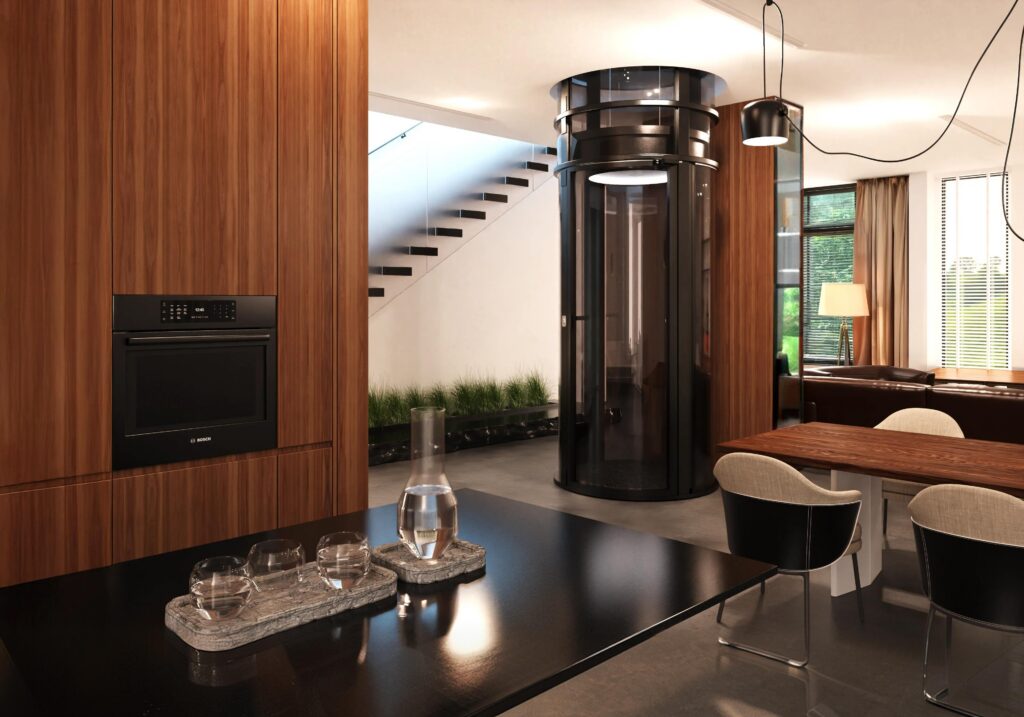
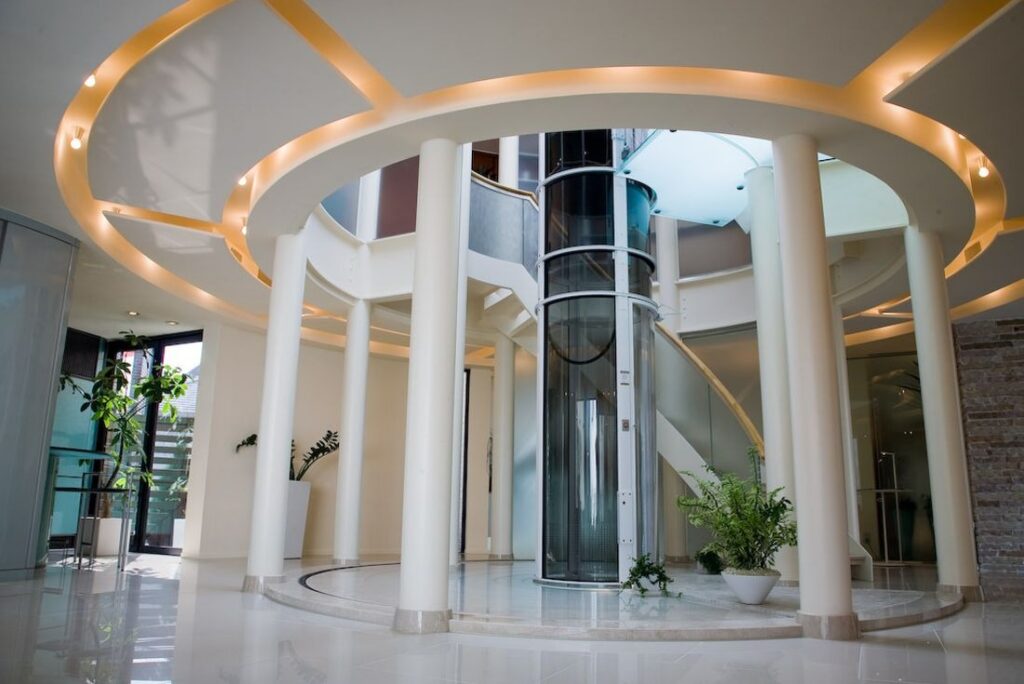
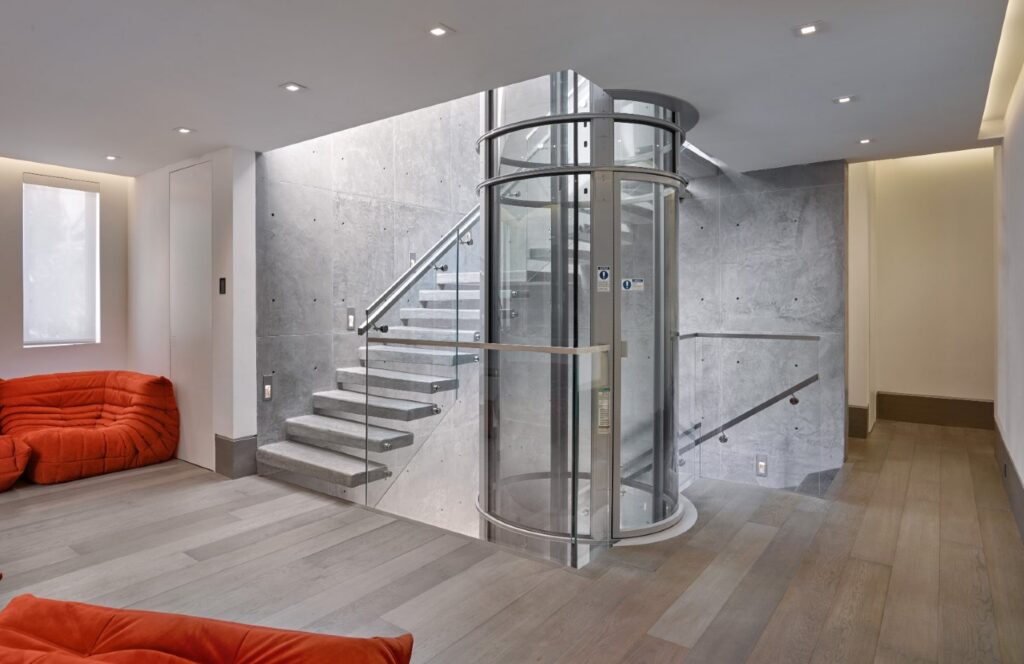
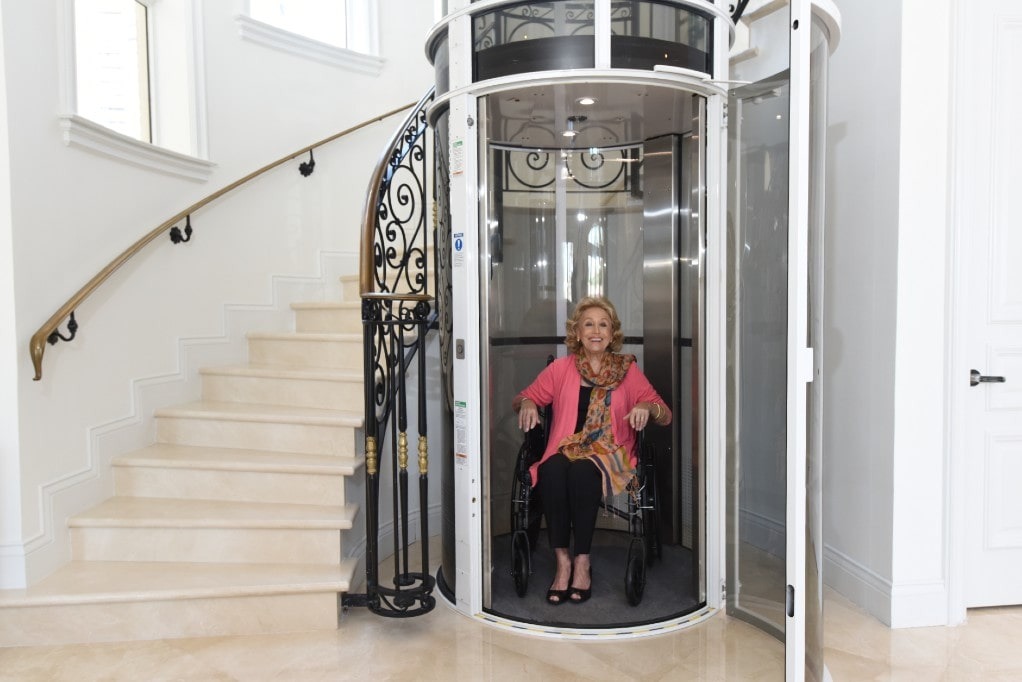
Pneumatic vacuum elevators (PVE) use differential air pressure to move a cabin through a self-supporting cylindrical tube. There’s no shaft, no pit, no machine room, and no cables or hydraulic pistons. The whole system rests on the lowest landing.
That makes pneumatic elevators the most retrofit-friendly option available. Install takes two to three days, and the only construction typically required is a single opening cut in the ceiling between floors. The trade-off is a round, glass cabin shape and lower weight capacity than traditional systems.
Traction Elevators
Traction elevators use steel ropes or belts running over a motor-driven sheave, with a counterweight balancing the cab. They’re the dominant technology in mid- and high-rise commercial buildings because they’re fast, smooth, and energy-efficient. In residential applications, traction systems require a shaft, guide rails, and typically a machine room, meaning significant construction for retrofits.
Hydraulic Elevators
Hydraulic elevators use a piston driven by pressurized fluid to push the cab upward. They’re common in low-rise buildings and homes because they handle heavy loads well and don’t require as much overhead clearance as traction systems. They do require a shaft, a pit of at least 8 inches, and a separate machine room to house the pump and fluid reservoir.
Machine Room Less (MRL) Elevators
MRL elevators integrate the drive components inside the shaft rather than a separate machine room. That saves floor space and reduces construction cost compared to hydraulic systems. They still require a full shaft with guide rails and a smaller pit (6 to 12 inches), so they’re better suited to new construction or homes where the space can be planned around them.
Shaftless Elevators
Shaftless elevators, also called “through-the-floor” elevators, use guide rails attached to the walls or the elevator itself rather than requiring a constructed shaft. Stiltz, Stannah, and Savaria’s Vuelift all use variations of this design. They’re a middle option between pneumatic (no shaft at all) and traditional systems (full shaft), and typically fit in tighter footprints than hydraulic or traction elevators.
For detailed dimensions and space requirements by system type, see our residential elevator dimensions guide.
The Best Home Elevator Brands
Now that you have the technology landscape, here’s who builds what.
Pneumatic Vacuum Elevators (PVE)
PVE built the first pneumatic vacuum elevator and has been the reference brand for the technology ever since. Instead of cables, hydraulics, or a machine room, a PVE elevator is a self-supporting cylinder that moves a cabin using differential air pressure inside a sealed tube. That means no shaft to cut, no pit to dig, no machine room to build. The whole install typically takes two to three days.
There are three models. The PVE30 is the smallest, a 30-inch single-passenger cabin that fits where nothing else will. The PVE37 handles two passengers at 37 inches diameter. The PVE52 accepts a wheelchair user and comfortably fits three passengers at 52 inches. All three are ASME A17.7 code compliant, and because there’s very little mechanical wear, service intervals run every five years rather than annually.
The trade-off is capacity and cab shape. PVE cabins are round and glass, which some homeowners love and others don’t. They’re also not the choice if you need to move heavy items regularly. They’re passenger elevators, not freight.
Stiltz
Stiltz is the closest thing to a direct PVE competitor. They’re a UK brand that built its reputation on compact “through-the-floor” elevators that install without a shaft, a similar retrofit-friendly value proposition. The difference is mechanical. Where PVE uses air pressure, Stiltz uses two guide rails and a motor. That means a more traditional rectangular cab, which some homeowners prefer for aesthetic reasons.
Stiltz systems are quieter than most traditional elevators and take less time to install than hydraulic systems, though longer than PVE. They’re a strong pick if you want a shaftless install but don’t like the round pneumatic tube look.
Savaria
Savaria is the biggest and most versatile of the residential brands. Based in Canada, they make traction elevators, hydraulic elevators, and MRL systems, plus stair lifts, wheelchair lifts, and platform lifts. If you want to be able to compare drive technologies from one manufacturer, Savaria offers that in a way few others do.
Their Vuelift model is worth noting: it’s a self-supporting glass elevator that installs without a shaft, competing on aesthetics with PVE. It costs more than PVE and takes longer to install, but the visual is dramatic.
Inclinator
Inclinator has been building residential elevators since 1923, longer than any other brand on this list. Their signature product is the Elevette, a cable drum drive system that comes in five cab styles and accepts significant custom finishes. If your priority is a home elevator that looks like it was designed for your specific house, matching millwork, custom veneers, coordinated hardware, Inclinator is likely where you’ll land.
Inclinator elevators require a traditional shaft, pit, and machine room, so they’re better suited to new construction or major renovations than tight retrofits.
Nationwide Lifts
Nationwide Lifts is really two things: a manufacturer (their Freedom line) and a large distributor of other elevator brands. That combination means you can compare traction, cable, hydraulic, pneumatic, and shaftless options from one company. For homeowners who want a single point of contact through the sales, install, and service process, and aren’t sure yet which technology fits, Nationwide Lifts is a practical starting point.
Their Freedom Green model is worth noting for eco-conscious buyers: recycled wood interior and up to 50 percent energy savings versus traditional systems.
Bruno
Bruno is primarily a stair lift company, but they’ve built a small residential elevator lineup focused on aging-in-place buyers. Their elevators emphasize ease of use, simple controls, and safety features designed with older users in mind. If accessibility is the driving reason for the install, Bruno is worth a look. For more on planning an accessible install, see our guide to home elevators for seniors.
Stannah
Stannah is a UK brand with a long history in stair lifts and residential elevators. In the U.S., their elevators are distributed through ACME. Stannah’s pitless and shaftless options are popular in Europe and offer solid alternatives to PVE and Stiltz for retrofits, though U.S. availability and service networks are more limited than the American brands.
AmeriGlide
AmeriGlide is the budget option. They focus on accessibility solutions (home elevators, stair lifts, and platform lifts) priced lower than most competitors. The trade-off is customization and premium finish options, which are more limited than Inclinator or Symmetry. For homeowners who need reliable residential elevator technology without paying for luxury finishes, AmeriGlide is a legitimate value choice.
Symmetry Elevating Solutions
Symmetry sits at the opposite end of the price spectrum from AmeriGlide. They build high-end elevators for custom luxury homes with an emphasis on finish quality, custom cab design, and integration with the home’s architectural details. Symmetry elevators are common picks for large custom builds where the elevator needs to feel like a designed element of the house rather than an appliance.
Garaventa Lift
Garaventa is one of the largest accessibility solution providers in North America. Their catalog goes well beyond home elevators into stair lifts, wheelchair lifts, inclined platform lifts, and commercial accessibility solutions. For homeowners with more comprehensive accessibility needs, say, a wheelchair user who also needs an outdoor porch lift, Garaventa’s ability to source multiple solutions from one company matters.
How to Choose a Home Elevator Brand
Comparing residential elevator brands comes down to a handful of decisions.
Home layout and space. Measure your available space carefully. Traditional elevators need a shaft, pit, and often a machine room. Pneumatic and shaftless models don’t. For detailed measurement guidance, see our elevator space requirements guide.
Number of floors. Most residential elevators serve two to five stops. Confirm the brand’s models cover your travel height before falling in love with the aesthetics.
Capacity and weight limit. Single-passenger models range from 350 to 500 pounds. Larger residential systems can handle 750 to 1,500 pounds. If you’ll need to move furniture or move heavy items regularly, plan for the higher capacity.
Accessibility features. Look for automatic doors, minimum 32 to 36 inch door widths for wheelchair access, and emergency call buttons. If aging in place is the reason for the install, prioritize brands with a strong accessibility track record like Bruno, Garaventa, or PVE’s PVE52.
Aesthetics and customization. Some brands offer significant customization (Inclinator, Symmetry). Others prioritize technology over cosmetic options (PVE, Stiltz). Neither approach is wrong. It depends on whether the elevator should disappear into your home or make a statement.
Local regulations and permits. Residential elevators in the U.S. must meet ASME A17.1 (traditional systems) or A17.7 (pneumatic vacuum systems). Local codes may add requirements. Your installer should handle the permitting process.
Maintenance and service. Traditional cable and hydraulic systems typically need annual inspections. Pneumatic vacuum elevators like PVE require service every five years due to fewer moving parts. Confirm the brand’s service network covers your area.
Budget. Home elevator prices vary widely depending on the brand, the technology, and the amount of construction required.
Top Commercial Elevator Brands
Commercial elevator manufacturers focus on higher-capacity systems for offices, retail, hospitality, and mid- to high-rise buildings. Here’s a brief look at the dominant global brands.
Otis Elevator Company
Founded in 1853, Otis is the world’s largest and oldest elevator manufacturer. Their product range covers everything from mid-rise commercial buildings to some of the world’s tallest skyscrapers, including the Empire State Building and Burj Khalifa.
Schindler
Swiss-founded in 1874, Schindler is one of the most trusted names in the commercial elevator industry. Their systems appear in office buildings, hotels, malls, and airports worldwide, with particular strength in mid- to high-rise installations.
KONE
KONE is a Finnish manufacturer known for eco-efficiency, energy-saving drive systems, and user-focused interface design. Their regenerative drives can reduce elevator energy consumption significantly compared to older systems, making them a common pick for sustainability-focused projects.
TK Elevator (formerly Thyssenkrupp)
TK Elevator, based in Germany, offers a broad range of commercial elevator solutions including the MULTI system, which uses magnetic levitation to allow multiple cabs in a single shaft. That’s the kind of innovation most brands don’t attempt.
Mitsubishi Electric
Mitsubishi Electric is known for smooth operation, durability, and quiet ride quality. They’ve held records for both the tallest and fastest elevators in the world, and their systems are common picks for premium office buildings and high-speed installations.
Fujitec
Fujitec is a Japanese manufacturer specializing in high-speed and energy-efficient commercial elevators. They’re strongest in the mid-market commercial segment, particularly in Asia-Pacific.
Hitachi
Hitachi’s elevator division produces feature-rich commercial systems including some of the fastest elevators in the world. Their strongest market is Asia, though systems are available globally.
Hyundai Elevator
Hyundai Elevator is a South Korean manufacturer with a strong domestic presence and growing global reach. Their catalog spans commercial and residential systems at competitive price points.
Choosing a Commercial Elevator Brand
The decision framework for commercial installations is different from residential.
Building height and capacity. Traction systems dominate mid- and high-rise. Hydraulic and MRL options work for low-rise buildings.
Traffic patterns. High-traffic buildings need faster systems with intelligent dispatch. Low-traffic buildings can use simpler configurations.
Energy efficiency. KONE, Otis, and Schindler all offer regenerative drives. Consider lifecycle energy costs, not just installation.
Service network. All major commercial brands maintain global service networks. Confirm coverage in your location.
Technology and innovation. TK Elevator’s MULTI, Mitsubishi’s high-speed systems, and Otis’s Gen360 platform each offer specific technological advantages worth investigating for larger projects.
Residential Elevator Trends
The residential elevator market is evolving quickly. Current trends shaping new installations include smart automation, energy efficiency, space-saving designs, and aging-in-place features.
Smart elevators and automation. AI and IoT integration for predictive maintenance, touchless controls, and voice activation are becoming standard on premium installations.
Energy efficiency. Regenerative drives that capture braking energy, and materials chosen for sustainability, are showing up across price points, not just luxury installs.
Space-saving designs. Compact systems like PVE that install without heavy construction, plus glass and panoramic cabins that blend with modern home design, are driving the biggest shift in the residential market.
Aging-in-place solutions. Wider doors, wheelchair accessibility, and safety features designed specifically for older homeowners are moving from optional add-ons to expected features.
Alternatives to Traditional Elevators
For homeowners with more limited needs, a full elevator install isn’t the only path to accessibility.
Stair lifts. Motorized chairs that travel along an existing staircase. Cost-effective for single-story accessibility.
Platform lifts. Vertical platforms for overcoming small elevation changes. Often used for entry-level accessibility (porches, entryways).
Inclined platform lifts. Similar to stair lifts but with a platform instead of a chair, allowing wheelchair transport along a staircase.
Frequently Asked Questions
What is the best elevator brand for a home?
The best home elevator brand depends on your specific needs. For retrofits without heavy construction, PVE offers pneumatic vacuum elevators that install without a shaft, pit, or machine room. For customization and traditional cab designs, Inclinator and Savaria are strong choices. For budget-conscious buyers, AmeriGlide provides reliable accessibility options. For aging in place, Bruno and Garaventa focus specifically on accessibility.
What are the top commercial elevator brands?
The top global commercial elevator brands are Otis, Schindler, KONE, TK Elevator, Mitsubishi Electric, Fujitec, Hitachi, and Hyundai Elevator. Each has specific strengths in speed, capacity, or energy efficiency.
What is the difference between residential and commercial elevator brands?
Residential elevator brands focus on compact systems designed for private homes, typically serving two to five floors with lower weight capacities and simpler code compliance. Commercial brands build higher-capacity, higher-speed systems for offices, hotels, and multi-story buildings, with stricter code and inspection requirements.
What are space-saving options for home elevators?
Pneumatic vacuum elevators (PVE) require no shaft, pit, or machine room, making them one of the most space-efficient residential options. Shaftless elevators from Stiltz, Bruno, and Stannah also fit in smaller footprints than traditional systems.
How much does a home elevator cost?
Home elevator costs vary by brand and technology. Compact pneumatic and shaftless systems typically start lower than traditional cable or hydraulic systems, which require additional construction for the shaft, pit, and machine room.
Are pneumatic vacuum elevators safe for home use?
Yes. PVE elevators are ASME A17.7 code compliant and include safety features such as emergency stop, pressure monitoring, automatic descent to the ground floor in the event of a power loss, and a safety brake system.
How much space does a pneumatic vacuum elevator require compared to a traditional elevator?
Pneumatic vacuum elevators require significantly less space than traditional systems. The PVE30 has a 30 inch exterior diameter, compared to 20 to 25 square feet typically needed for hydraulic or cable systems (including the shaft, pit, and machine room).
Is a pneumatic vacuum elevator noisy?
No. Pneumatic vacuum elevators operate quietly, with sound levels comparable to a typical home HVAC system. The vacuum-based drive doesn’t use cables, pulleys, or hydraulic pistons.
Can a home elevator be customized?
Yes. Most residential elevator brands offer customization options for cab finishes, door styles, and lighting. Inclinator, Savaria, and Symmetry offer the widest customization range. PVE offers customization in cab finish and interior lighting.
How much maintenance does a home elevator require?
Maintenance requirements vary by brand and technology. Traditional cable and hydraulic systems typically need annual inspections. Pneumatic vacuum elevators like PVE require service every five years due to fewer moving parts.