

Home Elevators in California





Air-driven home elevators for California homes, from a family house in the Bay Area to a hillside home in the south, with no pit to dig.
Prefer to talk? Call 813-548-4339
What happens next
- Tell us about your home
- A PVE specialist contacts you
- Get a quote for your home
Request a Free Quote
Tell us about your California home and the floors you want to reach, and we will be in touch.
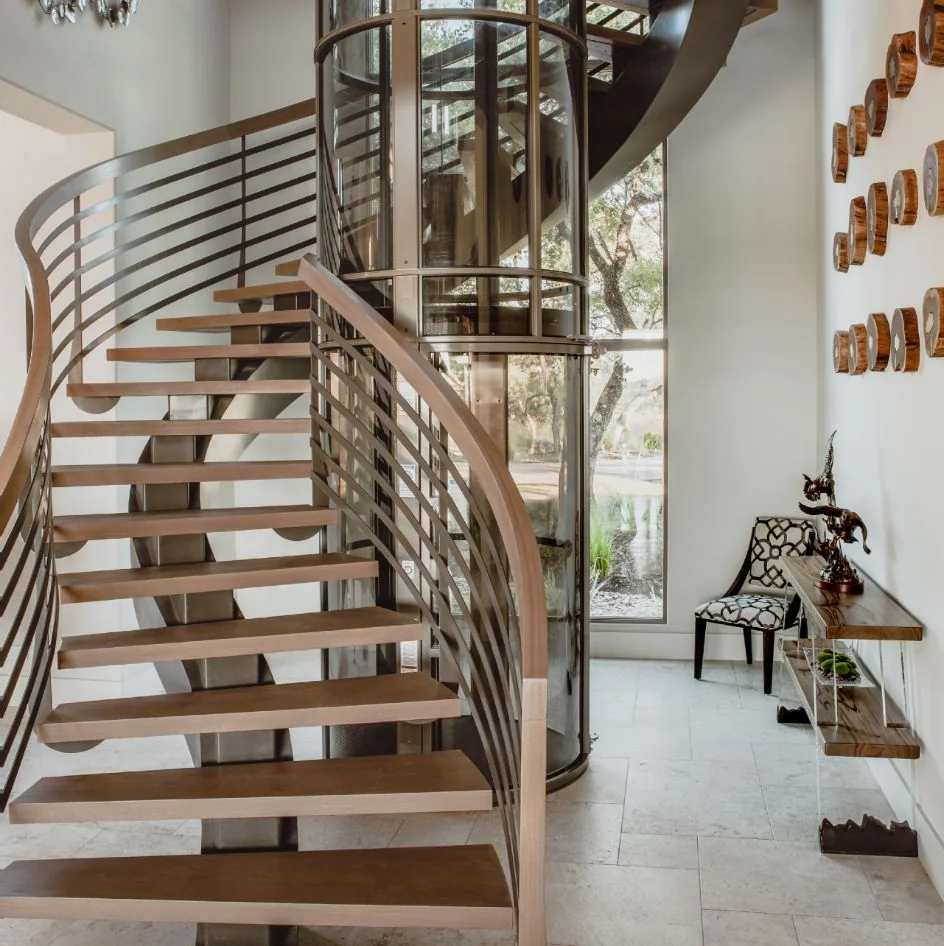
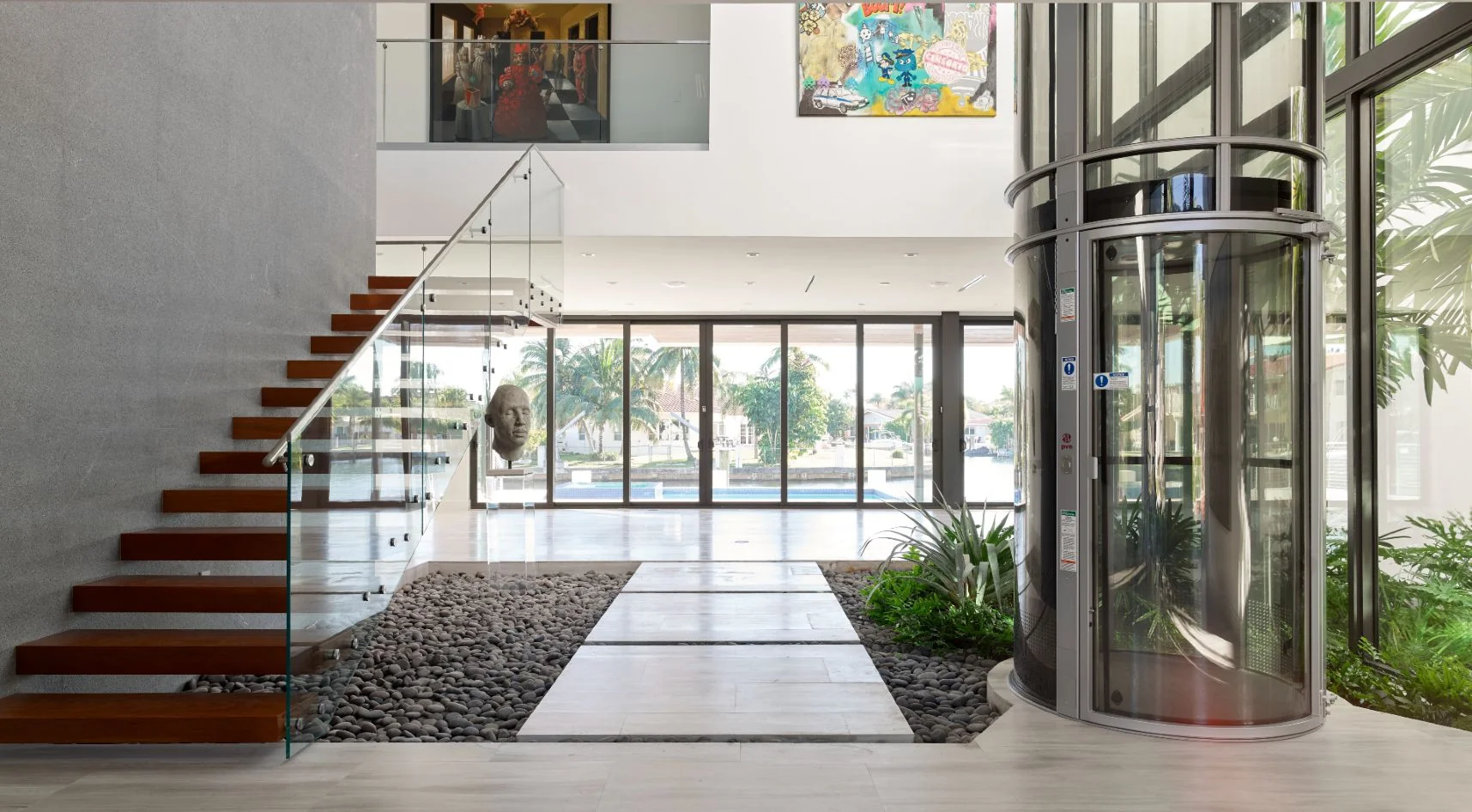
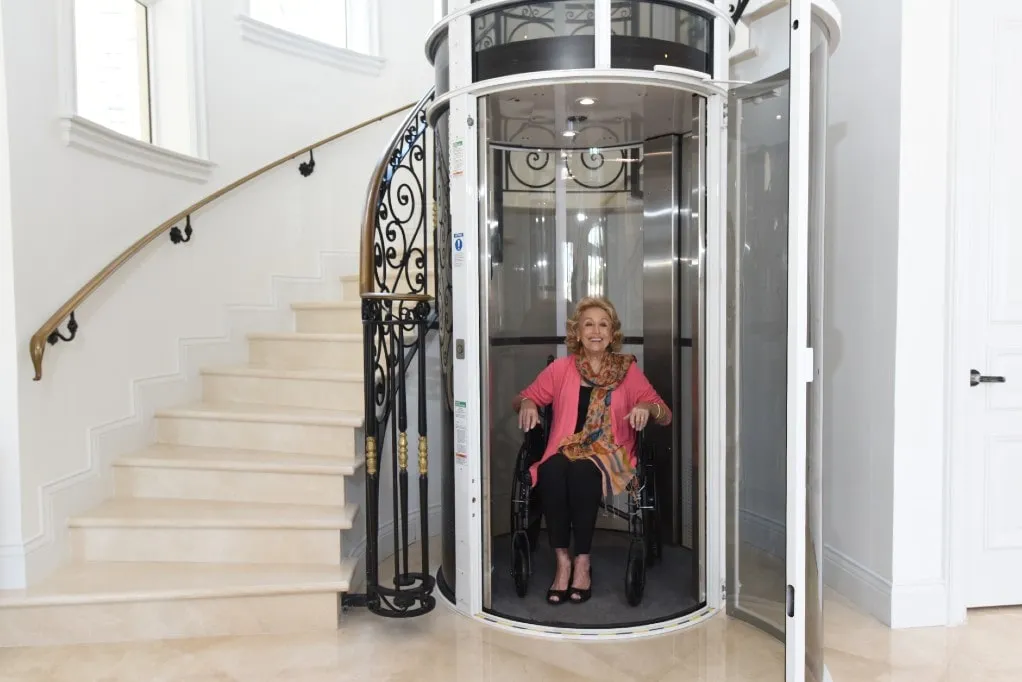
A PVE air-driven home elevator with its panoramic design, shown in a private home.
Keep every floor of your California home within easy reach.
When the stairs get hard, you should not have to give up the rooms you love.
Maybe it is your knees, a recent surgery or a partner who now needs help on the stairs. In many California homes, the bedrooms sit upstairs and the kitchen sits below. A home elevator lets you keep living on every floor, the way you planned when you bought the house.
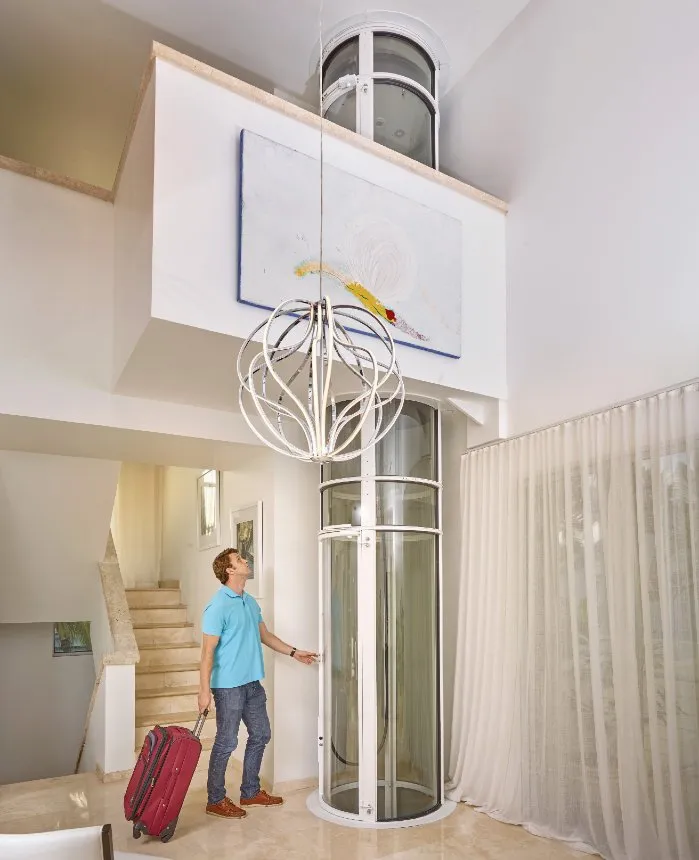
PVE designs and manufactures air-driven home elevators. They use pneumatic technology, and they are self-supporting. In plain words, the elevator stands on your existing floor. In standard installations you do not dig a pit, build a shaft or set aside a room for machinery.
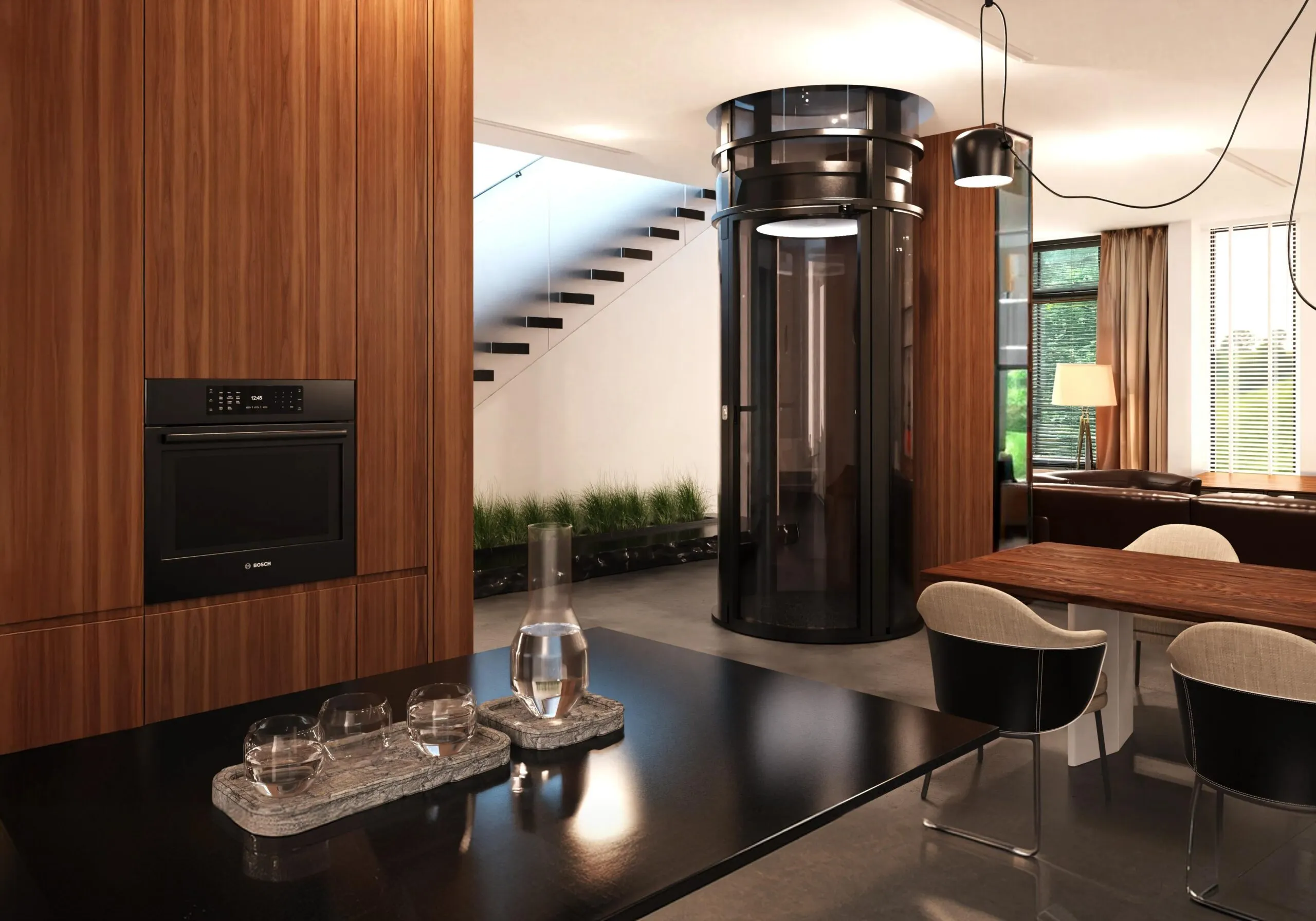
That suits California homes well. You keep your layout and your rooms, and the work in your house stays small. The round, panoramic design lets you see out as you ride, so it feels open rather than boxed in.
Below, you will find what California cities ask for, what your home may need first and how to choose a model. When you are ready, a free quote is the next step.
The cleanest home elevator on the market.
Across California, power can go out during wildfires, heat waves and winter storms. If the power fails while you ride, the cab descends to the lowest level at safety speed and the door lock opens, and a solar panel package is available.
- 01Air lifts you up
A vacuum pump at the top of the unit changes the air pressure and the cab rises.
- 02Gravity brings you down
Air is let back in and the cab descends. No oils, hydraulic fluid or lubricants.
- 03Runs on household current
Low power draw, so it works alongside the solar arrays many homes now have.
The most sustainable home elevator available. Anywhere.
- Pneumatic technology
- No shaft, pit or machine room
- Installed in 2 to 3 days
- Panoramic design
- Three sizes and a square
Four models. One for every home.
If you live alone and have a tight corner to work with, the compact PVE30 carries one rider. For a couple sharing the trip, the PVE37 or the square Cube gives room for two. If someone in your family uses a wheelchair, start with the PVE52, our wheelchair-accessible model, and ride one at a dealer to confirm the fit.
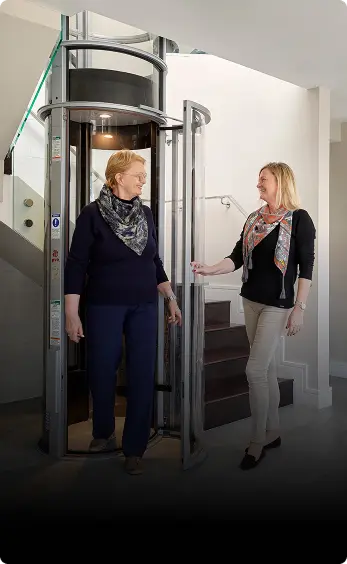
PVE30
- Riders
- 1 passenger
Start here for one rider when conserving floor space is a priority.
Explore PVE30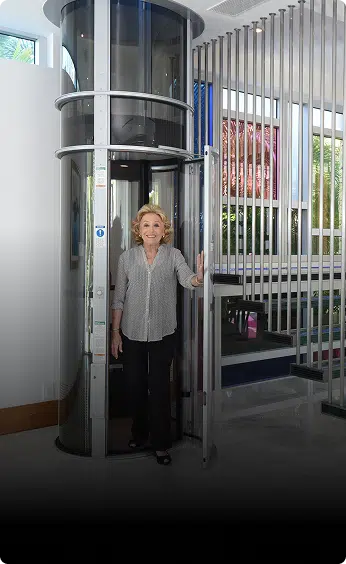
PVE37
- Riders
- 2 passengers
Compare this round model when you want room for two riders within its rated capacity.
Explore PVE37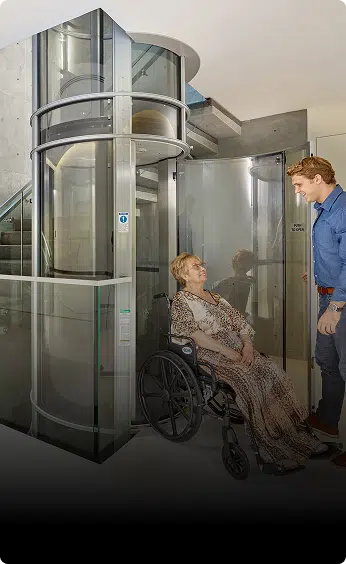
PVE52
- Riders
- 3 passengers
Start here when wheelchair access is a project requirement. Confirm the chair, rider, door opening and cabin fit together.
Explore PVE52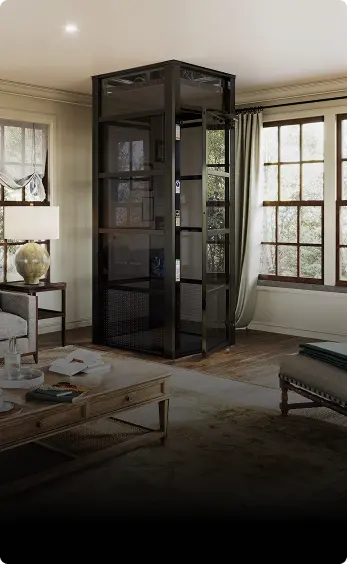
The Cube
- Riders
- 2 passengers
Consider this square model for a two-person layout, including potential corner placement after a site review.
Explore The CubePVE52 wheelchair suitability depends on the individual chair and user. Residential wheelchair access does not mean ADA compliance.
Serving homeowners across California.
Our authorized dealers serve homeowners across California, from the Bay Area to the southern coast and the Central Valley. Wherever you live, the process starts the same way: you tell us about your home, and a trained dealer visits to look at your floors, your power and the best spot for the elevator. Then you get a clear quote and a plan that fits your city's permit steps.
- Antioch
- Carlsbad
- Los Angeles
- Murrieta
- Orange County
- Sacramento
- San Diego
- San Francisco
- San Jose
- San Luis Obispo
- Santa Barbara
- Santa Monica
- Summerland
- Ventura
Also serving nearby: Alameda County, Santa Clara County, Contra Costa County.
Safe, simple and made to be seen.
California homeowners have their own reasons to choose an air-driven elevator. Here are six that matter most for a home in this state.
No pit to dig
A PVE elevator stands on your existing floor. In standard installations there is no pit, no shaft and no machine room. That means less structural work for your city to review and less disruption in your house.
A safe descent in an outage
Power can go out here during wildfires, heat waves and storms. If it fails while you ride, the cab descends to the lowest level at safety speed and the door lock opens, so you can step out.
Stay in the home you own
Most older Californians own their homes. An elevator lets you keep the house, the neighbors and the routine you know, instead of moving just to avoid the stairs.
Open, panoramic design
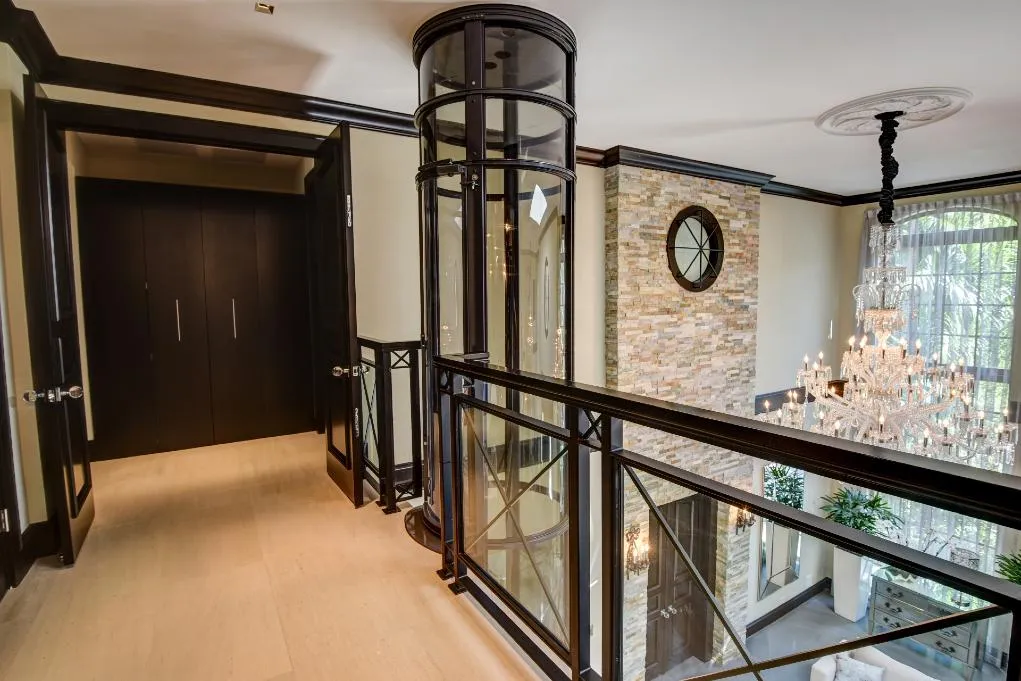
The cylinder is an aluminum frame with polycarbonate panels, giving you a full view as you ride. It looks like part of the home, not an add-on, and fits a modern or classic interior.
Low maintenance
The elevator uses no harmful oils, gases or lubricants. It is low maintenance, and your authorized dealer sets a service schedule for your home. A solar panel package is also available if you want it.
Assembled in the USA
Every PVE elevator is assembled and factory-tested in Miami, Florida. We have designed and manufactured air-driven home elevators since 2002, and our dealers train at our Miami facility before they install.
Real PVE installations.


What homeowners say.
Real words from families who added a PVE elevator to the home they love.
We are not age-limited with the elevator. At any age, it's like living on a single floor. We've been here 5 years and it's never needed anything. The elevator has been flawless.
My house was built in 1925 and it was hard to get something to fit in with the décor of my home, but the PVE fit in perfectly. I am thrilled with the design, engineering, and reliability of the elevator by PVE.
It turns a 2-story into a ranch concept! It's for the ease & access but also for the resale. I think the investment is worth it!
What happens during installation?
Your installation plan should cover the work before the elevator arrives as well as assembly and testing.
- Review the home
Confirm the layout, the people using the elevator and the levels it needs to serve.
- Confirm the model and location
Check dimensions, landing access and the requirements for the selected configuration.
- Prepare the site
Complete the agreed structural and electrical work and arrange the required permits and inspections.
- Install and hand over
Assemble and test the elevator, complete required approvals, and explain operation and ongoing care.
Timing depends on site preparation, the selected model and local requirements.
Let's talk numbersHome elevator cost in California.
The price of a project in California depends on the model you choose, how many floors it serves and what your home needs first, such as a level floor, new framing for the opening or a dedicated circuit. Your city's permit and plan check steps also play a part, so a free quote gives you the real price for your home.
For what shapes the price before you talk to us, read our guide to home elevator cost.
What affects your price
- ModelPVE30, PVE37, PVE52 or The Cube
- FloorsHow many levels the elevator serves
- Site workElectrical and structural prep, permits
- FinishThe colors and options you choose
Questions California buyers ask before ordering
Does the state of California have to approve my home elevator?
No, in most cases the state does not inspect an elevator in a single-family home. California's elevator safety rules do not apply to a private home that the public cannot use. That does not mean there are no rules. Your city or county still reviews the work on your house, such as framing and wiring, and inspects the installation. Your dealer can walk you through what your local office expects before you order.
What will my city ask for before the work starts?
Most California cities ask for a building permit and a plan check, then inspections after the work. Some cities add more steps. Los Angeles wants plan drawings filed before it issues a permit and inspects elevators every year. San Francisco asks for a building permit, and any structural work needs a city permit too. Your dealer knows how these steps tend to go and can help you plan the timing around your city's process.
Can it go in my house without tearing it up?
In many homes, yes. A PVE elevator stands on your existing floor, so in standard installations you do not dig a pit or build a shaft. What your home does need is a level floor, an opening between floors or a landing, and the right electrical circuit. A dealer visit tells you exactly what your house needs, because every home is different and not every spot will work. Request a free consultation to find out.
What if the power is shut off during a wildfire or heat wave?
You will not be stuck between floors. If the power fails while you ride, the elevator brings you down to the lowest level at a safe speed and the door unlocks so you can step out. That matters here, because wildfires, heat waves and winter storms have all caused outages in parts of California. If you want more independence from the grid, ask your dealer about the solar panel package.
Is there one my wife can use with her wheelchair?
Yes, the PVE52 is our wheelchair-accessible model, and it has room for a rider and a helper. It is not ADA compliant, and not every wheelchair fits, so the best step is to ride a PVE52 at an authorized dealer with her own chair. The other three models are not wheelchair accessible. If you are planning for a parent or spouse who may need a chair later, start your planning with the PVE52.
How many days will installers be in my house?
Once your home is ready, a trained dealer typically installs the elevator in 2 to 3 days. The longer part is often what comes before: your city's permit and plan check, and any prep work like levelling the floor or adding a circuit. Because there is no pit or shaft in standard installations, the noise and dust stay limited. Your dealer will give you a timeline that fits your city and your home.
Who will service it in California after it is installed?
Your local authorized PVE dealer installs and services your elevator. All PVE dealers train at our Miami facility, and the elevator is low maintenance, with service set on a regular schedule through the dealer. If you live in Los Angeles, keep in mind the city inspects elevators every year, and your dealer can help you stay ready for that visit. Ask about service when you request your quote.
Why would my quote differ from my neighbor's?
Because every home and every project is different. The model you choose, the number of floors you want to reach and the work your house needs first all change the price. One home may only need a dedicated circuit, while another needs new framing for the opening between floors. Your city's permit steps can add to the work as well. A free quote gives you the price for your own home, with no guessing.
Built for the way California lives.
- State inspection
- Not required for a single-unit private home
- Local permit
- Building permit and plan check from your city or county
- What it needs
- A level floor and a dedicated electrical circuit
- Install time
- Typically 2 to 3 days once site prep is complete
California is getting older, and fast. A growing share of the state will be 65 or over in the coming years, and the number of people over 80 is set to grow quickly. Most older Californians own their homes, and many own them outright. If that sounds like you, staying put often makes more sense than moving.
Research on aging in California points to one daily task above all others: the stairs. It is the most common thing older adults need help with at home. Among people over 80, many find it hard to stay in their homes without help. A home elevator answers that need directly, so you can keep the upstairs bedroom and the life you have built around it.
Stairs are the most common daily task older Californians need help with.
Some parts of the state are aging faster than others. In Bay Area counties such as Alameda, Santa Clara and Contra Costa, the older population is expected to grow sharply. If you live there, or your parents do, planning an elevator now can be easier than adding one in a rush after a fall or a surgery.
Now the rules. California's Elevator Safety Orders do not apply to an elevator in a single-unit private home that the public cannot use. The same goes for a building with no more than two homes that is closed to the public. In most cases, that means the state does not inspect your home elevator. Your city or county does.
Your local building department looks after the parts of the job that touch your house: framing, structural changes and the electrical circuit. Most California cities ask for a building permit and a plan check before work starts, then inspections after. Because a PVE elevator needs no pit and no shaft in standard installations, there is often less structural work for them to review.
Big cities add their own steps. In Los Angeles, plan drawings must be filed before a permit is issued, the work must be done by a registered elevator mechanic, and the city inspects elevators every year. In San Francisco, a building permit comes first, and any structural work needs a city permit too. Your dealer can help you plan for your city's process.
Weather matters too. Wildfires, heat waves and winter storms have cut power in parts of California, and storms have caused wide outages in Southern California communities. If the power fails while you ride a PVE elevator, the cab descends to the lowest level at safety speed and the door lock opens. You are not left waiting between floors.
Once your permit is in hand and the site is ready, the install itself is quick. A trained dealer typically finishes in 2 to 3 days. The best way to start is a visit to your home, so a dealer can check your floors, your power and the right spot for the elevator.
Find the right elevator for your California home.
Tell us about your house, the floors you want to reach and who will ride. A PVE dealer will help you choose a model, explain what your city asks for and give you a free quote for your home.
813-548-4339- Head office
- 4151 West 108th Street, Suite #1, Hialeah, FL 33018
- Phone
- 813-548-4339
- [email protected]
- Hours
- Mon – Fri 8am – 4pm EST · Sat – Sun closed
Request a Free Consultation
Share a few details about your home and we will be in touch.