

Why Your Parents Don’t Want to Talk About Mobility (And How a Home Elevator Changes That)
On this page
There is a dinner you probably remember more clearly than you want to. The one where you watched your mom take the stairs one at a time, pausing halfway, pretending to look at a photo on the wall. Or the phone call where your dad mentioned, almost in passing, that he has just been sleeping in the recliner lately. Easier on his knees.
You tried to bring it up on the drive home, or the next time you called. You asked a careful question. And the subject got dropped so fast you almost wondered if you had imagined the moment that prompted it.
This conversation stalls for every family. The reason it stalls is not denial. The reason it stalls is that every option on the table so far has required your parents to admit something they are not ready to admit. If you are an adult child researching when to get a home elevator for aging parents, this piece is for you. It is less about the elevator itself and more about the conversation that has to happen first.
Why Mobility Talk Hits a Wall for Aging in Place
Mobility aids are coded as surrender. A stair lift bolted to the staircase. A walker parked by the front door. A bench in the shower. Each one is a visible announcement, to themselves and to everyone who walks into the house, that something has been lost. Older adults are not refusing to be safer. They are refusing to accept a new identity.
The language we tend to use makes it worse. Safety. Fall risk. What if something happens. Every one of those phrases, said with love, positions your parent as a problem to be managed. They can feel the shift in the room when you say them. The dynamic flips. You are the adult now, and they are the one being handled.
And then there is the hardest part. The more you watch for signs of decline, the more they perform being fine. Your attention becomes a kind of surveillance, and their response becomes a kind of theater. Nobody wins that exchange.
So the question is not how to convince them. The question is how to offer something that does not require a confession first.
What Changes When the Solution Doesn’t Look Like a Solution
A home elevator sits in a different category than a stair lift or a walker, and that difference matters more than it first appears.
A stair lift is a medical device bolted to a staircase. A walk-in tub is a renovation that announces its purpose the moment anyone walks into the bathroom. These solutions solve a problem, and they also broadcast that the problem exists. Every guest sees them. Every grandchild asks about them. Your parent has to live with the daily visual confirmation that something changed.
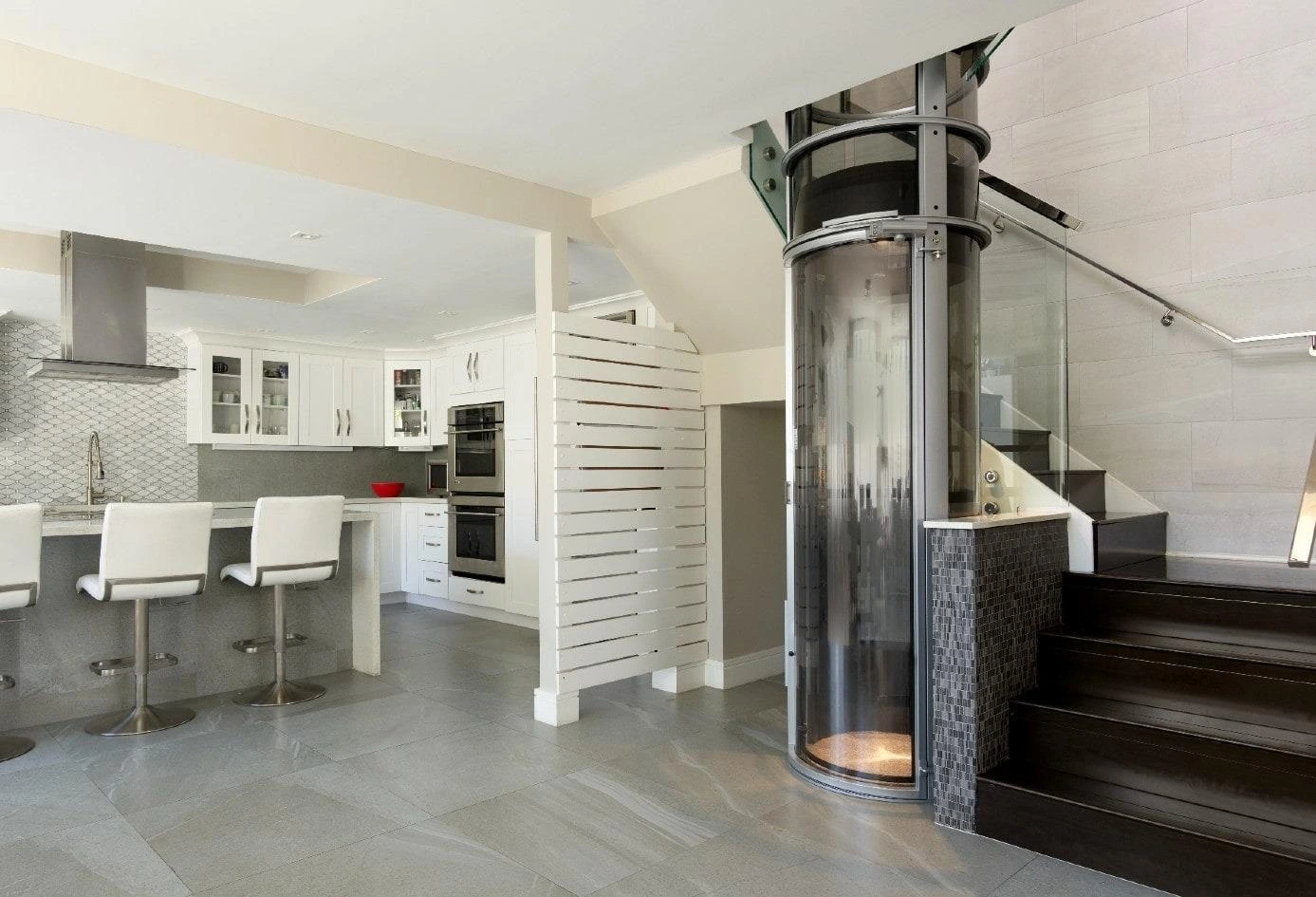
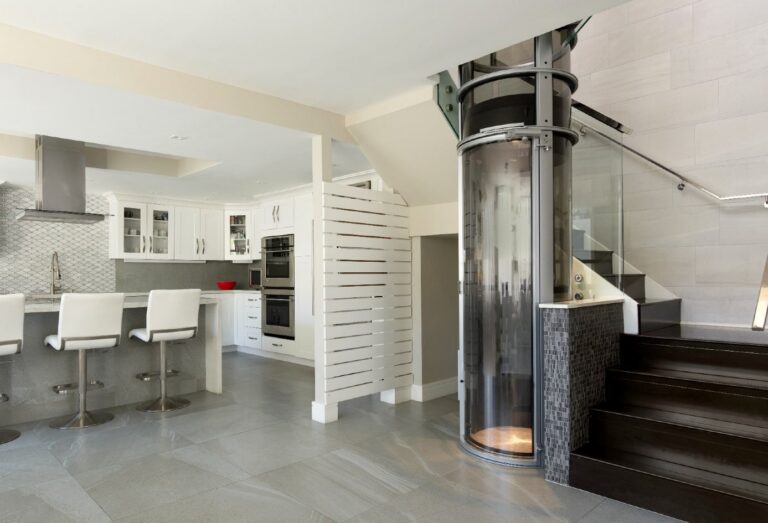
A modern residential elevator does not read that way. It reads like an upgrade. It belongs in the same mental category as a renovated kitchen, a sunroom, a wine cellar. It is architecture, not equipment. And that single reframe is what unlocks the conversation your family has been circling for months.
Surveys consistently show that roughly 90% of adults over 65 prefer to age in place at home rather than relocate to a nursing home or assisted living. Yet very few homes are built to actually support that preference. The barrier is almost never the house itself. The barrier is the staircase. Residential home elevators remove that barrier without asking your parents to accept a new identity in exchange, which is why they matter so much for aging in place.
Key Benefits of a Home Elevator for Aging Parents
Before the conversation can land, it helps to know what the actual benefits are, in language that is honest with your parent rather than pitched at them.
The key benefits break down into four categories:
- Safety. Falls on stairs are among the leading causes of injury for older adults, and the risk climbs sharply after 75. Home elevators remove the single most dangerous feature in a multi-story home, which lets your parent navigate stairs safely by not having to navigate them at all.
- Independence. Access to every floor means your parent can keep doing laundry, keep working on the project in the basement, keep sleeping in the primary bedroom. The daily routines that make a house feel like home stay intact. For many aging adults, that is what greater independence actually looks like.
- Convenience. Elevators carry what stairs make harder. Groceries. Laundry baskets. A grandchild. Later, if it ever comes to that, a wheelchair or walker with a caregiver beside them. Everyday tasks stop being negotiations with the staircase.
- Smart investment. Multi-story accessibility is increasingly a feature buyers look for. A well-designed home elevator can increase property value and widen the pool of future buyers. For a family weighing a one-time home modification against years of long-term care costs, the math usually favors the elevator.
None of these benefits require your parent to describe themselves as declining. They are benefits anyone with a two-story house would want.
How to Actually Start the Conversation
If the direct approach has not worked, try these four moves instead.
Lead with the house, not the body. Ask a different question. Something like, “Have you ever thought about what you would change about this house if you were planning to stay here forever?” That question invites planning ahead. The question you have probably been asking, some version of “are you okay on those stairs,” invites defensiveness. One opens a door. The other closes it.
Let them bring up the stairs themselves. Your parents already know the stairs are harder than they used to be. They think about it every day. Avoiding upper floors, pausing on the landing, moving everyday tasks to one floor are all early signs of mobility challenges that your parent has probably already noticed in themselves. If you give them a frame that assumes they will be living in this house for decades, the stairs come up on their own. Then you are problem-solving together instead of delivering news they did not ask to hear.
Put the elevator in the same category as every other upgrade they have made. If they renovated the kitchen in 2015 or added a deck in 2019, this is the same kind of decision. A capital improvement to a house they love. Not a medical intervention. For context on that framing, you might point to how home elevator value and property impact works for houses in their neighborhood.
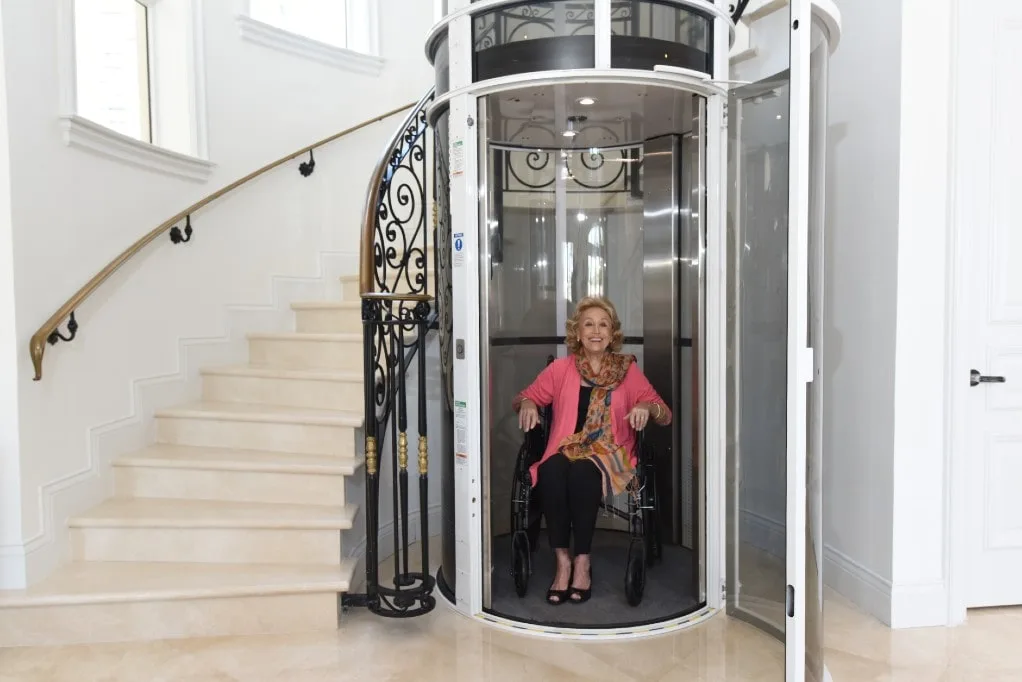
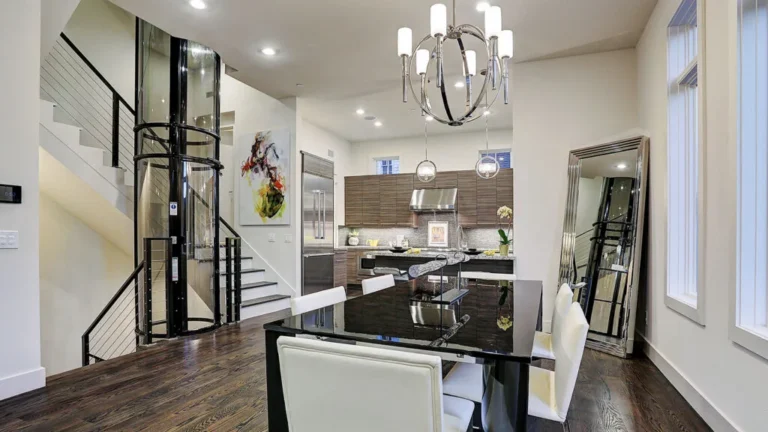
Show them what one looks like. Most parents picture a stair lift when you say the word elevator, and they already know they do not want that. Pull up a photo. Send a short video. Modern home elevators for seniors are often panoramic, glass-walled, and designed to be seen. The visual breaks the mental image. Once they see it, the conversation shifts, often inside a single sitting.
And if the conversation still stalls after all of this, drop it for six months. Let the house keep making the argument on its own. You will be surprised how often your parent brings it up next.
Choosing the Right Model: Residential Elevator vs. Platform Lift vs. Stair Lift
Not every mobility solution is a home elevator, and part of a stress free decision is understanding why one shape is the best solution for a given home and another is not.
Stair lifts are battery-operated chairs mounted to rails along a staircase. They are the cheapest option and can be installed quickly. They also cannot carry a wheelchair, a walker, or a caregiver, and cognitive changes can make them unsafe to use over time. For aging parents who may need a mobility device later, a stair lift solves today’s problem but not tomorrow’s.
Platform lifts are a practical solution for short vertical runs or split-level homes, especially where wheelchair users need to move between two levels without enough room for a full elevator shaft. Platform lifts are ideal for homes with limited space and for improving accessibility where a full home lift will not fit.
Residential elevators are the most future-proof choice for homes with multiple levels. They move your parent, a caregiver, and a mobility device together, which no stair lift can do. For families committed to aging in place in a multi-story home, a home lift is usually the right model, not because it is the most expensive but because it is the only option that still fits in ten years.
PVE’s lineup includes four residential elevators: the PVE30 (single passenger), the PVE37 (multi-passenger, fits most families), the PVE52 (wheelchair accessible, room for a caregiver), and The Cube (two passengers, compact square cabin, not wheelchair accessible). Picking the right model is less about budget and more about which scenario the elevator needs to support five and ten years from now.
Why the Aesthetic Difference Matters More Than It Sounds
A stair lift costs less. A platform lift takes less planning. On a spreadsheet, those are the easier choices. But the spreadsheet misses what actually drives a decision like this one.
What makes a parent say yes is whether the solution lets them keep seeing themselves the way they always have. A visible medical device on the staircase changes how they feel in their own house every time they walk past it. A panoramic vacuum elevator tucked into the corner of the living room reads as design. One tells a story about decline. The other tells a story about taste.
This is why the PVE conversation lands differently than the stair-lift conversation. It is not really about features. It is about identity. A pneumatic vacuum elevator typically installs in two to three days, requires no pit, no machine room, and no major structural work, which means the install itself does not become a weeks-long visible admission that something had to be done. The house gets quietly better, and your parent gets to keep being the person who lives there.
Safety Features That Matter for Older Adults
If your parent is open to the conversation, the next question they will ask is about safety. This is the one place in the conversation where the clinical answer is the right answer, because safety features are what let adult children stop worrying.
Modern home elevators include multiple layers of protection designed around the realities of older adults using them every day. Door interlocks keep the cab from moving while a door is open. Automatic door openers remove the need to pull a heavy door, which matters for anyone with arthritis or reduced grip strength. Safety sensors stop the cab if something is in the door opening. Certified braking systems and controlled descent to the lowest landing in a power loss mean your parent is never stranded between floors.
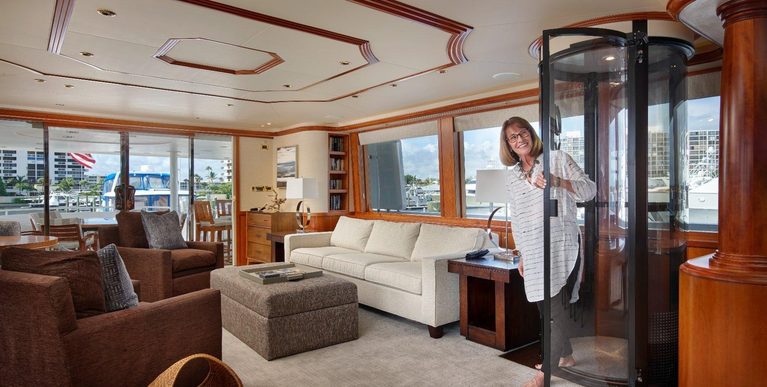
Pneumatic vacuum models have an additional advantage: 360-degree visibility through the transparent cab. A caregiver, spouse, or adult child can see your parent inside the elevator at all times, which quietly removes a whole category of worry.
Traditional home elevators can last approximately 20 years with proper maintenance, and routine maintenance for a pneumatic system is modest. For aging parents who want to remain in the home they love, the safety features are what make the decision feel settled rather than provisional.
How a Home Elevator Supports Daily Life for Aging Adults
Aging in place sounds like a lifestyle choice, but in practice it is a set of small daily routines that either hold together or quietly collapse. A home elevator is the thing that keeps them holding together.
With access to every floor, your parent keeps the full use of the house. Laundry stays where it has always been. The primary bedroom does not have to move downstairs. Hobbies that live in the basement or the attic stay accessible. Grandchildren can still be hosted upstairs for sleepovers. These are small things that add up to a life, and the elevator protects all of them at once.
Home elevators also provide a long-term accessibility solution that paired home modifications cannot match. Grab bars help in the bathroom. Non slip flooring reduces risk at the stair top. Better lighting improves safety at night. But none of those modifications solve the staircase itself. The elevator does.
For older adults who want to grow older in a familiar environment surrounded by their own things, that is what quality of life in the senior years actually looks like. Not a facility. Not a scaled-down version of the house with half the rooms shut off. The whole house, available every day.
Planning Ahead for Aging in Place
The adult child’s instinct is to wait until there is clear evidence. A fall. A hospital visit. A doctor who finally says it out loud. The problem is that by the time any of those arrive, the conversation has to compete with fear, and fear closes doors that patience could have kept open.
Planning ahead for future mobility needs is essential when considering home modifications. Many families wait too long because the right moment never announces itself clearly. There is no obvious milestone. There is only a slow pattern of avoidance that your parent has already noticed in themselves, long before you brought it up.
The honest timing is this. The right moment to talk is anytime you have started noticing. Not noticing a crisis. Noticing a pattern. The pause before the first step up. The sofa that has slowly become a second bed. The hobby in the basement that quietly stopped. The way daily life gets quietly rearranged to avoid the stairs.
If you have noticed, it is time to talk. Not because something is wrong. Because planning from a calm place produces better decisions than planning from a hospital waiting room, and because it is the move that lets aging parents stay home longer in the environment they know best. Many older adults who make this decision early describe the elevator less as a safety upgrade and more as the thing that let them keep the house.
Frequently Asked Questions
What if my parent refuses to even discuss it?
Drop it. Come back in six months with a different frame. A direct refusal usually means the conversation felt like an accusation. Next time, open with the house instead of the body. Many seniors respond differently when the goal is preserving daily life and autonomy rather than forcing a change. You will often get a very different response to the same underlying question.
Won’t they feel like we’re pushing them out of their own decision?
Only if you make the decision for them. Bring options, not conclusions. Let them pick the model, the location, the finish, and the timing. Autonomy is the whole point of the conversation, and it has to be the whole point of the process too.
Is a home elevator overkill if they’re still mobile?
It is the opposite. Installing one while they are still mobile means they get to choose it from a position of strength, not necessity. It also future-proofs the house if a wheelchair or other mobility device enters the picture later, which is a scenario a stair lift cannot cover. That changes how they feel about having it, and it changes how they feel about themselves living in a house that has one.
What if the house can’t accommodate one?
Most homes have enough room. Shaftless pneumatic models fit into corners, closets, and open stair wells in houses built from the 1970s onward. For tighter layouts, a platform lift can be a solid option, especially where wheelchair access matters most. Through-floor lifts can also be installed indoors and outdoors for improving accessibility across multiple levels. An in-home assessment from a PVE residential elevators specialist usually confirms feasibility in under an hour, and the conversation moves from “is it possible” to “where would you want it” much faster than most families expect.
How much maintenance does a home elevator need?
Residential lifts need routine maintenance to run safely for decades. For pneumatic vacuum models, the maintenance footprint is modest because there is no hydraulic fluid, no pit, and no machine room. An authorized PVE dealer handles scheduled service, and most homeowners find the cost and frequency comparable to maintaining a high-end appliance rather than a mechanical system.
Can home modifications like elevators qualify for financial assistance?
In some cases, yes. Veterans’ benefits, state-level aging-in-place grants, and certain long-term care policies may offset part of the cost of installing home elevators or other accessibility modifications. The specifics vary by state and situation. A PVE dealer can point you to the right questions to ask, and a certified aging-in-place specialist is often the best resource for navigating the paperwork.
The Conversation Underneath the Conversation
The talk about mobility is really a talk about who gets to decide what happens next. When the solution requires your parent to accept a new identity in order to accept the help, the answer is almost always no. When the solution lets them stay the person they have always been in the house they have always loved, the answer gets easier.
That is the real case for a home elevator. Not safer stairs. A conversation that does not require a confession.
Was this article helpful?
Get in touch to schedule a call back
One of our lift experts will answer all of your questions.
Prefer to talk now? (877) 691-0357