Skip to content >

- Key Takeaways
- What Is a Glass Home Elevator Today?
- Why Homeowners Choose Glass Home Elevators
- Types of Glass Home Elevators & Drive Systems
- Glass Elevators in Existing Homes vs New Construction
- Planning Your Glass Home Elevator: Design, Space & Technical Basics
- Cost, Operation & Maintenance of Glass Home Elevators
- What Should You Consider Before Choosing a Glass Home Elevator?
- Design Inspiration & Working with PVE
- FAQ: Glass Home Elevators & Pneumatic Vacuum Elevators
A glass home elevator uses transparent panels (polycarbonate, acrylic, or tempered glass) instead of solid walls, turning vertical travel into a panoramic experience. Installed costs range from $35,000 to $100,000+ depending on the drive system, model size, and structural work required. Pneumatic Vacuum Elevators (PVE) offers shaftless, pitless models with 360-degree views that install in two to three days.
Key Takeaways
- PVE specializes in panoramic, shaftless glass home elevators powered by air pressure, engineered for both new construction and retrofits in an existing home.
- These pneumatic vacuum elevators require no pit and no machine room, and professional installation typically takes just two to three days once site preparation is complete.
- The vacuum-powered drive system is eco-friendly and low-maintenance, delivering 360-degree panoramic views through clear glass-like panels that become a focal point in any living space.
- Installed costs for PVE models commonly range from roughly $35,000 to $100,000+, with the final price shaped by model size, number of floors served, and structural prep work.
- Contact Pneumatic Vacuum Elevators for a personalized design consultation and quote tailored to your home’s interior and your specific needs.
What Is a Glass Home Elevator Today?
A glass home elevator is a residential elevator in which the cab, the shaft walls, or both are constructed from clear, structural glass or glass-like panels, giving riders panoramic views instead of staring at solid walls. Glass elevators have clear panels for panoramic views, creating a more open and modern feel that traditional elevators – fully enclosed by solid walls – simply cannot match.
There are three main types of glass home elevators available today: fully panoramic cylinders like PVE’s air-driven models, framed glass cabs inside a traditional shaft, and compact shaftless designs for tighter configurations. Modern glass elevators can be shaftless or pneumatic, and glass panels used in residential elevators should be laminated or tempered safety glass to meet safety standards. PVE’s vacuum elevators use clear polycarbonate or glass-like panels that achieve the same transparent look while remaining lighter and easier to retrofit. Glass elevators can also be customized with different wall designs, and they eliminate the bulky visual footprint of standard shafts – a critical advantage for homeowners who want elegance without sacrificing space.
Why Homeowners Choose Glass Home Elevators
Many homeowners select glass elevators because they blend ease of use with aesthetic appeal in multi-story homes. A residential glass elevator acts as a luxury architectural statement, integrating seamlessly into modern architectural designs while supporting mobility needs.
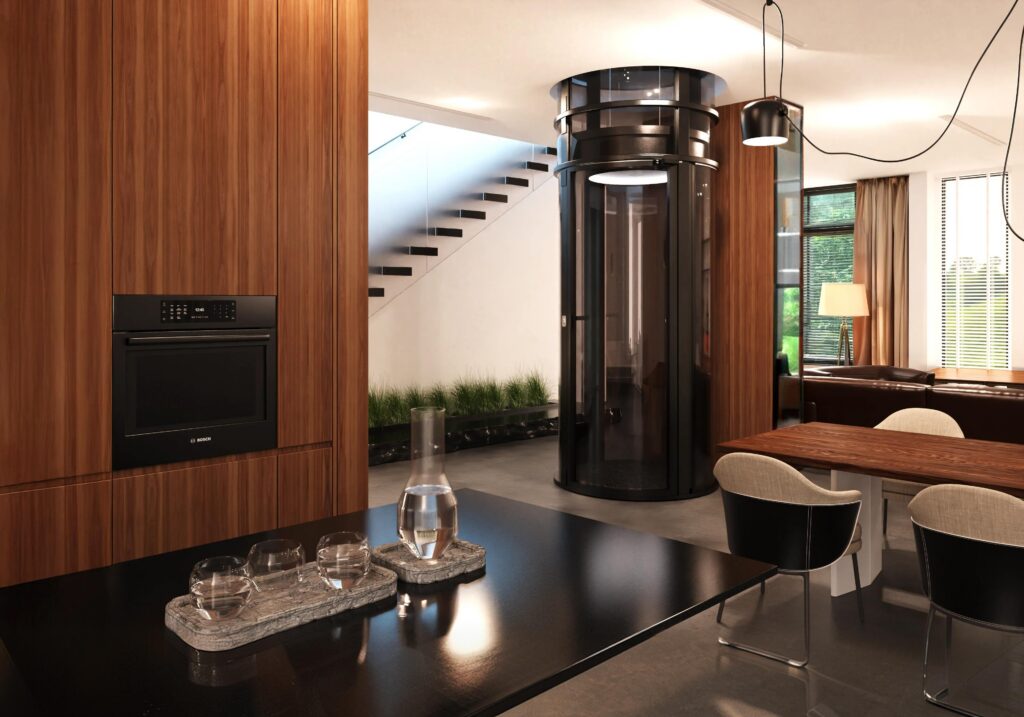
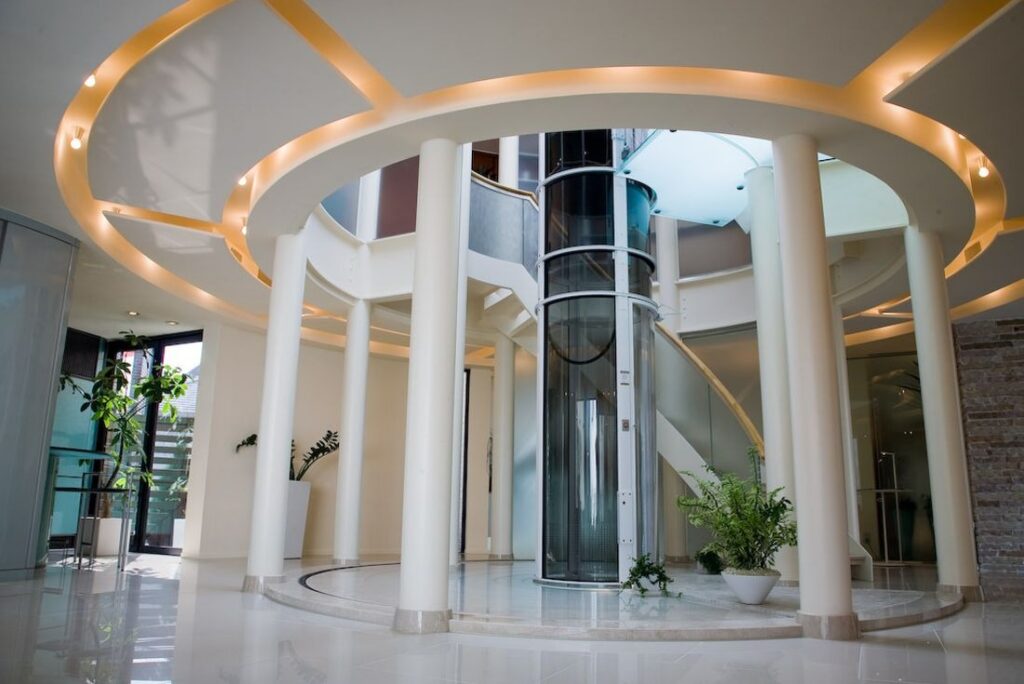
Glass walls let sunlight pass freely between floors, maintaining an open feel that avoids the claustrophobic sensation of a fully enclosed cab. They provide stunning panoramic views during rides and enhance the aesthetic appeal of homes – especially in open-plan living rooms, double-height foyers, and beside staircases where the elevator becomes an unmistakable design anchor.
For homeowners in their 50s through 70s, glass home elevators offer a way to future-proof a multistory residence for aging in place without compromising on unique style. Property value increases with high-end architectural upgrades like glass elevators, and real estate agents increasingly highlight them as a premium amenity. PVE’s vacuum glass elevator models combine all these benefits with a compact, self-supporting design that delivers convenience and wow factor in both new builds and renovations, enhancing perceived value and design cohesion across the home.
Types of Glass Home Elevators & Drive Systems
Glass elevators differ primarily by their drive system and the construction they demand. Understanding the distinction helps you choose the right home elevator for your floor plans, budget, and aesthetic goals. Here is a concise comparison:
- Hydraulic or traction systems with framed glass panels – robust, higher capacity, but need a shaft, pit, and often a machine room
- Shaftless rail-mounted glass lifts – compact, fewer floors, less panoramic coverage
- PVE cylindrical pneumatic glass elevators – shaftless, pitless, 360-degree views, integrated hoistway, minimal construction
| Feature | PVE Pneumatic (Vacuum Tube) | Traditional Shaft (Hydraulic/Traction) | Shaftless Rail-Mounted |
| Panoramic View | 360 degrees | Partial (glass cab walls only) | Partial (open sides or panels) |
| Pit Required | No | Yes | Varies (minimal or none) |
| Machine Room | No | Yes (or adjacent space) | No |
| Typical Install Time | 2-3 days | Weeks to months | Days to weeks |
| Installed Cost Range | $35,000-$100,000+ | $70,000-$100,000+ | $30,000-$60,000+ |
| Best For | Retrofits, modern homes, full panoramic look | New construction, high capacity, multi-story | Two-story homes, tight footprints |
Pneumatic Vacuum Glass Elevators (PVE)
Pneumatic Vacuum Elevators feature a fully glass circular shaft that doubles as the hoistway. Turbines at the top of the cylinder create a vacuum above the cab to lift it; controlled reintroduction of air lowers it using gravity, which means the air literally powers your ride. Glass elevator shafts provide unobstructed views of surroundings during operation, and pneumatic vacuum elevators require minimal construction for installation.
The practical benefits are significant: no pit, no machine room, and glass elevators may be installed without dedicated hoistways or machine rooms. Models range from the compact PVE30 single-passenger unit to the PVE52 wheelchair-accessible model with a 525-pound capacity and 32-inch entrance width. Energy use stays low – the cab descends by gravity, the turbines draw only 3–7 kW during ascent, and there are no hydraulic fluids to manage.
Traditional Glass Elevators with Separate Shafts
Some home elevators pair hydraulic or traction drive systems with glass cab walls or glass hoistways instead of opaque construction. These systems typically require a built-in shaft, a pit in the lowest floor, and a nearby machine room or dedicated equipment space. While they can look impressive, glass elevators often require less construction than traditional models suggest – but traditional shafted versions still involve longer timelines and higher costs than shaftless pneumatic glass elevators. PVE offers a streamlined alternative for customers who want glass aesthetics without the burden of a full hoistway build.
Shaftless and Rail-Mounted Glass Elevators
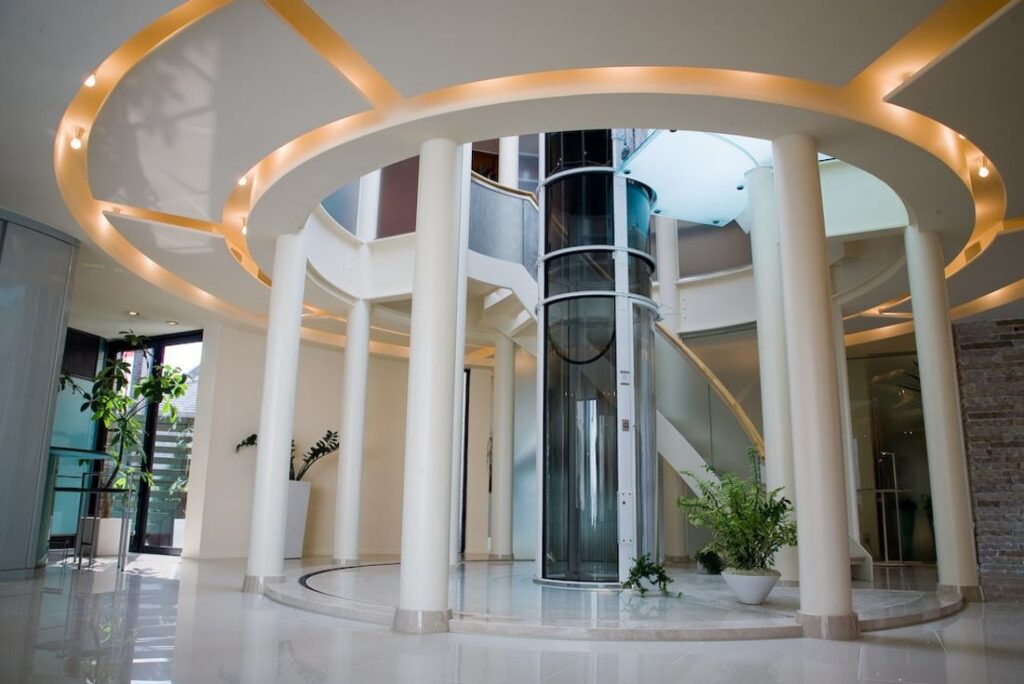
Shaftless home elevators do not require a full hoistway. They run on rails between floors with open sides or partial enclosures, often serving two-story homes. Shaftless elevators do not require a 6-8 inch pit, which simplifies installation. However, they may offer less panoramic visibility and less refined styling than PVE’s fully cylindrical design, which delivers the visual drama of a sculptural centerpiece plus the space-saving footprint homeowners expect.
Glass Elevators in Existing Homes vs New Construction
Many homeowners assume glass elevators belong only in new custom builds, but PVE’s vacuum models are specifically engineered for retrofitting into existing homes. Installation may involve cutting through floors and reinforcing frames, but because PVE units are self-supporting and need no pit or machine room, they avoid major excavation and accommodate tight timelines.
In new construction, architects can design around a central glass home elevator from the start – aligning floor openings, lighting, and circulation so the elevator becomes a functional design anchor. Installation of glass elevators requires structural preparation and safety testing regardless of scenario, and local building codes dictate construction and installation requirements for glass elevators, so early permitting conversations are essential.
A practical example: a three-story retrofit in a 1990s Florida home was completed in under a week of on-site work, including floor penetrations, electrical runs, and the two-day PVE installation itself.
Planning Your Glass Home Elevator: Design, Space & Technical Basics
Most elevators need six to seven feet of clear height at the top landing, and elevators require a footprint measuring three to five feet wide – dimensions that PVE’s circular models handle efficiently in smaller existing homes. PVE vacuum elevators support up to five stops with a maximum travel of roughly 50 feet, require no pit and no separate machine room, and their self-supporting frame means the primary structural work is creating floor openings and verifying local code compliance with your home elevator installation checklist.
For décor integration, coordinate trim rings, column color, and flooring transitions to match your home’s interior style – whether modern, coastal, or traditional. Symmetry Glass Home Elevators and other models allow for customizable glass finishes, so discuss options like frosted or tinted panels with your dealer. Exploring space-saving ideas for home elevators can help you identify the ideal placement within your floor plans.
Drive System & Performance Considerations
PVE’s drive system is an air-pump turbine assembly mounted at the top of the glass-like hoistway, with most equipment hidden from view. Ride quality is smooth, with moderate travel speeds of approximately 30–35 feet per minute – ideal for residential use where reliable operation and quiet comfort matter more than commercial speed. Compared with hydraulic and traction glass elevators, PVE systems produce less vibration, and while turbine noise is noticeable during ascent, descent is near-silent.
Cost, Operation & Maintenance of Glass Home Elevators
A glass home elevator is an investment that combines accessibility, convenience, and luxury design. Panoramic glass or glass-like home elevators from PVE commonly fall within a mid-to-high five-figure range – typically $35,000 to $100,000+ installed – while traditional shafted glass residential elevator projects can reach $70,000 to over $100,000+.
Primary cost drivers include cab size, total travel height, number of landings, choice of high quality materials, structural work in existing homes, permits, and regional labor rates. Operating costs stay low: PVE uses gravity for descent and efficient electric turbines for ascent, with no hydraulic fluids to replace.
Routine maintenance is needed for glass home elevator safety and operation. Elevator maintenance includes routine inspections, lubrications, and safety-checks on a manufacturer-recommended schedule. Cleaning and maintenance of glass panels is necessary to keep them spotless and presentable. Compared with many hydraulic systems, PVE has fewer moving parts, which can simplify upkeep. Request a detailed lifecycle cost overview from Pneumatic Vacuum Elevators or an authorized dealer before making your decision.
What Should You Consider Before Choosing a Glass Home Elevator?
- Privacy: Glass panels are transparent. Strategic placement away from bedrooms and bathrooms, or choosing frosted/tinted panels, addresses this. Many homeowners embrace the visibility in common areas like foyers and great rooms.
- Sun exposure: Direct sunlight through a glass elevator can create heat buildup. Discuss placement and panel tinting options with your PVE dealer, especially in south-facing installations.
- Cleaning: Transparent surfaces show fingerprints and dust more readily than solid walls. Most modern panels are treated for smudge resistance and clean easily with standard non-abrasive glass cleaner.
- Placement: A glass elevator reads best as an intentional design element. Work with your architect or interior designer so it serves as a focal point rather than an afterthought.
- Wheelchair access: Not all glass elevator models accommodate mobility devices. The PVE52 is engineered for wheelchair access with appropriate door openings and a 525-pound capacity. The Cube is a two-passenger square-cab model but is not wheelchair accessible. Confirm specific mobility requirements with your PVE dealer.
Safety & Reliability Features
Emergency systems are essential for the safe operation of glass home elevators. PVE units include multiple mechanical safety brakes, electromechanical door interlocks, and automatic emergency descent – if power fails, the cab descends safely to the lowest floor, interior LED lighting remains on via backup battery, and doors unlock per protocol. Glass elevators meet rigorous safety requirements to ensure reliable, worry-free use.
ASME A17.1 / CSA B44 safety standards govern residential elevators in North America, and PVE models hold certifications under the performance-based ASME A17.7 / CSA B44.7 code. Glass and glass-like panels are engineered for strength and impact resistance – they are not ordinary window glass. This makes PVE a reliable home elevator for families who prioritize both elegance and function.
Design Inspiration & Working with PVE
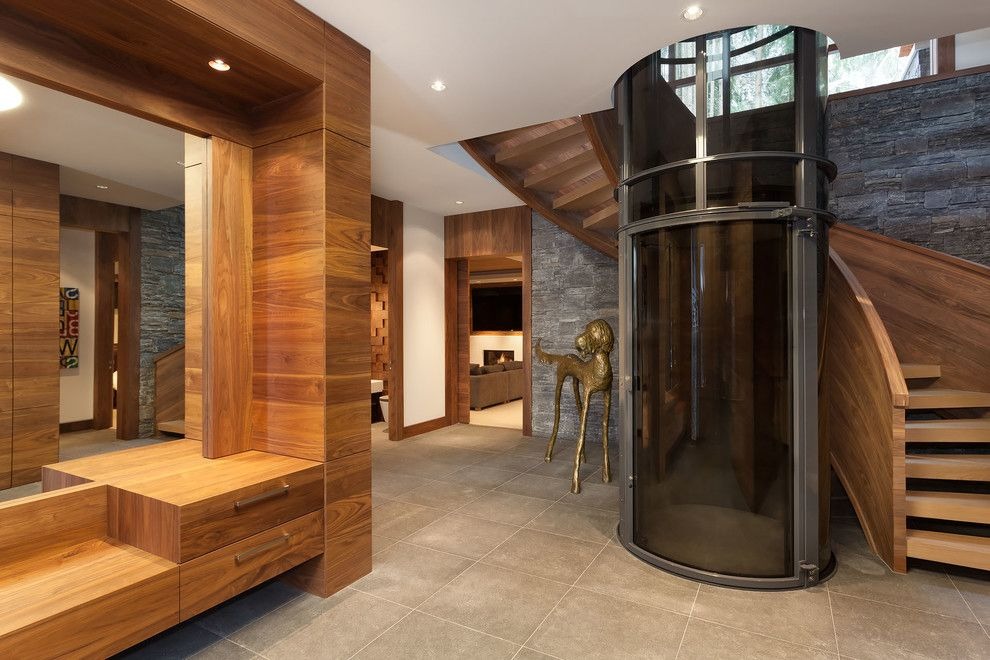
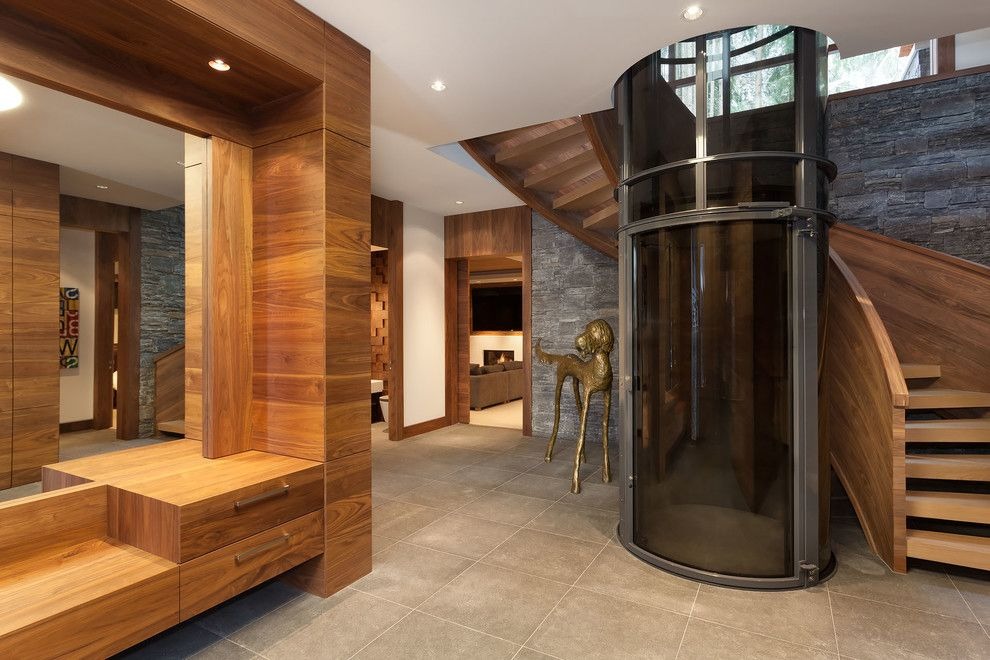
Picture a transparent column rising through a curved staircase, connecting a ground-floor foyer to an upper gallery while sunlight filters through every level. Glass cabs provide safe and independent movement between multiple levels, and glass elevators provide a panoramic view during rides that turns a simple trip between floors into an experience. A glass home elevator can create a sculptural vertical connection in a beachfront home, a penthouse corner, or a suburban family residence.
PVE offers customization in frame colors, trim styles, and coordinating lighting to enhance your home’s design elements. The typical process moves from initial consultation through site review, model selection, drawings and permits, then a two-to-three-day professional installation by an experienced team of authorized dealers.
Collaborate with your architect or interior designer so the glass elevator reads as an intentional focal point rather than an afterthought. To get started, visit Pneumatic Vacuum Elevators to explore available configurations and services, or contact the team directly for a design consultation.
FAQ: Glass Home Elevators & Pneumatic Vacuum Elevators
The following questions address common concerns not fully covered above, focused on real-world ownership and planning.
Can a glass home elevator be added to an existing home without major remodeling?
PVE’s pneumatic vacuum elevators are specifically designed to retrofit into existing homes without extensive demolition. They are self-supporting, require no pit, and need no machine room. Most projects require floor openings and electrical work but avoid reshaping the entire floorplan, making installation feasible even in homes built decades ago.
How private is a glass elevator inside a home?
While glass panels are transparent, strategic placement and interior design maintain privacy. Locating the elevator away from bathrooms and bedrooms – or choosing frosted or tinted panels – addresses concerns. Many homeowners embrace the visibility in common areas like foyers and great rooms, where the elevator operates as a design statement.
Are glass home elevators suitable for wheelchair users?
Certain larger-diameter PVE models, like the PVE52, are engineered to accommodate wheelchairs and mobility devices with appropriate door openings and a 525-pound capacity. Discuss your specific mobility needs, device dimensions, and turning clearances with PVE or an authorized dealer to confirm which model provides safe, comfortable access.
What ongoing maintenance does a pneumatic glass elevator require?
PVE elevators require periodic professional inspections and routine maintenance – checking seals, brakes, and control systems – typically on an annual or manufacturer-recommended schedule. Compared with many hydraulic systems, there are no fluids to manage and fewer components exposed to heavy mechanical wear, which can simplify upkeep over the elevator’s lifetime.
How long does it usually take from ordering a glass home elevator to riding in it?
Timelines vary by region and permitting, but many homeowners can expect several weeks to a few months from design approval to installation. The actual on-site installation of PVE units is typically completed in two to three days. Contact Pneumatic Vacuum Elevators early in your renovation or new-build planning so structural openings and electrical runs are ready when the elevator arrives.