Skip to content >

- Key Takeaways
- What Are Eco-Friendly Home Elevators?
- How Do Pneumatic Elevators Reduce Energy Consumption?
- What Is the Environmental Impact of Pneumatic Elevators?
- How Do Pneumatic Elevators Compare to Traditional Elevator Systems?
- Which PVE Model Fits an Eco-Conscious Home?
- Frequently Asked Questions
Eco-friendly home elevators reduce a home’s power consumption and environmental impact through lower energy use, cleaner operation, and simpler construction. Pneumatic vacuum elevators lead the category because they run on air pressure, use energy only during ascent, use no hydraulic oils, and require no pit, shaft, or separate machine room. PVE offers four models across the lineup, all designed for energy-efficient operation in an existing home or new construction.
Key Takeaways
- Pneumatic vacuum elevators use energy only during ascent; the ride down uses gravity and controlled airflow.
- PVE runs on a standard 220-volt single-phase supply, comparable to a home washer and dryer.
- Case data shows pneumatic vacuum systems can reduce elevator energy consumption by up to 90% compared with traditional hydraulic systems.
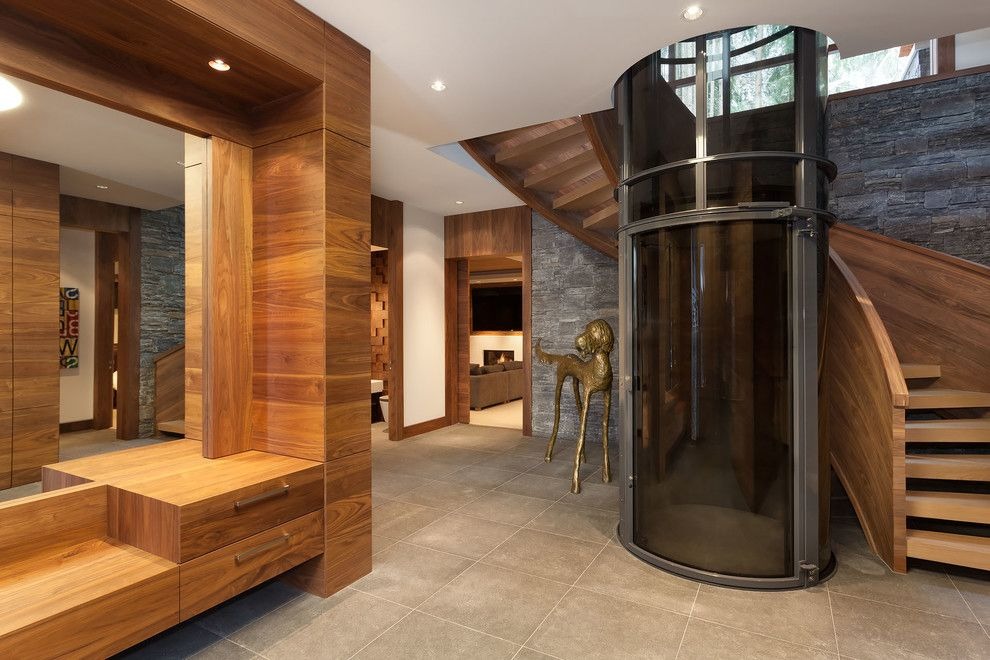
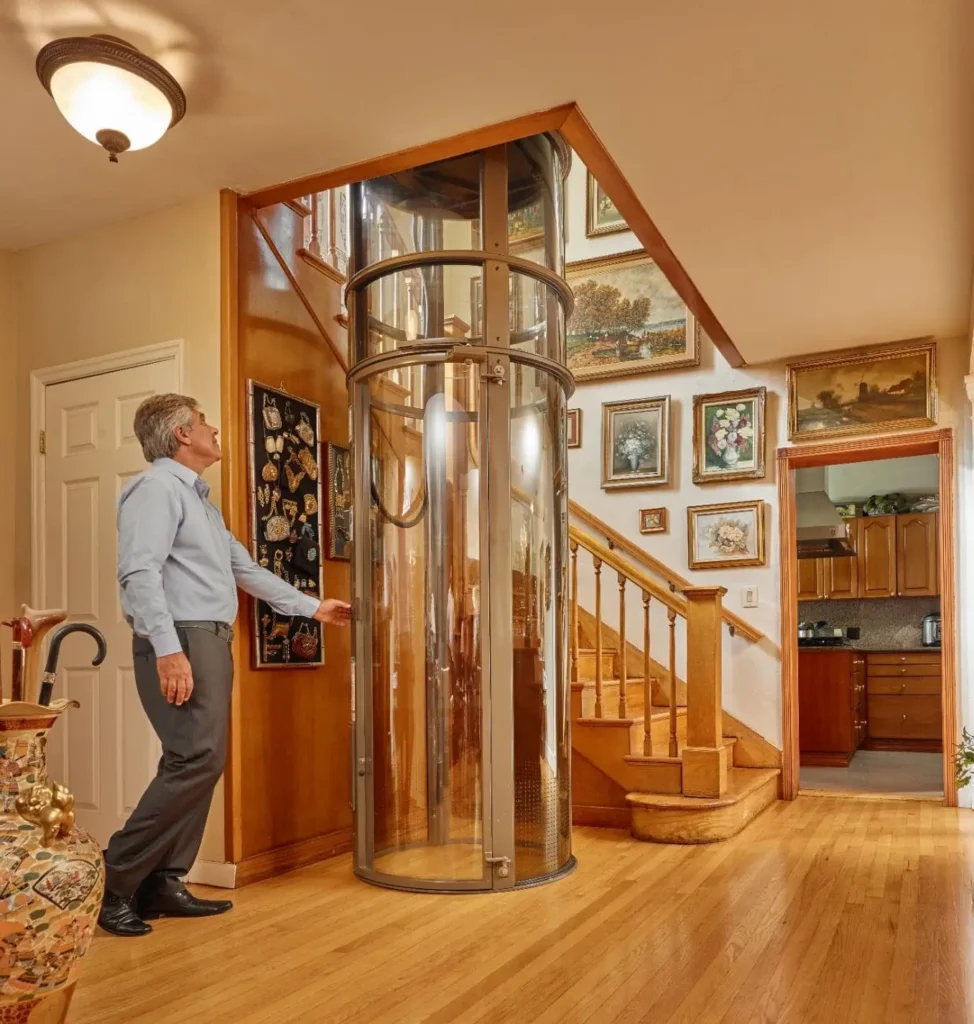
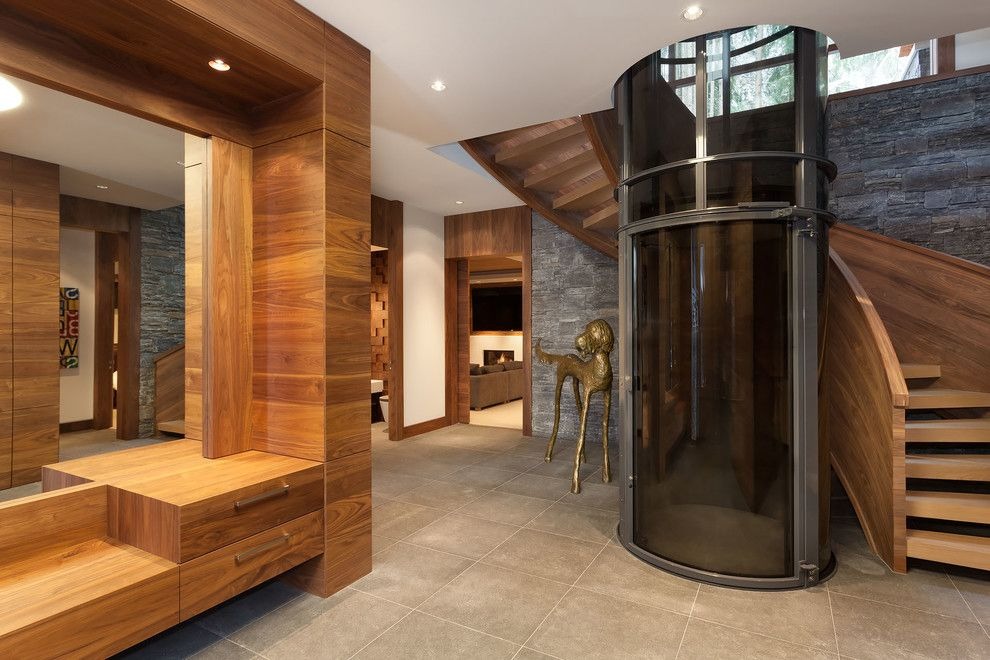
- No pit, shaft, or separate machine room means less construction waste, less floor space needed, and easier retrofit.
- PVE offers four models (PVE30, PVE37, PVE52, Cube), all air-driven with a solar-powered option available across the lineup.
What Are Eco-Friendly Home Elevators?
Eco-friendly home elevators are residential elevators designed to minimize energy consumption, reduce environmental impact, and simplify construction. The category includes pneumatic vacuum elevators, machine-room-less (MRL) traction systems, and regenerative-drive elevators that recover energy during operation. Each approach reduces the environmental footprint of vertical home transportation in a different way.
Pneumatic vacuum elevators are the most energy-efficient of these options for most residential applications. They use air pressure to move the cabin between floors and require no cables, pistons, or hydraulic fluid. For a full explainer on the underlying technology, see how a pneumatic elevator works.
Homeowners who prioritize sustainability alongside accessibility increasingly choose eco-friendly options over traditional hydraulic elevators, which use more power, rely on oil-based components, and require heavier construction to install.
How Do Pneumatic Elevators Reduce Energy Consumption?
Pneumatic vacuum elevators reduce energy consumption in three ways: they draw power only during ascent, they use gravity plus controlled airflow to descend, and they run on a standard 220-volt single-phase supply.
During ascent, a vacuum pump removes air from above the sealed cabin, creating the pressure differential that lifts the cabin between floors. During descent, air flow is controlled and the cabin lowers by gravity, using effectively no electricity. That descent behavior alone eliminates roughly half of the energy a traditional elevator draws over its operating life.
Additional features that support energy efficiency:
- 220-volt single-phase power supply, comparable to a home washer and dryer, plugged into standard household electrical
- LED cabin lighting with minimal power draw and long service life
- Idle-state power consumption near zero — the pump only runs when the elevator is in motion upward
- Smart-home compatibility for scheduling, monitoring, and integration with existing home automation
Case data on residential installations shows pneumatic vacuum elevators can reduce total elevator energy consumption by up to 90% compared with traditional hydraulic systems, depending on usage patterns and home layout.
What Is the Environmental Impact of Pneumatic Elevators?
The environmental impact of a pneumatic elevator is measurably lower than that of a traditional hydraulic or cable system across three dimensions: construction waste, operating emissions, and end-of-life materials.
Construction is where the largest difference shows up. A traditional home elevator typically requires excavation for a pit, framing for a hoistway, structural reinforcement, and a separate machine room. A pneumatic elevator is a self-supporting unit that rests on the finished ground floor and needs only localized cut-outs at upper landings. That reduces trucks on-site, raw materials used, labor hours, and construction waste sent to landfill.
Operation is where the ongoing footprint shows up. Pneumatic vacuum elevators use no hydraulic oil, no lubricants, and no harmful gases. Nothing needs to be replaced periodically, spilled, or disposed of. Descent uses gravity, so ongoing power consumption is low even with regular daily use.
End-of-life is where materials matter. PVE cabins are built primarily from recyclable aluminum and polycarbonate panels. Both are lightweight, durable, and recyclable at end of service life. The modular structure can also be disassembled, relocated, and reinstalled in another home — extending the useful life of the same equipment rather than manufacturing a replacement.
Combined, these three factors reduce the carbon footprint of a home elevator across installation, operation, and eventual disposal.
How Do Pneumatic Elevators Compare to Traditional Elevator Systems?
The clearest way to see the eco advantage is to compare pneumatic vacuum elevators against hydraulic and traction systems side by side.
| Factor | Pneumatic Vacuum (PVE) | Hydraulic | Traction / Cable |
| Power consumption | Ascent only, gravity descent | Continuous during travel | Continuous, counterweight-assisted |
| Operating fluid | None (air only) | Hydraulic oil | None (uses cables and grease) |
| Machine room | Not required | Required | Required (or MRL variant) |
| Pit / shaft | Not required | Pit and shaft required | Pit and shaft required |
| Floor space required | Compact cylindrical or square footprint | Larger footprint plus machine room | Larger footprint plus machine room |
| Construction impact | Minimal, 2-3 day install | Excavation, framing, structural work | Framing, structural work |
| Routine maintenance | Roughly every 5 years / 15,000 rides | Annually or semi-annually | Annually |
| Descent on power loss | Gravity lowering, no battery required | Battery backup or manual rescue | Battery backup or manual rescue |
| End-of-life materials | Aluminum and polycarbonate, recyclable | Mixed metals plus hydraulic fluid disposal | Mixed metals plus cable/counterweight |
| Safety features | Door interlocks, mechanical brakes, controlled descent | Door interlocks, backup power, buffer | Door interlocks, backup power, governor |
The comparison consistently favors pneumatic vacuum systems on the environmental factors. Traditional systems still have advantages in higher weight capacity and longer travel distances for larger multi-story buildings, but for residential use in a two- to five-story home, pneumatic elevators cover the vast majority of needs with less environmental impact. For a broader category breakdown, see our overview of types of home elevators.
Which PVE Model Fits an Eco-Conscious Home?
All four PVE models share the same eco-friendly design and can be paired with the solar-powered option. The right model depends on the number of riders, wheelchair accessibility needs, and available floor space.
- PVE30 — Single-passenger cylindrical model. Compact 30-inch footprint suits homes with limited space. Approximately 350 lb capacity.
- PVE37 — Two-passenger cylindrical model at roughly 37 inches in outside diameter. Accommodates one seated user with a light mobility aid, roughly 450 lb capacity.
- PVE52 — Wheelchair-accessible cylindrical model at about 52 inches in outside diameter. Fits most standard wheelchairs plus a standing companion, up to roughly 525 lbs.
- Cube — Wheelchair-accessible square-cab model that expands interior space and design options beyond the cylindrical footprint. Confirm current specs with an authorized dealer.
For homeowners running solar or planning off-grid capability, PVE offers a solar-powered configuration available across the model lineup. Details on how solar integration works, off-grid operation, and compatibility with existing home solar setups are covered in our solar-powered home elevator guide.
Customization options include exterior colors, in-cabin finishes, and lighting packages (standard LED or Premium Ceiling Package with mirrored finish). Every PVE is pre-built and factory tested at PVE headquarters in Miami, Florida before shipping. Ongoing service falls under a residential elevator maintenance schedule of roughly one service visit every five years or 15,000 rides. Home elevator cost varies by model, number of stops, and installation requirements.
Frequently Asked Questions
What eco-friendly home elevator technologies are available?
The main eco-friendly residential elevator technologies are pneumatic vacuum systems, machine-room-less (MRL) traction systems, and elevators with regenerative drives that recover energy during operation. Pneumatic vacuum elevators typically offer the lowest total energy consumption for residential use because they only draw power during ascent and use gravity for descent.
What makes pneumatic elevators eco-friendly?
Pneumatic elevators run on air pressure, use no hydraulic oils or lubricants, and require no pit, shaft, or separate machine room. During descent, they use gravity and controlled airflow rather than motor power. Combined, these features reduce operating energy consumption, construction waste, and long-term environmental impact compared with traditional hydraulic or cable systems.
How do pneumatic vacuum elevators compare to hydraulic elevators in energy use?
Pneumatic vacuum elevators run on a 220-volt single-phase supply and only consume power during ascent, while descent uses gravity. Traditional hydraulic elevators use energy during both ascent and descent and require a continuously pressurized fluid system. Case data on residential installations shows pneumatic systems can reduce total elevator energy consumption by up to 90% compared with hydraulic systems.
Are pneumatic elevators quiet to operate?
Yes. Pneumatic vacuum elevators have fewer moving parts than traditional systems and no hydraulic pump running throughout the ride. Quiet operation during both ascent and descent is one of the reasons they suit residential settings where noise carries between floors.
Can pneumatic elevators run on solar power?
Yes. PVE offers a solar-powered configuration compatible with all four models. The elevator can be integrated with an existing home solar setup or run as a stand-alone off-grid system. See the solar-powered home elevator guide for setup details and configuration options.
How much construction is required for a pneumatic vacuum elevator?
Pneumatic vacuum elevators are self-supporting units that rest on the finished ground floor. Installation typically takes 2-3 days and requires only localized floor cut-outs at upper landings. No pit, no traditional shaft, and no separate machine room. That significantly reduces construction waste and the floor space required compared with hydraulic or traction systems.
What are pneumatic vacuum elevators made from?
PVE cabins are built primarily from recyclable aluminum and polycarbonate panels. Both materials are lightweight, durable, and can be recycled at end of service life. The modular design also supports disassembly and reinstallation in another home, extending the useful life of the same equipment.