Skip to content >

- DIY Home Elevator Safety: What Can Actually Go Wrong
- Building Codes, Permits, and Liability for DIY Elevators
- What Building a DIY Elevator Actually Involves
- Alternatives to DIY: Exploring Safer Options
- What Counts as "DIY" and What Doesn't
- Cost Considerations: Beyond the Initial Price Tag
- Why a PVE Elevator Is the Closest Thing to a DIY-Friendly Install
- Should You Build a DIY Home Elevator?
- DIY Home Elevator FAQs
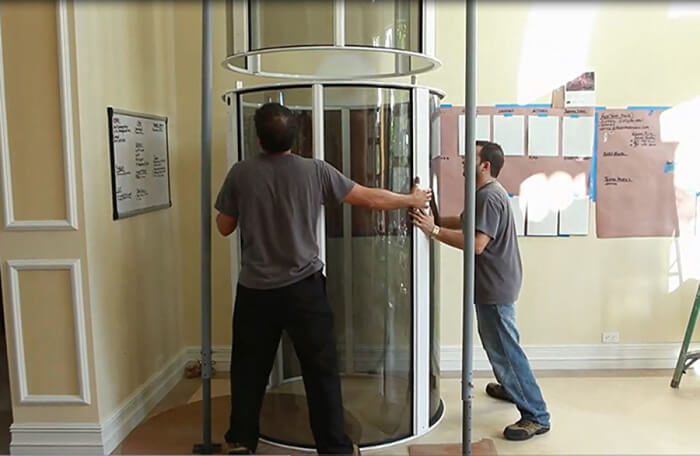
Searching “DIY home elevator” usually means one of two things: you want to save money, or you want to avoid the construction mess of a traditional elevator install. Both are reasonable goals. But before you buy a kit or start sketching plans, there are three things you need to know: what building code actually requires, what happens legally if someone gets hurt, and what a DIY elevator really costs once you add up materials, permits, and inspections.
This guide covers all three, plus a realistic alternative most people don’t know exists: a home elevator that installs in 2–3 days with almost no construction.
DIY Home Elevator Safety: What Can Actually Go Wrong
Before getting swept away by the DIY dream, it’s crucial to understand the inherent risks involved:
- Safety regulations: Most countries have strict building codes and safety standards for elevators. Violating these can lead to hefty fines and even legal repercussions.
- Complexity: Elevators involve complex mechanical and electrical systems. Improper installation or design can result in catastrophic failure, putting lives at risk.
- Professional expertise: While online tutorials are readily available, they cannot replace the knowledge and experience of qualified professionals like engineers and licensed electricians.
Building Codes, Permits, and Liability for DIY Elevators
Installing an elevator, whether DIY or professional, comes with a layer of legal complexities:
- Building permits: Obtaining the necessary permits is crucial, and the process can be lengthy and bureaucratic.
- Inspections: Your DIY elevator will likely undergo rigorous inspections by qualified authorities to ensure compliance with safety standards.
- Liability: In case of accidents or malfunctions, the legal responsibility falls entirely on you if you build the elevator yourself.
What Building a DIY Elevator Actually Involves
Beyond safety and legal considerations, building an elevator presents several practical challenges:
- Sourcing materials: Finding high-quality, reliable components that meet safety regulations can be difficult and expensive.
- Tools and equipment: Specialized tools and equipment are often required for construction and installation.
- Time commitment: Building an elevator is a time-consuming project, even for experienced DIYers.
- Hidden costs: Be prepared for unexpected expenses that can arise during the construction process.
Alternatives to DIY: Exploring Safer Options
If the challenges and risks of a DIY elevator seem daunting, here are some safer and more practical alternatives:
- Professional installation: Consider hiring a licensed elevator contractor to install a pre-manufactured unit. This ensures adherence to safety codes and provides access to professional expertise.
- Home lift: Explore smaller, platform-based lifts designed for accessibility purposes. These might be subject to less stringent regulations than full-fledged elevators.
- Stairlifts: For single-story level changes, stairlifts offer a more modern and readily available solution.
What Counts as “DIY” and What Doesn’t
While the previous sections emphasized the caution required for a full-fledged elevator build, it’s important to acknowledge that “DIY” can encompass a spectrum of involvement. Here are some nuances to consider:
- Light modifications: Some pre-manufactured home lifts allow customization options like adding enclosures or changing finishes. These minor modifications might be manageable for skilled DIYers with proper research and guidance from the manufacturer.
- Open-source designs: A handful of open-source home elevator designs exist, with detailed plans and instructions available online. However, these are typically complex projects requiring advanced engineering and mechanical expertise. Approaching such projects with extreme caution and consulting professional engineers is crucial.
- Collaboration with professionals: Partnering with qualified professionals like engineers and electricians can increase the feasibility and safety of a DIY project. They can guide your design, source materials, and ensure adherence to regulations while you handle specific tasks within your skillset. This approach requires careful planning, clear communication, and a thorough understanding of your capabilities and limitations.
Remember, even seemingly minor modifications or collaborations carry inherent risks. Always prioritize safety and never compromise on critical components or systems.
Cost Considerations: Beyond the Initial Price Tag
While cost savings are often a driving factor for DIY projects, consider the full financial picture:
- Unforeseen expenses: Material costs can fluctuate, unexpected issues might arise during construction, and professional help might be needed at various stages, all adding to the final cost.
- Long-term maintenance: DIY elevators lack the warranty and readily available maintenance support offered by professional companies. Regular inspections and potential repairs could add to long-term expenses.
- Resale value: While a professionally installed elevator can increase your home’s value, a DIY project might raise concerns for potential buyers and impact resale value.
Weigh these factors carefully against the potential cost savings of a DIY approach. Remember, true value lies in a safe, reliable, and well-maintained elevator that adds long-term benefits to your home.
Why a PVE Elevator Is the Closest Thing to a DIY-Friendly Install

Most people searching “DIY home elevator” aren’t really craving the construction project. They want to avoid what a traditional elevator install involves: cutting a shaft through their home, pouring a pit, building a machine room, running heavy structural work through finished floors.
A pneumatic vacuum elevator (PVE) skips all of that.
What a PVE install doesn’t require:
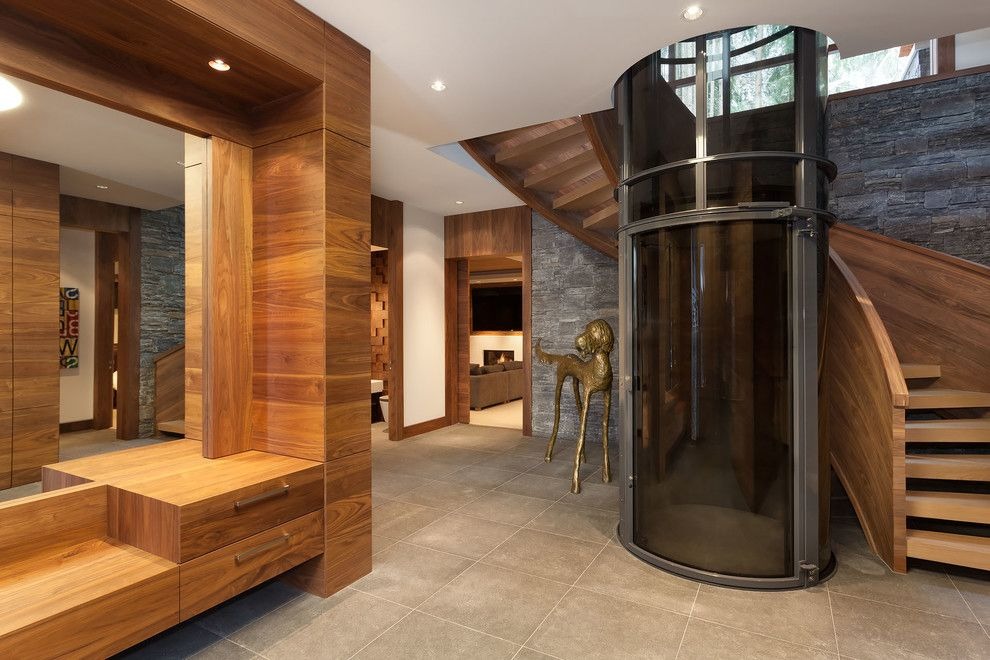
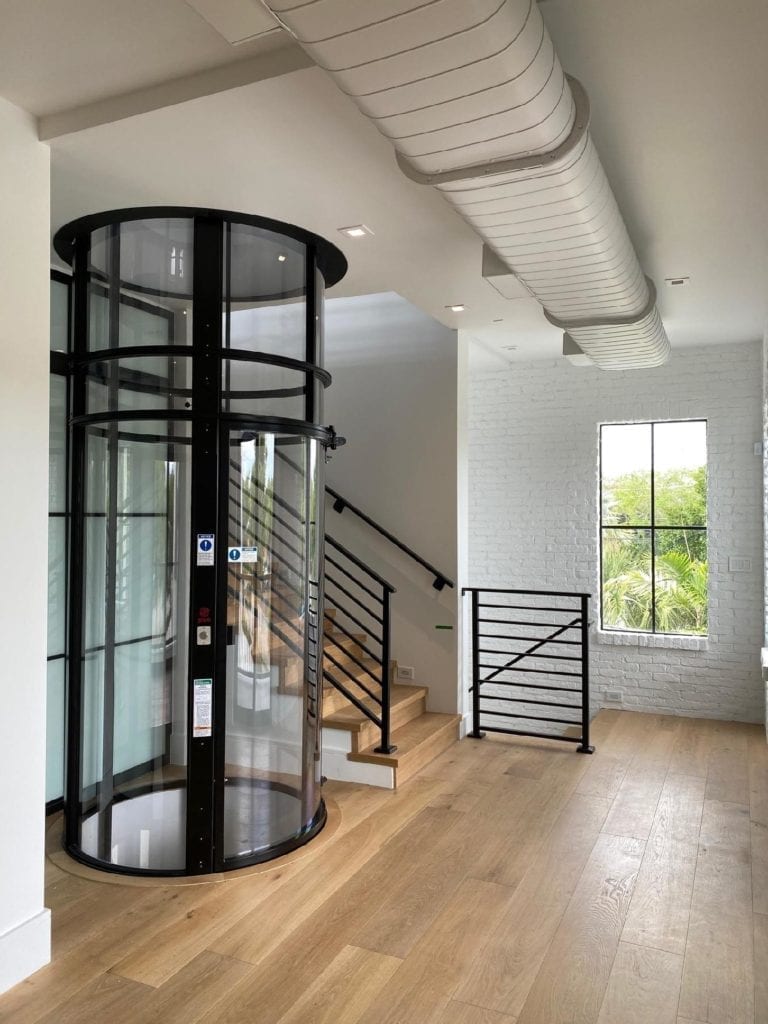
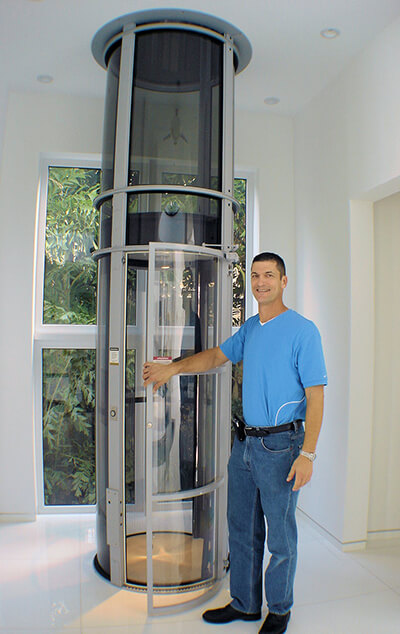
- No shaft. The elevator is a self-supporting cylinder that stands freely between floors.
- No pit. Nothing dug below the ground floor.
- No machine room. The vacuum turbines sit on top of the unit.
- No hoistway construction. No structural framing to build around the elevator.
- Minimal drywall work. Most installs only need a hole cut in the ceiling between floors.
What a PVE install does require:
- A licensed PVE installer (not you; this is the part that keeps it code-compliant and warrantied)
- A 220V outlet
- Typically 2–3 days on site
- A footprint as small as 30 inches in diameter (see the PVE30)
If the appeal of DIY was “I don’t want workers tearing my house apart for weeks,” a PVE install is genuinely the closest legitimate alternative. It’s not DIY, but it removes the exact construction burden that drives most people to search for DIY in the first place.
Learn more about PVE home elevators or explore pricing options.
Should You Build a DIY Home Elevator?
Building a DIY home elevator is a complex and risky undertaking. While it might seem like a cost-effective solution, the potential safety hazards, legal challenges, and practical difficulties should not be taken lightly.
Before embarking on this journey, thoroughly assess your skills, resources, and risk tolerance. Consider professional alternatives and consult with qualified professionals to ensure your home and loved ones remain safe.
Remember, your home is your sanctuary, and compromising its safety is never worth the potential cost savings. Make an informed decision, prioritize safety, and explore alternative solutions that best suit your needs and resources.
DIY Home Elevator FAQs
Building your own elevator might seem like an exciting project, but before you grab your toolbox, here are some essential answers to frequently asked questions:
Can I build an elevator in my house?
Technically yes, but with major caveats. Building a residential elevator yourself requires engineering expertise, strict adherence to ASME A17.1 and A17.7 safety codes, local building permits, and licensed electrical work. Most jurisdictions also require an inspection before the elevator can be operated legally. If anything fails, the liability falls entirely on you as the homeowner. Most DIY attempts end up costing more than a professionally installed compact system once permits, materials, inspections, and rework are added up. See what a home elevator actually costs for a realistic comparison.
What is the cheapest type of elevator?
The most affordable professionally installed residential elevator options are typically compact pneumatic or shaftless models, which start lower than traditional cable-driven or hydraulic elevators because they don’t require a shaft, pit, or machine room. Traditional systems run higher once you factor in the construction work. A DIY build often ends up costing more than a compact pneumatic install once permits, materials, and inspections are added up.
What can I use instead of elevators?
For single-floor level changes, stairlifts and platform lifts are the most common alternatives — they’re less expensive and don’t require the same permitting as a full elevator. For homes that need full multi-floor access without traditional elevator construction, a pneumatic vacuum elevator installs without a shaft, pit, or machine room, which makes it a practical middle option between a stairlift and a traditional residential elevator.
Which type of elevator is best for home?
The best type depends on your home’s construction, your accessibility needs, and how much construction disruption you can accept. Traditional cable and hydraulic elevators offer the largest cabin sizes but require a shaft, pit, and machine room. Pneumatic vacuum elevators require none of those and install in 2–3 days, which makes them well-suited for retrofits. Shaftless and compact models work best for tight spaces or aging in place.
Which elevator is safer?
Professionally installed elevators that comply with ASME A17.1 (traditional) or A17.7 (pneumatic vacuum) safety codes are significantly safer than any DIY build. Both codes require redundant safety systems including emergency brakes, backup power, cabin sensors, and manual lowering in the event of a power loss. Pneumatic vacuum elevators have an additional advantage: because they use atmospheric pressure differentials rather than cables, they cannot free-fall — if power fails, the cabin descends slowly to the ground floor by design.
How long does a home elevator last?
A professionally installed residential elevator typically lasts 20–30 years with annual maintenance. Pneumatic vacuum elevators have fewer moving parts than cable or hydraulic systems, which generally means less maintenance and longer service life. Annual professional inspections are required in most jurisdictions and recommended even where they aren’t.
What is the difference between a home lift and a home elevator?
The terms are often used interchangeably, but there is a technical distinction. A home lift usually refers to a smaller platform-based system designed for accessibility, often used for single-floor level changes or wheelchair access, sometimes without a full enclosed cabin. A home elevator refers to a fully enclosed cabin that travels between multiple floors and is regulated under residential elevator safety codes. In practice, “home lift” is more common in UK/European markets and “home elevator” in the US. Both terms may appear in PVE’s own materials depending on context.
How safe are home elevators?
When professionally installed and maintained, residential elevators are very safe. Modern residential elevators are built to ASME A17.1 or A17.7 codes with multiple redundant safety systems: emergency brakes, cabin door sensors, backup power, overload protection, and emergency communication. The most common safety issues with home elevators come from either DIY installations that skip code requirements or from professionally installed units that haven’t been maintained on schedule. Annual inspections and prompt repair of any issues keep a professional install operating safely for decades.
Are home elevators hard to maintain?
Not particularly, if you’re on a professional service plan. Most residential elevators need one annual inspection and occasional part replacements over their service life. Pneumatic vacuum elevators generally require less maintenance than traditional cable or hydraulic systems because they have fewer moving parts — no cables to replace, no hydraulic fluid to change, no machine room components to service.