Skip to content >

- Key Takeaways
- 1. Does a Home Elevator Add Value to Your Home?
- 2. How Does a Home Elevator Support Aging in Place?
- 3. How Does a Home Elevator Improve Daily Convenience?
- 4. Can a Home Elevator Reduce Fall Risk and Improve Safety?
- 5. Do Modern Home Elevators Fit Small or Older Homes?
- What Does Installing a Home Elevator Actually Involve?
- Which Reason Matters Most to You?
- Find the Right Home Elevator for Your Home
- Frequently Asked Questions
Quick answer: A home elevator is worth considering because it adds resale value, supports aging in place, improves daily convenience, reduces fall risk, and fits almost any home thanks to compact, no-shaft designs. For most homeowners, the biggest payoff is long-term independence and safety, not resale price alone.
Picture the moment you’re finally ready to list your house, or the morning your knees make it clear that stairs aren’t getting any easier. Home elevators used to only come up in that conversation for people building custom estates from scratch. That’s changed. Compact, pit-free, shaftless designs now mean a home elevator can go into an existing home, whether that’s a two-story family home or a multi story house, without a construction project that takes over your life for months.
Key Takeaways
- Not just resale value: a home elevator’s biggest returns are usually long-term independence and daily convenience, with resale appeal as a bonus.
- Fall prevention matters: the CDC reports over 3 million older adults are treated in emergency departments each year for fall injuries; removing stairs from daily movement addresses one common cause.
- No major construction required: compact pneumatic models install without a pit, shaft, or machine room, so most homes can accommodate one, usually in two to three days.
- Property value impact varies by market: treat it as one factor among several, not a guaranteed return.
- Safe during a power outage: pneumatic vacuum elevators descend gently on their own using gravity if the power fails, so no one is stranded between floors.
The reason any one homeowner installs one isn’t always the same. Some are thinking ahead to resale value and potential buyers. Others are planning for a parent who’s about to move in, or for themselves a decade from now. A few just want their Saturday grocery run to stop involving a flight of stairs. Here are the five reasons that come up most, and what each one actually looks like once the elevator is in your own home.
1. Does a Home Elevator Add Value to Your Home?
In many markets, yes. A home elevator is a premium accessibility feature that appeals to potential buyers planning for the future, including retirees, multigenerational families, and anyone with mobility needs. Like a renovated kitchen, it can widen your buyer pool and make a home stand out.
The size of that boost to home value depends on your local market and price point, so treat it as one factor among several rather than a guaranteed return. If resale value is your main driver, how a home elevator affects property value is worth understanding in more detail before you decide.
2. How Does a Home Elevator Support Aging in Place?
A home elevator removes stairs as a mobility barrier before that barrier becomes a problem. As physical needs change with age or after an injury, a trip up the stairs that once took no thought can become a real obstacle, especially in a multi story home where daily life happens across floors.
This matters for family homes with multiple generations under one roof, too. Grandparents, guests, and family members with limited mobility can move through the home independently, and unlike a stairlift, an elevator is a permanent, whole-home solution rather than a workaround for one staircase. Aging in place with a home elevator works best when it’s planned before mobility issues become urgent, not after.
3. How Does a Home Elevator Improve Daily Convenience?
Beyond long-term planning, a home elevator removes a daily hassle. Carrying groceries, laundry, luggage, or holiday decorations up and down stairs is one of the most overlooked chores in a multi story home, and an elevator cuts that time and effort to a single button press.
It’s also useful for busy family homes managing multiple schedules, or for anyone temporarily limited by an injury. Pneumatic models in particular are designed to be quiet, user friendly, and simple to operate, so they fit into daily routines without disruption.
4. Can a Home Elevator Reduce Fall Risk and Improve Safety?
Yes. A home elevator offers a stable, controlled way to move between floors, which lowers fall risk compared to stairs, especially for people managing arthritis, balance issues, or recovery from surgery.
Falls are a significant risk for older adults. The CDC reports more than 3 million older adults are treated in emergency departments each year for fall injuries. An elevator doesn’t eliminate that risk, but it removes one of the most common places falls happen in the home.
A common worry with elevators is what happens during a power failure. Pneumatic vacuum elevators are designed for this: if the power goes out, the cab descends gently on its own using gravity, so no one is left stuck between floors during a power outage.
5. Do Modern Home Elevators Fit Small or Older Homes?
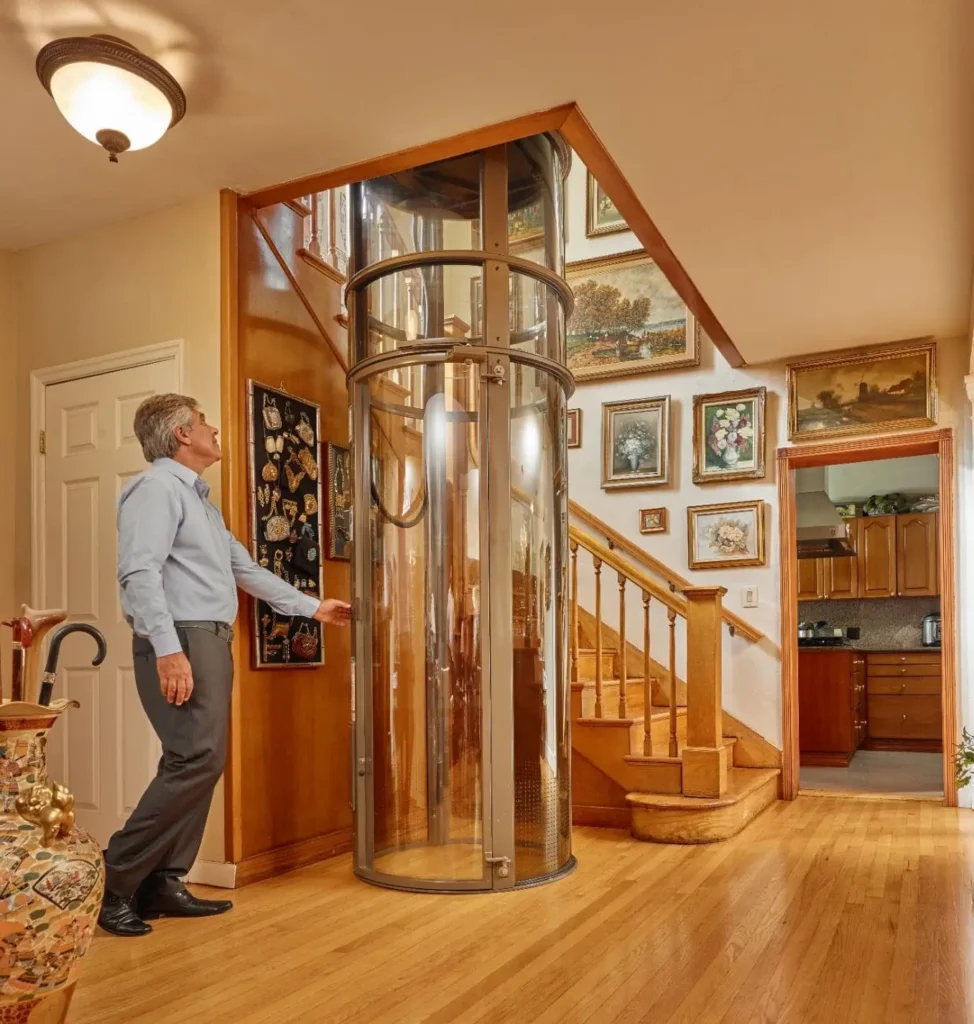
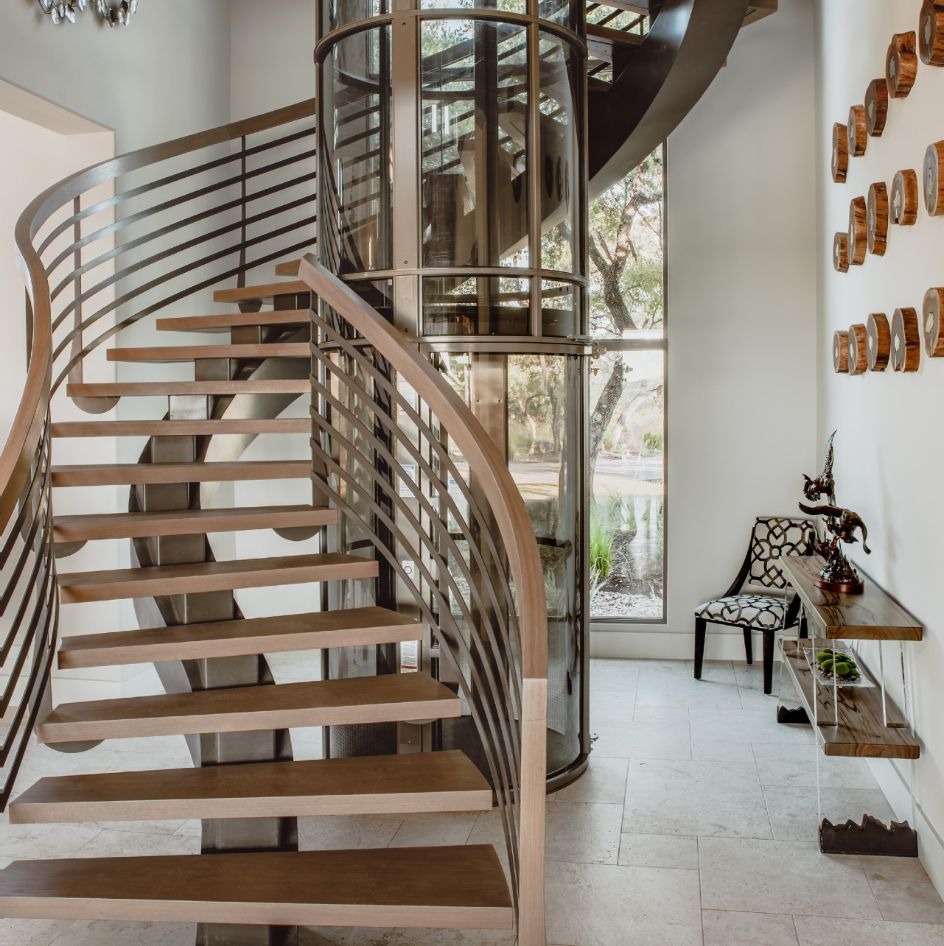
Yes, in most cases. Today’s residential in-home elevators are compact and fully customizable, and many, including PVE’s pneumatic models, install without a shaft, pit, or dedicated machine room. That means less construction and more flexibility for retrofitting an existing home, even one built on a single floor plan that’s being expanded upward.
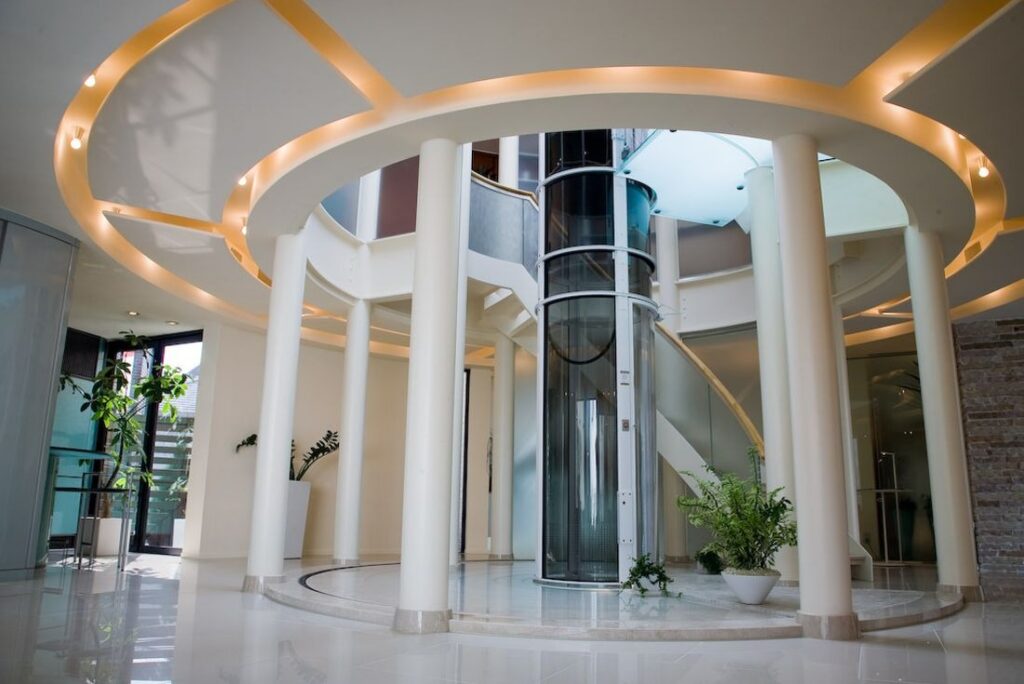
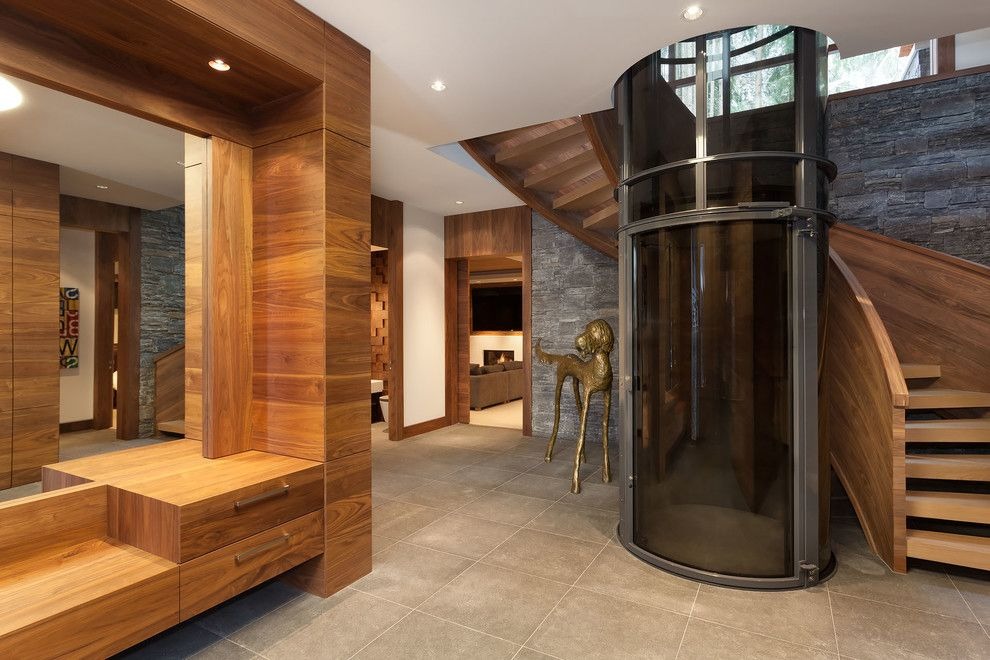
Customization options range from panoramic glass cabs to brushed metal and wood tones, so the aesthetic appeal can match your home’s design or stand out as a feature on its own. Several compact home elevator models are built specifically for homes with limited square footage, without sacrificing the shaft-free installation that makes retrofits possible.
What Does Installing a Home Elevator Actually Involve?
Home elevator installation is usually the part homeowners worry about most, and it’s often less disruptive than expected. Pneumatic vacuum elevators are pre-assembled and tested before they arrive on site, so installing an elevator this way typically takes two to three days rather than weeks of construction. There’s no shaft to build and no pit to dig, since the unit runs on air pressure differences instead of cables, a pump, or hydraulic fluid.
That means you can add an elevator to a house that was never designed for one, whether it’s a one floor ranch adding a second story or an existing home that already has three. Once installed, elevator maintenance is minimal compared to hydraulic or cable systems, since there’s no oil or hydraulic fluid to service. For most homeowners, this timeline and upkeep matter as much as the elevator itself when deciding whether the upgrade is realistic.
Which Reason Matters Most to You?
Most homeowners are motivated by more than one of these factors. Use this table to see which reason best fits your situation.
| Reason | What It Solves | Best For |
|---|---|---|
| Added home value | Appeals to potential buyers who prioritize accessibility and future-readiness | Homeowners who may sell within the next 5-10 years |
| Aging in place | Removes stairs as a mobility barrier as needs change over time | Homeowners staying long-term or caring for family members with limited mobility |
| Daily convenience | Cuts time and physical strain moving groceries, laundry, and belongings between floors | Busy family homes and multi story homes |
| Health and safety | Offers a stable, user friendly alternative to stairs | Anyone managing mobility issues, balance problems, or recovery from injury |
| Design flexibility | Installs without a shaft, pit, or machine room | Smaller homes, retrofits, and homes where major construction isn’t an option |
Find the Right Home Elevator for Your Home
Whichever reason brought you here, resale, an aging parent, a bad knee, or just wanting the laundry to stop being a workout, the right model comes down to your home’s layout, floor count, and budget. PVE builds four pneumatic models, from compact single-story lifts to larger multi-floor systems, and every one installs in two to three days without a shaft or pit.
Compare models to see which size and finish fit your space, or schedule a free consultation and a PVE specialist will walk through your home’s layout with you and recommend a model, no obligation.
Frequently Asked Questions
Does a home elevator increase property value?
It can. A home elevator is a premium accessibility feature that appeals to potential buyers planning for the future, which can widen your buyer pool. The size of the impact on home value depends on your local market.
How does a home elevator improve safety and reduce the risk of falls?
It offers a stable, user-friendly way to move between floors instead of using stairs, which is especially helpful for older adults, people with mobility challenges, or anyone recovering from an injury.
How does a home elevator support aging in place?
It removes stairs as a mobility barrier, letting homeowners move between floors independently as their needs change, without relying on a stairlift or moving to a single-story home.
Can a home elevator accommodate wheelchair users?
Many models can, though cab size varies by manufacturer and model. If accessibility for wheelchair users is a requirement rather than a nice-to-have, confirm interior cab dimensions and door width against the wheelchair before choosing a model.
How much does a home elevator cost?
Home elevator cost depends most on the model and any structural work your home needs, so it varies by size and level of customization.
How long does home elevator installation take in an existing home?
For pneumatic vacuum elevators, installation typically takes two to three days, since the unit is pre-assembled and tested before it arrives and doesn’t require a shaft or pit to be built.
Can a home elevator fit in a small house?
Yes. Compact pneumatic models are designed to fit in small homes or existing layouts with minimal construction, since they don’t require a shaft, pit, or machine room.