Skip to content >
- Residential Home Elevator Models
- 1. Shaftless Elevators: For Tight Spaces
- 2. Pneumatic Elevators: Modern and Space Efficient
- 3. Hydraulic Elevators: Smooth and Reliable Service
- 4. Panoramic & Glass Elevators: Style Meets Function
- 5. Mini Home Elevators: Compact and Convenient
- Customization Options for Your Home Elevator
- Choosing the Right Elevator Type for Your Home
- Conclusion
- FAQs
Looking for the right small residential elevator for your home? This guide highlights five popular residential elevator options, along with the features that make each one suitable for different home layouts and mobility needs.
Whether you’re considering a compact shaftless model or a pneumatic vacuum elevator, understanding how each system works can help you choose the right fit for your space, installation goals, and long-term use.
Residential Home Elevator Models
Residential elevators are transforming the way homeowners think about accessibility and convenience. Whether you’re planning a new build or looking to retrofit your existing home, today’s home elevators offer a blend of practicality, style, and increased property value.
With a wide range of residential elevators available, including shaftless elevators for tight spaces, sleek glass elevators for a modern touch, and advanced pneumatic vacuum models, there’s an elevator type to suit every floor plan, desired weight capacity, and budget.
Traditional hydraulic systems remain a reliable choice for those seeking a classic solution, while contemporary designs can turn your elevator into a stunning architectural feature. No matter your needs, installing a home elevator is a smart investment that enhances both mobility and the overall appeal of your house.
1. Shaftless Elevators: For Tight Spaces
Shaftless elevators are a practical option for homeowners with limited space who want a compact elevator design. Because they do not require a traditional shaft or deep pit, they are often used in retrofit projects and homes where major structural changes are not ideal.
In many cases, shaftless elevators can be installed within existing floor plans with less construction than traditional systems. Some shaftless models are also wheelchair accessible, depending on cabin dimensions and layout requirements.
They are available in a variety of cabin styles to match different home layouts and interior aesthetics.
Shaftless models:
- Fit easily into finished residences
- Work well in homes with limited available space
- Provide access between floors without relying on stair lifts
Shaftless elevators are typically designed to connect two floors, making them well suited for simple residential installations.
2. Pneumatic Elevators: Modern and Space Efficient
Pneumatic Vacuum Elevators (PVE®), also known as pneumatic elevators, are known for combining modern technology with space-saving options. These elevators use air pressure to lift and lower the cab, providing an eco-friendly alternative to traditional hydraulic systems. One of the main advantages of PVEs is their low maintenance and energy consumption, using very little energy during ascent and almost none during descent.
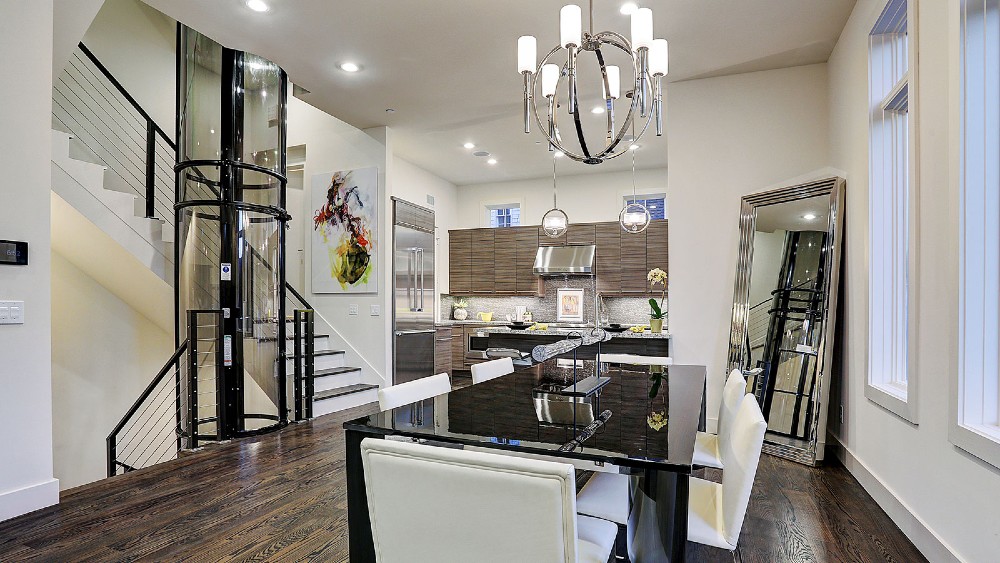
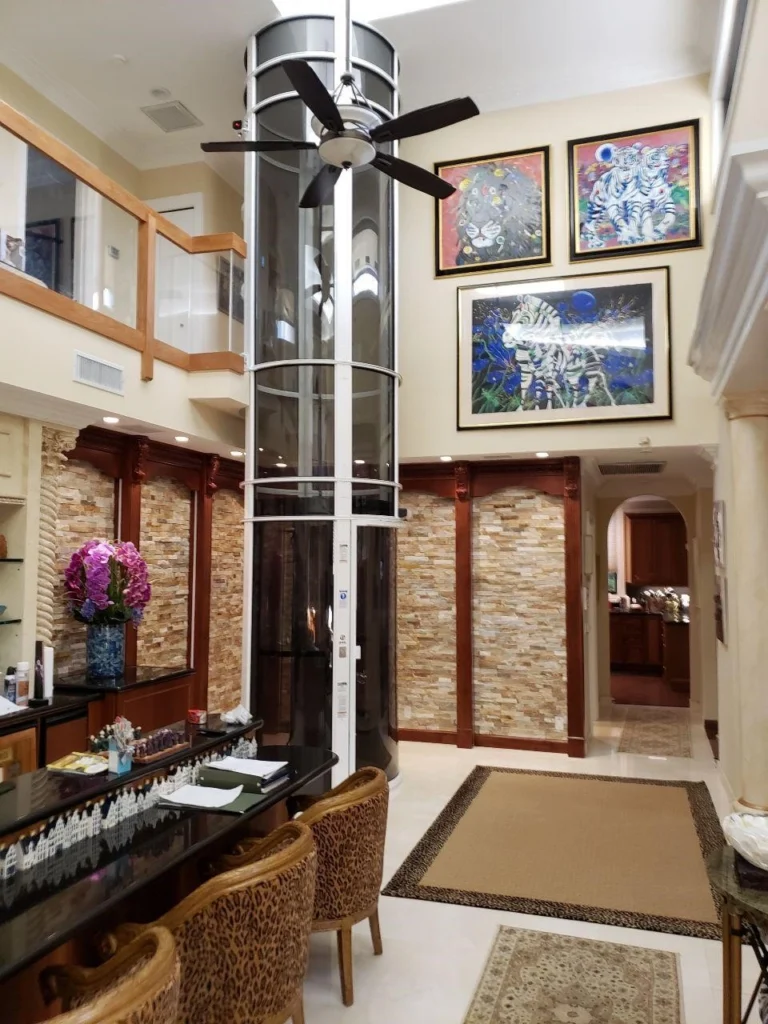
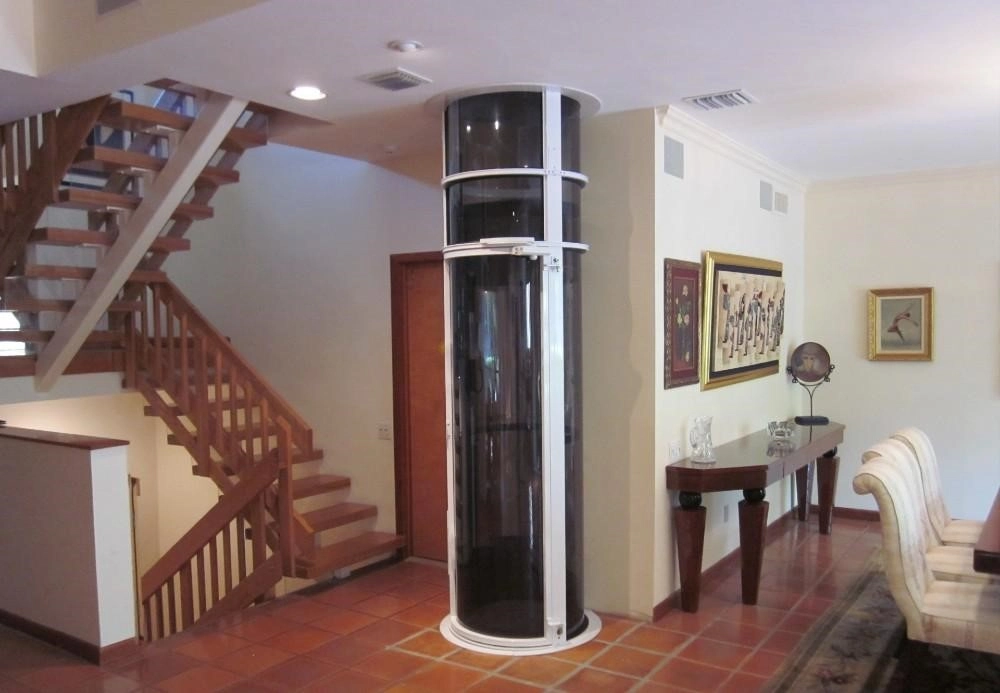
Unlike traditional home elevators that require a separate machine room and extensive construction, PVEs are self-supporting and can be installed with minimal disruption. Their sleek cylindrical design helps save space while complementing a wide range of home interiors. A pneumatic vacuum elevator offers both function and a modern appearance, making it one of the most space-efficient residential elevator options.
In addition, PVEs are well suited for small residences. PVE offers multiple home elevator models with different capacities and cabin sizes to fit a variety of residential needs. Each model has specific weight limits and dimensions that should be considered when selecting the right elevator for a home.
Pneumatic home elevators do not require a pit or machine room in many installations, which can simplify the installation process and reduce construction requirements. Their compact footprint makes them a practical option for tight spaces where traditional elevators may be more difficult to install.
PVEs are also energy efficient because they use an electric motor only during ascent, while gravity manages descent, helping reduce overall energy use and operational demands.
3. Hydraulic Elevators: Smooth and Reliable Service
Hydraulic elevators are known for smooth and reliable operation, making them a common choice for larger homes and low-rise residential applications. These systems use hydraulic power to provide a quiet, stable ride and often support higher weight capacities than some compact elevator models. Many hydraulic elevators also include safety features such as emergency lowering systems, backup power options, and door interlocks for controlled operation.
There are various hydraulic home elevator designs available, each with different features and installation requirements to suit different homes. However, because they typically require a pit, machine room, and additional structural work, they may not be the most practical option for every homeowner.
What to consider before your home elevator installation:
Installing a hydraulic elevator requires a hoistway, a pit, and a separate machine room for the pumps and fluid reservoirs. That means more construction and potentially higher home elevator installation costs. In comparison, winding drum elevators use an electric motor and drum system as an alternative to hydraulic mechanisms, offering different installation and layout requirements.
Despite being reliable, hydraulic elevators may not be the best fit for everyone. During a power outage, some elevator models, including hydraulic and winding drum elevators, may have battery backup or emergency lowering systems to ensure passenger safety. Hydraulic elevators provide smooth, reliable operation but still require extensive construction and additional space.
4. Panoramic & Glass Elevators: Style Meets Function
Homeowners who want both style and functionality will love glass and panoramic elevators. These elevators are known for their looks, providing an open and airy feel that can turn any house into a modern masterpiece. They not only serve a practical purpose but also become design centerpieces.
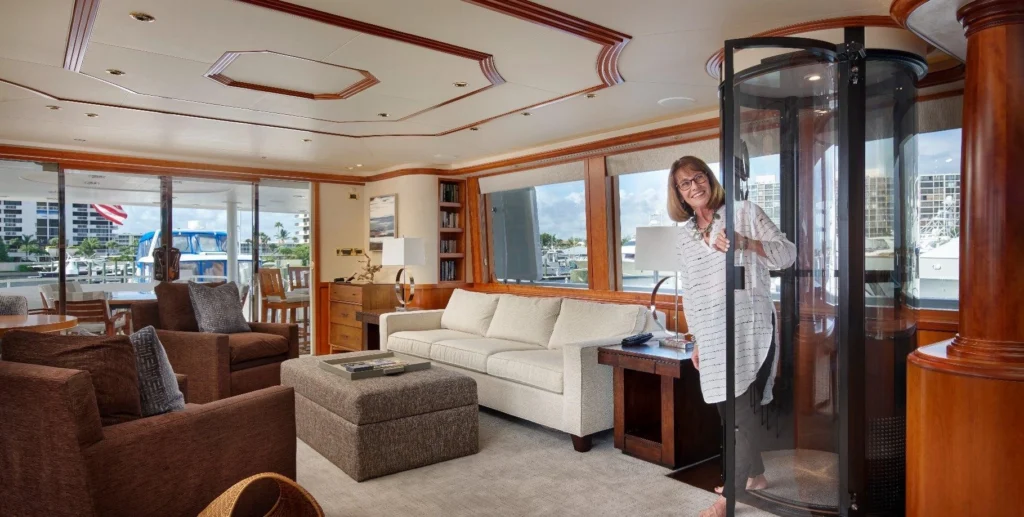
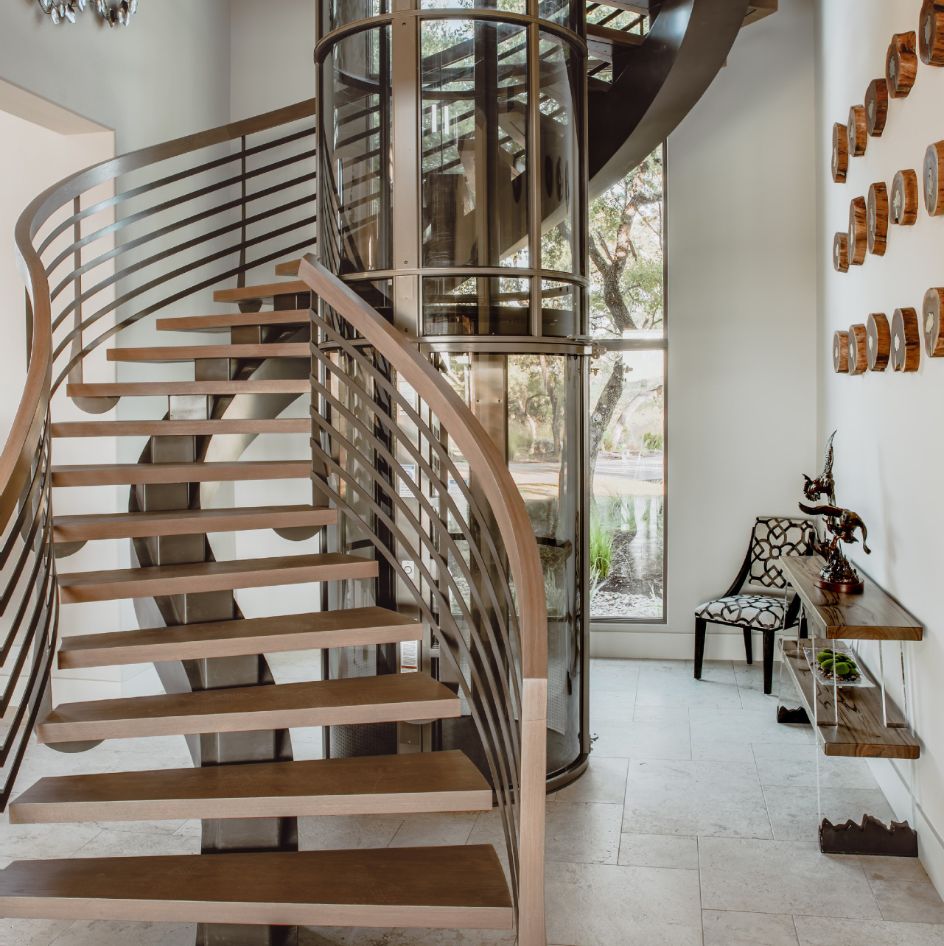
PVE’s clear cylindrical cabins are the perfect example of how style meets functionality. These panoramic elevators provide 360° visibility, so you can see your entire home’s interior as you travel between floors. The modern, sculptural look of these elevators adds a touch of luxury and sophistication to any home.
They are also highly customizable, so you can choose from various cabin configurations and customization options to match your home’s interior design. Panoramic and glass elevators offer endless personalization possibilities, whether you want to enhance a contemporary design or create a unique statement piece.
These particular models are especially popular in retirement living communities, where both accessibility and aesthetics are highly valued.
5. Mini Home Elevators: Compact and Convenient
A mini home elevator is a compact and convenient solution for homeowners who want to improve accessibility without sacrificing floor space. These compact residential lifts fit into homes with limited space and a small footprint, perfect for homes with limited square footage. They offer all the benefits of a traditional elevator in a smaller, more convenient package, improving home mobility.
A mini home elevator is a great alternative to stair lifts or wheelchair lifts for homeowners seeking a discreet and efficient mobility solution.
PVE offers three mini home elevators: PVE30, PVE37, and PVE52. Each model is designed to meet different needs and preferences, giving homeowners a range of options to choose from. PVE has models for single riders and ones that accommodate up to three passengers, to fit various requirements.
These small home elevators are not only space-saving but also energy-efficient. They use air pressure like their bigger counterparts, which supports minimal energy consumption and eco-friendly operation. PVE’s mini home elevators provide the convenience of residential elevators while maximizing space and style, ensuring comfort in small areas.
Customization Options for Your Home Elevator
One of the standout benefits of modern home elevators is the ability to customize nearly every aspect to match your personal style and home’s interior design. From elegant glass elevators that offer panoramic views to traditional wood-paneled cabins, the choices are nearly limitless. Homeowners can select from a variety of materials, finishes, and colors to create a seamless look that complements their décor.
Many residential elevators also offer flexible cabin configurations and finish options, allowing you to tailor the elevator’s size, shape, and safety features to your specific needs. Whether you want a minimalist, modern statement piece or a classic, understated lift, design flexibility options ensure your home elevator is both functional and visually appealing.
Choosing the Right Elevator Type for Your Home
Consider the following when choosing the right residential elevator for your home:
- Assess the available space and decide between a self-supporting, shaftless solution like PVE or the more extensive construction required for hydraulic or traction elevators.
- Review the installation requirements.
- Consider the level of disruption you’re willing to tolerate.
Another important aspect is the design, aesthetics, and space-saving value of the elevator. For a modern, sleek look, PVEs with their clear cylindrical cabins and panoramic views are an excellent option. These home elevators add functionality while preserving floor space, making them especially appealing for homes where efficient use of interior space matters. They also bring a sense of luxury and sophistication to residential design.
Evaluate your specific needs and preferences. Whether you:
- Have limited mobility
- Need to accommodate wheelchair users
- Just want to add a unique feature to your home.
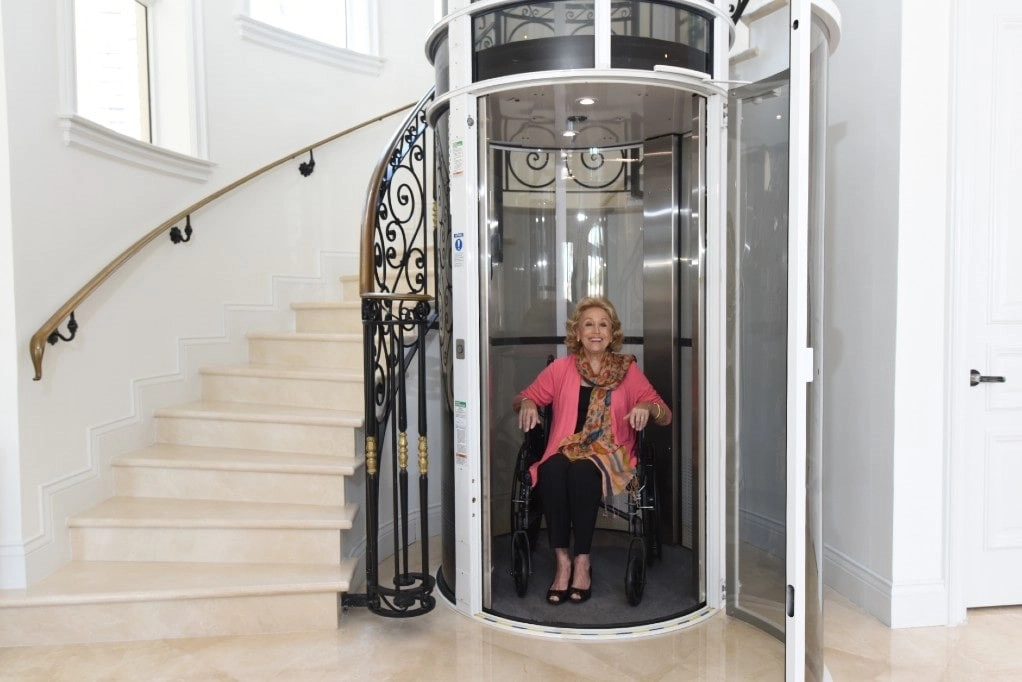
There is an elevator model that fits your accessibility needs. Some elevator models offer wheelchair-accessible designs for users with mobility needs, ensuring accessibility for wheelchair users and individuals with disabilities.
PVE’s range of models includes:
- Mini home elevators
- Larger, more spacious options so you can find the perfect fit for your home, especially if you have mobility issues.
Conclusion
There are several strong options for small residential elevators, each suited to different home layouts and installation goals. Shaftless elevators work well in limited spaces and retrofit projects, hydraulic elevators are often used in larger homes, and glass or panoramic elevators combine visibility with design appeal.
Among these options, Pneumatic Vacuum Elevators stand out for their modern design, compact footprint, and eco-friendly operation. Their air-driven technology uses minimal energy, and the clear cylindrical cabin adds a distinctive architectural element while preserving space. With multiple models available, PVEs can accommodate different mobility needs and home configurations.
When choosing a home elevator, it is important to consider construction requirements, design preferences, and long-term accessibility goals. The right system can improve daily mobility while supporting home value and future convenience.
FAQs
What are the main benefits of shaftless elevators?
Shaftless elevators maximize space and allow easy installation in existing homes by eliminating the need for a traditional shaft or deep pit. They are a practical option for accessibility without major structural changes.
How do pneumatic vacuum elevators save energy?
Pneumatic vacuum elevators save energy by using air pressure during ascent while relying on gravity during descent, which reduces overall energy use.
What are the installation requirements for hydraulic elevators?
Hydraulic elevators require a hoistway, a pit, and a separate machine room for the pumps and fluid reservoirs, so significant construction is required. Homeowners should confirm these requirements before installation begins.
What makes glass and panoramic elevators unique?
Glass and panoramic elevators are unique because of their 360° visibility, creating an open and airy feel while serving as a design feature in any home. Their aesthetic appeal adds to the overall interior design.
What does a home elevator cost?
Home elevator cost depends on the type of elevator, installation requirements, and the amount of construction needed for your home. Factors such as travel height, model selection, and site conditions can all affect the total investment. For the most accurate pricing, a consultation helps identify the best option based on your space, mobility needs, and budget.