Skip to content >

- Key Takeaways
- When Is a Home Elevator Tax Deductible as a Medical Expense?
- What Counts as Medical Necessity for a Home Elevator?
- How Does Increased Home Value Affect the Home Elevator Deduction?
- How Do the 7.5% AGI Threshold and Itemizing Rules Work?
- Can You Deduct Home Elevator Maintenance and Operating Costs?
- How Do Home Elevators Compare to Other Medical and Mobility Equipment for Tax Purposes?
- Are There Home Elevator Tax Credits or Other Funding Programs?
- How to Document and Claim a Home Elevator Tax Deduction
- Why Many Homeowners Still Choose a PVE Elevator Even Without a Tax Deduction
- Frequently Asked Questions About Home Elevator Tax Deductions
Installing a home elevator is a major decision, and many homeowners wonder whether they can claim a home elevator tax deduction to help offset the cost of a home elevator. The short answer: it depends on your medical situation, how you file your taxes, and whether the elevator increases your home’s value.
Key Takeaways
Summary: A home elevator can sometimes be tax deductible as a medical expense under IRS rules, but only when it is medically necessary and you itemize deductions on Schedule A. Any increase in your home’s fair market value must be subtracted from the total cost before calculating the medical expense deduction. Even then, unreimbursed medical expenses are deductible only to the extent they exceed 7.5% of your adjusted gross income (AGI). The primary benefit of the home elevator deduction is lowering your overall taxable income, but not every homeowner will benefit. Consult a tax professional for advice tailored to your situation and review IRS Publication 502 for the most current tax rules.
When Is a Home Elevator Tax Deductible as a Medical Expense?
A home elevator may qualify as a medical expense deduction if it is primarily installed to provide medical care or accessibility for the taxpayer, spouse, or your dependents. Installing a home elevator can qualify for a federal tax deduction if certified as a medical necessity by a medical professional.
Most home improvements aren’t immediately tax deductible. However, the IRS treats certain accessibility-related home modifications, including residential elevators and porch lifts, as capital expenses that can count as medical expenses when the primary purpose is medical care.
IRS Publication 502 recognizes a range of accessibility-related home modifications as deductible capital expenses when their main purpose is medical care. Examples include:
- Constructing entrance or exit ramps
- Widening doorways at entrances, exits, and in interior hallways
- Modifying stairways and installing railings, support bars, or grab bars
- Adjusting door hardware and the areas in front of entrance and exit doorways
- Lowering or modifying kitchen cabinets and equipment
- Moving or modifying electrical outlets and fixtures
- Installing porch lifts and other lifts
- Modifying fire alarms, smoke detectors, and other warning systems
- Modifying bathrooms for accessibility
- Grading the ground to provide safe access to the home
Many of these modifications don’t add to a home’s value, so their full cost can qualify as a medical expense. Home elevators are the key exception: because they generally do add value, the deduction is calculated differently, which the next sections explain.
Home improvements for medical care can be deductible, but luxury or convenience upgrades are not. An elevator in a vacation home installed purely for comfort does not qualify. Home elevators designed for medical necessity can potentially be deductible under IRS rules, but eligibility is always fact-specific.
What Counts as Medical Necessity for a Home Elevator?
Medical necessity is the core requirement for a home elevator tax deduction and must be supported by a licensed health-care provider. Medical necessity must be established through a doctor’s written prescription — without it, the IRS has no basis to allow the deduction.
Common conditions where a doctor may recommend a home elevator include:
- Severe arthritis or joint disease
- Advanced heart or lung disease
- Post-stroke mobility impairment
- Parkinson’s disease or multiple sclerosis
- Permanent wheelchair use that makes it unsafe to climb stairs
To establish medical necessity, you typically need a formal prescription for a home elevator, a letter of medical necessity on clinic letterhead, and medical records describing balance or mobility issues. Following a doctor’s advice is essential. The elevator’s primary purpose must be to provide access to essential rooms — bedroom, bathroom, kitchen — for a person with a disability.
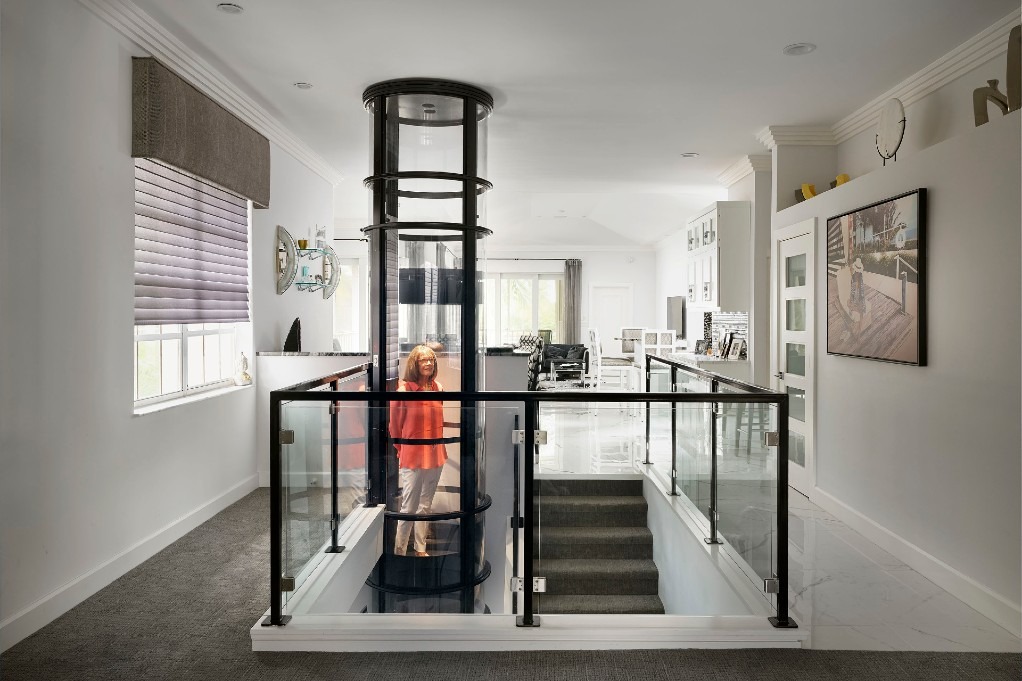
The IRS and your tax professional may scrutinize mixed motives. If you install a panoramic luxury cab with features that go well beyond accessibility, it can weaken your position. Design choices that prioritize function, like PVE’s air-driven residential elevators built for safe, simple mobility, help support the medical expense position.
How Does Increased Home Value Affect the Home Elevator Deduction?
Before getting to the math, one thing has to be true: the elevator must be installed for a legitimate medical reason, for the care of you, your spouse, or a dependent, and is generally something a doctor has recommended. If the elevator isn’t medically necessary, none of the cost is deductible as a medical expense.
When it is medically necessary, the IRS treats it as a “capital expense,” and a special rule applies: because a home elevator generally adds value to your home, you can’t deduct the full cost. Per IRS Publication 502, the cost of the improvement is reduced by the increase in your home’s value, and only the difference counts as a medical expense.
The basic formula:
Deductible medical expense = Total cost (purchase + installation) − Increase in home’s fair market value
A simple example:
| Item | Amount |
| PVE elevator installed cost | $40,000 |
| Home value before installation | $500,000 |
| Home value after installation | $525,000 |
| Value increase | $25,000 |
| Potential medical expense | $15,000 |
If a professional appraisal shows the elevator increased your home’s value by $25,000, then only $15,000 of the total cost qualifies as a potential medical expense. A qualified appraisal establishing the home’s value before and after installation is what supports this figure, and IRS Publication 502 provides a Capital Expense Worksheet to help with the calculation.
Reaching a “$15,000 potential medical expense” isn’t the same as deducting $15,000 — two more IRS rules, the 7.5%-of-AGI threshold and the requirement to itemize, decide what you can actually claim. Those are covered in the next section.
A related benefit: once the elevator qualifies as a medically necessary improvement, the ongoing costs to operate and maintain it can also be included as medical expenses — even in years when the equipment itself adds no further value.
Because home elevators generally do add value, a fully deductible installation (one where the home’s value doesn’t increase at all) is rare — but not impossible, depending on the appraisal.
How Do the 7.5% AGI Threshold and Itemizing Rules Work?
Even if a home elevator qualifies as a medical expense, you only get a tax break if you itemize deductions on Schedule A instead of taking the standard deduction — there’s no way around that requirement.
Under current federal law, unreimbursed medical expenses are deductible only to the extent they exceed 7.5% of your adjusted gross income (AGI). Here’s how that works in practice:
| Detail | Amount |
| Adjusted Gross Income | $120,000 |
| 7.5% threshold | $9,000 |
| Total medical expenses (including elevator) | $20,000 |
| Amount exceeding threshold | $11,000 |
| Potential itemized deduction | $11,000 |
This deductible medical amount is just one piece of your total itemized deductions, which together must exceed the standard deduction to actually lower your taxes. Because the standard deduction is relatively high, not every homeowner who installs an elevator will see a benefit, so a tax professional’s projection before you buy is worth getting.
This is general information, not tax advice. Tax situations vary, and the rules can change. Consult a qualified tax professional and see IRS Publication 502 before claiming any deduction.
Can You Deduct Home Elevator Maintenance and Operating Costs?
If the elevator qualifies as a medical expense, certain related costs may also be treated as medical expenses under IRS guidance. Costs associated with operating and maintaining the elevator are deductible as long as the medical need exists.
Potentially deductible ongoing costs include:
- Medically necessary maintenance visits
- Essential repairs to keep the elevator safe
- Electricity directly attributable to operating mobility equipment
Cosmetic upgrades, luxury cab finishes, or non-essential smart features generally do not qualify, even if the elevator’s basic function is medically necessary.
PVE’s air-driven, low-maintenance technology reduces both overall operating costs and the proportion of expenses you need to track. Keep separate, detailed records for all elevator-related invoices in case the IRS requests substantiation.
How Do Home Elevators Compare to Other Medical and Mobility Equipment for Tax Purposes?
Standard durable medical equipment — walkers, hospital beds, wheelchairs — usually does not affect property value and qualifies more straightforwardly as a medical expense than a home elevator does. You can deduct costs for wheelchair-accessibility improvements like ramps and bathroom modifications without worrying about the value-increase calculation.
Are stair lifts tax deductible? Yes, stair lifts can be tax deductible as medical expenses, and they follow the same capital-expense rules as elevators, including subtracting any increase in home value. The same applies to platform lifts and other mobility equipment. The IRS does not maintain an exhaustive list but uses the general standard of whether an item’s primary purpose is medical care.
Medicare and private insurance coverage rules for medical equipment are separate from IRS tax rules. A device can be tax deductible as a medical expense even if insurance does not reimburse it. PVE’s wheelchair-accessible PVE52 model is often part of a broader accessibility plan alongside other modifications, such as widening hallways and interior doorways, installing a ground-floor bathroom, or adding safety features that together strengthen the overall medical deduction.
Are There Home Elevator Tax Credits or Other Funding Programs?
It helps to know the difference between a tax deduction, which lowers your taxable income, and a tax credit, which directly reduces the tax you owe. There is no broad federal tax credit just for installing a home elevator, even for medical reasons.
At the state and local level, though, some accessibility programs can help. A few examples of the kinds of programs that exist:
- Some counties offer accessibility-related property tax credits. For example, Montgomery County, Maryland’s Design for Life credit, which applies to qualifying accessibility features, including indoor elevators.
- Some states offer an income tax credit for expenses that make a primary residence accessible.
- Some affordable-housing and home-modification programs include incentives for adding accessibility features.
Because these programs, along with their eligibility rules and dollar limits, vary by location and change over time, check your state revenue department and housing agency websites for the programs and current terms in your area.
Other funding sources worth exploring include Medicaid Home- and Community-Based Services (HCBS) waivers, Veterans Affairs housing adaptation grants for eligible veterans, and state aging or disability agencies. Many of these prioritize stair lifts, ramps, or bathroom modifications, but some will consider a home elevator, particularly a compact, shaftless model, when it’s the most reasonable way to provide access between floors. You can also explore budget-friendly home elevator financing options to further reduce out-of-pocket costs.
How to Document and Claim a Home Elevator Tax Deduction
Here is a step-by-step overview for preparing to claim a home elevator as a medical expense on your federal return:
- Obtain a doctor’s prescription or letter of medical necessity
- Collect itemized invoices from the elevator manufacturer and installer
- Arrange a professional before-and-after home appraisal
- Keep all payment records and contracts
To claim a deduction for a home elevator, itemized deductions must be submitted on Schedule A of Form 1040. Add the net elevator cost (after subtracting the home-value increase) to your other unreimbursed medical expenses under “Medical and Dental Expenses.”
Retain all supporting documents for at least three years after filing or longer if advised by your tax professional. Because the rules for capital expenses, medical expenses, and potential capital gains tax interactions are complex, using a CPA or enrolled agent is strongly recommended.
Why Many Homeowners Still Choose a PVE Elevator Even Without a Tax Deduction
Not every homeowner will meet the medical expense deduction rules, yet a home elevator can still be a smart long-term investment. Other modifications to your home can wait, but safe access between floors cannot.
Core PVE advantages that matter regardless of tax treatment:
- Shaftless design requiring no pit or machine room
- Quick 2–3 day installation with minimal structural changes
- Panoramic cab design that adds light and openness
- Air-driven technology using minimal electricity
These features connect directly to aging-in-place goals for seniors: enabling safe access to all floors, delaying or avoiding a move to single-story living, and preserving independence.
Contact Pneumatic Vacuum Elevators for a personalized quote and to discuss how your local dealer can coordinate with your tax and financial advisors.
Frequently Asked Questions About Home Elevator Tax Deductions
Can I deduct a home elevator installed in a second home or vacation property?
Medical expense deductions are generally allowed only for improvements to the taxpayer’s primary residence where medical care is provided. Claiming a deduction for a vacation property is significantly more difficult and should be reviewed with a tax professional before proceeding.
Does a home elevator affect capital gains tax when I sell my house?
Yes. The portion of the elevator cost that increased your home’s basis — the value increase you subtracted when taking the medical deduction — remains part of your adjusted basis. This can reduce capital gains tax when you sell, subject to normal home-sale exclusion rules.
Is a PVE home elevator considered durable medical equipment?
Medicare’s definition of durable medical equipment usually does not include residential elevators, so they are not treated as DME for insurance purposes. However, the IRS may still treat the elevator as a medical expense if installed primarily for medical care.
Can I claim a deduction if I finance my home elevator instead of paying cash?
The deductible amount is based on the cost of the elevator and installation, not how it is financed. Interest on personal loans is generally not deductible, so the focus remains on the qualified medical portion of the project cost.
Where can I find the most current IRS rules on medical expense deductions?
Review the latest version of IRS Publication 502 and the instructions for Schedule A on IRS.gov. Verify any 7.5% AGI thresholds or rule changes with a tax professional each filing season.