Skip to content >

- Key Takeaways
- 1. What Experience Do You Have Installing Residential Elevators?
- 2. Are You an Authorized Dealer for the Brand I'm Considering?
- 3. How Do You Handle Permits, Inspections, and Local Building Codes?
- 4. What Does Your Written Quote Include, and What Could Change the Price?
- 5. What Is the Total Project Timeline From Order to Final Inspection?
- 6. What Warranty and Post-Installation Support Do You Provide?
- 7. Do You Offer a Maintenance Contract, and What Does Routine Service Involve?
- 8. How Will Installation Affect My Home's Structure and Daily Life?
- 9. What Safety Features and Certifications Does This Elevator Have?
- 10. Can You Provide Recent References or Local Installations I Can Visit?
- What Type of Residential Elevator Is Right for Your Home?
- FAQ
Most homeowners research the elevator for months. They compare models, request quotes, tour showrooms. Then they hand the whole project to an installer they vetted in a single phone call.
That is where things go wrong.
The installer controls everything that happens between the contract and the ribbon cut: permits, structural prep, code compliance, warranty validity, and what happens the first time something breaks. These 10 questions will help you choose one who gets all of it right.
Key Takeaways
- Qualified home lift installers should have verifiable residential experience, authorized dealer status, proper licensing, and the ability to manage permits and inspections from start to finish.
- Always compare written quotes side by side, including the full cost breakdown, realistic timeline, warranty terms, and maintenance contract options.
- Ask for recent local references you can actually call, and verify dealer authorization directly with the manufacturer before signing anything.
- PVE works exclusively through factory-trained, authorized dealers who specialize in shaftless, air-driven residential elevators requiring no pit or machine room.
1. What Experience Do You Have Installing Residential Elevators?
A company that installs commercial elevators all day may not understand the specific demands of a home project. Residential elevators operate under different codes, fit into finished living spaces, and need to work quietly alongside daily family routines. The installer’s track record with residential systems directly affects safety, performance, and how long the elevator lasts.
The drive system matters. Vacuum elevators, hydraulic units, traction systems, and machine-room-less designs each have different requirements. Your installer should know the chosen system in detail, not just in theory.
Good answer:
The installer cites specific years in business, total residential installations completed, and recent projects similar to yours. They can explain the difference between retrofits in existing homes and new construction installs, and they show documentation or photos of past work.
Red flag:
Vague claims like “we do all kinds of elevators” with no examples. A portfolio that only shows commercial jobs, or an inability to describe past residential projects, is a reason to keep looking.
PVE works only with authorized dealers who receive factory training on pneumatic, shaftless residential elevators, ensuring every team has hands-on experience with air-driven technology rather than general lift knowledge.
2. Are You an Authorized Dealer for the Brand I’m Considering?
Authorized dealer status means the installer has completed the manufacturer’s training program, can order genuine parts directly, and receives ongoing technical support from the brand. It is not just a label. It determines whether your warranty stays valid and whether the elevator gets serviced correctly.
For PVE, only authorized dealers are permitted to perform installation and maintain valid warranties. Using anyone else risks voiding your coverage from the first day.
Good answer:
The installer shows dealer certificates, appears on the manufacturer’s dealer locator, and explains their re-certification process. They actively encourage you to verify their status directly with the brand.
Red flag:
The installer cannot prove dealer authorization, suggests substituting non-OEM parts, or discourages you from contacting the manufacturer. Call the brand yourself and verify before signing.
3. How Do You Handle Permits, Inspections, and Local Building Codes?
Residential elevator installation is tightly regulated. Non-compliance can delay a project by months, void your homeowner’s insurance, or create genuine safety hazards. The installer should know how to navigate the full permitting process, not hand it off to you.
A typical project involves plan review, structural permits, electrical permits, and a final elevator inspection by the authority having jurisdiction. Permit fees often run $500 to $1,500 depending on location and project complexity. [unverified, confirm with your local authority]
Good answer:
The installer explains which permits they pull, how they coordinate with local code officials, and confirms they attend all inspections and handle corrections. They can name the applicable standard, such as ASME A17.1/CSA B44, and explain how it applies to your project.
Red flag:
The installer expects you or your general contractor to figure out permitting. They are vague about local codes or cannot name the inspection authority in your area.
4. What Does Your Written Quote Include, and What Could Change the Price?
A detailed written quote protects you from surprise costs and makes the total home elevator cost transparent before you commit. A verbal estimate means nothing when the invoice arrives with unexpected line items.
A thorough quote should cover the elevator model and drive system, number of stops and travel height, interior finishes, site preparation, electrical work, permits, delivery, and any exclusions. Common variables that raise the price include unseen structural issues, design changes after ordering, and electrical panel upgrades.
Good answer:
The installer walks through the quote line by line, explains what is included and what is not, and puts change-order rules in writing.
Red flag:
Estimates given only verbally. A single lump-sum number with no breakdown. Any resistance to documenting how change orders are handled.
PVE elevators often reduce construction extras because they require no pit, no machine room, and no traditional shaft. Knowing what a home elevator costs to install across drive types helps you evaluate whether a quote is reasonable before committing.

5. What Is the Total Project Timeline From Order to Final Inspection?
Understanding lead time, on-site installation time, and inspection scheduling helps you coordinate with other trades and avoid living in a construction zone longer than necessary.
Traditional shaft-based systems often require several weeks of structural work before the elevator itself goes in. A shaftless PVE unit can be assembled on-site in 2 to 3 days once the floor opening and electrical supply are ready.
Good answer:
The installer breaks down each stage: design finalization, permitting, manufacturing and shipping, site preparation, installation, and final inspection. They provide realistic time ranges, explain dependencies, and commit to a written schedule with proactive updates.
Red flag:
“We’ll be in and out in a couple of days” without any mention of permits, inspections, or builder coordination. Or a refusal to give even rough target dates.
Ask specifically how schedule changes are communicated. A professional team sends updates before you have to call and ask what happened.
6. What Warranty and Post-Installation Support Do You Provide?
Warranty terms and long-term service availability matter just as much as the quality of the initial installation. The best installers treat the relationship as ongoing, not finished when the final invoice is paid.
Key warranty elements to confirm: coverage length on parts versus labor, definition of normal wear versus defects, whether warranty coverage requires using an authorized service provider, and response time commitments for emergency calls.
Good answer:
The installer outlines both the manufacturer warranty and their own workmanship warranty in writing before you sign. They provide response times for service calls and explain emergency support procedures.
Red flag:
Vague “we’ll take care of you” promises with nothing in writing. Hesitation to provide warranty documents before the contract is signed tells you something important.
PVE’s authorized dealers provide both manufacturer-backed warranties and local service. Using non-authorized technicians to repair or maintain a PVE elevator may void coverage entirely.
7. Do You Offer a Maintenance Contract, and What Does Routine Service Involve?
Preventive maintenance is what keeps a residential elevator running safely for decades. Skipping it shortens the system’s life and increases the chance of a breakdown at the worst possible time.
A reasonable maintenance contract specifies visit frequency, a detailed inspection checklist, which parts and labor are included, after-hours emergency rates, and how price increases are handled year over year.
Good answer:
The installer explains recommended service intervals for your specific model, provides a sample maintenance report, and clarifies which visits are required to keep the warranty valid.
Red flag:
“These elevators never need service.” Any installer who cannot specify what they inspect, or who only offers emergency pay-per-visit repair with no routine plan, is not a long-term service partner.
PVE’s pneumatic systems have fewer moving parts and no hydraulic oil, which simplifies routine maintenance compared with hydraulic or traction systems. Keeping up with residential elevator maintenance protects both your investment and your warranty.
8. How Will Installation Affect My Home’s Structure and Daily Life?
Some elevator installations require cutting into load-bearing walls, digging a pit, and building a dedicated machine room. Others leave a much smaller footprint. Knowing the scope before work begins protects your floors, your schedule, and your budget.
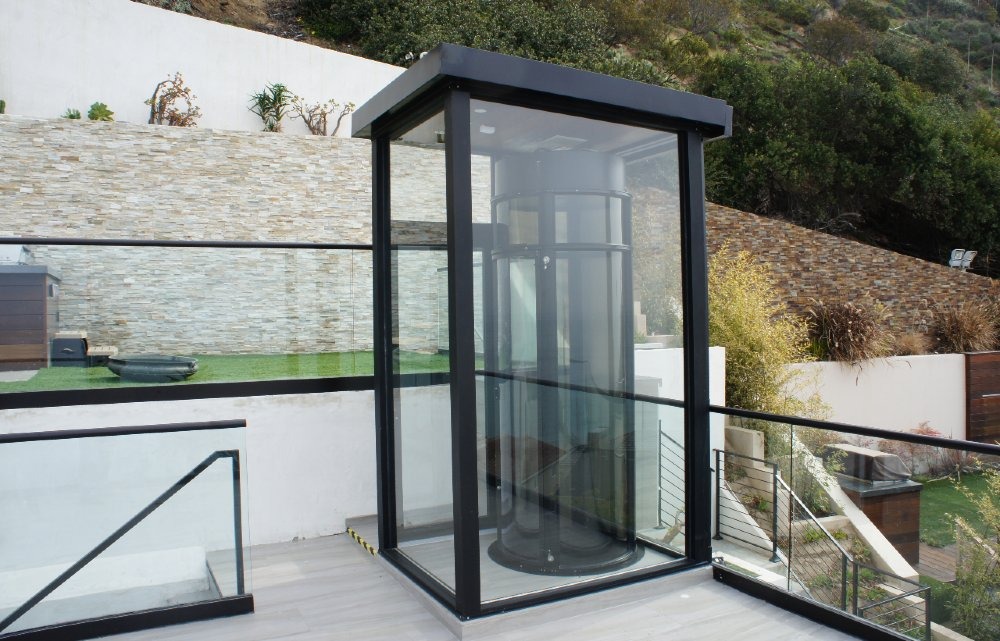
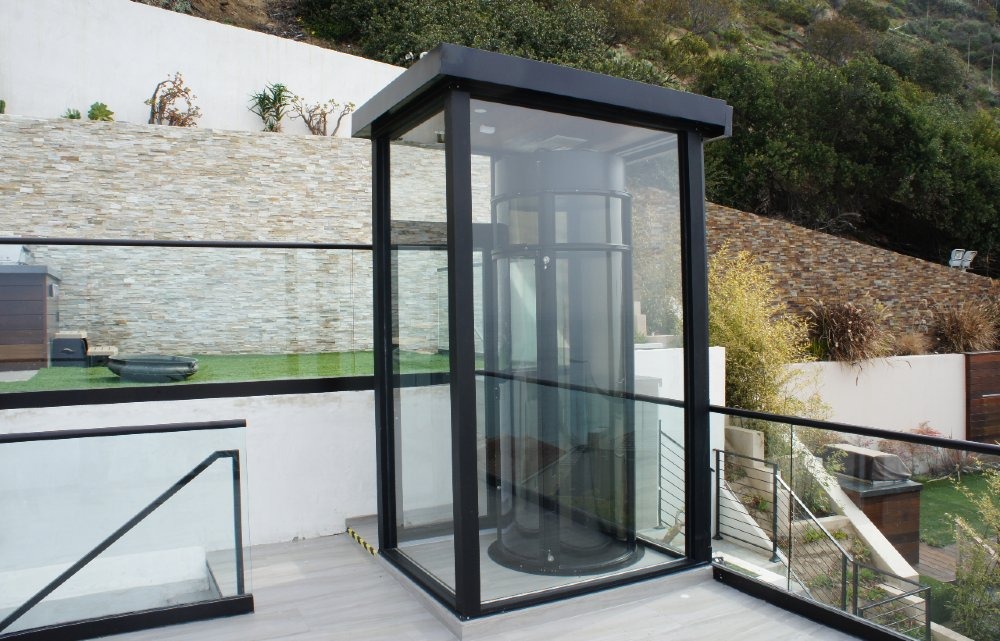
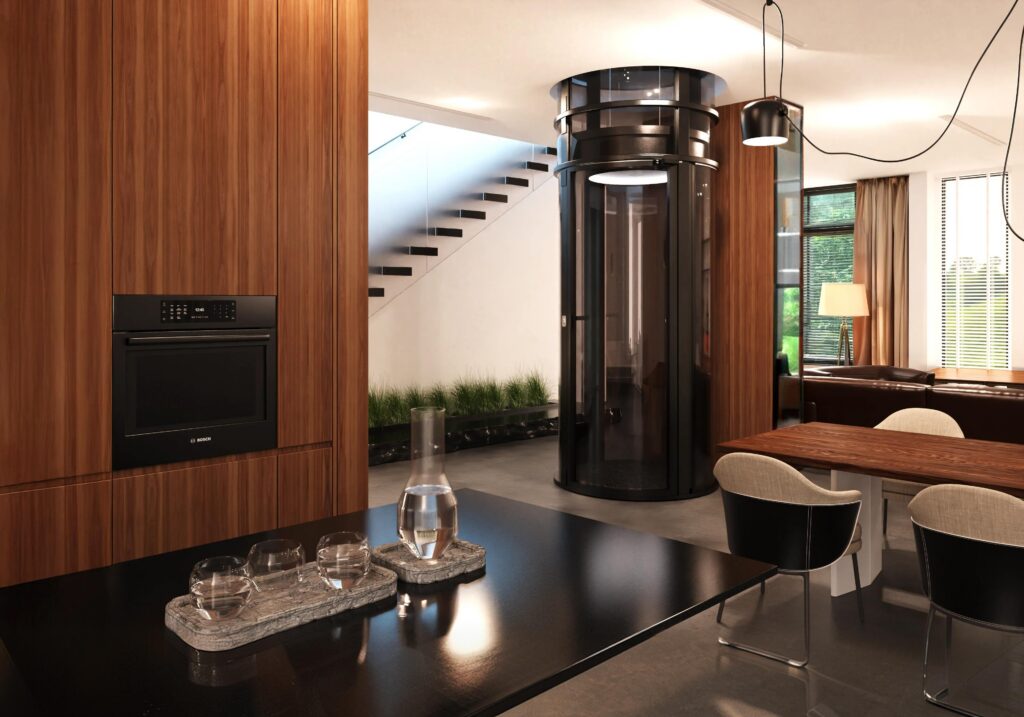
PVE’s free-standing cylindrical design avoids major structural work. The self-supporting tube sits within a floor opening cut through each stop, with no shaft construction required. Most homes see minimal disruption, and the on-site installation process wraps in 2 to 3 days.
Good answer:
The installer provides drawings, explains noise levels and dust control measures, outlines daily working hours, and describes exactly which walls or floors need to be opened. They explain how finished spaces will be protected during the work.
Red flag:
The installer cannot clearly describe the structural changes involved, shrugs off dust and noise concerns, or minimizes the impact on existing finishes without any supporting explanation.
9. What Safety Features and Certifications Does This Elevator Have?
Modern home elevators should meet recognized safety standards and include built-in protections for riders and technicians. In the U.S., residential elevators must comply with ASME A17.1/CSA B44. Ask for proof of compliance and inspection reports, not just a verbal assurance.
Core safety features to confirm:
- Emergency braking or safety gear
- Battery backup and controlled emergency lowering
- Door interlocks that prevent movement unless all doors are fully closed
- Overload sensors
- In-cab emergency communication device
- Automatic leveling at each floor
Good answer:
The installer references specific standards, explains how the elevator is tested, and can provide proof of compliance and prior inspection reports. They welcome independent inspection.
Red flag:
Dismissiveness about safety questions, an inability to name applicable standards, or discouraging you from requesting inspection documentation.
PVE’s air-driven elevators are certified in multiple jurisdictions worldwide. In a power outage, controlled air release brings the cab gently to the lowest landing without any external power source.
10. Can You Provide Recent References or Local Installations I Can Visit?
Speaking directly with recent customers is one of the clearest ways to evaluate a home elevator company. Published reviews help, but a live conversation with someone who has used the elevator for several months reveals information that no review captures.
When you reach references, ask about punctuality and respect for the home during construction, adherence to the quoted timeline and budget, responsiveness to service calls after installation, and any surprises during the process.
Good answer:
The installer readily offers several current references within your service area and may arrange a visit to a completed installation with the owner’s permission. You get to see the finished product in a real home before committing.
Red flag:
References described as “private,” a refusal to share any contacts, or a list of anonymous online reviews from several years ago. Ask references specifically how the elevator has performed over at least 6 to 12 months of regular use.
PVE uses a global network of local, authorized dealers, so homeowners know exactly who to contact for inspections, maintenance, and repairs over the life of the system.
What Type of Residential Elevator Is Right for Your Home?
A good installer listens to your priorities, including space, budget, accessibility, and long-term use, before recommending a model. If they push one option without reviewing your floor plan or mobility needs, that is a red flag on its own.
| Type | Key Traits |
| Hydraulic | Smooth ride, higher capacity, requires pit and machine room |
| Traction / Cable | Fast and efficient over multiple stops, needs a shaft |
| Machine-room-less | Compact footprint, no dedicated machine room |
| Pneumatic Vacuum | No pit, no shaft, no machine room, panoramic design |
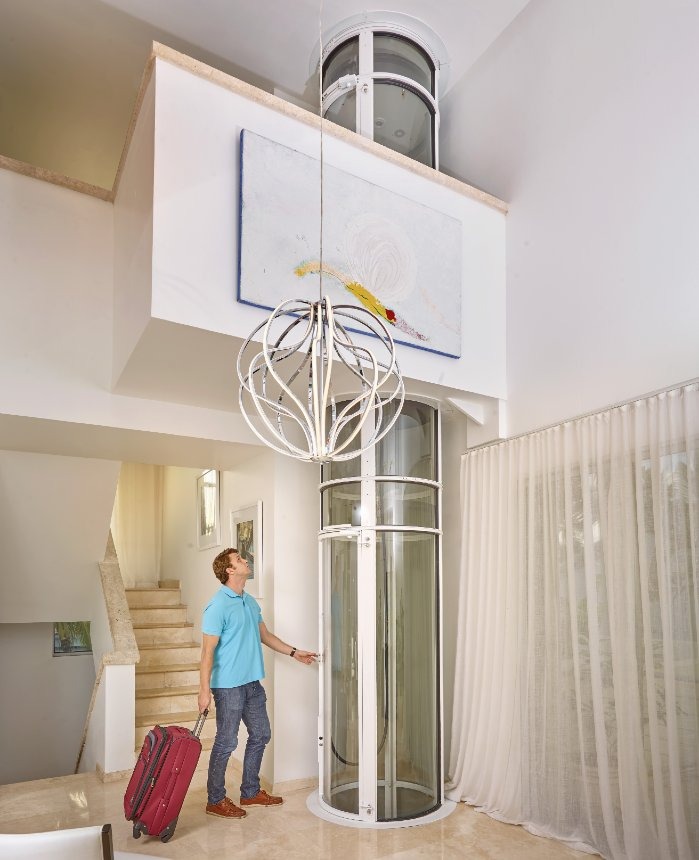
PVE offers three cab configurations: the single-passenger PVE30, the multi-passenger PVE37, and the wheelchair-accessible PVE52. All three use air-driven technology with no pit, no shaft, and no machine room, and all can be added to an existing home with minimal structural work. Homeowners who want a shaftless residential elevator have a narrow set of options, and PVE is the category leader.
FAQ
Do I need to move out during residential elevator installation?
Most homeowners can stay in place, especially with shaftless systems. You may need to block off the work area and tolerate noise and dust for a few days. Ask the installer which rooms will be affected and whether any electrical or HVAC systems will be temporarily shut off. A PVE installation typically wraps in 2 to 3 days on-site.
What electrical service does a home elevator require?
Most modern home elevators need a dedicated circuit sized to the manufacturer’s specifications. Some models require 220V service. Have a licensed electrician coordinate with the installer using official electrical drawings from the manufacturer before work begins.
Can a home elevator be installed in an older home?
Older homes often work well with compact, free-standing systems that avoid major structural changes. A structural assessment is needed to verify floor load capacity and ceiling height. Shaftless systems are a popular solution for retrofits because they require only a floor opening at each stop and no shaft construction.
How does a home elevator affect resale value?
A well-designed elevator can attract buyers who value accessibility and multi-floor convenience, particularly in luxury or multi-level properties. The impact on resale depends on the quality of installation, the model chosen, and local buyer demand. A pneumatic elevator’s panoramic design and small footprint tend to read as a feature rather than an intrusion into the floor plan.
How do I verify an installer is authorized by the manufacturer?
Call the manufacturer directly or check their official website for a dealer locator. Do not rely solely on what the installer tells you. For PVE, you can confirm authorized dealer status through the showroom locator on the PVE website or by calling the manufacturer directly at their Miami headquarters.
Is a pneumatic vacuum elevator a good option for a one-floor addition or a home with stairs?
Yes. Because PVE elevators are self-supporting and require no shaft or pit, they are one of the more practical accessibility solutions for homes where adding a traditional elevator would mean significant construction. A homeowner who currently relies on a stair lift but wants a full cab that can carry a wheelchair or multiple passengers will find a vacuum elevator covers what a stair lift cannot. The elevator installed footprint is small enough to fit in a corner, near a staircase, or through a balcony opening without disrupting the surrounding space.