Skip to content >

- How a Hydraulic Home Elevator Works
- The Two Main Types of Residential Hydraulic Elevators
- Safety Features in Hydraulic Home Elevators
- Hydraulic vs. Pneumatic Vacuum Elevators: Side-by-Side
- Honest Pros and Cons of Hydraulic Home Elevators
- When a Hydraulic Elevator Is the Right Choice
- When Pneumatic Vacuum Is the Better Choice
- How to Decide Which System Is Right for Your Home
- Additional Resources
- Frequently Asked Questions About Hydraulic Home Elevators
- How long do hydraulic home elevators last?
- Do hydraulic home elevators need a machine room?
- How much does a hydraulic home elevator cost?
- Are hydraulic home elevators safe during a power outage?
- Do hydraulic elevators use a lot of electricity?
- Can a hydraulic home elevator be installed in an existing home?
- What is the difference between holed and holeless hydraulic elevators?
- Ready to Compare Your Options?
If you are researching home elevators, hydraulic systems will come up early. They have been the standard residential option for decades, they are widely available, and most homeowners have ridden in a hydraulic elevator at some point without realizing it. But how do they actually work, what do they require from your home, and how do they compare with newer technologies like pneumatic vacuum elevators?
This guide explains the mechanical principles behind hydraulic home elevators, the two main configurations you will see quoted, honest pros and cons, real installation and maintenance considerations, and how they compare with pneumatic systems so you can decide which technology fits your home.
How a Hydraulic Home Elevator Works
A hydraulic elevator moves the cab using pressurized fluid pushing against a piston. It is the same basic principle you find in a car lift at an auto shop, adapted for enclosed passenger use.
The core components:
- Reservoir tank. Holds the hydraulic fluid, typically a mineral oil or biodegradable synthetic fluid.
- Electric pump and motor. Pressurizes the fluid and pushes it into the cylinder on demand.
- Cylinder and piston (or plunger). The piston sits inside the cylinder. Pressurized fluid entering below the piston pushes it up, which in turn raises the elevator cab.
- Control valves. Regulate the flow of fluid into and out of the cylinder, controlling speed and stopping accuracy.
- Safety valves. Prevent uncontrolled descent if pressure drops suddenly.
- Machine room or machine space. Houses the pump, motor, reservoir, and controller. Most residential hydraulic systems require a dedicated machine room or a machine space adjacent to the shaft.
Going up: You press a call button. The controller signals the motor to run the pump, which pressurizes fluid from the reservoir and directs it into the cylinder. The pressure pushes the piston upward, which raises the cab. Valves modulate the flow so the cab accelerates smoothly, cruises, and decelerates as it approaches your floor.
Going down: The pump does not run on descent. Instead, a valve opens to release fluid from the cylinder back into the reservoir. The weight of the cab and its passengers pushes the piston down as the fluid drains, which lowers the cab under gravity. This is why hydraulic elevators use noticeably less electricity going down than going up.
The Two Main Types of Residential Hydraulic Elevators
Nearly every residential hydraulic elevator you will be quoted falls into one of two configurations. The industry terms are
1. Holed hydraulic (in-ground)
A cylinder is sunk into the ground directly beneath the elevator shaft. The piston moves up and down inside this cylinder, with the cab attached to the top of the piston.
Requires: Drilling a hole into the ground as deep as the elevator’s travel distance. For a two-story rise of roughly 10 feet, that means drilling a 10-foot hole below your foundation. This adds significant cost and construction time, and it is not feasible in every soil condition or basement layout.
Trade-off: Compact above ground, but requires substantial subgrade excavation and creates a small environmental risk if the cylinder ever leaks fluid into the surrounding soil.
2. Holeless hydraulic (above-ground)
One or two cylinders are mounted vertically alongside the elevator shaft, above ground. The piston pushes the cab up directly, or lifts it through a cable-and-pulley arrangement (called a roped hydraulic) that doubles the travel distance for the same piston length.
Requires: More shaft width or overhead room than a holed system, since the cylinders take up space alongside or above the cab.
Trade-off: No drilling, faster installation, no risk of underground fluid leaks. Slightly larger above-ground footprint.
A qualified installer should evaluate your home’s structure, foundation, and available space before recommending which configuration applies.
Safety Features in Hydraulic Home Elevators
All residential elevators sold in the U.S. must meet the ASME A17.1 code for private residence elevators. For hydraulic systems, standard safety features typically include:
- Overload sensors that prevent operation if the cab exceeds its rated weight capacity.
- Emergency stop button inside the cab that halts movement immediately.
- Manual lowering valve that allows a technician to lower the cab to a landing during a service call, or during a power outage on systems without battery backup.
- Battery backup on many models, which allows the cab to descend to the lowest landing during a power outage so passengers can exit.
- Interlocks and door sensors that prevent operation unless every landing door is closed.
- Safety valves in the hydraulic line that stop uncontrolled descent if a line ruptures.
- Rupture valve designed to trigger if the pump pressure drops suddenly, locking the piston in place.
These features are standard across reputable manufacturers. What varies between models is ride quality, cabin finish options, and how the system integrates into your home’s electrical and structural layout.
Hydraulic vs. Pneumatic Vacuum Elevators: Side-by-Side
If you are researching home elevators, hydraulic is one of three main technology categories you will encounter. The other two are traction (cable-driven, more common in commercial buildings) and pneumatic vacuum (air-driven, purpose-built for residential retrofits). Here is how hydraulic compares with pneumatic on the factors that matter most to homeowners:
| Factor | Hydraulic Elevator | Pneumatic Vacuum Elevator |
|---|---|---|
| Drive system | Electric pump pressurizes hydraulic fluid to move a piston | Vacuum turbines create air-pressure differential to lift the cab |
| Machine room | Required in most configurations | Not required |
| Pit depth | Typically requires a pit of 6 to 12 inches | Minimal pit or no pit required |
| Overhead clearance | Standard overhead requirement | Lower overhead requirement |
| Shaft | Enclosed shaft construction required | Self-supporting cylinder, no shaft needed |
| Installation time | Several weeks, includes structural work | Typically installed in 2 to 3 days |
| Retrofit-friendly | Difficult in existing homes without renovation | Designed for retrofit installations |
| Fluid or oil | Hydraulic fluid required, needs periodic replacement | No fluid, no oil |
| Ride experience | Smooth, quiet, well-established | Smooth, distinctive panoramic cabin |
| Typical price range | Varies widely by model and installation | $35,000 to $60,000 for PVE models, up to $100,000+ for custom configurations |
For a deeper look at the comparison, see our guide on pneumatic vs. hydraulic home elevators.
Honest Pros and Cons of Hydraulic Home Elevators
Pros
- Established technology. Hydraulic residential elevators have been sold for decades. Parts, service technicians, and industry standards are widely available.
- Smooth ride at low speeds. Hydraulic systems ride comfortably at the modest speeds (typically 25 to 40 feet per minute) that residential elevators use.
- Higher weight capacity than most residential alternatives. Standard hydraulic systems can typically lift 750 to 1,000 pounds, which suits multi-passenger families or accessibility use.
- Design flexibility. Because they work with a conventional shaft, hydraulic elevators can be finished with a wide range of interior materials and door styles.
- Lower cost on descent. The pump only runs going up. Going down, gravity does the work.
Cons
- Machine room and pit requirements. Most hydraulic systems require a dedicated machine room or machine space, plus a pit beneath the lowest landing. In new construction this is manageable. In an existing home, it often means significant renovation.
- Longer installation timeline. Hydraulic installations typically take several weeks, including shaft construction, drilling for holed systems, and mechanical setup.
- Hydraulic fluid maintenance. The fluid must be inspected, sometimes topped off, and eventually replaced. Leaks (rare but possible) can create environmental and cleanup issues, especially with holed systems where the cylinder is underground.
- Higher energy use per trip. Running the pump to pressurize fluid uses more electricity than pneumatic vacuum systems on the ascent.
- Slower than traction elevators. Fine for residential use, but if you are used to commercial elevator speeds, hydraulic will feel deliberately slower.
- Difficult to retrofit. The space, structural, and fluid-line requirements make hydraulic a harder fit for existing homes without major renovation.
When a Hydraulic Elevator Is the Right Choice
Hydraulic residential elevators still make sense in specific situations:
- New construction where the machine room, pit, and shaft can be designed into the home from the start.
- Higher weight capacity requirements, such as a multi-passenger family or a homeowner using a heavier mobility device.
- Longer travel distances beyond what pneumatic systems accommodate.
- Homes with the structural setup already in place, for example a basement mechanical room and a purpose-built shaft.
When Pneumatic Vacuum Is the Better Choice
For most retrofit installations in existing homes, pneumatic vacuum elevators solve the problems that make hydraulic difficult:
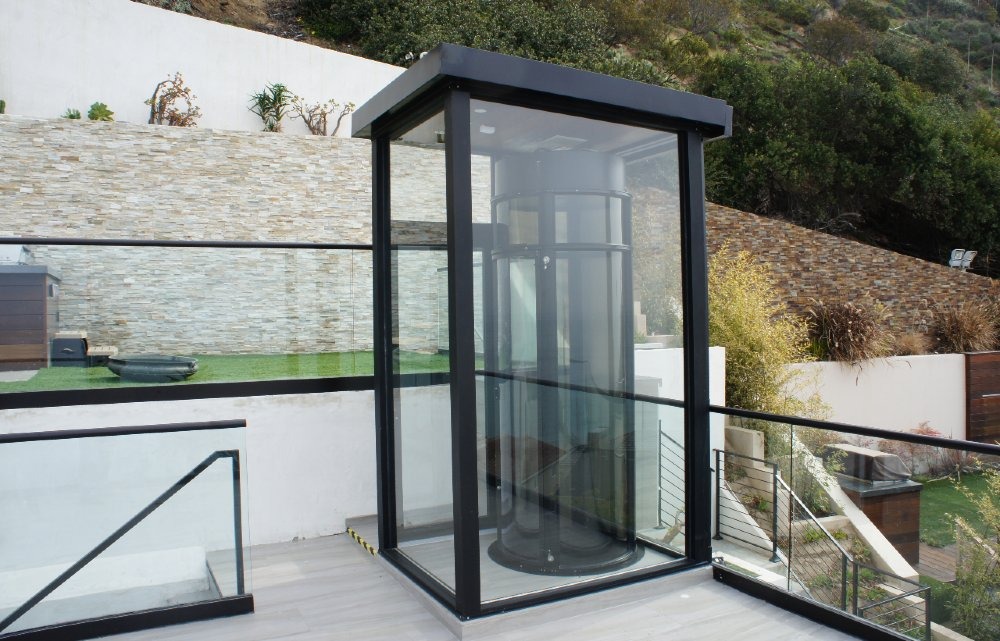
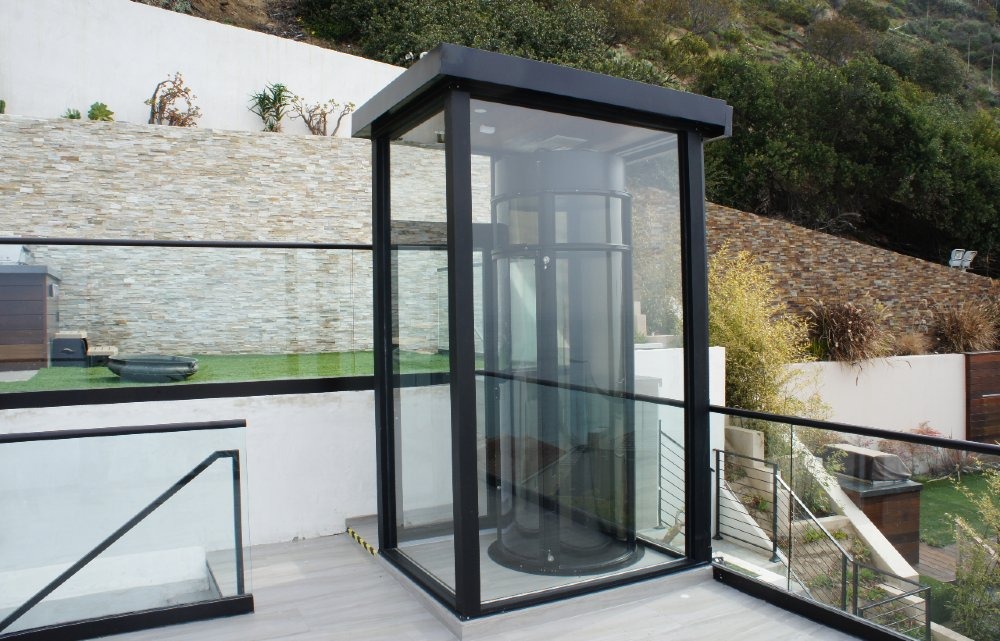
- No machine room. The vacuum turbines sit on top of the elevator, not in a separate room.
- No pit. The cylinder is self-supporting and rests on the floor.
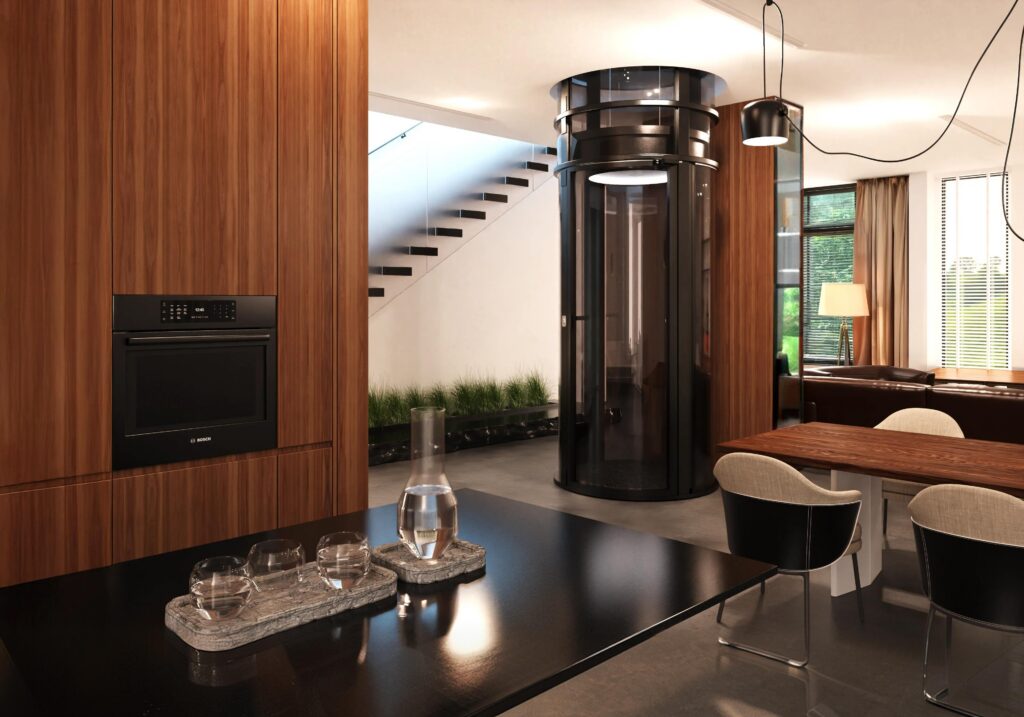
- No shaft construction. The clear cylinder is the shaft. No drywall, no framing, no structural cutouts beyond the floor penetrations for each landing.
- Installed in days, not weeks. Typical PVE installations are complete in 2 to 3 days.
- No hydraulic fluid. Air is the medium. There is nothing to leak, replace, or dispose of.
- Purpose-built for retrofit. The whole design premise is fitting an elevator into a home that was not built for one.
PVE (Pneumatic Vacuum Elevators) makes four residential models to match different home layouts and passenger requirements:
- PVE30: single-passenger cabin, our most compact option for tight spaces.
- PVE37: two-passenger cabin, the most popular residential model.
- PVE52: three-passenger or wheelchair-accessible cabin.
- The Cube: two-passenger square cabin (36″ x 36″), 450-pound capacity, designed for the most space-constrained retrofits.
Pricing for PVE models runs $35,000 to $60,000+, with custom configurations up to $100,000+. For the full breakdown, see the home elevator cost guide.
How to Decide Which System Is Right for Your Home
A few practical steps before committing to either technology:
- Get a home assessment. An installer should visit your home, measure the intended location, review your structural conditions, and confirm which systems can actually fit.
- Ask about total installed cost, not just equipment price. For hydraulic in an existing home, structural work often costs as much as the elevator itself. For pneumatic, installation is included in the quote.
- Ask about the machine room requirement specifically. If a hydraulic quote does not explain where the machine room will go, ask. It is not optional.
- Compare maintenance intervals and typical service costs. Ask about hydraulic fluid replacement schedules and typical annual service pricing.
- Check the residential elevator dimensions and specifications guide to understand how much space each option needs.
- Talk with two or three PVE authorized dealers or hydraulic manufacturers before deciding.
Additional Resources
For readers who want to research further:
- ASME A17.1 Safety Code for Elevators: the industry safety standard hydraulic residential elevators must meet.
- Elevator World magazine: trade publication covering residential and commercial elevator technology.
- National Association of Elevator Contractors: professional association whose member directory can help verify installer credentials.
Frequently Asked Questions About Hydraulic Home Elevators
How long do hydraulic home elevators last?
With proper maintenance, a residential hydraulic elevator can operate reliably for 20 to 30 years. The mechanical components (pump, motor, valves) may need service or replacement along the way, and hydraulic fluid typically requires periodic inspection and eventual replacement.
Do hydraulic home elevators need a machine room?
Most residential hydraulic systems require a dedicated machine room or machine space to house the pump, motor, reservoir, and controller. This is one of the biggest space differences between hydraulic and pneumatic vacuum systems, since pneumatic elevators do not require a machine room.
How much does a hydraulic home elevator cost?
Cost varies significantly based on the type (holed vs. holeless), travel distance, cabin finish, and how much structural work your home requires. In an existing home, the structural modifications (shaft construction, machine room build-out, pit excavation) can add substantially to the equipment cost. Get a total-installed quote, not just an equipment quote.
Are hydraulic home elevators safe during a power outage?
Most modern hydraulic residential elevators include battery backup that allows the cab to descend to the lowest landing so passengers can safely exit. Without battery backup, a technician can manually lower the cab using the emergency lowering valve, but this typically requires a service call.
Do hydraulic elevators use a lot of electricity?
Hydraulic elevators use more electricity on the ascent (when the pump is pressurizing fluid) than on the descent (when gravity does the work). Compared with pneumatic vacuum systems, hydraulic elevators typically use more energy per trip because pressurizing fluid requires more work than moving air.
Can a hydraulic home elevator be installed in an existing home?
Yes, but it is significantly more involved than in new construction. You will need to accommodate the shaft, the pit, the machine room, and the fluid lines. Many homeowners with existing homes find pneumatic vacuum elevators easier to retrofit because they do not require any of those structural elements.
What is the difference between holed and holeless hydraulic elevators?
A holed (in-ground) hydraulic elevator has its cylinder sunk into the ground below the shaft, which requires drilling. A holeless (above-ground) system has its cylinders alongside the shaft, which requires more headroom or shaft width but avoids drilling. Holeless is usually preferred for residential applications because it eliminates the environmental risk of an underground cylinder leak and simplifies installation.
Ready to Compare Your Options?
If you are weighing a hydraulic elevator against a pneumatic vacuum system for your home, schedule a consultation with a PVE authorized dealer. A specialist can walk through your home layout, explain what each technology would require, and give you a real installed-cost estimate so you can make the decision with actual numbers rather than assumptions.