

Residential Platform Lift vs. Home Elevator: How to Choose the Right Solution
On this page
If you’ve started researching accessibility solutions for your home, you’ve probably come across two terms that get used interchangeably but shouldn’t be: residential platform lift and home elevator. They solve similar problems, helping a person safely move between floors, but they’re very different products, with different price points, different ideal use cases, and different implications for how your home will look and feel.
This guide walks you through what each one actually is, when each is the right choice, and how to decide which fits your situation.
What is a residential vertical platform lift?
A residential platform lift — sometimes called a vertical platform lift (VPL) or wheelchair lift — is an electrically powered open or three-sided platform that raises a person (often along with a wheelchair, scooter, or walker) vertically between two levels. Platform lifts don’t follow stairs; they move the entire platform straight up and down along a rail or guide tower.
Platform lifts are typically used for:
- Porch or entryway access (3 to 6 feet of vertical rise)
- Garage-to-house transitions
- Short indoor rises, like a split-level landing
- Outdoor deck or patio access
- Situations where ADA-style accessibility is the priority and aesthetics are secondary
They’re a focused tool for a specific problem: getting a wheelchair user or someone with significant mobility limitations past a short vertical obstacle.
What is a home elevator?
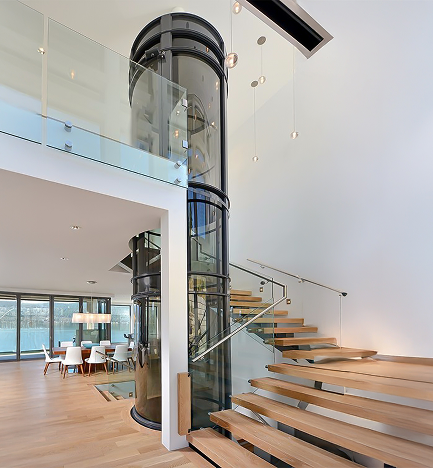
A home elevator is a fully enclosed cab that travels between floors in a residence. There are several types — hydraulic, traction, and pneumatic vacuum elevators — but all of them share one key feature: the user rides inside an enclosed cab, like a scaled-down version of a commercial elevator.
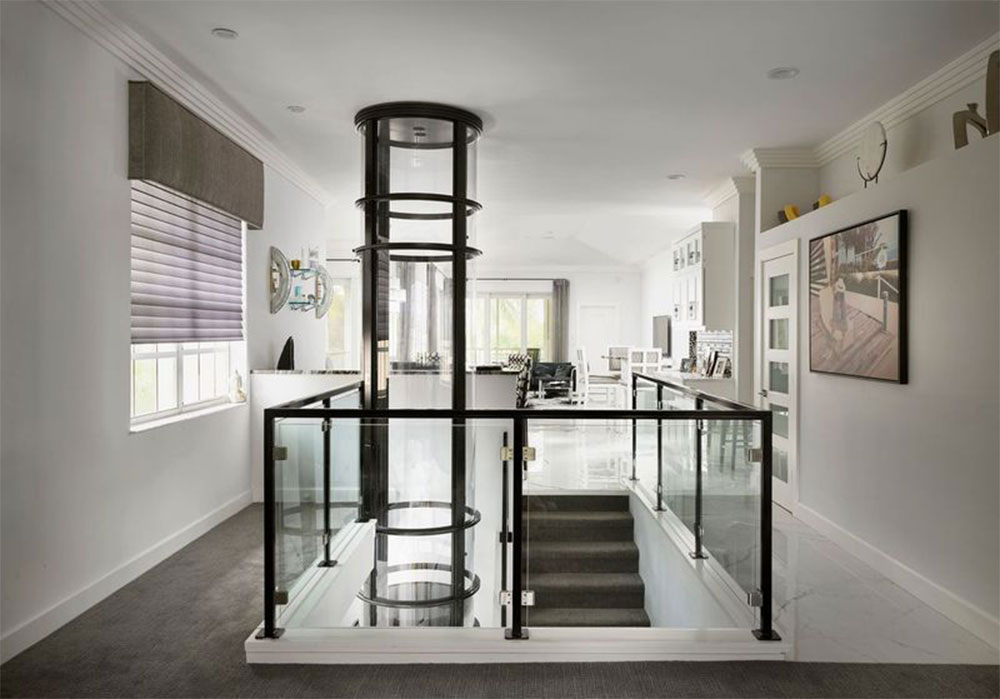
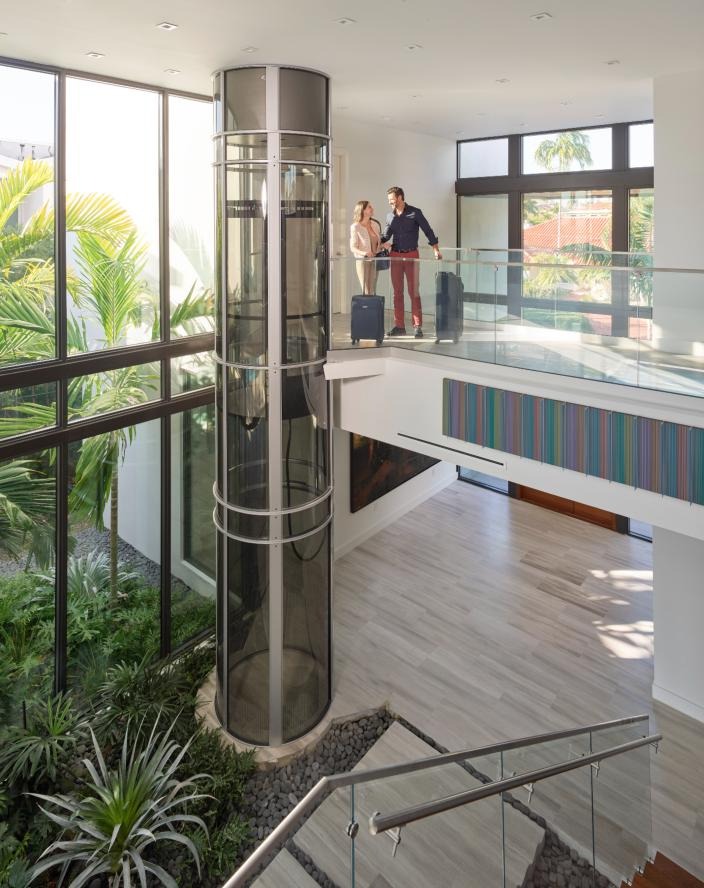
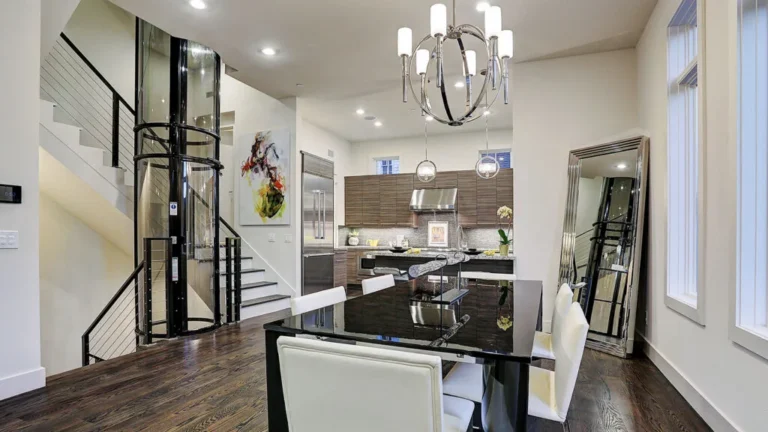
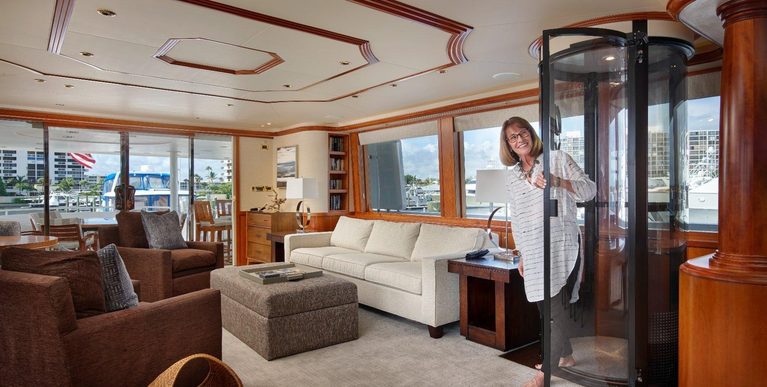
Pneumatic vacuum elevators — the type PVE manufactures — use air pressure differential to raise and lower the cab inside a cylindrical tube. The PVE30, PVE37, and PVE52 are examples. They require no shaft, no pit, and no machine room, which makes them well-suited to retrofits in existing homes.
Home elevators are typically used for:
- Full multi-floor access (two, three, or four stories)
- Aging in place in a two- or three-story home
- Luxury accessibility that integrates visually with the home’s design
- Transporting groceries, laundry, and family members daily
- Situations where the user wants an enclosed, climate-protected ride
The key differences at a glance
| Feature | Platform Lift | Home Elevator |
|---|---|---|
| Enclosure | Open or three-sided platform | Fully enclosed cab |
| Typical rise | Up to 14 feet | Full floor-to-floor (up to 50 feet for pneumatic models) |
| Primary user | Wheelchair users and those using scooters, walkers, or other mobility aids | Household members (with or without mobility aids) |
| Platform/cab capacity | Typically 750 to 1,050 pounds | Varies by model; PVE elevators range from 350 to 525 pounds |
| Footprint | Small (platform + rail tower) | Compact; pneumatic elevators are shaftless |
| Installation | 1 to 3 days, minimal construction | 2 to 5 days for pneumatic; longer for traditional elevators |
| Aesthetic | Industrial/functional | Designed to integrate with home interior |
| Typical cost range | $5,000 to $25,000 | $35,000 to $75,000+ depending on type and model |
| Indoor/outdoor | Both | Typically indoor only |
When a platform lift is the right choice
A residential platform lift is often the better fit when:
- The vertical rise is short. For 3 to 6 feet of rise — like getting from the driveway to a raised porch — a vertical platform lift is simpler and more affordable than an elevator, and it typically requires less space and structural modification than a long ramp.
- A wheelchair user needs access, not a whole household. Platform lifts are purpose-built for wheelchairs and mobility aids. If the primary use case is one wheelchair user getting into the house, a platform lift gets the job done.
- The installation is outdoors. Pneumatic and traditional home elevators are indoor products. If you need to solve an outdoor access problem — a deck, a sloped lot, a basement entrance — a platform lift is designed for weather exposure.
- Budget is the deciding factor. A quality platform lift typically costs a fraction of a home elevator. If accessibility is urgent and the budget is tight, a platform lift delivers safety and independence without the full elevator investment.
- Appearance is secondary. Platform lifts are functional products. If you don’t need the lift to blend into the home’s interior design, that’s one less constraint on the decision.
When a home elevator is the right choice
A home elevator often makes more sense when:
- You need full multi-floor access. For a two- or three-story home where everyone in the household will use the lift, an elevator is the right scale of solution.
- You want aging-in-place protection for a whole home. If you’re planning for the next 20 years in a home you love, an elevator covers more ground than a lift designed for a single transition point. Our guide to home elevators for seniors covers this planning in more depth.
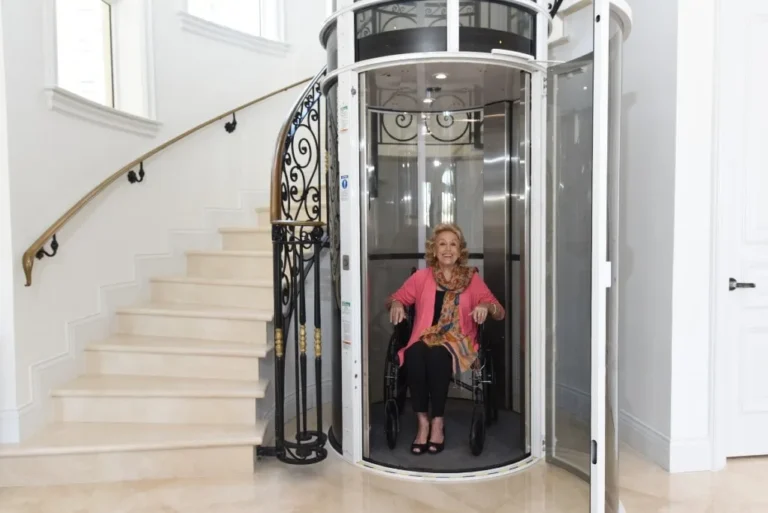
- Enclosure matters. An enclosed cab is climate-protected, more private, and feels safer to many users — especially those with vertigo, balance concerns, or anxiety about open heights.
- The home’s appearance matters. Pneumatic vacuum elevators in particular are designed to be visually striking features — a clear tube integrated into the home’s architecture — rather than functional additions bolted onto the side.
- You’re transporting more than people. Groceries, laundry baskets, luggage, strollers, an elevator cab holds all of them. A platform lift generally doesn’t.
How to choose: a decision framework
Here’s a simple way to work through the decision:
Start with vertical rise. If you’re solving a 3- to 6-foot access problem (porch, entry, split level), start with vertical platform lifts; they’re typically the right-sized solution when a ramp would be too long or space-hungry. If you’re solving a full-floor or multi-floor access problem, start with home elevators.
Consider who will use it. If one wheelchair user is the primary occupant of the lift, platform lifts are purpose-built for that. If the whole family will use it daily — kids, grandparents, groceries, laundry — an elevator serves a broader purpose.
Check indoor vs. outdoor. Outdoor applications almost always point to a platform lift. Indoor multi-floor applications almost always point to an elevator.
Think about the timeframe. If you need accessibility this month to solve an immediate medical or mobility issue, platform lifts install faster and cost less. If you’re planning five to twenty years ahead for aging in place or a long-term disability, an elevator is a longer-term investment that may pay back through increased home resale value.
Set a budget range. Platform lifts typically run $5,000 to $25,000+ installed, with many mid-range vertical platform lifts starting closer to $8,000+, depending on open vs. enclosed design, outdoor vs. indoor use, and travel distance. Home elevators typically start around $35,000 and go up based on type, finishes, and travel. Our home elevator cost guide breaks the elevator side down in detail.
Visit the manufacturer or dealer. Both platform lifts and home elevators are products you really need to see and ride before buying. Manufacturers often have showroom installations or can refer you to recent customer homes.
Benefits that apply to both platform lifts and home elevators
Whichever product fits your situation, both platform lifts and home elevators deliver the same core benefits:
- Independence. The ability to move through your home without asking for help.
- Fall prevention. Stair-related falls are a leading cause of serious injury in older adults; eliminating stair climbing meaningfully reduces that risk.
- Access to the full home. Basements, upper floors, and outdoor spaces become part of daily life again instead of off-limits.
- Aging in place. The home that worked at 55 can keep working at 75 and 85.
- Family inclusion. Accessibility means grandparents, friends, and guests with mobility needs can visit comfortably.
- Peace of mind. Knowing the home is ready for whatever comes next.
- Potential tax benefits. Both products may qualify as medical expense deductions under IRS Publication 502 when installed for a documented medical reason. A tax professional can confirm eligibility for your situation.
- Potential grant assistance. Programs like Rebuilding Together, Area Agencies on Aging, and some state Medicaid waivers may offer financial support for accessibility modifications. The Eldercare Locator can help you find local resources.
- Home value. Accessibility features are increasingly viewed as premium upgrades, particularly in markets with aging demographics.
Factors to consider when choosing either product
Regardless of which direction you’re leaning, work through these specifics with a qualified installer:
- Vertical rise — Measure precisely. Even a few inches changes what’s feasible.
- Weight capacity — Match capacity and platform size to safely accommodate the user, their mobility aid, and realistic cargo. Residential vertical platform lifts typically offer 750 to 1,050 pound capacities.
- Available space — Platform lifts need room for the platform and guide tower; elevators need a footprint for the cab or cylinder.
- Indoor vs. outdoor use — Different products are rated for different environments.
- Door and entry configuration — Single swing, double swing, powered — matters more than people expect.
- Power requirements — Most residential platform lifts and pneumatic elevators run on standard household current (110V or 220V). Some platform lift models include a rechargeable battery backup for operation during power outages. Confirm specifics with the manufacturer.
- Maintenance expectations — Both products need annual professional inspection.
- Permits and codes — Local building codes vary. ASME A18.1 covers platform lifts; ASME A17.1/A17.7 covers home elevators. A good installer knows the local requirements.
Safety features to look for in a platform lift
If a platform lift is the right fit, confirm these standard safety features before buying:
- Overload sensors that prevent operation if weight capacity is exceeded
- Emergency stop button accessible from the platform
- Interlocking doors or gates that prevent operation unless they’re properly closed, including a landing gate at the upper landing where applicable
- Non-slip platform surface — especially important for outdoor units
- Grab bars for added stability during entry, exit, and travel
- Battery backup lowering system for safe descent during power outages
- Weather-resistant materials on outdoor units for long-term durability
- Audible and visual indicators for direction and operation status
For enclosed platform lifts installed in multi-family dwellings, confirm the unit meets ADA accessibility standards if that applies to your situation. ADA compliance is typically not required for single-family private residences but is required for multi-family rental properties and public accommodations.
Safety features to look for in a home elevator
If you’re leaning toward a home elevator, look for:
- Enclosed cab with door interlocks
- Emergency stop and alarm
- Battery backup for safe descent during power outages
- Overweight sensor
- Door obstruction detection
- For pneumatic vacuum elevators specifically: the fail-safe braking system that engages automatically if cab speed deviates from normal operation
PVE elevators are built around a passive safety design — if vacuum pressure is lost for any reason, the cab lowers slowly and safely to the nearest landing rather than requiring powered intervention. More on how this works in our guide to how pneumatic elevators work.
Financing and funding options
Both platform lifts and home elevators have financing paths worth exploring:
- Manufacturer financing — PVE and most major platform lift brands partner with lenders for in-house financing. See our home elevator financing overview for how the elevator side typically structures.
- Home equity loans or HELOCs — For larger projects, equity financing often carries better rates than consumer loans.
- VA benefits — Veterans with service-connected disabilities may qualify for Specially Adapted Housing (SAH) grants that cover accessibility modifications.
- State Medicaid HCBS waivers — Home and Community-Based Services waivers in many states cover accessibility equipment for qualifying individuals.
- Nonprofit grants — Rebuilding Together, local Area Agencies on Aging, and disease-specific organizations (ALS Association, MS Society, etc.) sometimes fund equipment.
- Medical expense tax deduction — Document the medical reason for installation and consult IRS Publication 502 with a tax professional.
Frequently asked questions
How long does it take to install a platform lift?
Indoor open platform lifts typically install in one day. Enclosed platform lifts or outdoor installations with structural modifications can take two to three days.
How long does it take to install a home elevator?
Pneumatic vacuum elevators like PVE models typically install in two to five days without the extensive construction required for traditional elevators (no shaft, no pit, no machine room). Traditional hydraulic or traction elevators take significantly longer, often weeks of construction before installation.
Do I need a permit?
Yes, in most jurisdictions. Permit requirements for both platform lifts and home elevators are set by local building codes. A qualified installer typically handles the permit process as part of the project.
How much does a residential platform lift cost?
$5,000 to $25,000+ installed in most cases, with many mid-range vertical platform lifts starting closer to $8,000+. Final cost depends on open vs. enclosed design, indoor vs. outdoor use, vertical rise, weight capacity, platform size, and additional features.
How much does a home elevator cost?
Home elevators typically start around $35,000 and go up based on type, finishes, travel distance, and installation complexity. Pneumatic vacuum elevators often fall in the middle of the home elevator price range because they don’t require the extensive construction of traditional elevators. See our home elevator cost guide for a full breakdown.
Are platform lifts ADA compliant?
ADA applies to public accommodations and commercial buildings, not single-family private residences. Some platform lifts are designed to meet ADA specifications, which matters if the installation is in a multi-family dwelling, a short-term rental serving the public, or a mixed-use property.
What maintenance do these products need?
Both platform lifts and home elevators need annual professional inspection and lubrication at minimum. Pneumatic vacuum elevators have fewer mechanical components than traditional elevators or platform lifts (no cables, no hydraulics, no pulleys), which generally translates to simpler maintenance requirements.
Can I convert a platform lift to a home elevator later?
Not directly — they’re separate products with different installation footprints. However, if you’re planning for progressive mobility needs over time, discuss this with your installer. A platform lift that solves today’s problem doesn’t preclude installing an elevator later for broader access.
Which has better resale value impact?
Both can increase home resale value in markets with aging demographics, but enclosed home elevators generally add more measurable value because they’re perceived as a premium architectural feature rather than a medical device. Our article on whether home elevators increase property value covers the research.
A residential platform lift and a home elevator both solve accessibility problems, but they solve different versions of the problem. If you’re dealing with a short rise, an outdoor access issue, a wheelchair-focused use case, or a tight budget, a platform lift is probably the right tool. If you’re looking at full multi-floor access, long-term aging in place, enclosed-cab comfort, or integration with the home’s design, a home elevator is likely the better fit.
Both are substantial decisions. Measure your space, talk to a qualified installer, and if possible, see the product you’re considering in person before committing.
If a home elevator sounds like the right direction for your situation, we’re happy to walk you through what a PVE pneumatic vacuum elevator would look like in your home. If a platform lift is the better fit, we’ll tell you that too — the goal is the right solution for your situation, not the sale.
The bottom line
A residential platform lift and a home elevator both solve accessibility problems, but they solve different versions of the problem. If you’re dealing with a short rise, an outdoor access issue, a wheelchair-focused use case, or a tight budget, a platform lift is probably the right tool. If you’re looking at full multi-floor access, long-term aging in place, enclosed-cab comfort, or integration with the home’s design, a home elevator is likely the better fit.
Both are substantial decisions. Measure your space, talk to a qualified installer, and if possible, see the product you’re considering in person before committing.
If a home elevator sounds like the right direction for your situation, we’re happy to walk you through what a PVE pneumatic vacuum elevator would look like in your home. If a platform lift is the better fit, we’ll tell you that too — the goal is the right solution for your situation, not the sale.
Was this article helpful?
Get in touch to schedule a call back
One of our lift experts will answer all of your questions.
Prefer to talk now? (877) 691-0357