Skip to content >

- Key Takeaways
- What Is a Retrofit Elevator?
- Can You Retrofit an Elevator Into an Existing Home?
- What's Involved in the Retrofitting Process?
- What's the Best Location in a House for a Retrofit Elevator?
- Retrofit vs. New Construction: Key Benefits and Differences
- Which PVE Model Is Best Suited for Retrofit?
- How Much Does a Retrofit Home Elevator Cost?
- Retrofit for Seniors and Family Members With Limited Mobility
- Is a Retrofit Elevator a Smart Move for Resale?
- Frequently Asked Questions
- About Pneumatic Vacuum Elevators
Quick Answer: A retrofit elevator is a home elevator added to an existing house rather than designed into a new construction project. Retrofit is possible in most older homes when overhead clearance, floor structure, and layout allow. PVE’s air-driven residential elevators are especially well suited for retrofit because they need no machine room, shaft, or pit, install in 2 to 3 days, and can be placed almost anywhere inside your home.
Key Takeaways
- A retrofit elevator installs into an existing home; new construction integrates the elevator into original architectural plans.
- PVE air-driven home elevators are well suited for retrofit because they are self-supporting and need no machine room, shaft, or pit.
- Most retrofit installations complete in 2 to 3 days with minimal construction and no changes to interior walls beyond the elevator footprint.
- Best retrofit locations include stacked closets, a corner of the master bedroom, a converted stairwell, an unused basement or garage corner, or open two-story space.
- Retrofit elevators improve accessibility for family members with limited mobility and add long-term value for potential buyers of an older home.
What Is a Retrofit Elevator?
A retrofit elevator is a residential elevator installed in an existing home, older home, or occupied building rather than one designed into a new construction project from day one. Retrofit differs from new construction because the existing structure was not built with a lift in mind, so the installation process must work around interior walls, ceiling heights, and the available space you already have.
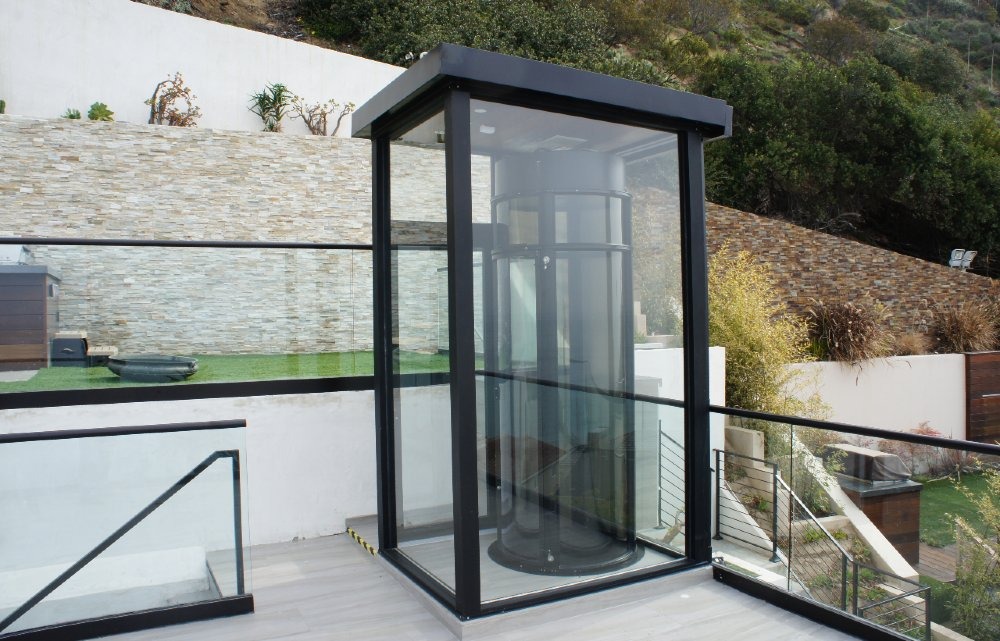
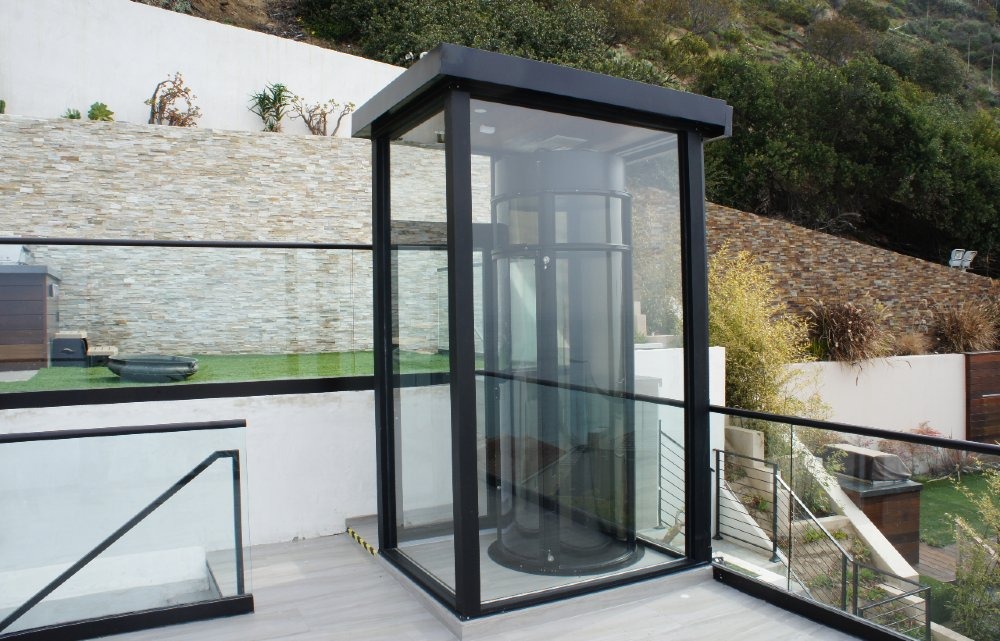
Traditional elevators, including hydraulic elevators and cable-driven residential lifts, typically require a machine room, a shaft, and a pit. Those requirements make retrofit into an older home or older building difficult and expensive because you often need major structural changes to accommodate the equipment. PVE’s air-driven residential elevators skip those requirements entirely. Learn how pneumatic elevator technology works: the units are self-supporting, need no machine room, no shaft, and no pit, and install with minimal construction impact on your existing structure.
Can You Retrofit an Elevator Into an Existing Home?
Yes, in most cases. Retrofit is possible in the majority of older homes and older buildings when three conditions are met: adequate overhead clearance, a floor that can support the elevator load, and enough interior space for the footprint of the elevator type you choose. For larger or more complex retrofits, your plan may also include a structural evaluation by a licensed engineer.
A short feasibility checklist:
| Factor | What to Verify |
| Overhead clearance | Top-floor ceiling height supports the total rise plus overhead |
| Floor structure | Floor can carry the elevator load and preserve structural integrity |
| Available space | Enough interior space for the compact design of the model you choose, based on the retrofit options under consideration |
| Access to power | A dedicated 220-volt single-phase circuit is available or can be run, with the home’s existing electrical service evaluated |
| Layout and location | Interior walls allow a placement that makes practical sense |
| Permits and code compliance | Local jurisdiction issues permits for residential elevator installation, subject to local zoning and fire safety requirements |
A certified PVE dealer, or one of the elevator companies you work with, can complete a full site visit to confirm feasibility before you commit to a project.
What’s Involved in the Retrofitting Process?
The retrofitting process for a PVE air-driven home elevator is far simpler than retrofitting a traditional elevator. Because there is no machine room and no shaft to build, the physical installation process typically takes 2 to 3 days with minimal construction impact on the existing home.
The typical steps:
- Site visit and feasibility review. A certified dealer or local elevator company reviews layout, overhead clearance, floor structure, and best location to help plan the project early.
- Design and quote. You compare retrofit options, then choose an elevator model and finishes. The dealer confirms footprint, total rise, and any minor structural changes required.
- Prep work. A small opening is cut in the floor between the two levels. Electrical is run to the location. Any lighting adjustments in the immediate room are handled here.
- Delivery and install. The elevator arrives pre-assembled. Installation is completed in 2 to 3 days with the family in most cases still living in the house.
- Commissioning and handoff. The dealer tests, certifies, and walks you through operation, maintenance expectations, and safety features.
Because the unit is self-supporting and rests on the existing ground floor, retrofit does not require the deep structural changes that hydraulic elevators demand.

What’s the Best Location in a House for a Retrofit Elevator?
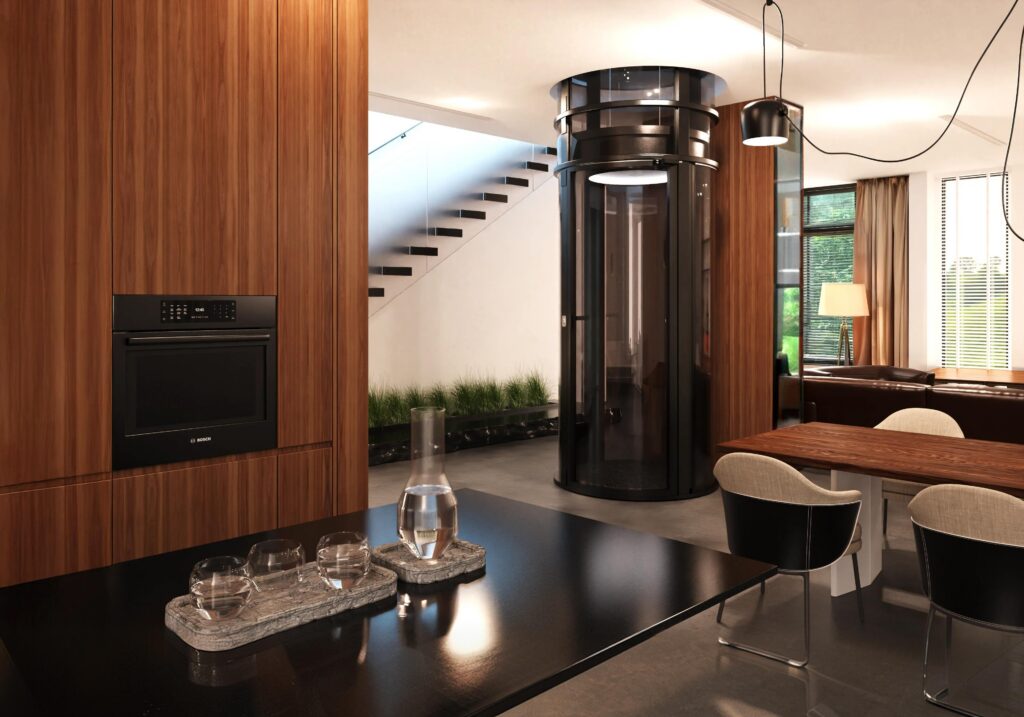
The best location depends on your layout, but the most common retrofit placements are stacked closets, a corner of the master bedroom, a converted stairwell, a corner of the basement or garage, or an existing open two-story space that already has vertical alignment between floors. In general, a residential lift works best when you can dedicate a clear, contiguous footprint on both floors so the opening lands within the existing plan.
Stacked closets are the single most popular retrofit location because both floors already share unused vertical alignment, minimizing structural changes and preserving your home’s aesthetic. The compact design of a small residential elevator like the PVE30 means the footprint fits inside spaces most homeowners assume are too tight for a lift. Under ASME A17.1 code, residential elevator cab interiors are capped at 15 square feet, which is why layout efficiency matters in retrofit placement.
Retrofit vs. New Construction: Key Benefits and Differences
Both applications produce the same finished elevator, but the project experience differs.
| Consideration | Retrofit | New Construction |
| Timing | Added to an existing home after the fact | Planned into original architectural drawings |
| Construction impact | Minimal construction with PVE, primarily the floor opening | Integrated during framing, no rework needed |
| Design flexibility | Constrained by existing walls, layout, and available space | Full flexibility on best location and lighting |
| Cost | Slightly higher due to prep work in the existing structure | Slightly lower when integrated from day one |
| Timeline | Elevator installed in 2 to 3 days after prep | Installed alongside other construction |
| Structural changes | Usually minor with PVE, significant with traditional elevators | Designed in from the start |
The key benefit of PVE for retrofit is that the compact design and self-supporting structure eliminate most of the structural changes that make retrofit expensive with traditional elevators. Other retrofit categories, such as LU/LA elevators, still require a small pit and more construction than an air-driven install.

Which PVE Model Is Best Suited for Retrofit?
PVE manufactures four models, and each fits a different retrofit scenario. Compare the full lineup on the home elevators hub.
| Model | Best Suited For |
| PVE30 | The smallest footprint. Ideal for stacked closets and tight interior space in an older home. |
| PVE37 | The most popular retrofit choice. Fits inside almost any residence and handles two passengers. |
| PVE52 | Wheelchair-accessible retrofit for homeowners with limited mobility or family members who need full access. |
| Cube | Modern square cabin for retrofit projects where a sleek design and larger cabin footprint make sense. |
For retrofit projects that need to minimize footprint entirely, PVE’s models function similarly to shaftless elevators: no dedicated shaft is required, and the unit installs in small spaces most traditional equipment cannot fit.
How Much Does a Retrofit Home Elevator Cost?
Retrofit costs vary by model, home layout, and the amount of prep work your existing structure needs. As a general rule, retrofit runs somewhat higher than a comparable new construction install because of the added floor prep, electrical work, and coordination inside an occupied home. Over the long term, an air-driven system can save money on service compared to hydraulic equipment because there are no hydraulic fluids or overhead machinery to maintain.
Because PVE elevators require no shaft or machine room, they avoid the largest cost driver of traditional elevator retrofit: building a shaft into an older home. For a full breakdown of pricing factors, see PVE’s home elevator cost guide.
Retrofit for Seniors and Family Members With Limited Mobility
Adding a residential elevator to an existing home is one of the most impactful accessibility upgrades a homeowner can make. For seniors and loved ones with limited mobility, a retrofit elevator eliminates the daily strain of stairs, enhances accessibility, and adds everyday convenience while preserving safe access to every floor of the house.
PVE’s wheelchair-accessible model is the PVE52. For a broader look at how retrofit fits into aging in place, see home elevators for seniors.
Is a Retrofit Elevator a Smart Move for Resale?
Yes, for the right home. Retrofit is a smart move when the house is a two-story or three-story home in a market where potential buyers value accessibility, or when the homeowner plans to age in place. An installed elevator signals a well-maintained, forward-looking home and can be a differentiator against comparable listings without one.
The potential impact on resale is strongest in luxury homes and in markets with a large senior demographic. Discuss the local market with your real estate agent to gauge how much value a lift adds in your specific area.
Frequently Asked Questions
What Are The Best Retrofit Solutions To Add A Home Lift Without Major Construction?
The best retrofit solutions minimize structural changes to your existing home. PVE air-driven residential elevators are among the most retrofit-friendly options because they need no machine room, no shaft, and no pit, while still offering customizable options in finishes and design. Most PVE installations complete in 2 to 3 days, and the compact design fits inside stacked closets, corner locations, or existing open vertical space.
Do Retrofit Elevators Require Code Compliance Permits?
Yes. Residential elevator installation requires permits in most jurisdictions, and code compliance is confirmed by the certified installer during the permitting process. Your PVE dealer coordinates permits as part of the installation.
What Kind of Maintenance Does a Retrofit Elevator Require?
PVE air-driven elevators require minimal ongoing maintenance compared to hydraulic elevators because there are no hydraulic fluids, cables, or overhead machinery to service. A certified PVE dealer handles any maintenance the unit does need.
Can a Retrofit Elevator Be Installed in a Small Older Home?
Yes. Small spaces are one of the strongest use cases for PVE. The PVE30 has the smallest footprint available and is designed to fit inside interior locations where a traditional elevator or hydraulic lift would not be practical.
Are Retrofit Residential Elevators Safe?
Yes. PVE residential elevators are fully certified and engineered for safety, with a gravity-assisted descent in the event of a power outage. Retrofit installation does not change any of the safety features built into the equipment.
Do Retrofit Elevators Work in Commercial Buildings and Offices?
PVE elevators are designed for residential use. While air-driven elevator technology exists at commercial scale, retrofit into commercial buildings and offices typically uses different equipment from elevator companies specializing in commercial applications.
How Disruptive Is the Retrofit Installation Process?
Not very. Because PVE units are self-supporting and require minimal construction, the installation process is far less disruptive than a traditional elevator retrofit. Most residents stay in the house during the 2 to 3 day install with only the immediate room affected.
About Pneumatic Vacuum Elevators
PVE is a residential elevator manufacturer specializing in air-driven home elevators for retrofit and new construction. Every PVE lift is self-supporting, requires no machine room, shaft, or pit, and is engineered for reliable, efficient operation. Whether you are retrofitting an older home to accommodate a loved one with limited mobility, planning a new construction project with accessibility built in, or upgrading a house for long-term value, a PVE home elevator can be placed almost anywhere inside your home with minimal construction impact.