Skip to content >

- Key Takeaways
- What Are the Most Common Home Elevator Repairs?
- What Is the Difference Between a Repair and Routine Maintenance?
- When Should You Repair or Replace a Home Elevator?
- How Does Repair Work for a PVE Elevator?
- What Should You Look for in an Elevator Repair Service?
- Frequently Asked Questions
Key Takeaways
- Most home elevator faults come from a small set of parts: the doors and gates, the control system, the drive or lifting mechanism, and the power supply.
- A repair fixes a specific problem after it happens. Proper maintenance is scheduled servicing that helps prevent problems. They are two different visits.
- Air-driven (pneumatic) elevators have fewer moving parts than cable or hydraulic systems, with no hydraulic fluid and no separate machine room, which narrows the list of what can fail.
- Home elevator repairs should be handled by a professional technician. This equipment carries real safety risks and is not a do-it-yourself job.
- For a PVE elevator, service is arranged through the authorized local dealer network rather than a general elevator contractor.
A home elevator is a long-term accessibility and mobility solution, built to run for years with little trouble. Like any mechanical system, it still needs occasional repair. Knowing what usually goes wrong, how a repair differs from routine servicing, and when a problem is worth fixing helps you protect your investment and avoid costly repairs later.
What Are the Most Common Home Elevator Repairs?
Most home elevator repairs trace back to four areas: the doors and gates, the control system, the drive or lifting mechanism, and the electrical supply. Door and gate faults are the most frequent, because sensors and safety interlocks are used on every trip and are designed to stop the elevator the moment something is out of place.
Control system issues show up as unresponsive call buttons, error codes, or an elevator that will not answer a call. These are usually electronic rather than mechanical. A professional technician follows a clear diagnostic process to pinpoint the fault and resolve it safely.
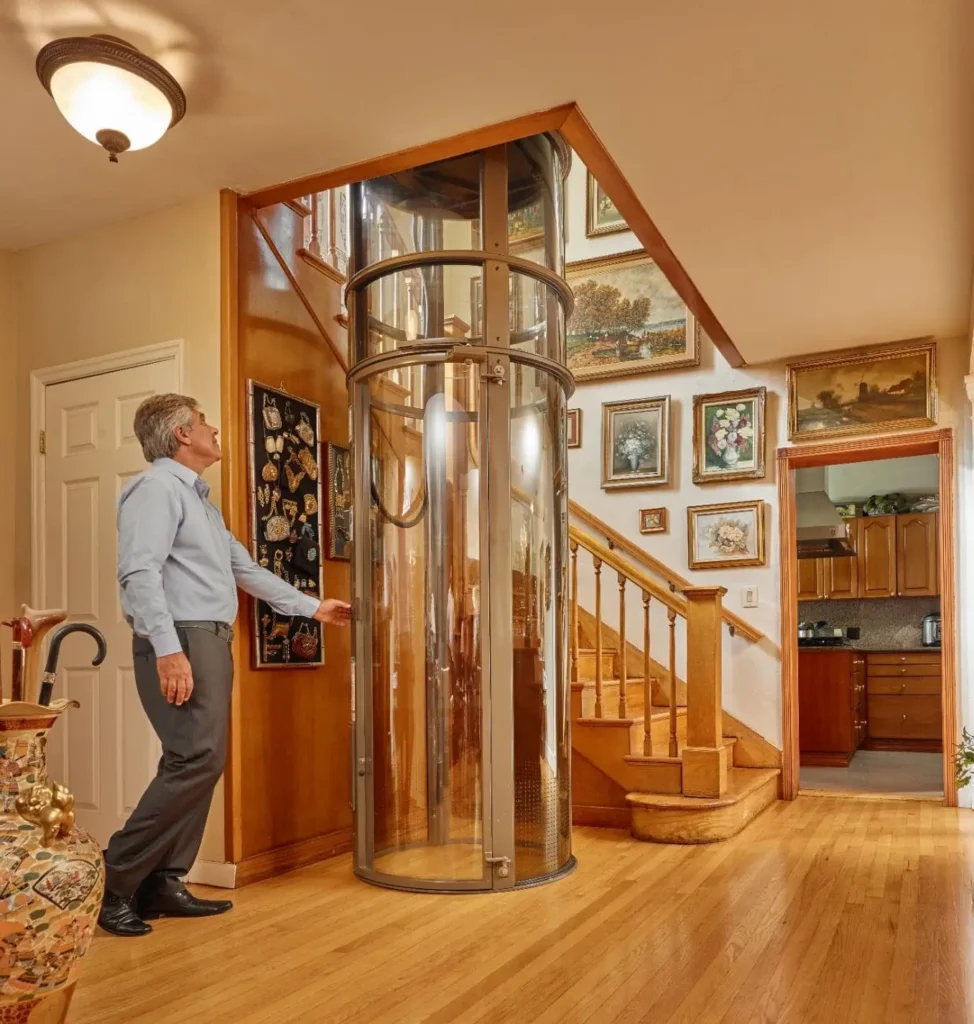
The drive or lifting mechanism depends on the elevator type, and this is where the systems differ the most. A cable or traction elevator relies on cables, pulleys, and a counterweight that wear over time. A hydraulic elevator uses a fluid-driven piston, which introduces the possibility of fluid leaks and seal failures. An air-driven pneumatic elevator moves the car using air pressure inside a sealed cylinder, so there are no cables to fray and no hydraulic fluid to leak. On this equipment, attention tends to focus on the vacuum turbines, valves, and seals that maintain air pressure. To understand how a pneumatic elevator works, the sealed-cylinder design explains why the service picture is different from a commercial elevator or a traditional home lift.
Power and leveling problems round out the list. An elevator that stops slightly above or below the floor, or that fails to line up level between floors, is signaling something worth having checked. On a pneumatic elevator, a controlled gravity-assisted descent during a power loss is a built-in safety feature, not a malfunction. Catching these potential issues early keeps the equipment running smoothly and prevents small faults from turning into costly repairs.
What Is the Difference Between a Repair and Routine Maintenance?
A repair corrects a specific fault that has already occurred, such as a failed sensor or a control board error. Routine maintenance is scheduled, preventive servicing that inspects, adjusts, and cleans the system to catch small issues before they become failures.
The two work together. Proper maintenance, ideally under a regular home elevator service plan, reduces how often repairs are needed and often catches a developing problem while it is still minor. Consistent residential elevator maintenance also gives the technician a clear record of the elevator’s condition when a repair is needed. Installation quality plays a part too; an elevator that was installed well by qualified professionals tends to need fewer repairs over its life.

When Should You Repair or Replace a Home Elevator?
Repair is almost always the right first step, but repeated or costly repairs on an aging unit can eventually cost more than they return. If breakdowns are becoming frequent, or a single repair approaches a large share of what a new home elevator costs, replacement may be the better value. Review the signs it may be time to replace your elevator before deciding, so you protect both your safety and your investment.
How Does Repair Work for a PVE Elevator?
PVE designs and manufactures its elevators and provides service through an authorized dealer network. For a repair, the right first call is PVE or your local authorized dealer rather than a general elevator repair company. A dealer who knows the specific model, such as the PVE30, PVE37, or PVE52, brings direct knowledge of the equipment, can follow the correct diagnostic process, and uses genuine manufacturer parts.
This matters more than it might seem. Pneumatic vacuum elevators are a specific technology, and a contractor whose experience is with cable or hydraulic systems may not be equipped to service them. Because the same authorized network also handles installation, dealers understand the elevator from the ground up. You can find a local PVE dealer or installer near you to arrange service.
What Should You Look for in an Elevator Repair Service?
If your elevator is not a PVE unit, or you are comparing providers, a few checks separate a reliable service from a risky one. Keep this short list in mind:
- Confirm the company holds valid licensing and insurance for your area and elevator type.
- Look for professional knowledge of your specific equipment, whether it is a residential or commercial elevator.
- Ask whether they use original manufacturer (OEM) parts rather than generic aftermarket parts.
- Get the warranty on both parts and labor in writing.
- Request more than one written estimate so you can compare scope and price.
- Keep records of every service visit for warranty and future reference.
Frequently Asked Questions
Can You Repair a Home Elevator Yourself?
No. Home elevators combine electrical, mechanical, and safety systems that require training to service safely. Diagnosis and repair should be left to a qualified, licensed professional.
What Are the Signs a Home Elevator Needs Repair?
Common signals include unusual noises, jerky or uneven movement, doors that stick or fail to close, stopping out of level with the floor, or unresponsive controls. Any of these potential issues is a reason to schedule service.
Does PVE Repair Its Own Elevators?
PVE manufactures its elevators and provides service through its authorized local dealer network. For any repair, contact PVE or your authorized dealer so the work is done by someone with direct knowledge of the specific model and access to genuine parts.
How Is Repairing a Pneumatic Elevator Different From a Cable or Hydraulic One?
A pneumatic elevator moves on air pressure inside a sealed cylinder, with no cables, counterweight, hydraulic fluid, or separate machine room. That means fewer wear parts and a different service focus, centered on the turbines, valves, and seals that hold air pressure.
Is It Worth Repairing an Older Home Elevator?
Usually, yes, especially for a well-built unit that has had proper maintenance. Replacement becomes the better option only when repairs turn frequent or costly relative to the value of a new elevator.