

Residential Cargo Lifts vs. Home Elevators: What’s the Difference?

On this page
Quick Answer:
A residential cargo lift is built to move goods only, usually on an open platform that travels along a guided track, and it is not designed to carry people. A home elevator carries both passengers and the things they bring with them. If your goal is to move groceries, luggage, and laundry between floors and ride along too, a home elevator is the better fit. Pneumatic vacuum elevators from PVE carry people and cargo, install indoors or outdoors, and need no pit or machine room.
Key Takeaways
- A residential cargo lift moves goods only; a home elevator moves people and their belongings.
- A cargo lift is typically an open platform on a track and is not designed or permitted to carry passengers.
- PVE pneumatic vacuum elevators carry both people and cargo, and install indoors or outdoors with no pit or machine room.
- PVE offers four models: PVE30, PVE37, PVE52, and The Cube, in capacities suited to passengers plus everyday loads.
- On a power loss, a PVE elevator descends gently to the lowest landing, so no one is stranded between floors.
Living in a multi-story home has its rewards, from spacious living areas to upstairs views. The daily reality is less charming when it means carrying groceries, laundry, and luggage up and down several flights of stairs. Two solutions come up most often: a residential cargo lift and a home elevator. They sound similar, but they solve different problems, and knowing the difference keeps you from buying the wrong one.
What Is a Residential Cargo Lift?
A residential cargo lift is designed to move goods, not people. Most feature an open platform or basket that travels vertically along a guided track, and they are rated to carry a set weight of cargo rather than passengers. In fact, cargo lifts are not designed or permitted to carry people, which is the single most important thing to understand before buying one. They suit homeowners who only need to move items, such as groceries from a garage up to a kitchen, or gear up to an elevated deck.
A dumbwaiter is a close cousin, a small goods-only lift sized for lighter loads like dishes, laundry, or groceries. If that is all you need, the dumbwaiter cost guide covers that option.
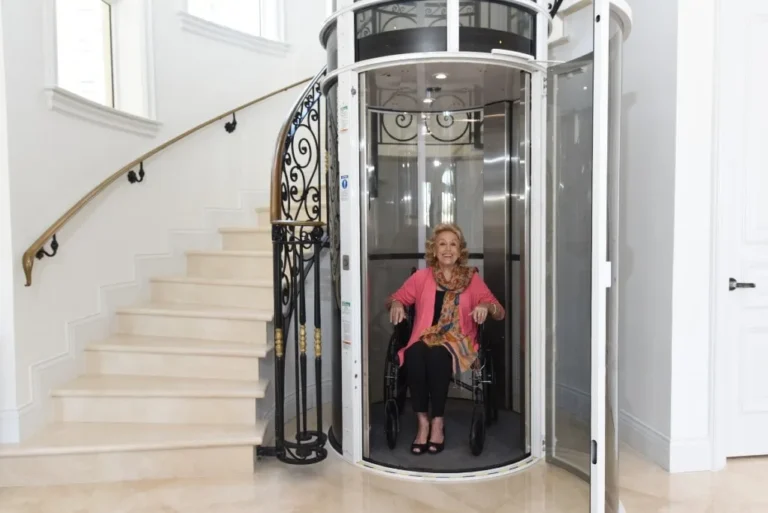
A home elevator is a different machine. It is built to carry passengers safely, and it carries whatever those passengers bring with them. For most homeowners weighing the two, that distinction is what decides the purchase.
Cargo Lift vs. Home Elevator: What’s the Difference?
The clearest way to compare the two is by what they carry and what they require to install.
| Consideration | Residential Cargo Lift | Home Elevator (PVE) |
|---|---|---|
| Carries passengers | No, goods only | Yes, people and belongings |
| Carries cargo | Yes | Yes |
| Typical design | Open platform on a track | Enclosed cab |
| Pit or machine room | Varies by system | Not required |
| Footprint | Varies | Compact, self-supporting |
| Outdoor installation | Available on some models | Available |
| Best for | Moving goods only | Moving people and their belongings |
If you only ever need to send objects between floors and will always take the stairs yourself, a cargo lift may be enough. If you want to ride between floors and bring your groceries, luggage, or laundry with you, a home elevator does both jobs in one.
Can a Home Elevator Carry Cargo, Groceries, and Luggage?
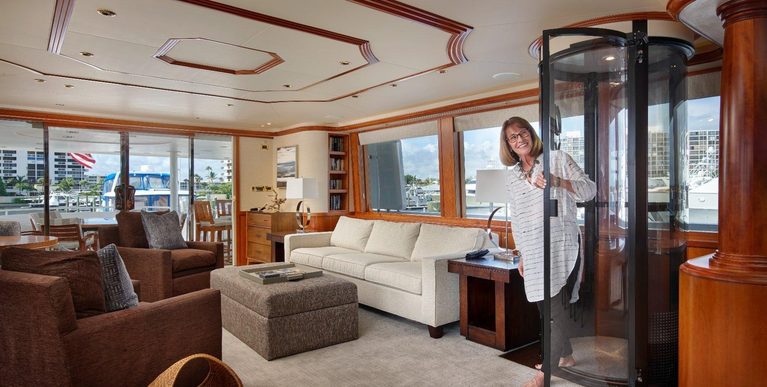
Yes. A home elevator moves people first, and everything they are carrying comes along for the ride. A PVE pneumatic vacuum elevator is well suited to this everyday use. It is self-supporting, so it needs no pit or machine room, and it installs indoors or outdoors, which makes it practical for retrofits and for homes where a traditional shaft is not an option.
PVE offers four residential models to match different space and capacity needs. The PVE30 carries one passenger, the PVE37 and The Cube each carry two, and the PVE52 carries three or fits a wheelchair with an attendant. The Cube has the most compact square footprint, 36 inches by 36 inches with a 450 pound capacity, which suits tight corners, though it is not wheelchair accessible. Because the right model depends on who rides and what they carry, capacity is worth planning carefully; the guide to elevator weight limits breaks down what residential elevators are built to support. PVE elevators are residential elevators and are not ADA compliant.
What to Consider Before Choosing
Whether you are comparing cargo lifts or home elevators, a few factors shape the decision:
- Capacity: who and what the lift will carry, now and in the years ahead.
- Travel height: the total rise needed to reach every floor you want to serve.
- Doors and landings: how the entry fits your floor plan at each stop.
- Noise: whether the unit sits near a frequently used living space.
- Permits and code: lifts and exterior structures usually require local permits, which a qualified installer can confirm for your area.
What Does a Cargo Lift or Home Elevator Cost?
Pricing depends on the type of equipment, the capacity, the finishes, and the installation, and a retrofit can add to the total when a site needs preparation. Rather than a single number, think in terms of what drives it: capacity and cab size, custom finishes, travel height, and site work. For a full breakdown of what shapes the figure on a home elevator, see the home elevator cost guide. The most reliable number for your home is a quote from a dealer who has assessed it.
Installation and Maintenance
A PVE pneumatic vacuum elevator installs with far less construction than a traditional system. Because it is self-supporting and needs no pit or machine room, it rests on the existing lowest landing and runs on a standard 220-volt supply, which allows installation in about two to three days for many retrofit or new-construction projects. Maintenance follows a straightforward rhythm of periodic professional inspections and keeping the unit clean, with your dealer setting the recommended schedule for your model.
Why Choose PVE for Moving People and Cargo
If what you really want is to move between floors with your hands full, a home elevator does more than a cargo lift, and a PVE pneumatic vacuum elevator pairs that with a compact, self-supporting design that installs indoors or out. PVE sells and services through an authorized dealer network, so the next step is a conversation about your home and the model that fits. Find your nearest PVE showroom to see the elevators in person.
Frequently Asked Questions
What is the difference between a residential cargo lift and a home elevator?
A cargo lift moves goods only and is not designed to carry people. A home elevator carries passengers along with whatever they are holding, such as groceries, luggage, or laundry. If you want to ride between floors yourself, you want a home elevator.
Can a home elevator carry cargo?
Yes. A home elevator carries passengers and their belongings together, which is why many homeowners choose one instead of a separate cargo lift. The weight each PVE model carries varies, so a dealer can confirm the right fit.
Can a cargo lift carry passengers?
No. Residential cargo lifts are built and permitted to move goods only, not people. To carry passengers, you need a home elevator.
Will a lift increase the value of my home?
A home elevator can be a meaningful feature for buyers, particularly in multi-story homes and for those planning for accessibility over time, because it keeps the whole home reachable.
Can a home elevator be installed outdoors?
Yes. PVE pneumatic vacuum elevators can be installed outdoors as well as indoors, which suits raised and coastal homes. An outdoor installation uses an enclosure to protect the equipment from the elements.
How long does installation take?
A PVE pneumatic vacuum elevator can often be installed in about two to three days, faster than a traditional cable or hydraulic system, with new construction simpler than a retrofit.
Was this article helpful?

Get in touch to schedule a call back
One of our lift experts will answer all of your questions.
Prefer to talk now? (877) 691-0357