

Beach House Elevators: A Coastal Homeowner’s Guide
On this page
Quick Answer
A bA beach house elevator is a residential elevator installed in a coastal or raised home, often one built on pilings, to carry people, groceries, luggage, and beach gear between the ground level and the raised living floors. Pneumatic vacuum elevators from PVE can be installed indoors or outdoors, need no pit or machine room, and fit tight or retrofit spaces well. Most residential elevators run from $35,000 to $100,000+.
Key Takeaways
- A beach house elevator carries people and gear between the ground level and the raised living floors of a coastal home.
- PVE pneumatic vacuum elevators install indoors or outdoors, need no pit or machine room, and retrofit well into homes on pilings.
- PVE offers four models: PVE30, PVE37, PVE52, and The Cube, with The Cube the most compact at 36 by 36 inches and a 450 pound capacity.
- Expect $35,000 to $100,000+ for a residential elevator.
- On a power loss, the elevator descends gently to the lowest landing so no one is stranded.
Why Coastal Homes Add an Elevator
Beach houses are built up. Whether the home sits on pilings above a flood zone or simply stacks its main living space on the upper floors to catch the view, the stairs add up fast. An elevator turns a three-story climb, arms full of groceries and wet beach bags, into a short ride.
The practical case is straightforward. An elevator keeps the whole home reachable for every age and mobility level, moves heavy and awkward loads without the stairwell struggle, and plans ahead for years when stairs stop being easy. In a home you intend to keep or pass down, that accessibility also protects the value of the property.
Can a Pneumatic Vacuum Elevator Be Installed Outdoors at a Beach House?
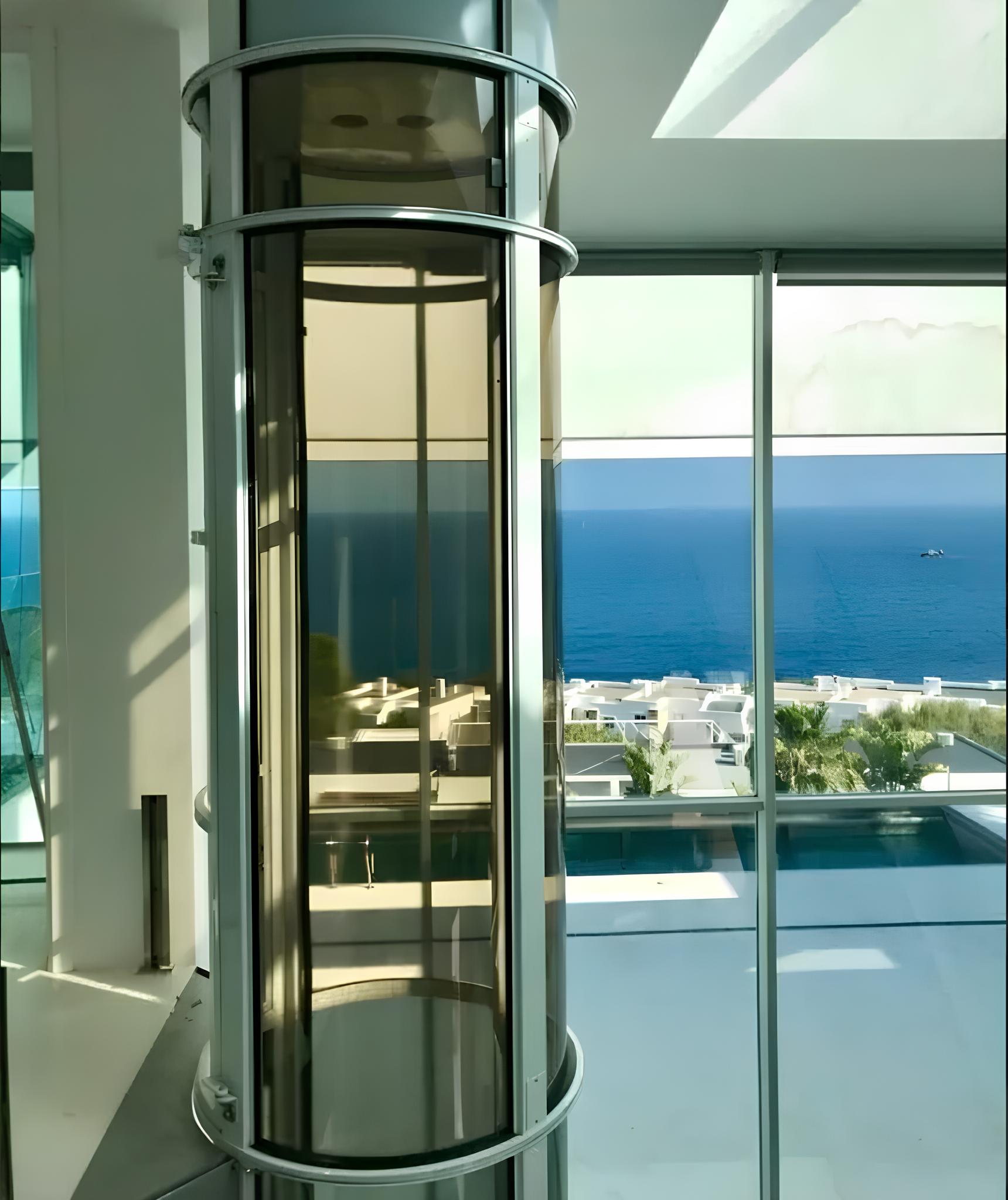
Yes. PVE pneumatic vacuum elevators can be installed outdoors as well as indoors, which suits raised coastal homes where the practical route runs from ground level, or the space beneath the house, up to the raised living floor.
The design fits beach construction for a few reasons. The elevator is self-supporting, so it needs no separate hoistway pit or machine room, which is often the deciding factor in a home built on pilings. Its footprint is compact. And because the cab travels inside a clear cylindrical tube, it delivers a genuine panoramic view on the way up, which is hard to argue with when the view is the ocean. If you are new to the technology, it helps to understand how a pneumatic vacuum elevator works before comparing it with other systems.
Does Salt Air Affect a Coastal Elevator?
Salt air and humidity are the honest realities of any coastal installation, and they are worth planning for with any elevator you consider. In a beach environment, the questions that matter are what materials and finishes are used, how the unit is sited and protected from direct exposure, and what the maintenance rhythm looks like once it is in. Regular cleaning also helps keep sand and salt from building up.
The most reliable way to plan for your specific site is to talk through its exposure with a PVE dealer, who can advise on placement and what a coastal setting means for your home.
Which PVE Model and Weight Capacity Fits a Beach House?
PVE offers four residential models: the PVE30, PVE37, PVE52, and The Cube. Each suits a different combination of space, capacity, and passenger needs, which are among the key features to compare for a beach house elevator.
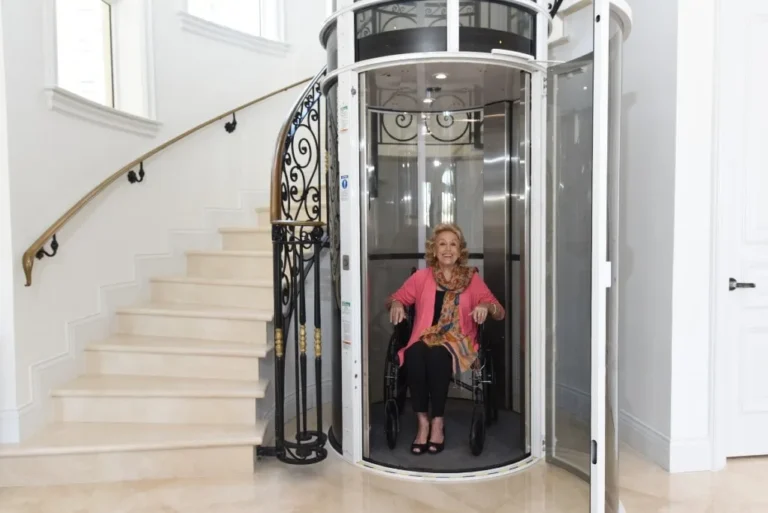
The Cube is the most compact option, a two-passenger cab with a 36 inch by 36 inch footprint and a 450 pound capacity, which makes it a fit for the tightest corners of a beach house, though it is not wheelchair accessible. The PVE30, PVE37, and PVE52 step up in cabin size and capacity from there, with the larger models suited to multi-passenger use and greater accessibility. For a space-constrained coastal build, it is worth reviewing the options for small residential elevators alongside the full lineup.
Because the right model depends on your floor plan, how many people ride at once, and whether you need wheelchair access, the cleanest way to match a model to your home is to work through it with a dealer at a PVE showroom.
Pneumatic Vacuum Elevator vs Traditional Elevator for a Beach House
For a coastal home, the build requirements matter as much as the ride. The main categories for a beach house elevator include pneumatic, hydraulic, and traction systems, depending on needs and regulations.
| Consideration | Pneumatic Vacuum Elevator (PVE) | Traditional Residential Elevator |
|---|---|---|
| Pit required | No | Often yes |
| Machine room required | No | Often yes |
| Footprint | Compact, self-supporting | Larger, needs structural hoistway |
| Retrofit into an existing home | Well suited | More involved |
| View | Panoramic, clear cylindrical cab | Enclosed cab |
| Outdoor installation | Available | Varies by system |
Hydraulic elevators use a fluid-driven piston system for heavy loads and smooth travel. Traction elevators use cables and a counterweight for efficient operation over several floors.
Can You Add an Elevator to an Existing Beach House on Pilings?
Yes, and retrofits are where the pneumatic design earns its keep. Because the elevator does not require a pit or a machine room and stands on its own, it drops into an existing home with far less structural work than a conventional system.
A retrofit still needs planning. You will want a professional to confirm there is room for the unit and the landings, that the structure supports it, and that the installation meets local building codes. In flood-prone areas, elevators may need to be installed above the base flood elevation, and flood zones can require specific installation techniques to prevent water damage. A PVE dealer handles this assessment as part of the process.
What Happens During a Power Outage?
This is a fair question in a hurricane-prone region. If power is lost, a PVE elevator descends gently to the lowest landing and the door can be opened, so no one is stranded between floors. Coastal homeowners planning for storm season should raise backup power options with their dealer.
How Do You Maintain a Beach House Elevator and Its Safety Features?
Maintenance keeps any elevator running well, and a coastal setting makes a regular rhythm more important, not less. Plan on periodic professional inspections, keeping the unit clean, and reporting any unusual noise or performance change promptly so small issues are caught early and the lift keeps operating safely.
The same residential elevator maintenance practices apply, with extra attention to a coastal environment. Your dealer can lay out the recommended service schedule for your model and your setting, including annual inspections that check safety systems and keep moving parts lubricated for smooth operation.
How Much Does a Beach House Elevator Cost?
A residential elevator generally runs from $35,000 to $100,000+, depending on the model, cab size, finishes, and installation. PVE’s models fall in the $35,000 to $60,000 range. Retrofitting an existing beach house can add to the total when the site needs preparation, and coastal permitting can factor in as well. For a fuller breakdown of what drives the number, see the guide to how much a home elevator costs. The most reliable figure is a quote from a dealer who has seen your home.
Why Choose PVE for Your Coastal Home?
Installing a beach house elevator adds real day-to-day convenience in an elevated coastal home, and PVE pairs that fit with a compact, self-supporting pneumatic vacuum design that installs indoors or out, retrofits into a raised home without a pit or machine room, and gives you a panoramic view on every ride. PVE sells and services through an authorized dealer network, so the next step is a showroom conversation about your site and your model.
Frequently Asked Questions
What is the estimated cost of a beach house elevator?
Most residential elevators run from $35,000 to $100,000+. PVE models fall in the $35,000 to $60,000 range. Cab size, finishes, and whether the home is new construction or a retrofit all move the final number, so a dealer quote is the most accurate figure.
Can a PVE elevator be installed outdoors?
Yes. PVE pneumatic vacuum elevators can be installed outdoors as well as indoors, which suits raised and coastal homes.
Can I add an elevator to an existing beach house?
Yes. Because the pneumatic design needs no pit or machine room and is self-supporting, it retrofits into existing homes with less structural work than a traditional elevator, which helps in beach houses on pilings or with several flights of stairs. A dealer confirms space, structure, and local code compliance first. Retrofits can also help households dealing with mobility challenges.
What happens if the power goes out?
The elevator descends gently to the lowest landing and the door can be opened, so no one is stranded. In storm-prone areas, ask your dealer about backup power.
How long does installation take?
Installing a PVE pneumatic vacuum elevator typically takes about two to three days, faster than a traditional cable or hydraulic system, with new construction simpler than a retrofit. Site conditions and code requirements in flood-prone areas can affect the schedule.
Was this article helpful?
Get in touch to schedule a call back
One of our lift experts will answer all of your questions.
Prefer to talk now? (877) 691-0357