Skip to content >

- Can Elevators Fall?
- What Safety Systems Prevent an Elevator From Falling?
- How Do the Three Elevator Types Compare on Fall Protection?
- What Do Elevator Accidents Actually Involve?
- What Happens During a Mechanical Failure?
- Why Regular Inspections and Maintenance Matter
- Can a Home Elevator Fall?
- What Happens to an Elevator During a Power Outage?
- Frequently Asked Questions
Key Takeaways
- Modern elevators use multiple safety systems that work independently. A simultaneous failure of all of them is considered virtually impossible.
- Cable elevators rely on multiple steel cables, mechanical governors, guide rails, and emergency brakes that engage automatically if the elevator car moves too fast.
- Hydraulic elevators rest on a piston and fluid column. If hydraulic pressure drops, the elevator car settles slowly rather than falling.
- Pneumatic vacuum elevators use air pressure instead of cables or pistons. During a power outage, the cab descends by gravity through controlled airflow to the lowest landing, where the passenger can exit.
- Most elevator accidents involve construction workers and maintenance workers near the elevator shaft, not passengers in a falling elevator car.
The short answer is no, not in the way most people picture it. A modern elevator will not suddenly plummet to the ground floor. Multiple independent safety systems work together to make a free fall scenario virtually impossible. But the question deserves a real explanation, not just reassurance. Understanding why elevators stay put is especially useful for homeowners thinking about installing a residential elevator, where safety concerns tend to be more personal.
This article covers the safety systems and engineering behind each major elevator type, looks at what elevator accidents actually involve, explains the role of regular inspections and fall protection, and shows why pneumatic vacuum elevators have a structural advantage when it comes to preventing free fall.

Can Elevators Fall?
The fear of an elevator falling is one of the most common anxieties people carry into their daily lives. Movies and television have reinforced the image of an elevator car plummeting down a shaft, cables snapping overhead. In reality, that scenario is not how modern elevators work.
Every elevator system in use today, whether cable, hydraulic, or pneumatic, relies on more than one mechanism to keep the elevator car in place. No single cable, brake, or seal is the only thing between passengers and the ground. The specific technology varies, but the principle is the same: redundancy. If one component fails, another takes over before the car can accelerate.
That redundancy is also required by code. Residential elevators in the United States must comply with ASME A17.1 (conventional types) or ASME A17.7 (pneumatic and other alternative technologies), both of which set minimum requirements for braking, speed limiting, electrical systems, and emergency operation.
What Safety Systems Prevent an Elevator From Falling?
The safety systems that prevent an elevator from falling depend on the elevator type. Here is how each technology keeps passengers safe.
Cable (Traction) Elevators
Traction elevators are the most common type in commercial buildings, high-rise offices, and freight elevators. The elevator car hangs from multiple steel cables inside an elevator shaft. Each cable is individually strong enough to support the full weight of the car and its passengers. Even if several cables were to fail simultaneously, the remaining cables would hold.
Beyond the cables, traction elevators include additional layers of fall protection:
- Governor and safety brakes. A governor monitors the speed of the elevator car. If the car exceeds a preset speed threshold, the governor triggers mechanical safety brakes mounted on the car. These brakes clamp onto the guide rails and bring the car to a controlled stop. They work mechanically, meaning they do not require electricity or the motor to engage.
- Counterweight. A counterweight balances the elevator car so the motor only needs to overcome the difference in weight, not the full load. Because the counterweight is connected to the same cables as the car, it adds stability to the entire system.
- Buffers. At the bottom of every elevator shaft, buffers absorb impact energy as a final safeguard. Even in a worst-case mechanical failure, the buffers at the basement or ground level provide a last line of protection.
The result is a system where multiple steel cables, mechanical brakes, guide rails, and buffers would all have to fail at the same moment for the car to experience free fall. In more than a century of modern elevator technology, that combination of simultaneous failures has remained extraordinarily rare.
Hydraulic Elevators
Hydraulic elevators move the elevator car by pumping fluid into a cylinder, which pushes a piston upward. To descend, the fluid is released in a controlled flow. The car essentially rests on a column of pressurized fluid.
Because of this design, hydraulic elevators are not suspended from above. They cannot experience a free fall the way a cable elevator theoretically could. If the hydraulic system loses pressure through a malfunction, the car will not drop suddenly. Instead, it settles slowly as fluid drains through the control valve. A check valve prevents uncontrolled fluid release, and some systems include a manual lowering mechanism for power outages.
Hydraulic systems are common in low-rise buildings and some residential installations, though they require a machine room and a pit beneath the elevator shaft.
Pneumatic Vacuum Elevators
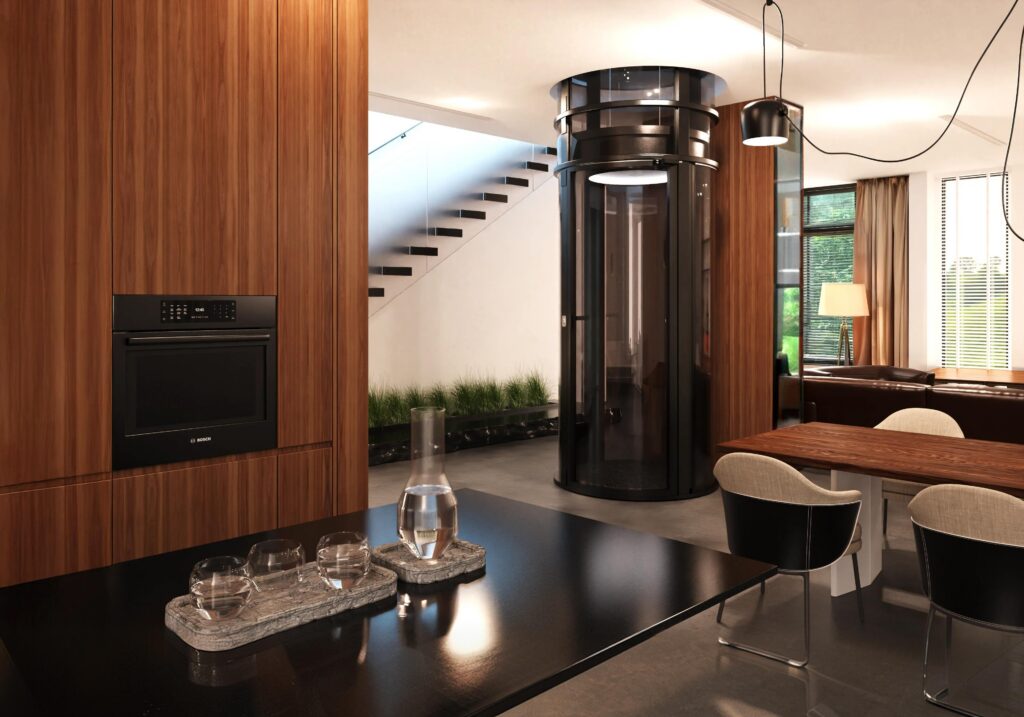
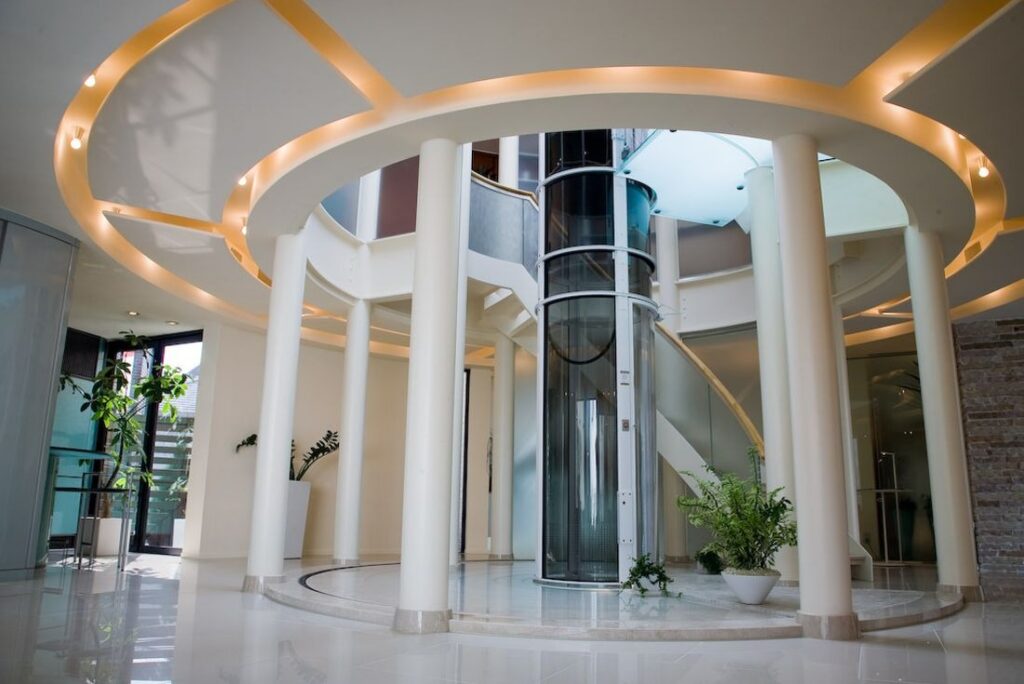
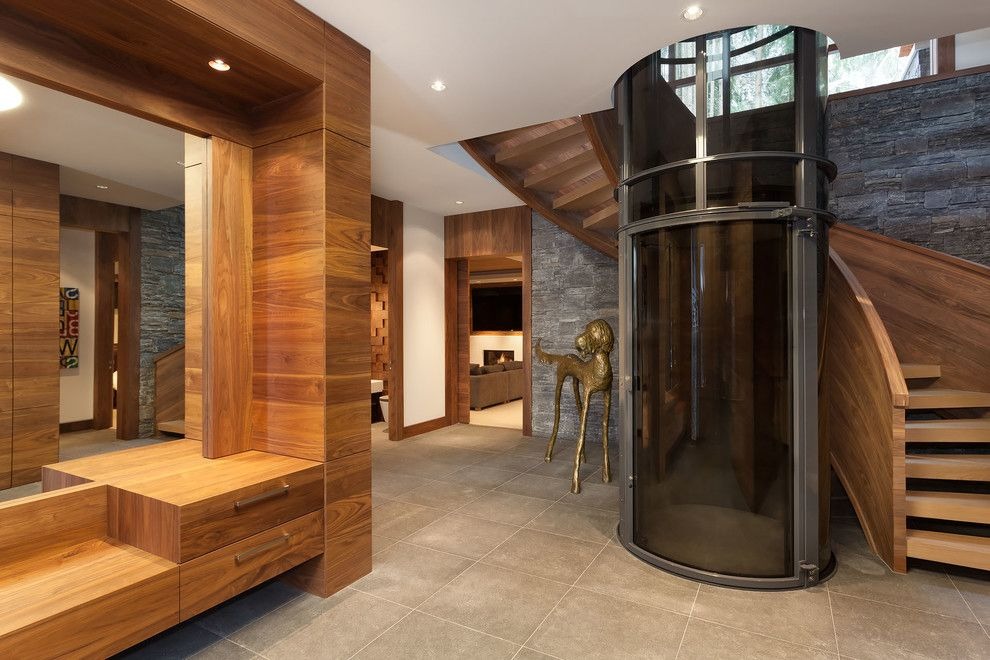
Pneumatic vacuum elevators work on a completely different principle. There are no cables, no pistons, and no hydraulic fluid. The elevator car sits inside a sealed cylindrical tube, and a vacuum pump at the top removes air above the cabin. The higher air pressure below the car creates a lift force, pushing it upward. To descend, air is slowly reintroduced above the car, gently lowering it through controlled airflow. For a closer look at the technology, see how pneumatic vacuum elevators work.
This design gives pneumatic elevators a structural safety advantage: the elevator car cannot enter free fall because it travels inside a sealed tube. The air below the cabin acts as a natural cushion. Even during a complete power outage, the car does not drop. Instead, it descends by gravity through the controlled release of air to the lowest landing, where the passenger exits safely.
PVE pneumatic vacuum elevators also include a mechanical anchoring system that locks the car in place when the doors open at a floor, and a safety device (chute) designed to stop the car if an unexpected descending elevator speed occurs. Because there are no cables to snap and no hydraulic fluid to leak, the mechanical failure modes that concern people most with traditional elevators simply do not apply.
How Do the Three Elevator Types Compare on Fall Protection?
| Safety Feature | Cable (Traction) | Hydraulic | Pneumatic (PVE) |
|---|---|---|---|
| Primary support | Multiple steel cables | Hydraulic piston and fluid | Air pressure differential |
| Fall protection | Governor + safety brakes clamp guide rails | Check valve prevents fluid loss; car rests on piston | Sealed tube + air cushion below car prevents free fall |
| Power outage behavior | Brakes engage; car holds in place | Car holds or lowers slowly via manual release | Car descends by gravity and controlled airflow to lowest landing |
| Cables that can break? | Yes (but redundant) | No | No |
| Elevator shaft required? | Yes | Yes (with pit) | No (self-supporting tube) |
| Requires machine room? | Usually | Yes | No |
What Do Elevator Accidents Actually Involve?
Despite the fear of a falling elevator, the statistics tell a very different story. Most elevator accidents do not involve an elevator car in free fall. According to data from the Bureau of Labor Statistics and the Consumer Product Safety Commission, the majority of elevator-related fatal injuries and minor injuries happen to construction workers and maintenance workers working in or near elevator shafts, not to passengers riding inside the car.
The most common causes of serious elevator accidents include:
- Falls into the elevator shaft. Construction workers and maintenance workers account for the largest share of elevator-related fatalities. Falls from a height into an open shaft on a construction site are the leading cause.
- Caught between hazards. Workers can be caught between the elevator car and the shaft wall, or between the car and a floor landing, particularly during installation or service.
- Elevator door incidents. For passengers, the most common injuries involve elevator doors. A person can be struck by a closing door, or trip at the gap between the elevator car and the floor if the car is not properly leveled.
- Stalled elevators. Being stuck in a stalled elevator is frightening but almost never dangerous. The car is held in place by its safety systems. The risk is anxiety, not physical harm.
An elevator crash or elevator collapse involving passengers in a properly maintained, code-compliant elevator is extraordinarily rare anywhere in the world. The systems described above are specifically designed to make that incident virtually impossible.

What Happens During a Mechanical Failure?
Mechanical failure in an elevator does not mean the car will fall. It means one component has stopped working as intended, and the elevator’s redundant safety systems take over.
If the motor fails or loses power, the brakes engage automatically in a cable elevator. In a hydraulic elevator, the car holds position on the fluid column. In a pneumatic elevator, the car descends slowly and safely to the lowest landing through controlled airflow.
If a speed sensor detects the car moving faster than its rated speed, the governor activates the mechanical safety brakes. These brakes clamp directly onto the guide rails, stopping the car without relying on the motor, the electrical systems, or any external power source.
Even in the unlikely scenario of a cable breaking in a traction elevator, the remaining multiple steel cables continue to hold the full load. The system is designed so that no single mechanical failure can result in a free fall. Each layer of protection works independently.
Why Regular Inspections and Maintenance Matter
Safety systems only work reliably when they are properly maintained. Regular inspections are a critical part of elevator safety for every elevator type, whether it serves a commercial building, a freight elevator on a construction site, or a home elevator carrying passengers between two floors.
A typical elevator inspection covers:
- Condition of cables, guide rails, and braking mechanisms
- Electrical systems and control boards
- Door operation, sensors, and interlocks
- Emergency communication and lighting
- Speed governor calibration
- Overall condition of the elevator shaft and car
Inspection frequency varies by location and elevator type. Most jurisdictions require annual inspections for commercial elevators. Residential elevators may follow different schedules depending on the manufacturer’s recommendations and local building codes. Building management teams and homeowners alike should keep service records and address any unusual sounds, vibration, or door behavior promptly.
For PVE pneumatic vacuum elevators, homeowners should follow the recommended service schedule and work with an authorized PVE dealer for inspections. Because PVE elevators have no cables, no hydraulic fluid, and fewer moving parts than conventional systems, the maintenance requirements are simpler, but regular inspections remain essential for long-term safety and efficient operation.
Can a Home Elevator Fall?
Homeowners considering a residential elevator often have this question, and it makes sense. A home elevator feels more personal than a commercial one. You are trusting it with your family in your daily lives.
The answer depends on the technology. All three types described above are used in residential settings, and all three include redundant safety systems that make a free fall scenario extremely unlikely. But pneumatic vacuum elevators have an inherent structural advantage: the sealed-tube design means there is no physical way for the elevator car to drop uncontrolled. The air column below the cabin prevents it.
PVE elevators are designed specifically for residential use. They do not require a pit, a shaft, or a machine room. They install in two to three days. And because they use air rather than hydraulic fluid or cables, there are fewer mechanical components equipped with parts that can wear. PVE offers models for different household needs, including the PVE30 single-passenger elevator, the PVE37 two-passenger elevator, and the wheelchair-accessible PVE52.
For homeowners concerned about elevator safety, particularly those installing an elevator for aging-in-place use or for a family member with mobility challenges, the pneumatic design offers peace of mind that goes beyond the standard safety checklist. For a broader overview of residential elevator safety features, codes, and maintenance, see the full guide to home elevator safety.
What Happens to an Elevator During a Power Outage?
Power outages are another common fear. In a cable elevator, the brakes engage and the elevator car stays in place until power returns or a service technician arrives. Passengers may feel trapped and stuck in the cabin, but the car is held securely by its mechanical braking systems.
In a hydraulic elevator, the car typically holds its position on the fluid column. Some models include a manual lowering valve that allows building management or a technician to lower the car to the nearest floor.
PVE pneumatic vacuum elevators handle power loss differently. Because the car’s upward position depends on the vacuum above it, losing power means losing the vacuum. Air reenters the tube gradually, and the car descends by gravity to the lowest landing. The descent speed is controlled by the airflow through the system. Once the car reaches the lowest landing, the passenger can exit.
This means passengers are never trapped in a PVE elevator during a power outage. They do not need to wait for a technician, a rescue team, or a backup generator. The physics of the system delivers them to a safe exit automatically.
Frequently Asked Questions
Can an elevator go into free fall if all the cables break?
In a cable elevator, each of the multiple steel cables is individually strong enough to hold the full load. All cables failing at once is considered virtually impossible. Even in that scenario, the governor and safety brakes would engage before the elevator car could accelerate. The buffers at the bottom of the shaft provide a final safeguard. No modern elevator relies on a single mechanism to prevent falling.
How common are elevator accidents involving passengers?
Passenger injuries from a falling elevator are extraordinarily rare. Most elevator-related fatal injuries involve construction workers and maintenance workers near the elevator shaft. For passengers, the most common incidents involve door-related minor injuries or being briefly stuck in a stalled elevator. Properly maintained elevators with regular inspections are among the safest forms of transportation in the world.
Are pneumatic elevators safer than cable elevators?
Both types are safe when properly installed and maintained. Pneumatic elevators have a structural advantage in that the sealed tube and air cushion make free fall physically impossible, while cable elevators achieve fall protection through redundant mechanical safety systems. The right choice depends on building requirements, capacity needs, and homeowner preferences.
What safety codes apply to home elevators?
In the United States, residential elevators must meet ASME A17.1 (for conventional hydraulic and traction types) or ASME A17.7 (for pneumatic and other alternative technologies). Local building codes may add additional requirements. Homeowners should work with a qualified installer who understands the applicable code for their location.
Do PVE elevators require a backup battery or generator?
PVE pneumatic vacuum elevators do not require a backup power source for safe descent. During a power outage, the elevator car automatically descends to the lowest landing through controlled airflow. No battery or generator is needed for the passenger to exit safely.
How often should a home elevator be inspected?
Inspection and service frequency depends on the elevator type, model, usage level, and manufacturer recommendations. Homeowners should follow the service schedule in their owner’s manual and schedule regular inspections with an authorized dealer or qualified technician. Any unusual sounds, vibration, or door behavior should be addressed before continued use.
What should I do if I am stuck in a stalled elevator?
Stay calm. A stalled elevator is held in place by its safety systems and is not at risk of falling. Use the emergency communication button or phone inside the cabin to contact help. Do not try to force the doors open or climb out of the car. Wait for a trained technician to arrive. In a PVE pneumatic elevator, a power loss results in an automatic controlled descent to the lowest landing, so being stuck is typically not a concern.