Skip to content >

- Key Takeaways
- Quick Answer: What Is A Pneumatic Residential Elevator?
- How Does A Pneumatic Elevator Work In A Home?
- What Does A Pneumatic Elevator Need From Your House?
- Which PVE Model Fits Your Home?
- What Does Installation Involve?
- What Does A Pneumatic Home Elevator Cost?
- What Is It Like To Live With?
- Who Is A Pneumatic Residential Elevator For?
- Does A Home Elevator Add Value To The House?
- Next Steps
- Frequently Asked Questions
- Do pneumatic elevators need a shaft or pit?
- Can a pneumatic elevator be installed in an existing home?
- How many people can a pneumatic residential elevator carry?
- Are pneumatic elevators wheelchair accessible?
- What happens during a power outage?
- How much does a pneumatic home elevator cost?
- Who services a pneumatic residential elevator?
Key Takeaways
- A pneumatic residential elevator moves its cab using air pressure rather than cables, counterweights, or hydraulic fluid.
- No shaft, pit, or machine room is required, which is why these systems fit into existing homes that cannot accommodate a conventional elevator.
- PVE offers four residential models: the PVE30, PVE37, PVE52, and The Cube.
- Installation is measured in days rather than weeks, with limited structural modification.
- Home elevator projects generally range from $35,000 to $100,000+ or more depending on model, floors served, and site conditions.
- Service is handled through PVE’s authorized dealer network.
Quick Answer: What Is A Pneumatic Residential Elevator?
A pneumatic residential elevator is a home elevator that moves its cab through a sealed tube using differences in air pressure. Turbines at the top of the tube reduce pressure above the cab to lift it, and controlled air release lowers it. Because the tube is self-supporting, the system does not rely on a traditional elevator shaft and works as a space saving solution for homes with limited space, with no hoistway, pit, or machine room.
Most homeowners researching a residential elevator run into the same obstacle early. The elevator itself is only part of the project. A conventional system needs an elevator shaft framed into the house, a pit dug below the lowest landing, and a separate machine room for the equipment. In an existing home, that work is often what makes the project impractical rather than the equipment cost.
Pneumatic elevators approach the problem differently, and the difference shows up in what your house has to give up to accommodate one. This guide covers how the technology fits a real home, which model suits which situation, what elevator installation involves, and what to expect once it is in daily use, including the benefit of minimal home modifications.
How Does A Pneumatic Elevator Work In A Home?
The cab travels inside a sealed cylindrical tube. Turbines mounted at the top of the tube lower the air pressure above the cab, and the higher pressure below pushes it upward. To descend, the system releases air in a controlled way and the cab lowers gently under its own weight.
Two practical consequences follow from that design. The tube supports itself, so it does not need to be built into the structure of the house. And because descent relies on controlled air release rather than motor power, the system draws power during ascent rather than continuously.
If you want the full technical explanation of the mechanism, the guide to how air pressure moves a vacuum elevator covers it in more depth.
What Does A Pneumatic Elevator Need From Your House?
This is the question that decides most residential projects, and it is where pneumatic and conventional systems diverge most sharply.
| Requirement | Conventional Home Elevator | Pneumatic Vacuum Elevator |
|---|---|---|
| Hoistway or shaft | Required, built into the structure | Not required, the tube is self-supporting |
| Machine room | Typically required | Not required |
| Pit excavation | Typically required | Not required |
| Structural modification | Extensive, often framing and foundation work | Limited, mainly floor openings |
| Cables and counterweights | Yes | No |
| Retrofit into an existing home | Often difficult or impractical | Common, installs in existing floor plans |
| Footprint | Larger, shaft plus machine room | Compact, the tube itself |
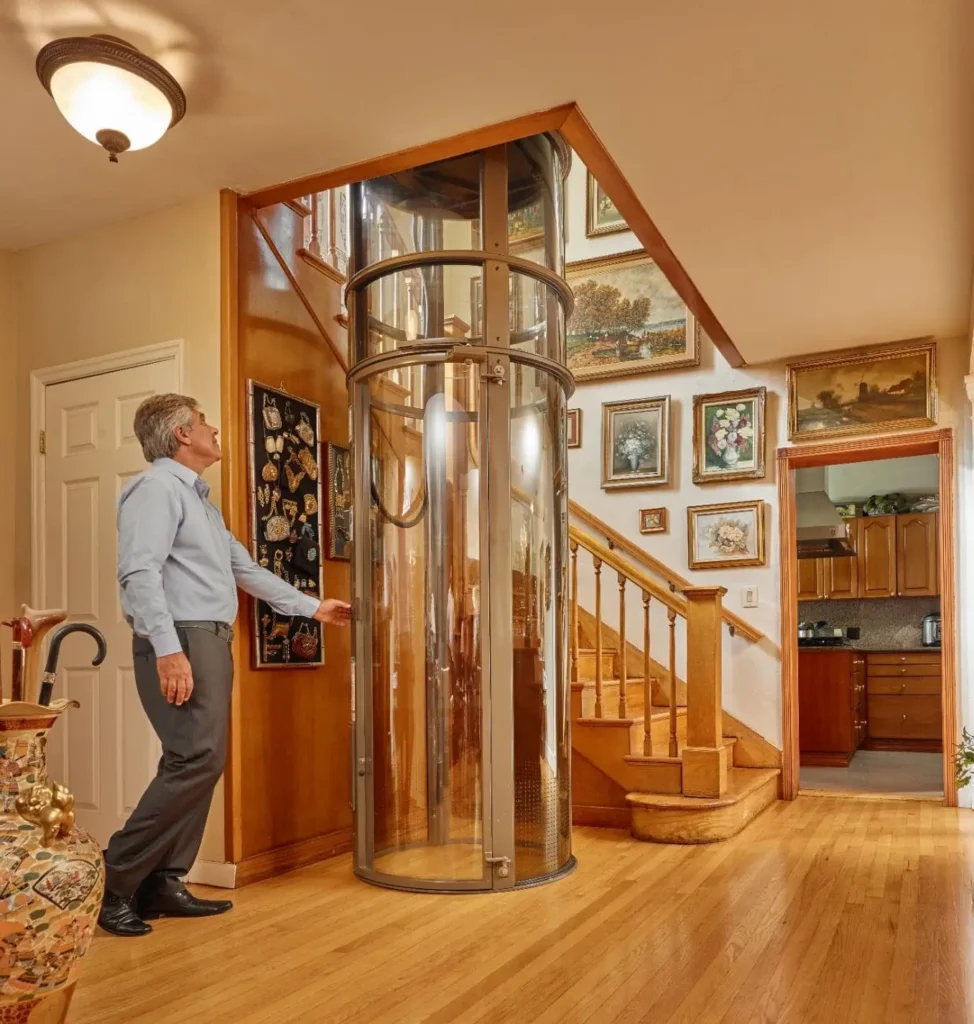
For a home under construction, either approach can be designed in. For an existing home, the absence of a shaft and pit is usually the deciding factor because it gives you a compact footprint and a more space saving solution. The installation needs openings cut in the floors it will serve and a stable footprint at the lowest landing, which supports easy installation with minimal disruption, but it does not require the house to be reframed around it.
Space requirements and the existing home layout are still worth reviewing properly before you commit. The residential elevator dimensions guide covers footprint, ceiling height, and clearance requirements in detail.
Which PVE Model Fits Your Home?
PVE builds four residential models, and they differ mainly in cabin size, passenger capacity, footprint, and how many stops the home needs to serve.
- PVE30: the most compact model, suited to single-passenger use and homes with the tightest available footprint.
- PVE37: a mid-size option for homes where a slightly larger cabin is workable.
- PVE52: the largest residential model, and the option to look at where wheelchair access is a requirement.
- The Cube: a two-passenger model with a 36-inch square cabin and a 450-pound capacity. The Cube is not wheelchair accessible.
Model selection is usually driven by who will use the elevator and how often, not by the house alone. A household where the elevator is the primary route between floors for someone with limited mobility has different requirements than one where it mainly carries groceries and luggage.
What Does Installation Involve?
A pneumatic installation is shorter and less disruptive than a conventional one because the compact design usually calls for less construction work. The crew cuts the floor openings, positions and assembles the tube, connects the turbines and controls, and commissions the system. Professional expertise with pneumatic systems is still important for proper elevator installation.
What that means in practice is that the house stays livable through most of the project, with minimal home modifications. There is no extended period with a framed shaft open through the middle of the home and no excavation below the lowest landing.
What Does A Pneumatic Home Elevator Cost?
Home elevator projects generally fall between $35,000 and $100,000 or more. The range is wide because the final figure depends on the model, the number of floors served, site conditions, finish selections, and any optional upgrades.
Because a pneumatic system does not require a shaft, pit, or machine room, the construction portion of the project is typically smaller than it would be for a conventional elevator in the same house. That is a difference in scope rather than a discount, and it matters most in retrofits, where conventional construction costs climb fastest.
The complete home elevator cost guide breaks down each variable and what drives it.
What Is It Like To Live With?
Ride Quality
The cab moves smoothly in both directions, and the absence of cables and pulleys removes a common source of mechanical noise.
Maintenance
Fewer moving parts mean fewer components to inspect and service than a cable-and-counterweight system requires. Routine service is still necessary and is handled through an authorized PVE dealer or trained technician. The residential elevator maintenance guide covers service intervals and what a visit includes.
Design And Finish
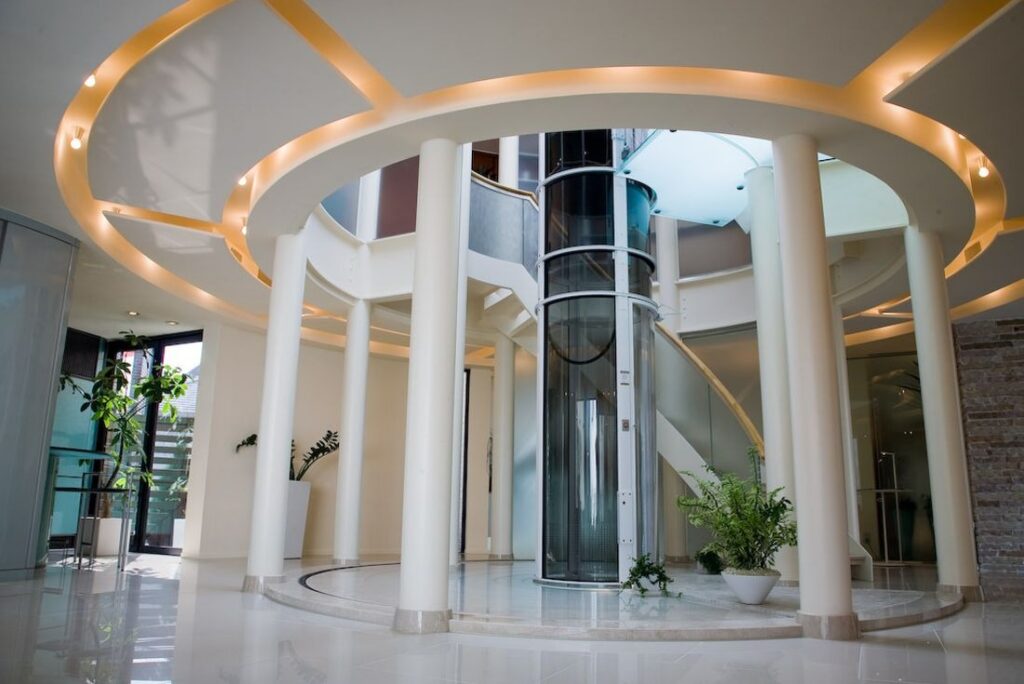
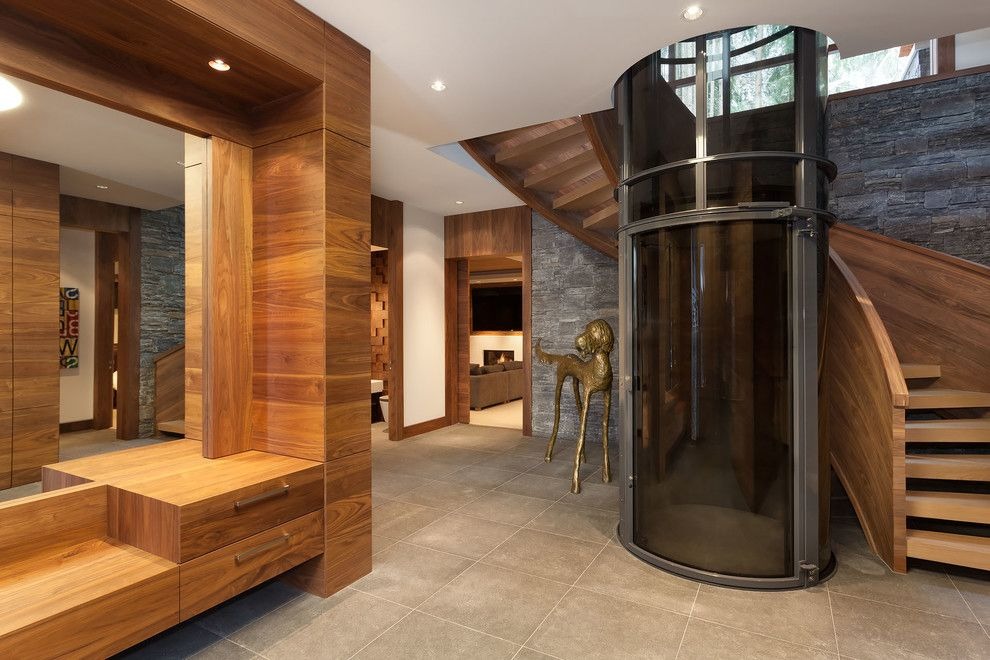
The transparent tube creates a sleek design and a panoramic view, so the elevator feels like part of the room rather than an intrusion into it. Finish options include brushed stainless steel and powder-coated colors, suiting both contemporary and traditional interiors.
Safety
PVE systems include door interlocks, emergency braking, and over-speed protection, and are built to A17.7 code. The absence of cables and counterweights removes the risks specific to those components.
Who Is A Pneumatic Residential Elevator For?
The clearest fit is a household in an existing home where stairs have become a daily obstacle and a conventional elevator would mean major construction. That covers a lot of situations: aging in place, a family member recovering from surgery, a multigenerational household, or simply a multi-story home where carrying things up and down has stopped being reasonable.
It is also worth noting what these systems are not. Pneumatic vacuum elevators are designed as residential elevators and are not ADA compliant. If ADA compliance is a requirement for your project, that changes the specification, and it is worth raising early in the conversation.
Does A Home Elevator Add Value To The House?
A home elevator can contribute to resale appeal, particularly for buyers who want single-level living or who are planning ahead for mobility. How much it contributes depends heavily on the local market and the house itself. The guide to whether a home elevator boosts property value looks at the evidence in detail.
Next Steps
If a pneumatic residential elevator looks like a fit, the right choice depends on your specific floor plan, who will use it, and your budget. PVE sells and services through an authorized dealer network, and a local dealer can assess the site, confirm the right model for your home’s layout, and give you a real number for your project.
Frequently Asked Questions
Do pneumatic elevators need a shaft or pit?
No. The tube is self-supporting, so no hoistway, pit, machine room, or traditional elevator shaft is required. Installation needs openings through the floors being served and a stable footprint at the lowest landing.
Can a pneumatic elevator be installed in an existing home?
Yes, and that is the most common application. The absence of shaft and pit construction is what makes retrofits practical, usually with minimal home modifications, where a conventional elevator would not be.
How many people can a pneumatic residential elevator carry?
Capacity varies by model. The Cube carries two passengers at a 450-pound capacity. The PVE30, PVE37, and PVE52 differ in cabin size and capacity, with the PVE52 being the largest residential model.
Are pneumatic elevators wheelchair accessible?
The PVE52 is the model to look at where wheelchair access is required. The Cube is not wheelchair accessible. Note that PVE elevators are designed as residential elevators and are not ADA compliant.
What happens during a power outage?
The cab descends to the lowest landing under controlled air release, allowing passengers to exit.
How much does a pneumatic home elevator cost?
Home elevator projects generally range from $35,000 to $100,000 or more depending on model, floors served, site conditions, and finish selections. A dealer assessment gives you a figure specific to your home.
Who services a pneumatic residential elevator?
Service should be handled by an authorized PVE dealer or a technician trained on pneumatic vacuum technology, since the maintenance requirements differ from hydraulic and traction systems.