Skip to content >

- Quick Answer
- What a Residential Elevator Warranty Actually Covers
- How Long Home Elevator Warranties Last
- What's Typically Excluded
- Proper Maintenance Requirements That Keep Your Warranty Valid
- Manufacturer vs. Dealer Warranties
- How Pneumatic Vacuum Elevator Warranties Are Different
- Extended Warranty and Service Agreements
- How to Compare Warranties Before You Buy
- Frequently Asked Questions
A home elevator is a significant investment, and the warranty that comes with it is one of the most important pieces of fine print you’ll encounter during the purchase. It determines what the manufacturer will fix, for how long, and under what conditions, and it can shift thousands of dollars of repair costs from your budget to theirs, or vice versa.
This guide walks through what a home elevator warranty actually covers, how coverage typically breaks down across the industry, what tends to be excluded, and what to ask before you sign. Warranty terms often correlate with home elevator cost and vary considerably across the PVE home elevator lineup and competitor systems, so it’s worth understanding these details before you compare quotes.
Quick Answer
Most home elevator warranties cover defects in mechanical and electrical components for a limited period, typically ranging from one to ten years depending on the component category. Labor coverage is almost always shorter than parts coverage, usually one year. Normal wear items, damage from misuse or natural disasters, and unauthorized modifications are standard exclusions. To keep coverage valid, most manufacturers require documented maintenance performed by an authorized technician.
What a Residential Elevator Warranty Actually Covers
Home elevator warranties are limited warranties that cover failures caused by defective material or workmanship, not normal wear or damage from how the elevator is used. What that means practically: if a control board fails because a component was manufactured incorrectly, that’s covered. If the same board fails because a lightning surge damaged it, it isn’t.
The components manufacturers typically warrant fall into a few categories. The drive system and motor (turbines for pneumatic elevators, pumps for hydraulic systems, and traction mechanisms for cable-driven elevators) are usually covered against manufacturing defects. So are the control boards and electrical logic that run the elevator, the brake system and safety sensors that prevent freefall, the doors and their locking mechanisms, and the communication systems including alarms, emergency phones, and battery-backed descent.
The specific coverage varies by manufacturer and by component. A single elevator warranty might cover mechanical parts for a longer period than electrical components, and labor for shorter still than either.
How Long Home Elevator Warranties Last
The industry standard for home elevator warranties is a tiered coverage structure that separates parts from labor and often mechanical from electrical.
A representative example from one major residential elevator manufacturer breaks down as follows: ten years on mechanical components, three years on electrical components, and one year on labor. Another common structure is a two-year standard warranty across the whole system with an optional extended service agreement bringing that up to five to seven years. Some pneumatic elevator manufacturers offer a shorter standard warranty of one to two years with the option to extend through authorized dealer service plans.
The most important detail buried in these numbers is what “labor” actually covers. If a covered component fails 18 months after installation, the replacement part might still be covered, but the technician’s time to install it typically is not. That’s usually the biggest out-of-pocket cost after year one, and the biggest source of surprise for owners who assumed “warranty” meant the whole repair was free.
The warranty clock generally starts on the verified installation date, not the ship date or the date you signed the purchase agreement. For new construction with long timelines, this distinction can be worth thousands of dollars.
What’s Typically Excluded
Understanding what your warranty doesn’t cover is often more valuable than knowing what it does. The common exclusions across the residential elevator industry include:
Normal wear items. Light bulbs, fuses, cabin flooring, cosmetic finishes, and trim are considered consumables or aesthetic components, not warranted parts.
Damage from misuse. Overloading the cabin, using the elevator to move items beyond its rated capacity, or forcing doors to close are considered user-caused failures.
Acts of God. Flooding, hurricanes, lightning strikes, and earthquakes are excluded from every home elevator warranty. That damage falls under your homeowner’s insurance, not the manufacturer’s warranty.
Power surges and voltage instability. Damage to control boards from voltage spikes or unstable power is typically excluded. This is one of the strongest arguments for installing surge protection on the elevator’s dedicated circuit.
Unauthorized modifications. Any work performed by someone who isn’t a trained, authorized technician can void coverage on the affected component and sometimes on the entire system. Changes to design or operation without written authorization can also void coverage.
Neglect of required maintenance. Skipping scheduled inspections or delaying recommended service almost always voids the warranty when a covered part later fails.
Most warranties also exclude liability for personal injury and property damage that results from unauthorized modifications, misuse, or neglect. That’s a common source of dispute when a claim gets denied.
The scenarios that most commonly void coverage in the real world are surprisingly practical: a homeowner renovates around the elevator without consulting the dealer, an unlicensed general contractor opens the control panel to reroute wiring, or the elevator is physically moved to a different location without factory authorization. Each of these can invalidate coverage even if the failure itself seems unrelated.
Proper Maintenance Requirements That Keep Your Warranty Valid
Even the lowest-maintenance residential elevators require periodic inspections to keep warranty coverage active. This isn’t optional fine print. It’s the condition on which every other warranty term depends.
Most manufacturers require regular inspection at least once every 12 months. Some higher-end warranty programs require semi-annual maintenance to remain in force. The inspection must be performed by a qualified, authorized technician, and the documentation of that visit (invoice, inspection report, technician signature) must be retained by the owner as proof for future warranty claims.
A typical residential elevator maintenance visit covers safety tests, inspection of brakes and door interlocks, checks of backup power and battery systems, cleaning of key components, minor adjustments, and diagnostics of the control software. The specifics vary by drive technology: hydraulic systems require fluid checks and cylinder inspections; traction systems need cable and pulley inspections; pneumatic systems focus on turbine performance, seal integrity, and safety valves. Home elevator maintenance requirements are often tied directly to warranty terms, so understanding the schedule matters for coverage.
Best practice is to document every service visit and keep records for the full warranty period plus several years afterward. Report unusual noises, vibration, or performance changes to your dealer as soon as you notice them. Waiting can convert a covered warranty repair into a much larger out-of-warranty problem.
Manufacturer vs. Dealer Warranties
Home elevator coverage usually comes in two overlapping layers, and understanding the difference matters when something breaks.
The manufacturer’s warranty covers the elevator equipment itself: defects in the components that came out of the factory. The authorized dealer or installer typically provides a separate warranty covering the installation work: whether the hoistway is aligned correctly, whether the electrical connections were made properly, whether the elevator meets local code requirements at the point of install.
When something goes wrong, the question of which warranty applies determines who you call and who pays. A misaligned door that’s slowly damaging the interlock mechanism is likely an installation issue. A control board that fails from an internal defect is a manufacturer issue. In practice, reputable manufacturers work only through trained authorized dealers, so both warranties often route through the same local company, but the underlying responsibility is different, and it matters when disputes arise.
Before you sign, get written answers to a few questions. Who do you actually call when the elevator stops working? Who approves warranty claims, and how long does the process typically take? Does the warranty apply only to elevators installed by authorized dealers? Are travel time, emergency visits, and after-hours labor included in warranty repairs, or billed separately? Are warranty parts provided at no charge, and what shipping method is standard? What happens if a critical safety component fails after the labor warranty expires?
Warranty terms also vary considerably across home elevator brands, and comparing warranty language is often more revealing than comparing brochure specs.
How Pneumatic Vacuum Elevator Warranties Are Different
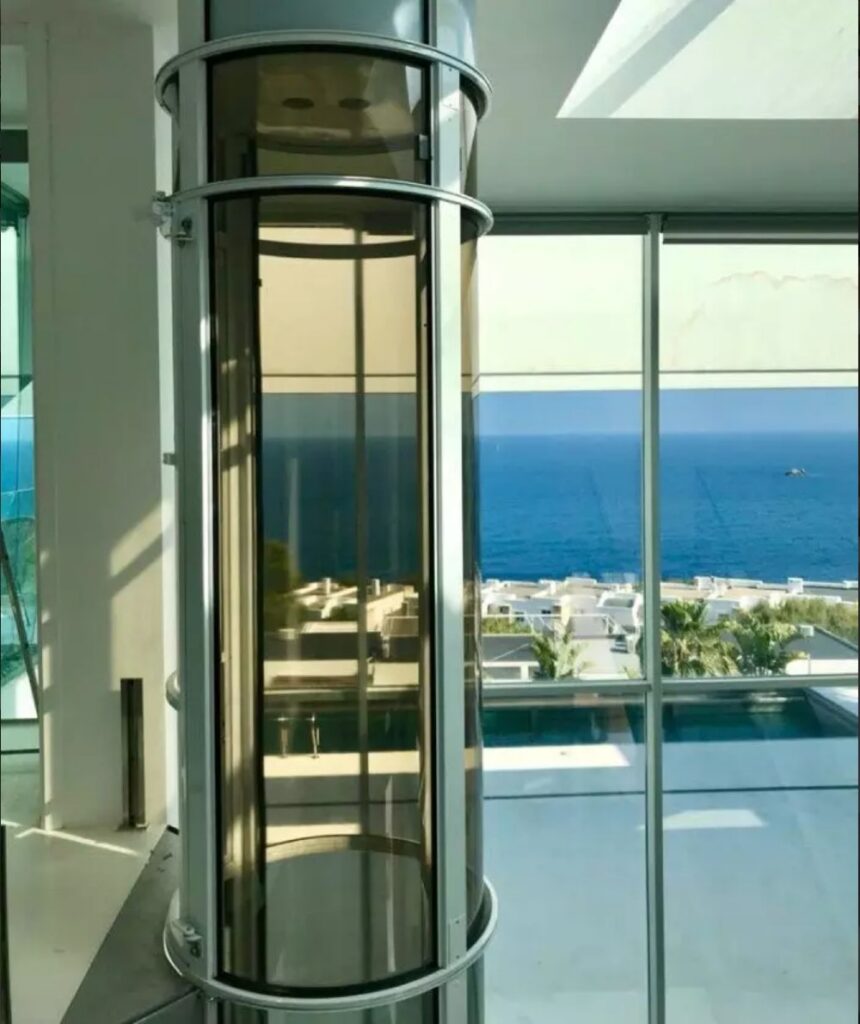
Pneumatic vacuum elevators like PVE work fundamentally differently from hydraulic or cable-driven residential elevator systems, and that difference shows up in warranty economics.
A pneumatic elevator has no cables, no pulleys, no hydraulic piston, no fluid reservoir, no counterweight, and no machine room. The drive mechanism is a set of turbines that create differential air pressure inside a sealed tube. There’s no oil to leak, no cable to fray, no pump to fail, and no separate room full of components to service. That translates to fewer warranty claims for the failure modes that dominate traditional residential elevators.
The tradeoff is a smaller component pool, but each component is critical. The turbines, control logic, safety brakes, and seal system all need to work correctly for the elevator to operate safely, and the warranty terms reflect that focus. PVE’s shaftless design also makes retrofit installations less structurally complex, which reduces the chance of building-related issues, like hoistway misalignment, that sometimes complicate warranty claims in conventional systems. The PVE52, which accommodates wheelchair users at 52 inches diameter, uses the same fundamental drive system as the smaller PVE30 and PVE37 models.
Because PVE elevators have fewer moving parts and no lubrication requirements, the service interval is generally longer than what’s typical for hydraulic or cable systems. That reduces both routine maintenance cost and the warranty risk from missed service.
Extended Warranty and Service Agreements
Most home elevator manufacturers offer some form of extended coverage beyond the standard warranty period. These come in a few forms: extended parts warranties that lengthen the manufacturer’s coverage on specific components, service agreements that bundle maintenance visits with priority repair response, or comprehensive protection plans that combine both.
The value depends on what’s included and how it’s priced. A parts-only extension can be worthwhile if the covered components are expensive and prone to failure. A service agreement that includes annual inspections is often cost-effective simply because those inspections are already required to keep the standard warranty valid, so you’re paying for something you’d need anyway, ideally with a small discount and simplified billing.
Before signing an extended warranty, ask what specifically is covered, whether labor is included, what the total cost is over the extended period, whether there’s an enrollment window that closes shortly after installation, and whether the coverage transfers if you sell the home. Not all extended warranties are transferable, even when the underlying manufacturer warranty is.
How to Compare Warranties Before You Buy
Home elevator warranties vary widely enough that a direct comparison matters. When you’re evaluating quotes from multiple manufacturers, the warranty document should sit alongside the pricing and specifications, not as an afterthought.
The questions that matter most:
What’s the exact length of parts coverage, labor coverage, and any component-specific coverage? A one-page summary in a brochure isn’t enough. Get the full warranty document in writing.
Which components have different timelines? Mechanical parts often have longer coverage than electrical components. Knowing this in advance helps you predict where out-of-pocket costs are likely to appear over the elevator’s first decade of ownership.
Does the plan include expedited shipment of critical replacement parts, or is standard ground shipping the default? For a stuck elevator, that difference can mean days versus weeks of downtime.
Are extended warranty options available? At what cost? Is there an enrollment deadline that closes quickly after installation, or can you decide later?
Is the warranty transferable to a subsequent owner? If yes, under what conditions?
For related planning considerations, see our residential elevator dimensions guide. Space and installation choices sometimes affect warranty terms indirectly (a retrofit into a non-standard space can create structural conditions that manufacturers exclude).

Frequently Asked Questions
How long is a typical home elevator warranty?
Home elevator warranties typically run one to ten years depending on the component category. Mechanical parts often carry the longest coverage, sometimes up to ten years on premium plans. Electrical components typically get three years, and labor is usually covered for one year from the installation date. Extended service agreements can bring total coverage to five to seven years across the whole system.
What does a home elevator warranty cover?
Most home elevator warranties cover defects in materials and workmanship on the drive system, control boards, brake system, safety sensors, doors, and communication systems. Normal wear items like light bulbs and flooring aren’t covered, and damage from misuse, natural disasters, or unauthorized work is excluded.
What voids a home elevator warranty?
The most common causes of voided warranty coverage are unauthorized modifications, work performed by non-authorized technicians, missed required maintenance, damage from misuse or overloading, and moving the elevator without manufacturer authorization. Damage from natural disasters, power surges, and lightning also typically falls outside warranty coverage.
Can I transfer my home elevator warranty when I sell my house?
Some home elevator warranties are transferable to a new homeowner, and some aren’t. Where transfer is allowed, it usually requires that the elevator has been properly maintained with documented service records, and that the transfer is requested in writing within a specific window after closing. Confirm the specific transfer rules with your manufacturer or authorized dealer before listing your house.
What’s the difference between a home elevator warranty and a service contract?
A warranty is the manufacturer’s promise to fix defective components within a specified period. A service contract is a separately-purchased maintenance agreement that typically includes scheduled inspections and may bundle priority repair response. Warranties are usually included in the purchase; service contracts are optional and paid separately. Some manufacturers require an active service contract to keep the warranty valid.
Does a home elevator warranty cover installation?
The manufacturer’s warranty covers the elevator equipment itself. Installation workmanship is typically covered separately by the authorized dealer or installer who did the work. Both warranties matter, but they route to different responsible parties when something goes wrong.
Are emergency service calls covered under warranty?
Standard warranty terms usually cover parts and normal labor for covered failures. Emergency callouts, after-hours service, and expedited shipping of urgent replacement parts are often billed separately. Ask specifically which scenarios qualify as billable emergency service before purchase.
How do I file a home elevator warranty claim?
Contact your installing dealer or the manufacturer directly. Provide the elevator’s model and serial number, the installation date, and a description of the issue and when it started. An authorized technician will inspect the equipment and determine whether the failure qualifies under warranty. Keep organized service records; they will be requested during the claim process.
Do I need to register my home elevator for warranty coverage?
Many manufacturers require warranty registration after installation to activate the coverage. Check the warranty document your dealer provides for the specific registration process and deadline. Missing the registration window can reduce your coverage from the extended terms to a shorter standard warranty.
What should I ask about the warranty before buying a home elevator?
Ask for the full warranty document in writing before signing anything. Confirm the length of parts, labor, and component-specific coverage. Ask whether extended warranty options exist and when the enrollment window closes. Confirm transferability rules if you might sell the home. Ask specifically what’s excluded and what maintenance is required to keep coverage valid.