

Why Homeowners Choose Exterior Residential Elevators

On this page
Quick Answer
Exterior residential elevators sit outside the home rather than inside it, giving homeowners a way to add vertical mobility without giving up interior square footage or changing the home’s floor plan. They’re a common choice for multi-story homes, historic properties, waterfront homes, and homes where a rooftop deck or elevated entry is part of everyday life. This article covers the reasons homeowners choose to install their elevator outside rather than inside, from design considerations to accessibility to resale value.
What Is an Exterior Residential Elevator?
An exterior residential elevator is a home elevator installed on the outside of a house, typically attached to an exterior wall or freestanding next to it. It moves passengers between floors, decks, or from ground level to an elevated entry. Unlike an interior elevator, the exterior version doesn’t require rearranging rooms, sacrificing closet space, or opening up interior floors.
Exterior installations work with several elevator types, including pneumatic vacuum elevators, cable-driven elevators, and hydraulic elevators. The right choice depends on the home’s layout, the climate, and how the elevator will be used.
Reasons Homeowners Install Their Elevator Outside
1. Preserving Interior Design and Square Footage
An interior elevator takes up floor space on every level it serves. For homeowners who’ve invested in the interior of their home, or who own a historic or architecturally distinctive property, cutting into that floor plan often isn’t an option. An exterior elevator solves this by moving the entire installation outside. The interior stays exactly as it is.
2. Retrofitting a Home That Wasn’t Designed for an Elevator
Older homes weren’t built with elevator shafts in mind. Retrofitting an interior elevator into an existing home usually means structural modifications, floor cutting, and finish work in every room the elevator passes through. Exterior installations avoid most of that by attaching to the outside of the building instead.
3. Serving Elevated Entries, Decks, and Rooftops
Waterfront homes, hillside properties, and homes with elevated entries often need vertical mobility that doesn’t fit inside the home at all. An exterior elevator can carry passengers from a driveway or dock up to the main floor, or from the main floor up to a rooftop terrace. These use cases don’t have an interior equivalent.
4. Multi-Generational and Aging-in-Place Households
For families that plan to age in place or that share a home across generations, accessibility is a long-term investment. Adding an elevator outside means the family doesn’t have to redesign the interior of a home they love. It also makes it easier for the elevator to serve a specific wing or level used by a family member with mobility needs.
5. Historic and Architecturally Sensitive Properties
Historic homes often have restrictions on interior modifications. Exterior installations, especially when finished to match the home’s architecture, can add accessibility without violating those restrictions. Some homeowners choose exterior elevators specifically because the outside of a historic home has more flexibility than the inside.
6. Simplifying Grocery, Luggage, and Everyday Loads
Beyond accessibility, homeowners often install exterior elevators to make daily life easier. Bringing in groceries, carrying luggage between floors, moving beach gear or ski equipment, or hauling heavy items to a rooftop deck all become significantly easier when there’s an elevator by the door.
7. Adding Resale Value
An elevator is a feature that appeals to buyers thinking about multi-generational living, accessibility, or long-term ownership of a multi-story home. Exterior installations tend to be seen as a premium feature because they preserve the interior of the home while adding accessibility.
8. Making Boat, Beach, and Vacation Homes More Usable
Coastal and vacation homes often have complicated approaches: long staircases up from the beach, elevated first floors to meet flood codes, or docks that sit well below the main house. Exterior elevators make these properties more livable and more usable for guests.
9. Working Around Interior Limitations
Some homes simply don’t have the interior space for an elevator. Tight floor plans, load-bearing walls in inconvenient places, or ceiling heights that don’t meet elevator requirements can all rule out interior installations. Exterior elevators often work in cases where an interior elevator physically cannot.
10. Design Statement
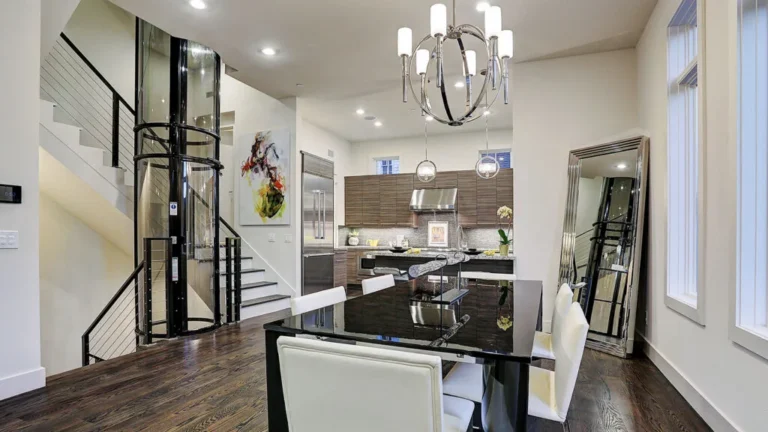
A well-integrated exterior elevator can be a design feature rather than a utility. Glass-panel pneumatic elevators, in particular, add a modern architectural element that homeowners often choose to show rather than hide.
What to Consider Before Installing an Exterior Elevator
Weather and Climate Protection
Exterior elevators are exposed to weather. The elevator itself needs to be rated for outdoor use, and the installation may need weather-resistant finishes, drainage planning, and, in cold climates, freeze protection. Pneumatic vacuum elevators, for example, can be installed outdoors with the proper enclosure and climate considerations.
Structural Attachment
An exterior elevator typically attaches to the home or sits on its own foundation next to the home. Either approach requires a structural assessment to confirm the wall or ground can support the installation.
Permits and Local Codes
Exterior installations often involve additional permits because they change the home’s exterior. HOAs, historic districts, and coastal zones may have their own requirements on top of building codes. Your dealer will handle the permit process, but factor in the review timeline.
Aesthetic Integration
Because the elevator will be visible from outside the home, finish and material choices matter more than they do for an interior installation. Homeowners typically choose finishes that either match the home or, in the case of glass panel designs, become a modern design feature.
Which PVE Model Fits an Exterior Installation?
PVE’s pneumatic vacuum elevators can be configured for exterior use with the right enclosure. The right model depends on how the elevator will be used:
- PVE30 Single-passenger. Best fit for tight spaces and single-user access.
- PVE37 Two-passenger. A common choice for couples and small families.
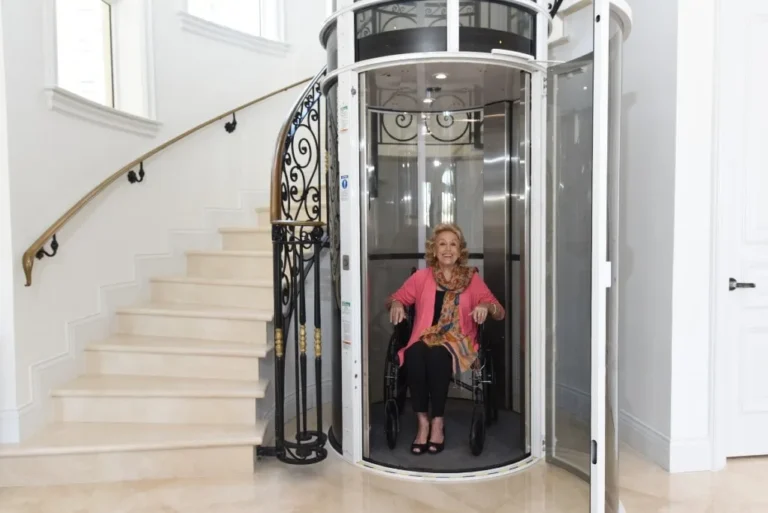
- PVE52 Wheelchair-accessible, up to three passengers. The right model when accessibility is the primary reason for the installation.
- The Cube Two-passenger square cabin. An option for homeowners who prefer a squared-off look.
An authorized PVE dealer can assess your home, confirm which model fits your exterior installation, and walk you through weather, permit, and structural considerations specific to your property.
Frequently Asked Questions
Can Any Home Elevator Be Installed Outside?
Not every model is rated for exterior use. Some cable and hydraulic elevators require indoor installation. Pneumatic vacuum elevators can be installed outdoors with proper enclosure. Confirm exterior rating with the manufacturer or dealer before committing.
How Long Does an Exterior Elevator Installation Take?
Timeline depends on the elevator type and the amount of prep work the home needs. A pneumatic exterior installation is typically shorter than a traditional cable or hydraulic installation, but exterior work often adds foundation, weatherproofing, or enclosure steps to the timeline.
Do Exterior Elevators Need More Maintenance Than Interior Ones?
Exterior elevators face weather exposure that interior ones don’t. That typically means more attention to seals, finishes, and drainage during scheduled maintenance. Following the manufacturer’s maintenance schedule matters more for exterior installations than for interior ones.
Can I Install an Exterior Elevator on a Historic Home?
Often yes, but historic districts and HOAs may have restrictions. Some homeowners choose exterior installations specifically because their historic home has more flexibility on the exterior than the interior. Work with an authorized dealer who can navigate local requirements.
Are Exterior Elevators Safe in Bad Weather?
Yes, when properly installed. Exterior-rated elevators are built to handle weather exposure. In severe storms or extreme cold, elevators may pause operation until conditions return to normal, but they’re not damaged by ordinary rain, wind, or heat.
Key Takeaways
- Exterior elevators install outside the home, preserving interior square footage and floor plans.
- They’re a strong fit for historic homes, retrofits, waterfront properties, elevated entries, and rooftop decks.
- Weather protection, structural attachment, and additional permits are the main considerations that don’t apply to interior installations.
- Pneumatic vacuum elevators can be installed outdoors with the right enclosure; not all elevator types can.
- An authorized dealer’s site assessment is the best way to confirm which model and configuration fit a specific home.
Curious whether an exterior installation would work for your home? Contact your nearest authorized PVE dealer for a site assessment and personalized recommendation.
Was this article helpful?
Get in touch to schedule a call back
One of our lift experts will answer all of your questions.
Prefer to talk now? (877) 691-0357