

Home Lift Installation: What to Expect, Common Challenges, and How to Keep Costs Down
On this page
Quick Answer
Home lift installation typically takes several days to several weeks depending on the type of elevator. A pneumatic vacuum elevator installs in about two to three days with no shaft, pit, or machine room. A traditional cable or hydraulic elevator requires a hoistway, structural modifications, and often several weeks of construction. Installation cost depends on the elevator type, the number of stops, the options you choose, and how much structural work your home needs to accommodate the elevator.
Key Takeaways
- Home lift installation time and cost depend heavily on the type of elevator: pneumatic elevators install in two to three days with minimal structural work, while cable and hydraulic elevators typically take weeks.
- The biggest cost variable is structural work. Choosing an elevator that fits your home reduces installation cost more than any other single decision.
- Get a site assessment and a total installed quote (not just an equipment quote) before you commit.
- Never cut corners on certified installation. Home elevators are regulated equipment, and improper installation compromises safety, warranty, and code compliance.
- Permits, timeline, and construction disruption are predictable challenges that authorized dealers plan around.
Home lifts, also called home elevators or residential elevators, are a long-term investment in accessibility, mobility, and home value. The installation process shapes how much you spend, how long your home is under construction, and how well the finished elevator serves you. This guide covers what installation actually involves, what determines the cost, how to keep costs down without compromising safety, and the challenges to plan for.
What Does Home Lift Installation Actually Involve?
Installation depends heavily on the type of elevator you choose. The three main residential elevator types install very differently.
Pneumatic Vacuum Elevator Installation
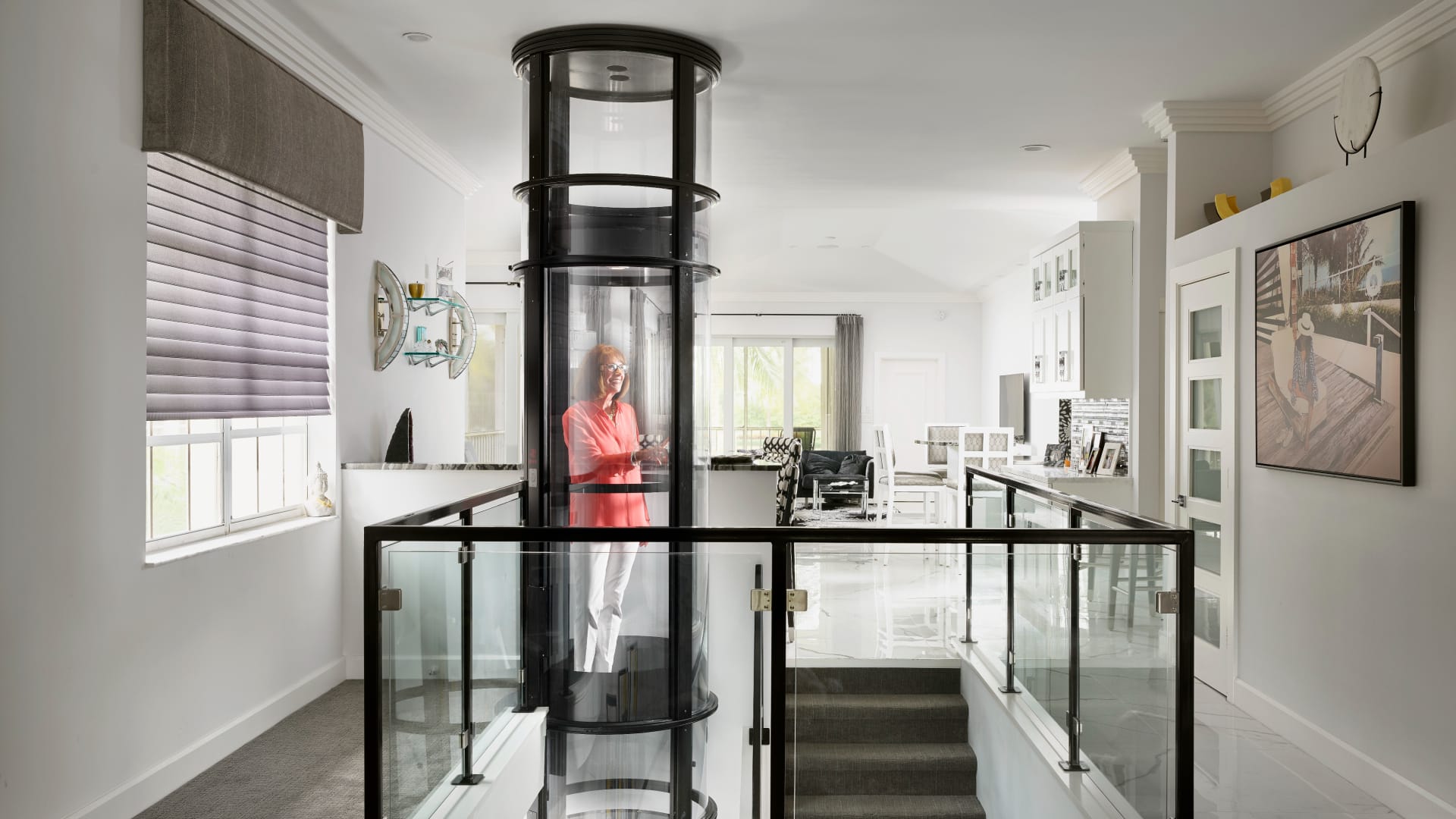
Pneumatic vacuum elevators, like PVE’s, install faster and with less disruption than traditional home elevators. The elevator is a self-supporting cylindrical tube that sits on the ground floor and passes through a floor opening at each level. There is no hoistway to build, no pit to dig, and no separate machine room. Installation typically takes two to three days and requires only a hole in each floor the elevator passes through.
This matters for cost and timeline. Because the pneumatic elevator provides its own structural support, the project doesn’t require the framing, drywall, and finish work that a traditional shaft demands.
Cable (Traction) Elevator Installation
Cable elevators use a system of cables, pulleys, and a counterweight housed in a shaft. Installation requires building a full hoistway, a pit at the bottom of the shaft, and typically a machine room. Structural modifications are almost always needed. Installation time usually runs several weeks.
Hydraulic Elevator Installation
Hydraulic elevators use a fluid-driven piston to move the cabin. They require a hoistway, a pit for the piston assembly, and a separate machine room for the hydraulic pump. Like cable elevators, installation involves substantial construction and typically takes several weeks.
What Determines Home Lift Installation Cost?
Total installed cost depends on several factors, not just the elevator itself. The main drivers are:
- Elevator type: Pneumatic elevators generally have lower installation costs because they need no shaft, pit, or machine room. Cable and hydraulic elevators carry higher installation costs because of the required construction.
- Number of stops: More floors means a longer elevator, more landings, and more installation time.
- Model and capacity: Larger cabins and higher weight capacities cost more than compact single-passenger models.
- Options and finishes: Custom finishes, tinted panels, lighting packages, and app-based controls add to the total.
- Structural work required: If your home needs framing, reinforcement, or major electrical upgrades to accommodate the elevator, that work adds to the installation cost.
- Permits and inspections: Local permit fees vary by jurisdiction.
For a quote specific to your home and the model you’re considering, contact an authorized PVE dealer. Dealers can assess your home, recommend the right model, and give you a total installed price rather than an equipment-only estimate.
How to Keep Home Lift Installation Costs Down Without Compromising Safety
Cost reduction and safety don’t have to compete. The most effective ways to keep installation costs down are also the ways to keep the installation safe:
Choose an Elevator Type That Fits Your Home
The single largest cost variable in home lift installation is structural work. A pneumatic elevator installs into a floor opening and needs no shaft, pit, or machine room. That eliminates the construction work that drives cost on traditional cable and hydraulic elevators.
Get a Site Assessment Before You Commit
An authorized dealer will assess your home before quoting. That assessment tells you whether the elevator fits where you want it, what modifications your home needs, and what the total installed cost will be. It prevents surprises during installation, which are one of the largest sources of budget overruns.
Plan for the Whole Project, Not Just the Elevator
Installation cost includes permits, any electrical upgrades needed to support the elevator, potential structural modifications, and finish work in the surrounding rooms. Ask your dealer for a total installed quote that includes all of these items, not just the equipment.
Ask About Financing
Most dealers offer financing options that spread the cost of the elevator and installation over time. Financing doesn’t reduce the total cost, but it can make the project accessible without draining savings.
Don’t Cut Corners on Certified Installation
Home elevators are regulated equipment. Installation must be handled by a trained, licensed technician following code. Using an unqualified contractor to save money can compromise safety, void the warranty, and create code violations that cost more to fix than they saved.

Common Home Lift Installation Challenges
Every home elevator project has challenges. The good news is that most of them are predictable, which means they’re preventable if you plan for them.
Permitting and Local Code Requirements
Home elevator installations require permits. Requirements vary by state and municipality. Your authorized dealer will handle the permit process, but expect a permit review timeline before installation can start. Skipping permits is not an option; unpermitted elevator work can halt construction and create resale problems later.
Structural Fit
Not every home accommodates every elevator model. Ceiling height, floor-to-floor distance, and available floor space all matter. A pneumatic elevator’s compact footprint and lack of shaft requirements make it a strong fit for retrofits and existing homes, but a site assessment is still needed to confirm the specific model works in your space.
Power Supply
Home elevators require a dedicated electrical circuit. Older homes may need an electrical panel upgrade or a new circuit run to the installation location. Your dealer will confirm the elevator’s electrical requirements during the site assessment so any upgrades can be planned before installation day.
Construction Disruption
Even the fastest installations involve some disruption: workers in the home, floor openings between levels, and dust from cutting. Pneumatic installations are usually done in two to three days, so the disruption window is short. Traditional cable and hydraulic installations can take weeks. Plan for pets, work-from-home schedules, and any accessibility needs during the install window.
Timeline Between Order and Installation
The elevator itself has to be built and shipped before it can be installed. Timelines vary by manufacturer and current lead times. Ask your dealer for a realistic delivery window when you order.
Aesthetic Integration
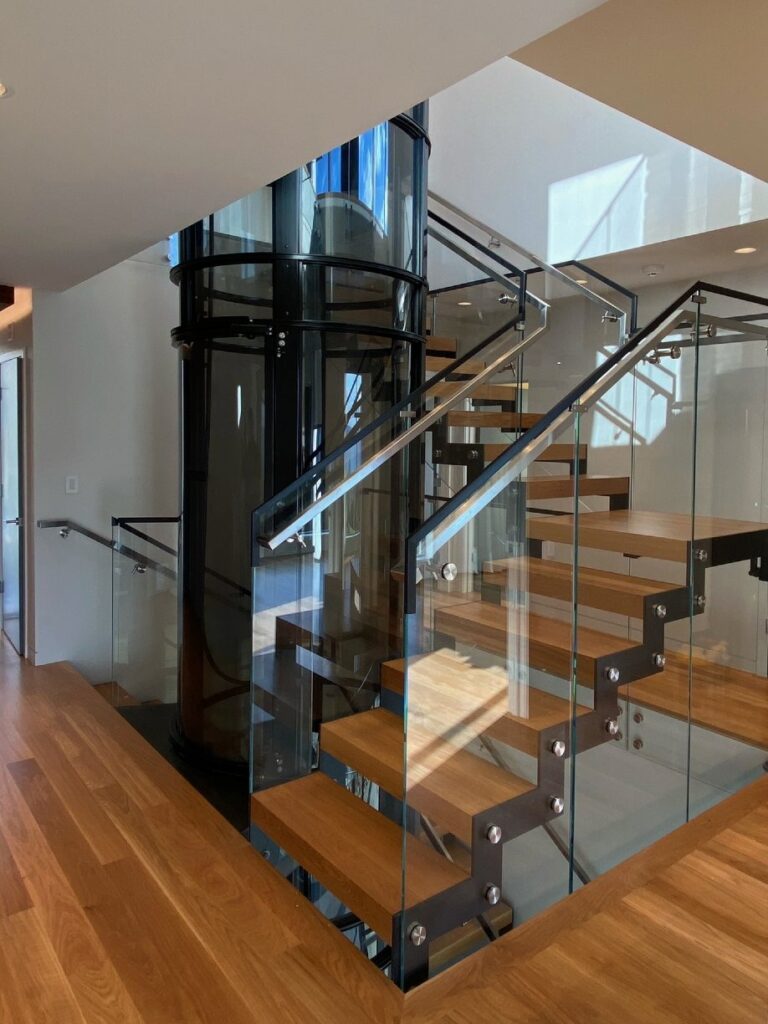
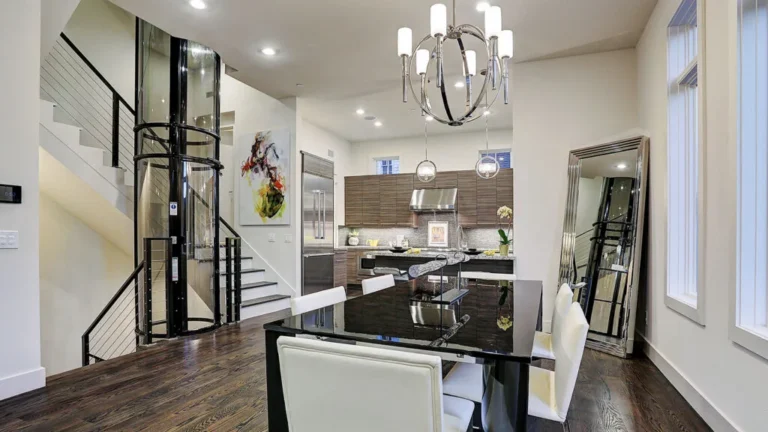
The elevator will be visible in your home, including the door and surrounding finishes. Choose finishes and panel options that fit your interior early in the process, not after installation, so you can select style options that suit the home’s design, including the look and operation of the door. Adding options after the elevator is on-site is more expensive than specifying them upfront.
Why Installation Is Simpler with a Pneumatic Elevator
PVE elevators install differently from cable and hydraulic elevators because the technology is different. The elevator is a sealed cylindrical tube. A turbine at the top removes air to lift the cabin, and controlled air release lowers it back down. That design eliminates the components that drive installation complexity in traditional elevators:
- No hoistway. The elevator is self-supporting.
- No pit. The elevator sits on the ground floor.
- No machine room. The turbines and controls are integrated into the elevator.
- No cables or counterweight. Fewer parts to install and fewer parts that can fail.
- No hydraulic fluid. Unlike hydraulic systems, there is no fluid handling, no fluid storage, and no cleanup risk.
The result is a two-to-three-day installation with far less structural work. For most homes, that’s the difference between a weekend project and a multi-week construction job.
Frequently Asked Questions
How Long Does Home Elevator Installation Take?
It depends on the type. A PVE pneumatic elevator typically installs in two to three days. Cable and hydraulic elevators usually take several weeks because of the shaft, pit, and machine room construction.
Do I Need a Permit to Install a Home Elevator?
Yes, in almost all jurisdictions. Your authorized dealer handles the permit application as part of the installation process.
Can I Install a Home Elevator Myself?
No. Homeowners should not install an elevator themselves. Installing a home elevator requires licensed professionals who understand code, safety standards, and the correct installation process. DIY installation compromises safety, voids the warranty, and violates code.
Will Installation Damage My Home?
A pneumatic elevator requires a hole in each floor the elevator passes through. Finish work in the surrounding rooms is minimal because there’s no shaft to frame or drywall. Cable and hydraulic installations involve more substantial construction.
Does the Installation Include Warranty Coverage?
PVE elevators come with a manufacturer’s warranty on the equipment, and authorized dealers provide installation warranty. Ask your dealer for the specifics before signing.
What Happens After Installation?
Your dealer walks you through the elevator’s operation, safety features, and maintenance schedule. Home elevators need routine maintenance to stay under warranty and to operate safely. Set up a maintenance schedule with your dealer at the time of installation.
Ready to see what a home elevator installation looks like in your home? Contact your nearest authorized PVE dealer for a site assessment and installed quote. Learn more about the PVE30, PVE37, and PVE52 models to see which fits your home.
Was this article helpful?


Get in touch to schedule a call back
One of our lift experts will answer all of your questions.
Prefer to talk now? (877) 691-0357