

Home Elevators in Arizona





Air-driven home elevators for Arizona homes: no pit to dig, panoramic views, and a clear path through local permits and state inspection.
Prefer to talk? Call 813-548-4339
What happens next
- Tell us about your home
- A PVE specialist contacts you
- Get a quote for your home
Get your free Arizona quote
Tell us about your Arizona home and your stairs, and we will prepare a free quote.
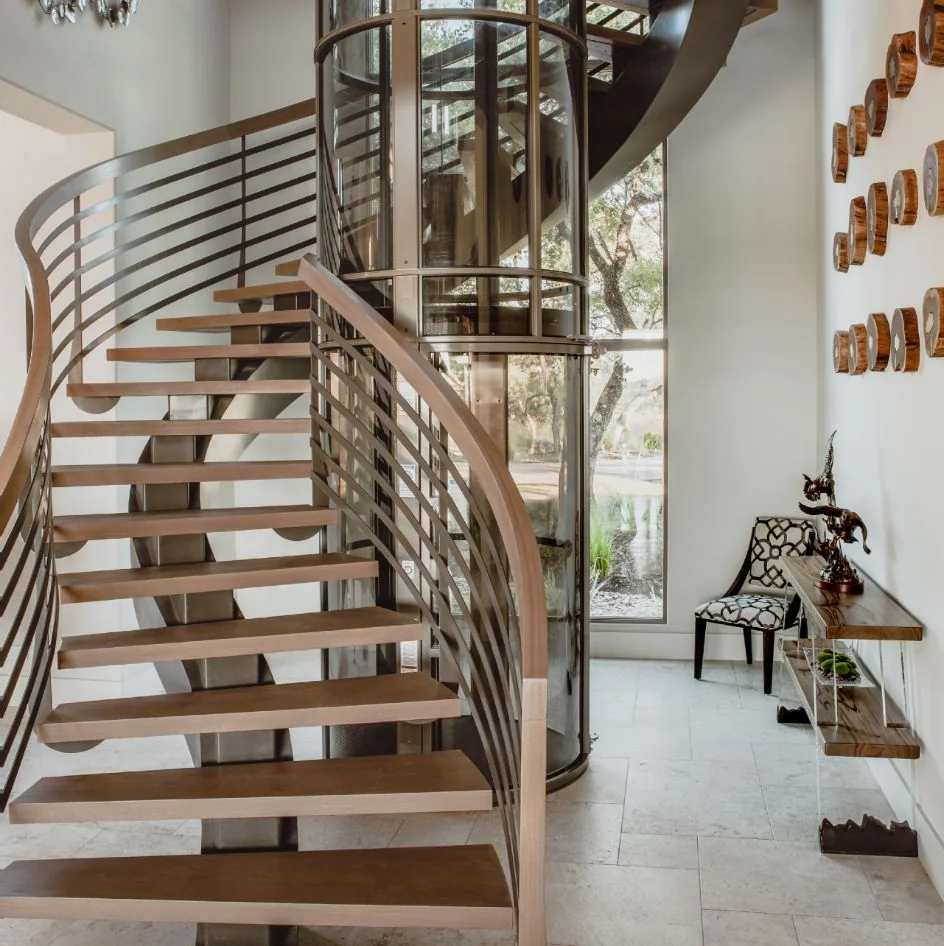
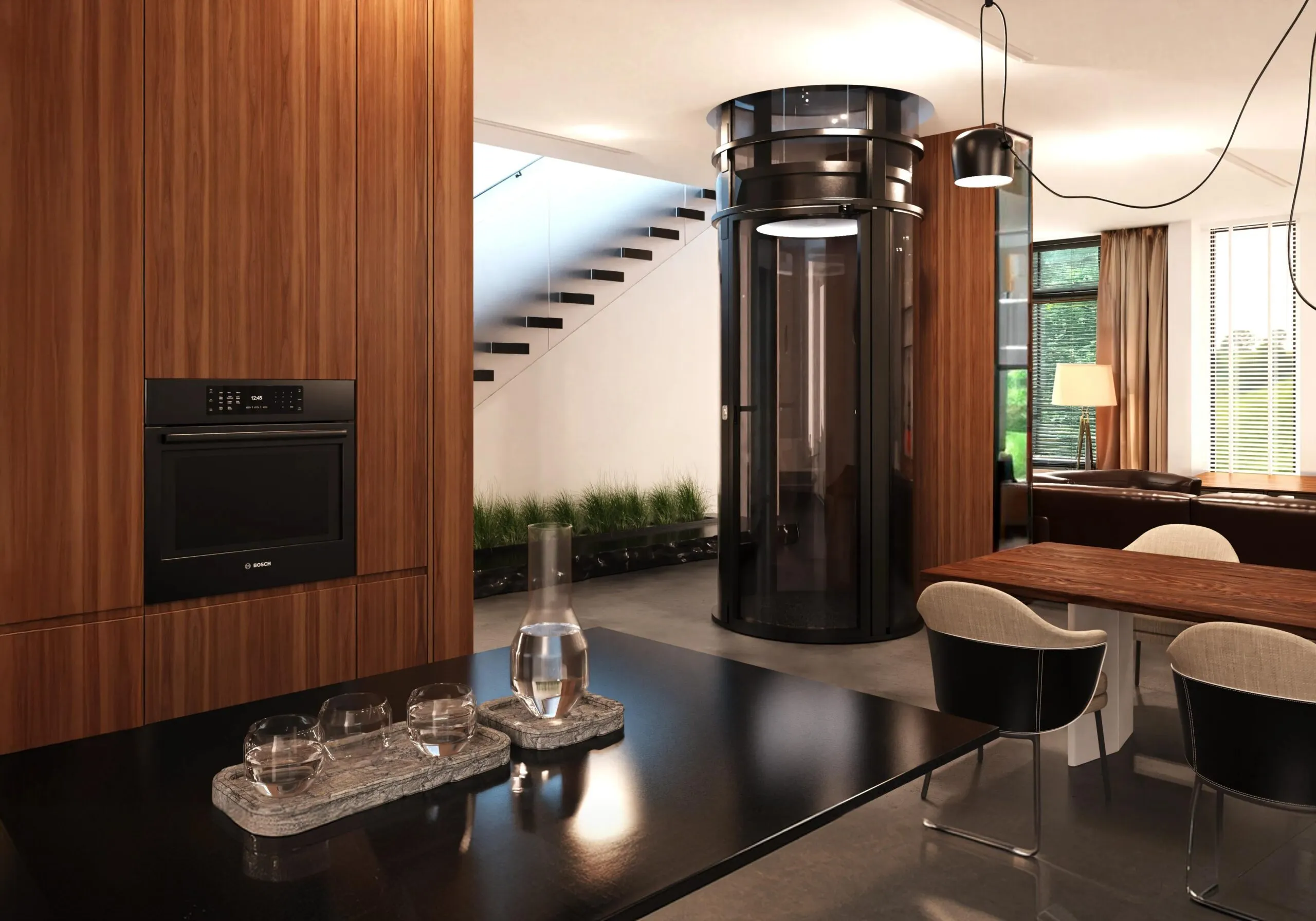
A PVE air-driven home elevator in a residential setting. Photo shown for illustration of the design.
Keep every floor of your Arizona home within reach.
A home elevator lets you stay in the house you love, on every level, for years to come.
If the stairs in your Arizona home have started to feel longer, you are not alone. Knees, a recent surgery or a partner's mobility can turn the trip upstairs into the hardest part of the day. A PVE home elevator gives you back the whole house, so the bedroom, the office and the view upstairs stay part of your life.
PVE designs and manufactures the world's only air-driven residential elevators. Air pressure lifts the cabin, and gravity helps it come down. Because the elevator is self-supporting, it stands on your existing floor. In standard installations you need no pit, no hoistway and no separate machine room.
That keeps the work in your home small. Once the site is ready, a trained dealer typically installs the elevator in 2 to 3 days. You keep your rooms, your layout and most of your routine while the job gets done.
Whether you own a two-story house, are planning a new build or want a safe way up for a parent who lives with you, there is a model sized for your home. Below you will find how it works, what Arizona asks of you, and how to get a free quote.
The cleanest home elevator on the market.
Storms in the Phoenix Valley can knock out the power. If that happens during a ride, your PVE elevator descends to the lowest floor at a safe, slow speed and the door unlocks, so no one is left waiting between floors.
- 01Air lifts you up
A vacuum pump at the top of the unit changes the air pressure and the cab rises.
- 02Gravity brings you down
Air is let back in and the cab descends. No oils, hydraulic fluid or lubricants.
- 03Runs on household current
Low power draw, so it works alongside the solar arrays many homes now have.
The most sustainable home elevator available. Anywhere.
- Pneumatic technology
- No shaft, pit or machine room
- Installed in 2 to 3 days
- Panoramic design
- Three sizes and a square
Four models. One for every home.
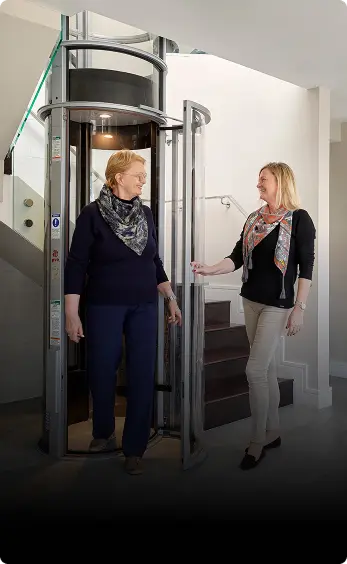
For a narrow corner of a two-story home and one rider, the PVE30 takes the least space. Couples who want to ride together often choose the PVE37 or the square Cube, which suits two- and three-story homes. If someone in your family uses a wheelchair, start with the PVE52, our only wheelchair-accessible model.
PVE30
- Riders
- 1 passenger
Start here for one rider when conserving floor space is a priority.
Explore PVE30
PVE37
- Riders
- 2 passengers
Compare this round model when you want room for two riders within its rated capacity.
Explore PVE37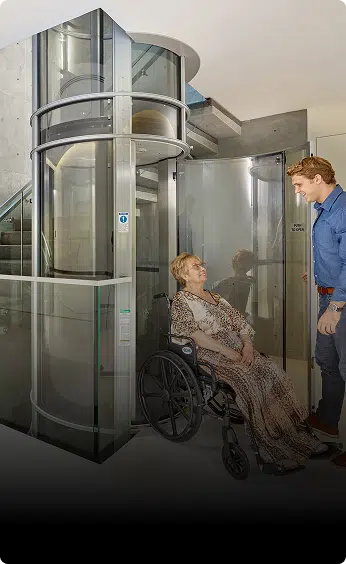
PVE52
- Riders
- 3 passengers
Start here when wheelchair access is a project requirement. Confirm the chair, rider, door opening and cabin fit together.
Explore PVE52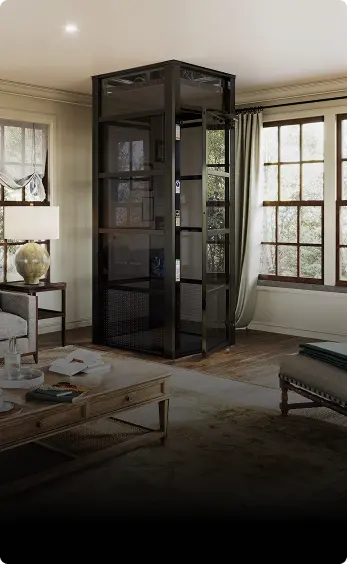
The Cube
- Riders
- 2 passengers
Consider this square model for a two-person layout, including potential corner placement after a site review.
Explore The CubePVE52 wheelchair suitability depends on the individual chair and user. Residential wheelchair access does not mean ADA compliance.
Serving homeowners across Arizona.
We work with homeowners across Arizona, from the Phoenix Valley to Tucson. Your local authorized dealer visits your home, measures the spot you have in mind, and explains the permit steps for your city or county. Each city sets its own review times and fees, so your dealer plans the project around the rules where you live. Request a free consultation to start.
- ArizonaYou are here
Also serving nearby: Phoenix, Tucson, Scottsdale, Mesa.
Safe, simple and made to be seen.
Arizona owners choose PVE for practical reasons: less work in the house, a safe ride in a storm, and a design that looks good in the home.
No pit to dig
The elevator stands on your existing level floor. In standard installations there is no pit, no hoistway and no machine room, so your home needs far less construction than with a traditional lift.
Safe when the power goes out
Valley storms can cut the power. If that happens during a ride, the cabin lowers itself to the bottom floor at a slow, safe speed and the door unlocks so you can step out.
A short install
Once the permit is approved and the site is prepared, your dealer typically installs the elevator in 2 to 3 days. The rest of the house stays livable during the work.
Panoramic design
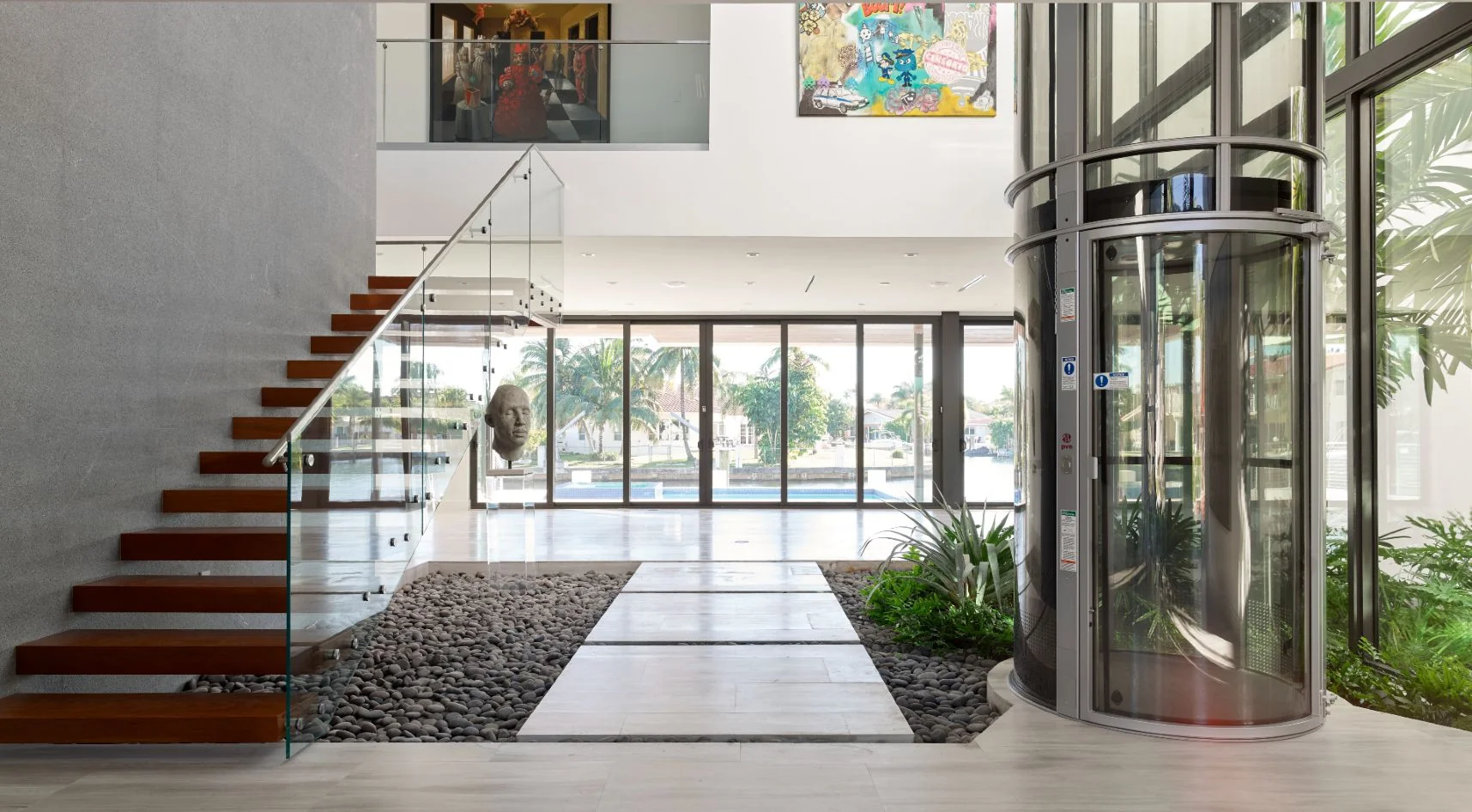
The round cabin offers 360 degree views through clear polycarbonate panels on an aluminum frame. It reads as a feature of your home, not a piece of equipment hidden in a closet.
Low maintenance
The system uses no harmful oils or gases. Your authorized dealer sets a simple service schedule and handles the regular checks, so you know who to call.
From the manufacturer
PVE has designed and manufactured air-driven elevators since 2002. Each one is assembled in the USA and factory-tested in Miami, and every dealer is trained at our Miami facility.
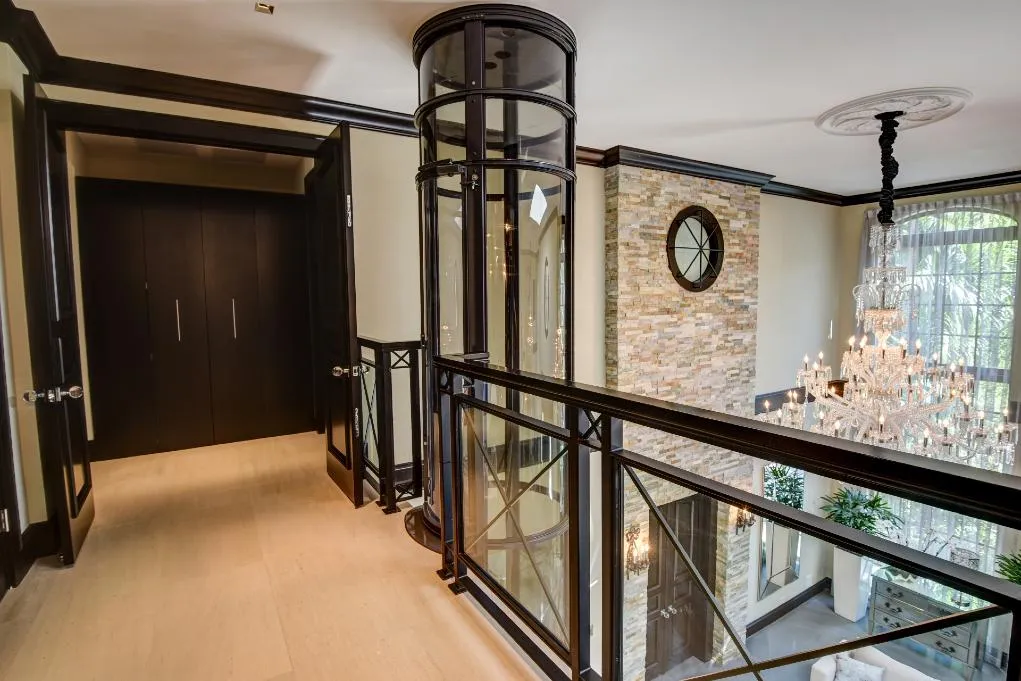
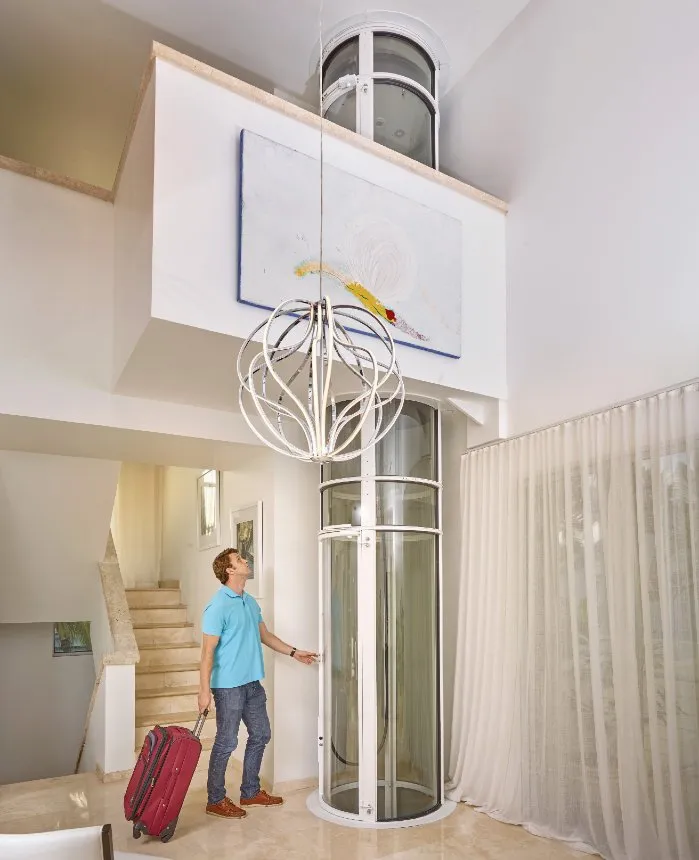
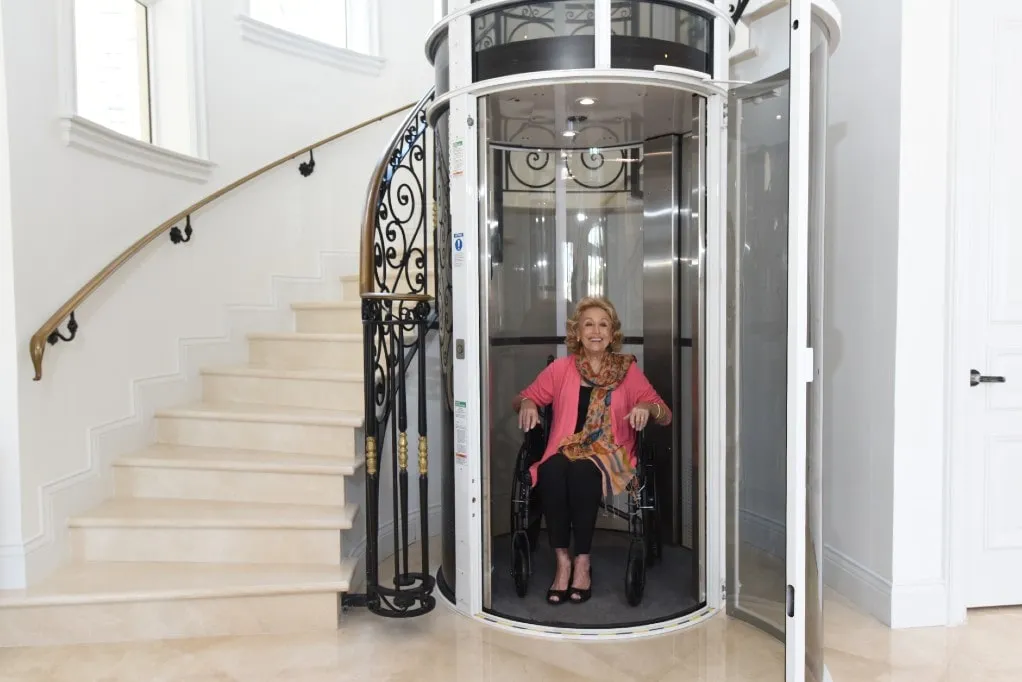
Real PVE installations.


What homeowners say.
Real words from families who added a PVE elevator to the home they love.
We are not age-limited with the elevator. At any age, it's like living on a single floor. We've been here 5 years and it's never needed anything. The elevator has been flawless.
My house was built in 1925 and it was hard to get something to fit in with the décor of my home, but the PVE fit in perfectly. I am thrilled with the design, engineering, and reliability of the elevator by PVE.
It turns a 2-story into a ranch concept! It's for the ease & access but also for the resale. I think the investment is worth it!
What happens during installation?
Your installation plan should cover the work before the elevator arrives as well as assembly and testing.
- Review the home
Confirm the layout, the people using the elevator and the levels it needs to serve.
- Confirm the model and location
Check dimensions, landing access and the requirements for the selected configuration.
- Prepare the site
Complete the agreed structural and electrical work and arrange the required permits and inspections.
- Install and hand over
Assemble and test the elevator, complete required approvals, and explain operation and ongoing care.
Timing depends on site preparation, the selected model and local requirements.
Let's talk numbersHome elevator cost in Arizona.
In Arizona, your price depends on the model, the number of floors, and the site work your home needs, such as cutting and finishing the floor opening or adding the right power supply, plus engineered drawings and local permit fees. A free quote gives you the price for your own home.
For what shapes the price before you talk to us, read our guide to home elevator cost.
What affects your price
- ModelPVE30, PVE37, PVE52 or The Cube
- FloorsHow many levels the elevator serves
- Site workElectrical and structural prep, permits
- FinishThe colors and options you choose
Questions Arizona buyers ask before ordering
Will a home elevator fit in my house?
In most two- and three-story homes, yes, but a dealer visit confirms it. The elevator stands on your existing floor and needs a level spot with enough height above it, plus an opening through each floor. Many Arizona owners place it near the stairs, in a corner of the living room or by a large window. Your dealer will measure your home, suggest the best spot and tell you what prep work comes first.
Who handles the permit, me or the installer?
Your authorized dealer usually handles it with you. In Arizona, your city or county issues the permit, and the application needs drawings, equipment details, license information and a site plan. Your dealer prepares that package so it is complete the first time, which helps avoid delays from corrections. You will sign where needed and stay informed. Before you hire anyone, check that they hold an active elevator license from the Arizona Registrar of Contractors.
How long until I can actually use it?
Most of the wait is the permit, not the install. Approval in Arizona generally takes from a couple of weeks to about two months, depending on your city and whether corrections are needed. Once the site is ready, the install itself typically takes 2 to 3 days. After that, a state inspector checks the elevator, and you can ride it once the state issues a certificate of operation. Your dealer will give you a realistic timeline.
Does the state have to inspect a home elevator?
Yes. In Arizona, a state inspector from ADOSH performs a final inspection after the elevator is installed, even in a private home. Your city issues the permit, but the state issues the certificate of operation, and you need both before the first ride. This protects you and keeps your home clear of problems when you sell. Your dealer schedules the inspection and walks you through it.
What if the power goes out while I am riding?
You come down safely. If the power fails during a ride, the cabin lowers itself to the bottom floor at a slow, steady speed, and the door unlocks so you can step out. You do not need to call anyone or wait for help. That matters in the Phoenix Valley, where storms have caused outages. Your dealer can show you how it works during a demonstration.
My husband uses a wheelchair. Which model should we look at?
Look at the PVE52. It is our only wheelchair-accessible model, with room for a rider and a companion. Not every wheelchair fits, so we suggest you ride a PVE52 at an authorized dealer with your own chair before you order. Keep in mind that PVE elevators are not ADA compliant, and home elevators in Arizona are generally not covered by the ADA. Your dealer can arrange a visit to try one.
Will it make a mess of my house?
No, the work is much lighter than most people expect. Because the elevator needs no pit, no shaft and no machine room in standard installations, there is no digging and no major framing. The main job is a finished opening in each floor and the right power supply. Once that prep is done, the install typically takes 2 to 3 days, and you can keep living in your home throughout.
Who services the elevator after it is installed?
Your local authorized dealer does. Every PVE dealer is trained at our Miami facility, and they set your service schedule, with regular checks to keep the elevator running well. The system is low maintenance and uses no harmful oils or gases. If you ever have a question or a concern, you call the dealer who installed it. Ask about service during your free consultation.
Built for the way Arizona lives.
- Who it helps
- A fast-growing group of Arizonans aged 65 and over
- Permit
- Issued by your city or county
- Before first ride
- State inspection and certificate of operation from ADOSH
- Install time
- Typically 2 to 3 days after site prep
Arizona is getting older faster than the country as a whole. Since 2010, the number of people aged 65 and over has grown faster than any other age group in the state, and nearly one in five Arizonans is now in that group. For you, that is a practical question, not a statistic: how do you keep living well in a home with stairs?
A home elevator is one of the simplest answers for aging in place. You stay close to your neighbors and your routines. If an adult child is helping a parent plan, an elevator can also make it easier for the whole family to share one house across generations.
Your next question is usually about rules. In Arizona, a residential elevator needs a permit, even in a single-family home. Your city or county processes that permit. The state also plays a part: ADOSH, the state agency for elevator safety, oversees elevators under the Arizona Elevator Safety Act. Arizona follows the national elevator safety code, adopted without changes.
Here is what that means for your project. The permit application typically includes engineered drawings, the equipment specifications, the application form, contractor license details and a site plan. Your authorized dealer prepares this package with you. After installation, a state inspector from ADOSH performs a final acceptance inspection. You may not use the elevator until ADOSH issues a certificate of operation.
Plan for the permit, then enjoy a short install.
Approval time depends on where you live. In general, it takes anywhere from a couple of weeks to about two months. Cities with online permit portals can clear a simple residential lift faster. Scottsdale, Tucson and Mesa often move a little quicker than Phoenix, and Phoenix and Scottsdale offer faster plan review for a fee. Each round of corrections can add a few more weeks, so a complete first application saves you time.
Skipping the permit is never worth it. Homeowners who install a lift without one can face enforcement and trouble later when they sell. Before you sign, check that your installer holds an active elevator license from the Arizona Registrar of Contractors. Permit fees are set by each building department, so your dealer will confirm them with your city.
One more point is worth knowing. Elevators in single-family homes are generally not covered by the ADA, and PVE elevators are not ADA compliant. If you need wheelchair access at home, the PVE52 is the model designed for it, and riding one first is the best way to confirm your chair fits. Weather matters too: storms in the Phoenix Valley have caused damage and outages, and your elevator is designed to bring you down safely if the power goes out.
Find the right elevator for your Arizona home.
Tell us about your home, your stairs and who will ride the elevator. An authorized dealer will help you choose a model, plan the permit and set up a visit. Your quote is free, with no pressure to decide.
813-548-4339- Head office
- 4151 West 108th Street, Suite #1, Hialeah, FL 33018
- Phone
- 813-548-4339
- [email protected]
- Hours
- Mon – Fri 8am – 4pm EST · Sat – Sun closed
Request a Free Consultation
Share a few details about your Arizona home and we will be in touch.