

Home Elevators in Illinois





Air-driven home elevators for Illinois houses, designed to stand on your existing floor so you can keep living on every level.
Prefer to talk? Call 813-548-4339
What happens next
- Tell us about your home
- A PVE specialist contacts you
- Get a quote for your home
Request a Free Quote
Tell us about your Illinois home and we will help you find the right elevator for it.
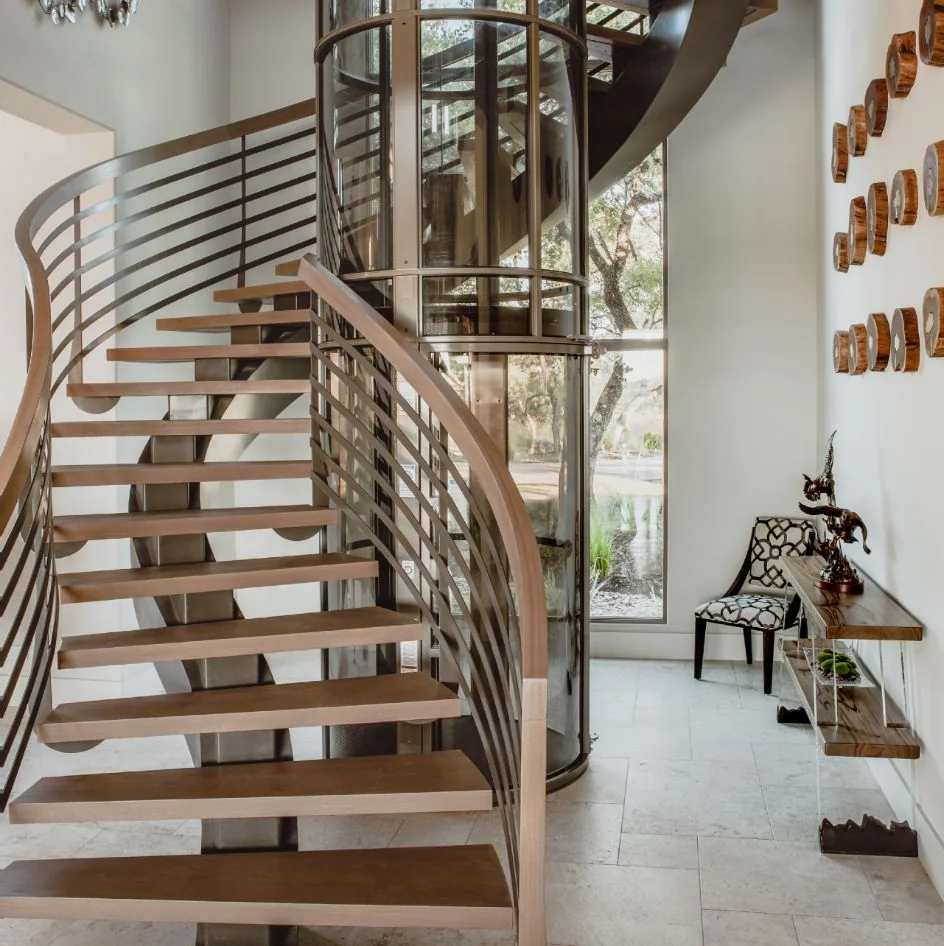
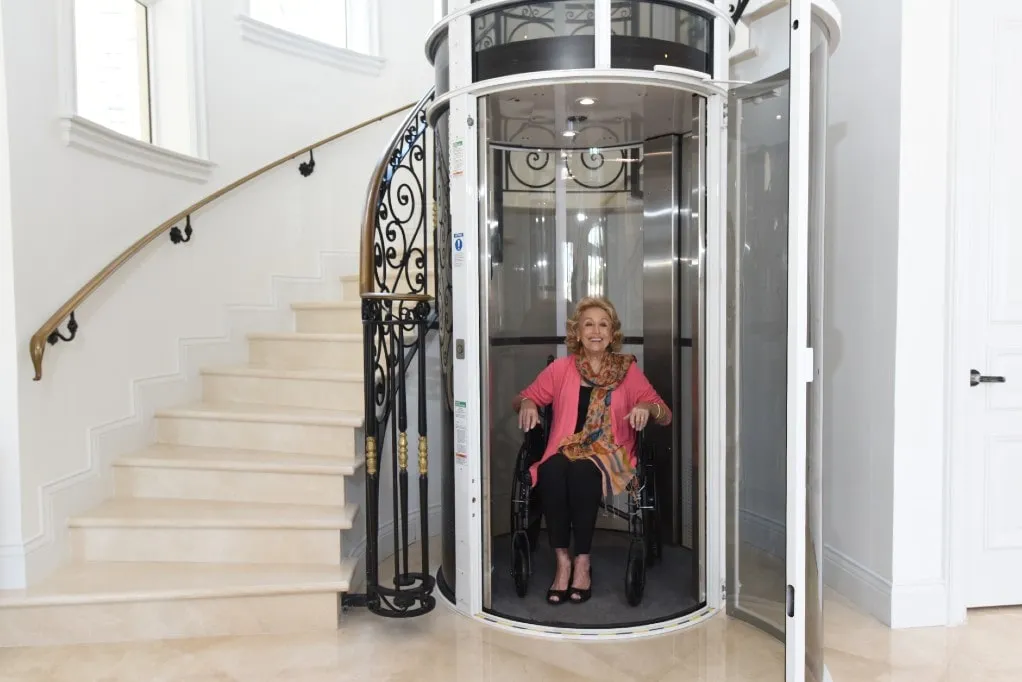
A PVE home elevator and its panoramic design, shown in a home setting.
A home elevator that fits the house you already love
Keep every floor of your Illinois home in easy reach, without a major remodel.
The stairs used to be nothing. Now there is a knee that complains, a recovery from surgery, or a partner who needs a steady hand on the way up. If you want to stay in your Illinois home, a home elevator lets the whole house stay yours, not just the ground floor.
Our elevators run on air. PVE designs and manufactures them with patented pneumatic technology: a change in air pressure lifts the cabin, and gravity assists the ride down. In standard installations there is no pit to dig, no hoistway to frame and no separate machine room. The elevator is self-supporting, which means it stands on the floor you already have.
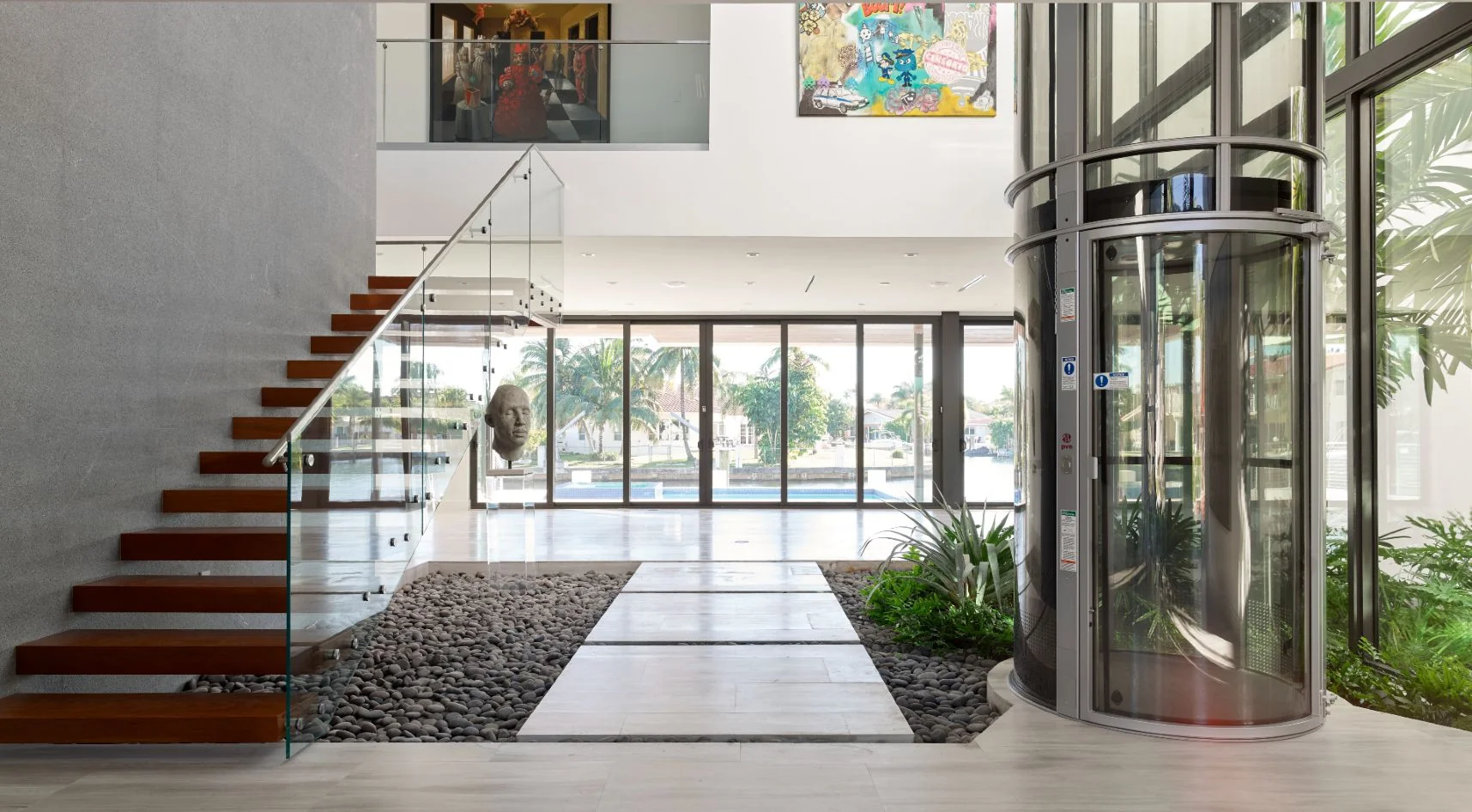
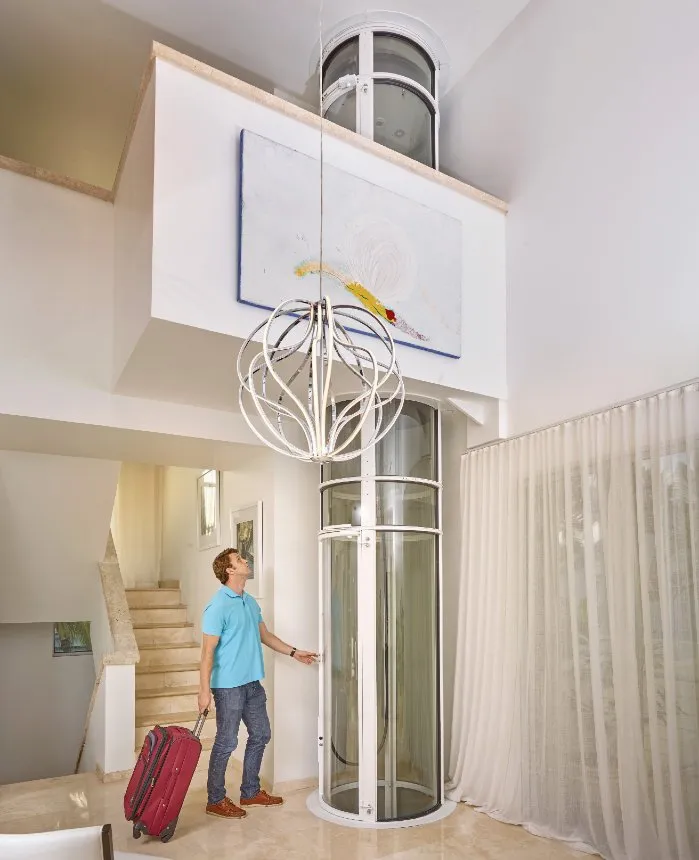
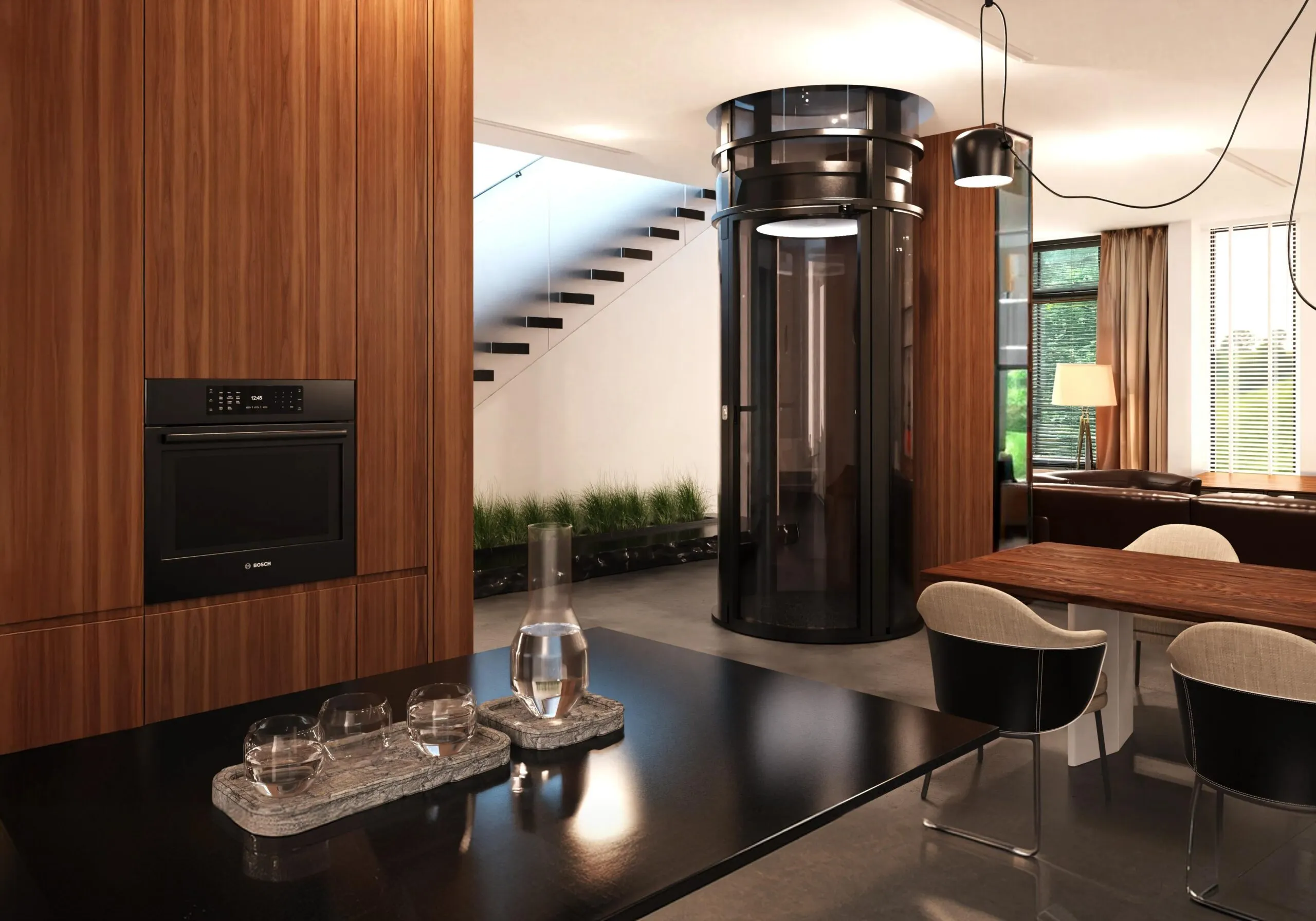
For a two- or three-story house, a home with a finished basement, or a new build still on the drawing board, that keeps the job small. You keep your rooms as they are. The round, panoramic design lets light pass through instead of closing off a corner, so the elevator feels like part of your home.
The cleanest home elevator on the market.
The system runs on a single-phase home circuit and uses no harmful oils or lubricants. If the power fails during a ride, the cabin descends to the lowest level at safety speed and the door opens.
- 01Air lifts you up
A vacuum pump at the top of the unit changes the air pressure and the cab rises.
- 02Gravity brings you down
Air is let back in and the cab descends. No oils, hydraulic fluid or lubricants.
- 03Runs on household current
Low power draw, so it works alongside the solar arrays many homes now have.
The most sustainable home elevator available. Anywhere.
- Pneumatic technology
- No shaft, pit or machine room
- Installed in 2 to 3 days
- Panoramic design
- Three sizes and a square
Four models. One for every home.
If your stair landing or closet corner is tight and one person rides at a time, the PVE30 is the place to start. Couples who ride together often choose the PVE37 or the square Cube, which suits two- and three-story homes. If someone in your family uses a wheelchair, look first at the PVE52, the one model designed for it.
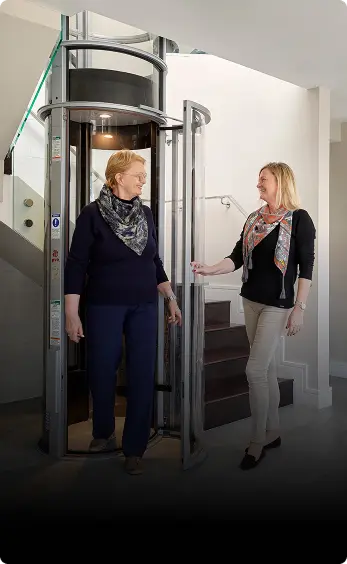
PVE30
- Riders
- 1 passenger
Start here for one rider when conserving floor space is a priority.
Explore PVE30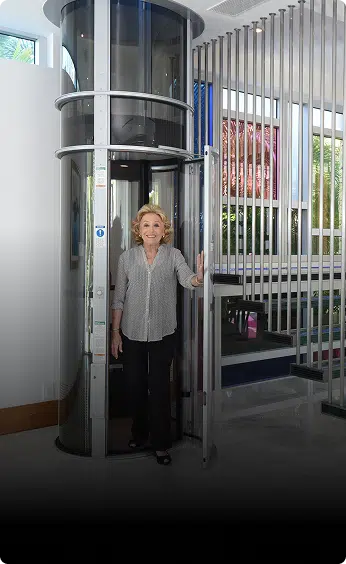
PVE37
- Riders
- 2 passengers
Compare this round model when you want room for two riders within its rated capacity.
Explore PVE37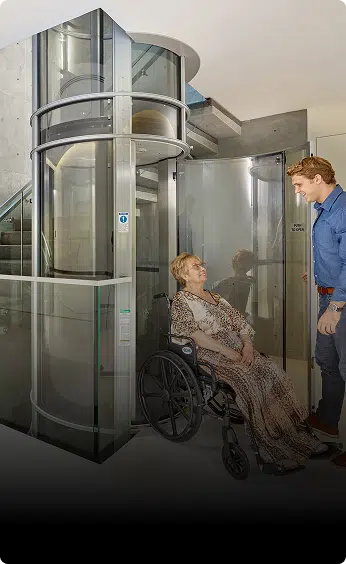
PVE52
- Riders
- 3 passengers
Start here when wheelchair access is a project requirement. Confirm the chair, rider, door opening and cabin fit together.
Explore PVE52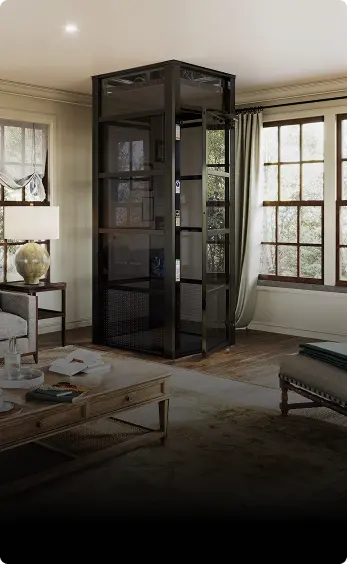
The Cube
- Riders
- 2 passengers
Consider this square model for a two-person layout, including potential corner placement after a site review.
Explore The CubePVE52 wheelchair suitability depends on the individual chair and user. Residential wheelchair access does not mean ADA compliance.
Serving homeowners across Illinois.
PVE works through authorized dealers trained at our Miami facility, and they handle the home visit, the install and the service that follows. Wherever your home is in Illinois, from the city to a quiet town, you can start with a free quote. We will connect you with the dealer who serves your area and set up a visit to look at your home.
Safe, simple and made to be seen.
Here is what a PVE home elevator brings to your Illinois home, from the first visit to many years of daily rides between floors.
No pit, no shaft to build
Standard installations need no pit, no hoistway and no machine room. In an older house with a basement, that means no digging into your foundation and far less dust and noise. In a newer home, it means no rooms rebuilt around a shaft.
A calm answer to power cuts
If the power fails while you are riding, the cabin descends to the lowest level at safety speed and the door lock opens, so you can step out. You do not wait between floors for help or for the power to come back.
A panoramic design
The round cabin gives 360 degree views, so you can see out as you ride. Light passes through, and the elevator reads as a design piece in your living room or stair hall rather than a closed box in the corner.
Fast installation
Once your site prep is done, the install typically takes 2 to 3 days. That suits a family who needs the elevator soon, after a surgery or before a parent moves in, and it keeps your home livable while the crew works.
Low maintenance
There are no harmful oils, gases or lubricants to manage. Your authorized dealer sets the service schedule and handles the checks, so you always know who to call and what comes next.
Assembled in the USA
Every PVE elevator is assembled in the USA and factory-tested in Miami, Florida. PVE has designed air-driven home elevators since 2002, and the dealers who install them are trained at the Miami facility.
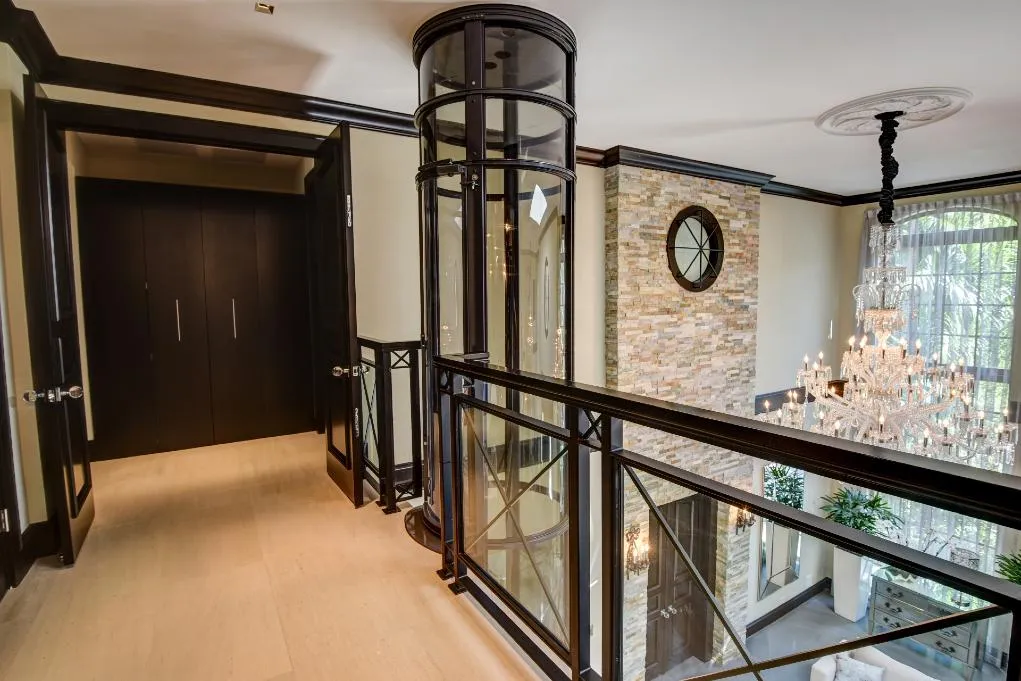
Real PVE installations.


What homeowners say.
Real words from families who added a PVE elevator to the home they love.
We are not age-limited with the elevator. At any age, it's like living on a single floor. We've been here 5 years and it's never needed anything. The elevator has been flawless.
My house was built in 1925 and it was hard to get something to fit in with the décor of my home, but the PVE fit in perfectly. I am thrilled with the design, engineering, and reliability of the elevator by PVE.
It turns a 2-story into a ranch concept! It's for the ease & access but also for the resale. I think the investment is worth it!
What happens during installation?
Your installation plan should cover the work before the elevator arrives as well as assembly and testing.
- Review the home
Confirm the layout, the people using the elevator and the levels it needs to serve.
- Confirm the model and location
Check dimensions, landing access and the requirements for the selected configuration.
- Prepare the site
Complete the agreed structural and electrical work and arrange the required permits and inspections.
- Install and hand over
Assemble and test the elevator, complete required approvals, and explain operation and ongoing care.
Timing depends on site preparation, the selected model and local requirements.
Let's talk numbersHome elevator cost in Illinois.
What you pay depends on the model, how many floors you connect and the work your home needs first, such as cutting floor openings, leveling an older floor or adding a dedicated circuit. A free quote, based on a look at your Illinois home, gives you the price for your own project.
For what shapes the price before you talk to us, read our guide to home elevator cost.
What affects your price
- ModelPVE30, PVE37, PVE52 or The Cube
- FloorsHow many levels the elevator serves
- Site workElectrical and structural prep, permits
- FinishThe colors and options you choose
Questions Illinois buyers ask before ordering
Will an elevator fit in a two-story house like ours?
In many cases, yes. The elevators need only a modest footprint, and the smallest model is made for tight spaces such as a corner by the stairs or a pair of stacked closets. Every house is different, though, and site suitability varies. Ceiling height, a level floor and the space above the top stop all play a part. A free visit from your dealer shows where it can go in your Illinois home and what has to happen first.
Do I have to deal with the building department myself?
No, your dealer guides you through it. Permit rules for an elevator in a private home are set locally, so they can differ from one Illinois town to the next. Your authorized dealer knows what your building department usually asks for, prepares the paperwork with you and arranges any inspection that follows. You will still sign where the owner must sign, but you will not have to figure out the steps alone.
Can one elevator serve every floor, from the basement up?
Yes, in many homes it can. The PVE30, PVE37 and PVE52 can serve every level of a typical house, basement included, so your laundry or family room downstairs and the bedrooms upstairs are one short ride apart. The lower level must be heated living space with a level floor. Your dealer checks this on the visit, tells you which models suit the number of floors you have, and says if the basement needs any work first.
What if the power cuts out halfway up?
You come down gently and step out. If the power fails while you are riding, the elevator lowers itself to the bottom floor at a slow, safe speed, and the door unlocks so you can leave the cabin. You do not have to wait for the power to return or for someone to come and help. That brings peace of mind in any season, and it matters most for someone who often rides alone.
Will my husband's wheelchair fit inside?
It may, if you choose the PVE52. It is the only PVE model designed for wheelchair use, with a wider door and room for more than one person. Not every wheelchair fits, and the PVE52 is not ADA compliant, so the best step is to ride one at a PVE authorized distributor with his own chair. Your dealer can also check that your Illinois home has the floor space this larger model needs.
Can we keep living at home while it goes in?
Yes, most families do. The install itself typically takes 2 to 3 days once site prep is complete. Before that, the main jobs are any floor openings, leveling and a new circuit, which your dealer schedules with you. Because there is no pit or shaft to build, the work stays contained. You can plan around a few busy days rather than weeks with your home torn apart.
Is it loud when it runs?
You will hear it while it moves, and there are ways to make it quieter. PVE offers an acoustic package that softens the sound at the top, and a split unit that places the machinery in another part of the house or outside. If your bedroom sits next to where the elevator would go, mention it on the visit. Your dealer can suggest the setup that suits your home and the way you live.
Can it go in our garage or on a cool sun porch?
Usually not. The elevator is built for heated indoor living space, and it is not meant to run in a room that gets cold. An unheated garage, porch or crawl space would need to become part of your heated home first. In most cases, a spot inside the house works better, such as beside the stairs or in stacked closets. Your dealer will walk through the options with you and suggest a spot that works all year.
Built for the way Illinois lives.
- Typical homes
- Two- and three-story houses, homes with basements, new builds
- What it needs
- A level floor, heated indoor space and a dedicated circuit
- Permits
- Arranged with your local building department through your dealer
- Install time
- Typically 2 to 3 days once site prep is complete
Start with your floor plan. Your home might be an older house with plaster walls and a basement, a two-story home from a more recent decade or a new build you are planning now. Either way, the first question is the same: where would the elevator stand? Many families find a spot beside the stairs, in a corner of the living room, or in closets that stack one above the other. Because the elevator is round and open to view, it can stand in plain sight without looking like equipment.
There are two ways to reach the upper floor. In a through-floor install, your dealer has a neat opening cut in each floor the elevator passes through, lined up from bottom to top. In a balcony install, the elevator rises beside an open landing, walkway or loft, and the upper stop meets that edge. If your home has an open stair hall or a loft, ask about the balcony option, since it can mean less cutting.
The elevator rests on your existing floor, and that floor must be fully level. In an older home, floors can settle over the years, so your dealer checks this on the visit and tells you if any leveling comes first. Ceiling height matters too, and so does the space above the top stop. If your top floor is low, ask about the split unit, which moves the machinery to another spot in the house or outside.
If you have a basement, the elevator can often start there and stop on each floor above, with up to 5 stops on the PVE30, PVE37 and PVE52. The elevator is meant for warm, indoor living space. It belongs in a heated room, not an unheated garage, porch or crawl space, and your dealer will point out any spot that would need work first.
Picture a couple in a two-story house with the bedroom upstairs and the laundry in the basement. A three-stop elevator links all three levels, so neither of them has to carry a basket or count the steps. The same plan works when a parent moves in and wants to keep a bedroom on the main floor while still joining the family upstairs.
Then there is the electrical side. Every model runs on a dedicated single-phase circuit at 220 to 240 V, so a licensed electrician usually adds a breaker and an outlet near the elevator. Your dealer will also suggest a buck-boost or voltage stabilizer to keep the supply steady. If your house has an older electrical panel, this is the part of the site prep to ask about early.
Permits come before the crew. Rules for an elevator in a private home are set locally, so what you need depends on where your house is. Your PVE authorized dealer works with your local building department on the permit and any inspection that follows, and tells you what to expect for timing. In many cases, the paperwork and site prep take longer than the install itself.
After the prep work, your crew is typically in and out in 2 to 3 days.
During those days, the cylinder sections go up, the head unit is set at the top, and the doors and controls are fitted. Most families keep living at home throughout. After that, your dealer handles service, with an inspection at least every 6 months. The elevator is low maintenance, so care is mostly routine checks. A free visit to look at your home is the best first step.
Ready to see what fits your home?
Tell us about your house, your stairs and who will ride. We will help you compare models, explain the site work your home may need and arrange a free visit with an authorized dealer who serves your part of Illinois.
813-548-4339- Head office
- 4151 West 108th Street, Suite #1, Hialeah, FL 33018
- Phone
- 813-548-4339
- [email protected]
- Hours
- Mon – Fri 8am – 4pm EST · Sat – Sun closed
Find the Right Elevator for Your Home
Share a few details and we will reply with next steps and a free quote.