

Home Elevators in Michigan





Air-driven home elevators for Michigan houses, with no pit and no machine room in standard installs, so you can stay in the home you love.
Prefer to talk? Call 813-548-4339
What happens next
- Tell us about your home
- A PVE specialist contacts you
- Get a quote for your home
Request a Free Quote
Tell us about your Michigan home and we will help you find the right elevator.
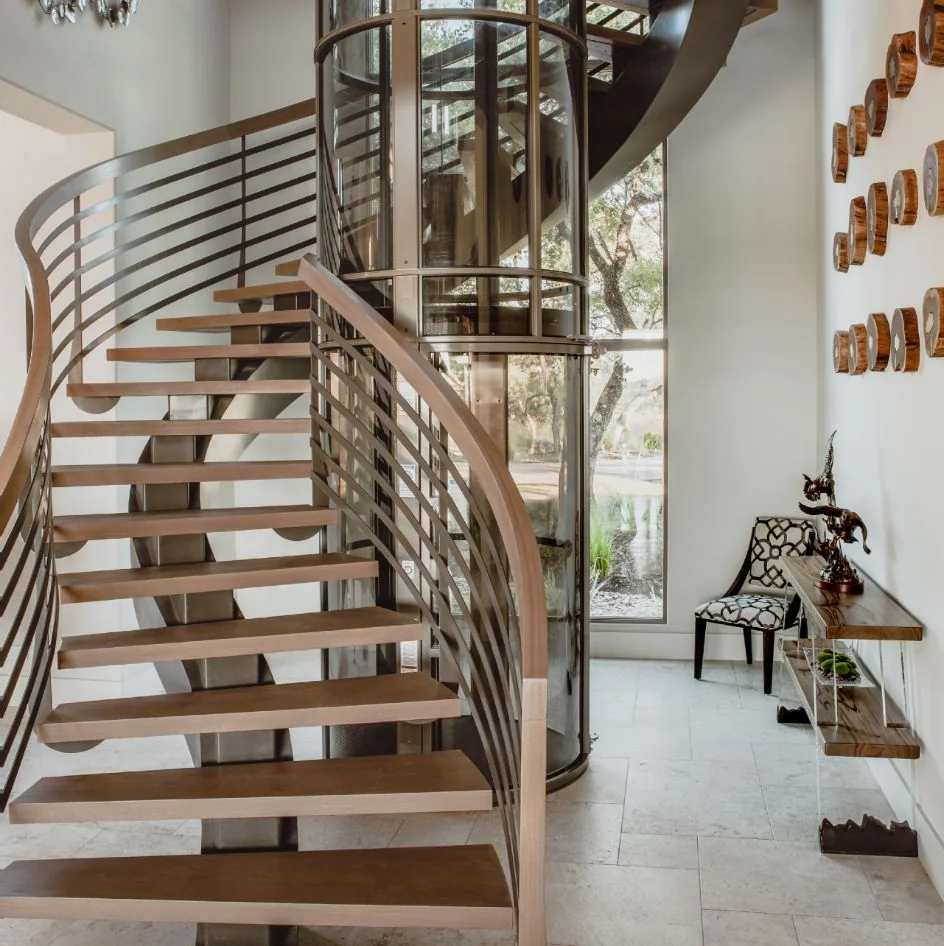
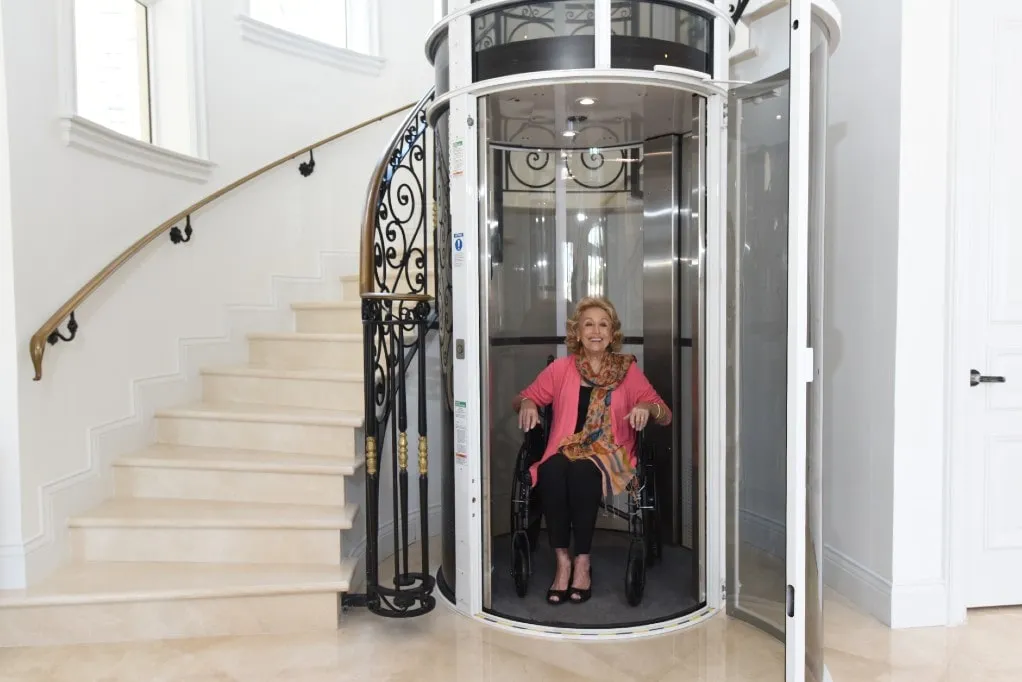
A PVE air-driven home elevator with panoramic design, shown in a home setting.
A simple way to reach every floor of your Michigan home
Keep your bedroom, your kitchen and your basement within easy reach, every day.
Maybe the stairs feel steeper than they used to. A knee may need care, a hip may be healing, or your partner may want a safer way up at night. If you plan to stay in your Michigan home for years to come, an elevator lets you keep using all of it.
PVE designs and manufactures air-driven home elevators with patented pneumatic technology. A change in air pressure lifts the cabin, and gravity helps it come down. Each one is self-supporting, so it rests on your existing floor. Standard installations need no pit, no hoistway and no separate machine room.
What does that mean for your house? The work stays small. You give up a corner, not a room. It can suit an older two-story house, a ranch with a basement, or a new home you are still planning.
Every PVE elevator is assembled in the USA and factory-tested in Miami, Florida. A trained local dealer looks at your home first, so you know what will work before you commit.
The cleanest home elevator on the market.
The design is clean and simple. It uses no harmful oils or lubricants, needs little upkeep, and plugs into your home's power, with a solar panel package available if you want it.
- 01Air lifts you up
A vacuum pump at the top of the unit changes the air pressure and the cab rises.
- 02Gravity brings you down
Air is let back in and the cab descends. No oils, hydraulic fluid or lubricants.
- 03Runs on household current
Low power draw, so it works alongside the solar arrays many homes now have.
The most sustainable home elevator available. Anywhere.
- Pneumatic technology
- No shaft, pit or machine room
- Installed in 2 to 3 days
- Panoramic design
- Three sizes and a square
Four models. One for every home.
If space is tight and one person rides, the PVE30 is often the place to start. The PVE37 and The Cube give room for two, and The Cube suits two- and three-story homes. If someone in your family uses a wheelchair, look first at the PVE52.
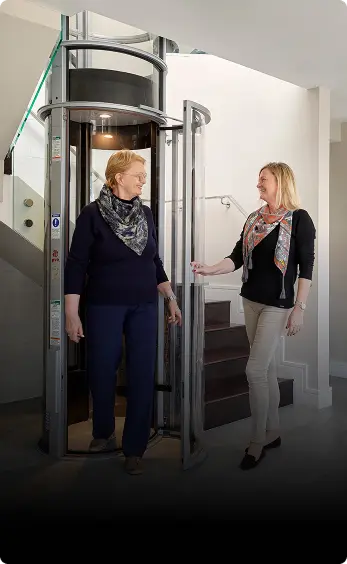
PVE30
- Riders
- 1 passenger
Start here for one rider when conserving floor space is a priority.
Explore PVE30
PVE37
- Riders
- 2 passengers
Compare this round model when you want room for two riders within its rated capacity.
Explore PVE37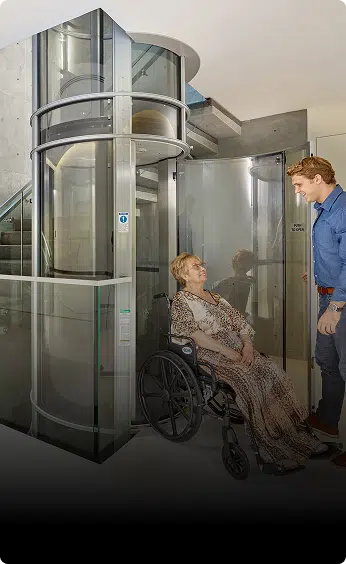
PVE52
- Riders
- 3 passengers
Start here when wheelchair access is a project requirement. Confirm the chair, rider, door opening and cabin fit together.
Explore PVE52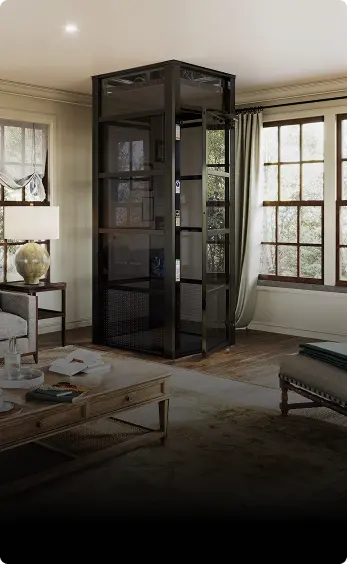
The Cube
- Riders
- 2 passengers
Consider this square model for a two-person layout, including potential corner placement after a site review.
Explore The CubePVE52 wheelchair suitability depends on the individual chair and user. Residential wheelchair access does not mean ADA compliance.
Serving homeowners across Michigan.
PVE works through trained, authorized dealers who handle the home visit, the install and local service. Wherever your home is in Michigan, tell us where you live and what you need. We will connect you with the dealer who serves your area, so you get advice about your own house, a clear quote and someone nearby to look after your elevator for years to come.
- MichiganYou are here
Safe, simple and made to be seen.
A home elevator is a big choice for your family. Here is why many Michigan homeowners choose an air-driven elevator from PVE for the house they want to stay in.
No pit to dig
Standard installations need no pit, no hoistway and no separate machine room. The elevator rests on your existing level floor. That means less building work in your home, whether it is an older house or a new one, and fewer changes to rooms you like as they are.
A calm ride down in a power cut
If the power fails while the elevator is running, the cab descends to the lowest level at a safe, slow speed. Then the door lock opens so the rider can step out. You do not need to wait for someone to come and help.
Fits homes with tight space
The models are compact and space-saving. The PVE30 has the smallest footprint of the four, which helps in a narrow hall or a snug corner. Your dealer helps you match the model to the space your home really has.
Light and open to ride
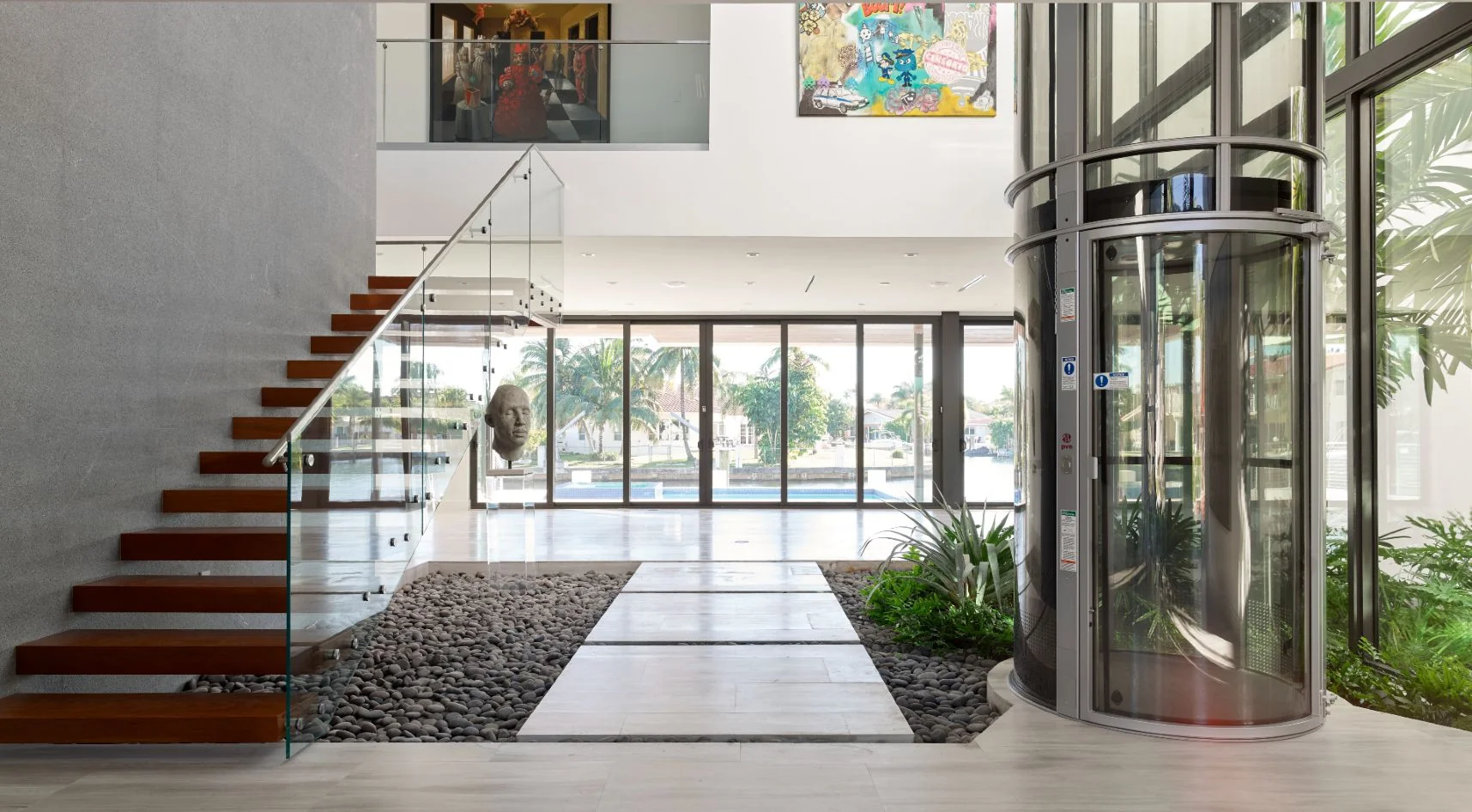
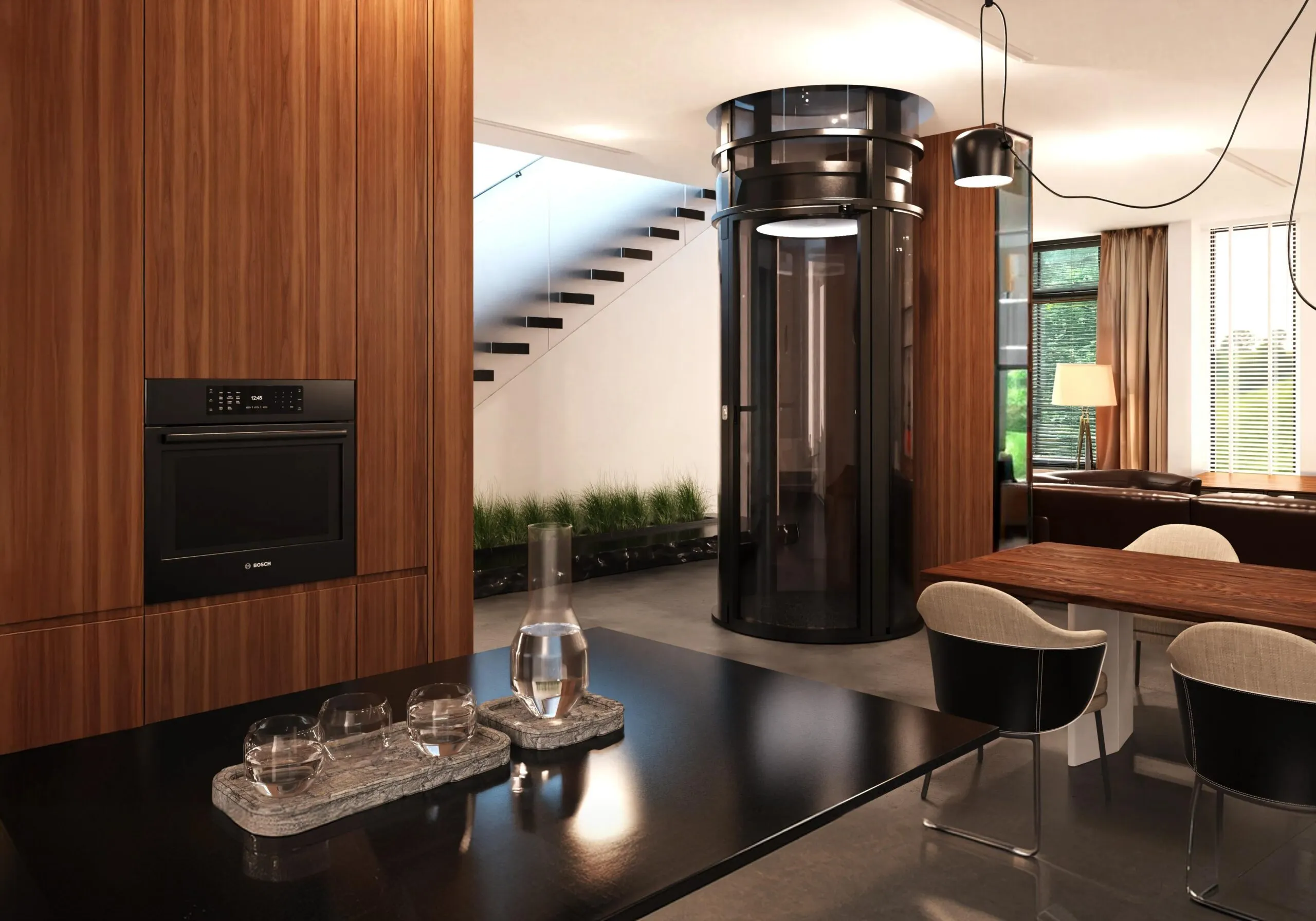
Panoramic 360 degree visibility is a defining part of the design. The cylinder is an aluminum frame with polycarbonate panels, so you see out on every side. It feels open, and it looks like a piece of design, not a medical device.
Fast to install
Once site prep is complete, installation typically takes 2 to 3 days. Your daily routine is disrupted for a short time, and you keep living in your home while the work is done.
A manufacturer behind it
PVE has designed and manufactured air-driven home elevators since 2002. Each one is assembled in the USA and factory-tested in Miami. Over 250 authorized dealers on 5 continents are trained at our Miami facility, and they handle installation and local service.
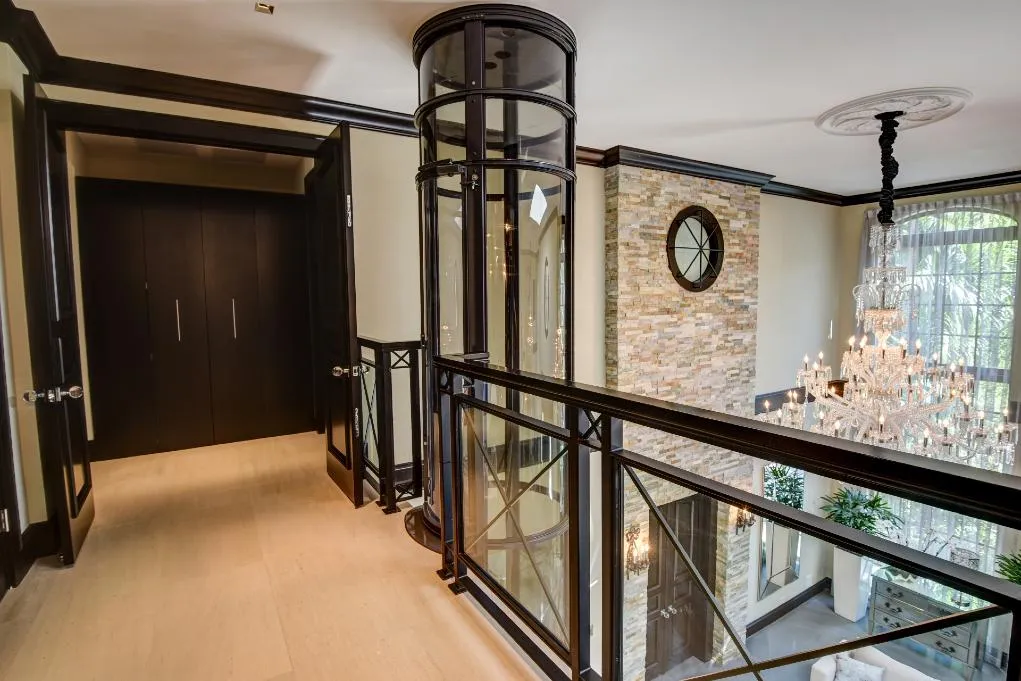
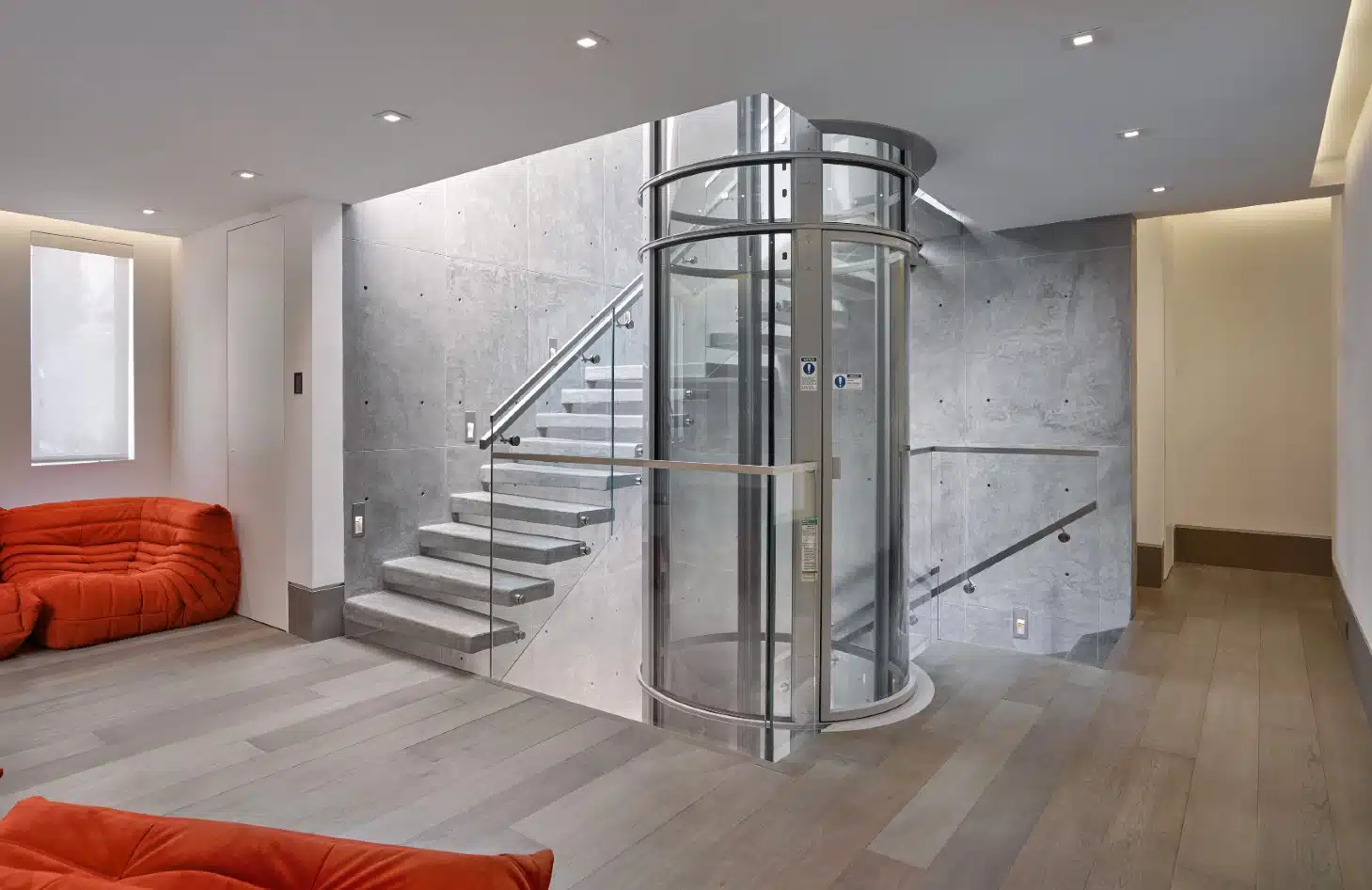
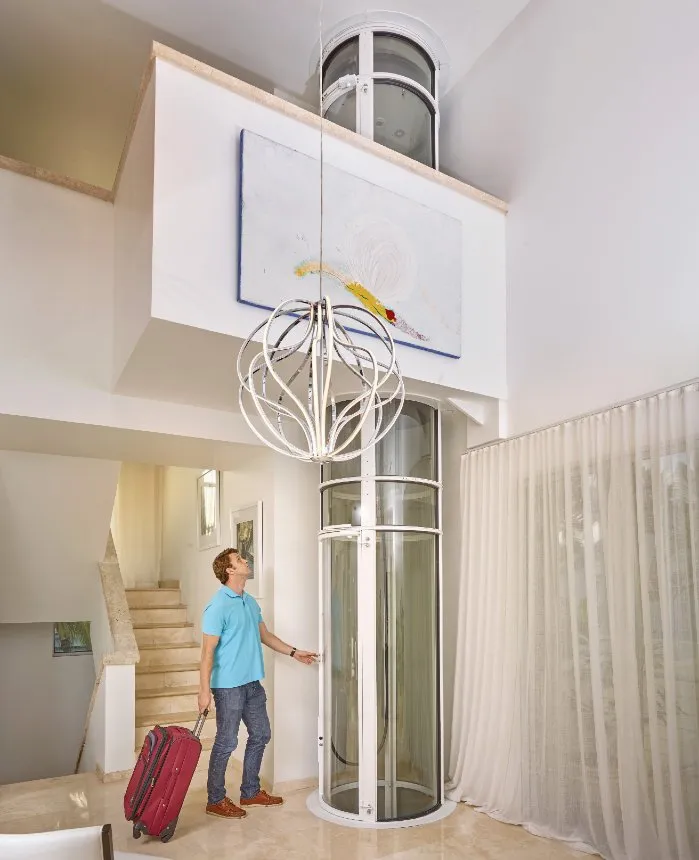
Real PVE installations.

What homeowners say.
Real words from families who added a PVE elevator to the home they love.
We are not age-limited with the elevator. At any age, it's like living on a single floor. We've been here 5 years and it's never needed anything. The elevator has been flawless.
My house was built in 1925 and it was hard to get something to fit in with the décor of my home, but the PVE fit in perfectly. I am thrilled with the design, engineering, and reliability of the elevator by PVE.
It turns a 2-story into a ranch concept! It's for the ease & access but also for the resale. I think the investment is worth it!
What happens during installation?
Your installation plan should cover the work before the elevator arrives as well as assembly and testing.
- Review the home
Confirm the layout, the people using the elevator and the levels it needs to serve.
- Confirm the model and location
Check dimensions, landing access and the requirements for the selected configuration.
- Prepare the site
Complete the agreed structural and electrical work and arrange the required permits and inspections.
- Install and hand over
Assemble and test the elevator, complete required approvals, and explain operation and ongoing care.
Timing depends on site preparation, the selected model and local requirements.
Let's talk numbersHome elevator cost in Michigan.
The price of your project depends on the model, the number of floors, and the site work your home needs, such as leveling an older floor, cutting openings or adding power. Permits and finishes also play a part, so a free quote after a home visit gives you the real price for your house.
For what shapes the price before you talk to us, read our guide to home elevator cost.
What affects your price
- ModelPVE30, PVE37, PVE52 or The Cube
- FloorsHow many levels the elevator serves
- Site workElectrical and structural prep, permits
- FinishThe colors and options you choose
Questions Michigan homeowners ask before they order
Is there really enough room in our Michigan home for one?
In many homes, yes. Because the elevator is self-supporting, it needs only a corner and a clean opening in the floor above, not a full shaft. Owners often use a spot near the stairs, a hallway nook or stacked closets. Every house is different, though, and not every spot will work. The best way to know is a visit from your local dealer, who looks at the space with you and tells you what fits. You can request a free consultation to set that up.
What paperwork do we need before the work starts?
Most projects need a building permit from your local building department. In many cases an inspection follows once the elevator is in. The exact steps and timing depend on where your home is, so they can differ across Michigan. You do not have to sort this out alone. Your authorized dealer knows how the process usually goes in your area and helps you through each step. Ask about it during your home visit so you know what to expect.
Our floors are old and a bit uneven. Does that stop us?
No, but that spot will likely need some work first. The elevator rests on your existing floor, and that floor must be fully level where it sits. In an older house, floors can settle over time, so a carpenter may level that area before the install. This is common and usually a small job. Your dealer checks the floor during the visit and tells you what is needed, so there are no surprises later.
Can the elevator go in a basement that runs cooler than the house?
It can, as long as the space is kept warm like the rest of your living area. The elevator is not meant to run in a cold room, so an unheated basement corner, garage or porch is not a good fit unless it is heated. Many basements are finished and heated, and those can work well. Your dealer will look at the spot and help you plan the best place for it.
What keeps my mom safe if the power fails during a ride?
The elevator will lower her down of its own accord. In the event of a power loss during transit, the cab is designed to make a slow and safe descent to the bottom floor. The door lock will disengage to let her out; there is no need for her to remain in the cabin waiting on assistance. An alarm and phone are provided in the cabin as well. Before making a decision, your dealer can show you and your mother how it is done.
Our son uses a wheelchair. Which elevator should we look at?
Start with the PVE52. It is the only PVE model built for wheelchair access, with room for three people. It is not ADA compliant, and not every wheelchair fits, so it is wise to check with your own chair. The best way is to ride a PVE52 at an authorized dealer with your son. The other models are not wheelchair accessible. Ask your dealer about a test ride when you request your quote.
How long will the work upset our daily routine?
Usually not for long. Site prep comes first, such as the floor opening, leveling and the right power outlet, and a local contractor often does this. Once that is done, the elevator itself typically goes in within 2 to 3 days. There is no deep digging, and you can stay in your home the whole time. Your dealer gives you a plan for your house so you know which days the crew will be there.
Why does the price differ from one house to the next?
Because every home needs different work. The model you choose and the number of floors matter most. After that comes site prep, like leveling an older floor, cutting openings or adding power, plus permits and options such as an automatic door. Two homes on the same street can need very different work. That is why we visit first. A free quote for your home gives you a clear price, with no guessing.
Built for the way Michigan lives.
- Typical homes
- Two-story houses, ranches with basements, new builds
- What it needs
- A level floor and a heated indoor spot
- Permits
- Usually handled with your local dealer's help
- Install time
- Typically 2 to 3 days after site prep
Every home in Michigan is a little different. Yours may be an older two-story house with a narrow hall. It may be a ranch with a full basement below, or a new build still on paper. The good news is that a self-supporting elevator does not need a shaft built around it. That gives you more choices about where it goes.
Many owners put the elevator in a corner of the living room, near the stairs, or in a hallway nook. Others use the back of a closet that lines up with a closet on the floor above. The goal is a spot that stacks neatly from floor to floor. Your dealer checks this with you during the visit, so you are not guessing alone.
If your home has a basement, think about whether you want a stop down there. A laundry room, a family room or a workshop below can feel far away when the stairs are hard. One elevator can serve the basement, the main floor and the bedrooms upstairs, with up to 5 stops on the PVE30, PVE37 and PVE52. The Cube serves two or three stops.
You give up a corner, not a room.
Two things matter most before any install. First, the floor where the elevator sits must be fully level. In an older house, floors can settle over the years, so a carpenter may need to level that spot first. Second, the elevator needs to live in a space that stays warm, like the rest of your living area. An unheated garage, porch or cold corner of a basement is not the right place unless it is kept heated.
Permits are the next question most people ask. In many cases your city or township building department issues the permit for work inside your home, and an inspection follows. The steps and timing vary from one place to the next. Your authorized dealer knows how this usually works where you live and helps you through it, so the paperwork does not land on you alone.
Here is how the project usually goes. A dealer visits your home and looks at the spot you have in mind. You then get a quote for your house. Next comes site prep, such as cutting a clean opening in the floor above, leveling the floor and adding the right power supply. A local contractor often handles this part.
Once the site is ready, the elevator itself goes in fast, typically in 2 to 3 days. There is no deep digging and no long stretch of heavy building work. You can keep living in your home while it happens. When it is done, your dealer shows your family how to use it and sets up regular service. To start, request a free consultation and tell us about your home.
Find the right elevator for your Michigan home
You do not need to have every answer yet. Tell us about your home, your stairs and who will ride. A trained dealer will look at your space, explain your choices and give you a free quote for your house.
813-548-4339- Head office
- 4151 West 108th Street, Suite #1, Hialeah, FL 33018
- Phone
- 813-548-4339
- [email protected]
- Hours
- Mon – Fri 8am – 4pm EST · Sat – Sun closed
Request a Free Consultation
Share a few details about your home and we will be in touch soon.