


Most home elevators serve reliably for years, but every mechanical system has a finite life. Knowing when to replace a home elevator can save you money, reduce stress, and keep your household safe. This guide walks through the typical lifespan of a residential elevator, explains the difference between elevator upgrades and full replacement, and details seven warning signs that it may be time for a new system.
Most home elevators last about 20–30 years with proper maintenance. If your elevator has frequent breakdowns, outdated safety features, expensive repairs, or no longer meets your accessibility needs, replacing it is often more cost-effective than continued repairs.
Home elevators often last 20 to 30 years with proper care, though some systems may need major updates sooner depending on the elevator type, usage, maintenance history, installation quality, and home environment. Factors like frequent daily use, missed service appointments, humidity, or aging components can shorten the life of the system.
For many homeowners, the first signs of aging appear around the 15-to-20-year mark. You may notice more frequent repairs, outdated controls, slower performance, or parts that are harder to source. By 20 to 30 years, many elevator systems may require either significant modernization or full replacement.
Routine service can help an existing elevator operate safely, but there comes a point when replacement may be the more practical and cost-effective decision. Modern options, including shaftless and vacuum-powered home elevators, often use fewer traditional wear components, which can simplify long-term maintenance expectations.
Elevator modernization focuses on targeted upgrades rather than full replacement. This can mean updating the control system, door operators, elevator cab interior, or safety features while keeping the existing elevator structure and hoistway intact. Elevator modernization costs are typically lower than full replacement, and modernization can extend an elevator’s life by several years.
Common upgrades include control systems, motors, and safety features. Modernization is often more cost-effective than full elevator replacement, but modernization projects have limits. Ask a qualified elevator modernization company to compare the 5–10-year cost of continued upgrades versus installing a new home elevator.
If you’re unsure whether your elevator needs a few updates or a complete replacement, this comparison can help you decide which option best fits your situation.
Consider an Elevator Upgrade When… | Consider Full Elevator Replacement When… |
The elevator is still reliable overall | The elevator breaks down frequently |
Repairs are occasional and manageable | Repair costs keep increasing |
Replacement parts are still available | Parts are obsolete or difficult to source |
The system meets current safety expectations | Safety features are outdated or code issues are present |
The cab, controls, or finishes simply need updating | Multiple major components are aging or failing |
Your mobility needs have not changed significantly | The elevator no longer supports your accessibility needs |
The existing hoistway and structure are in good condition | Renovations or layout changes make a new system more practical |
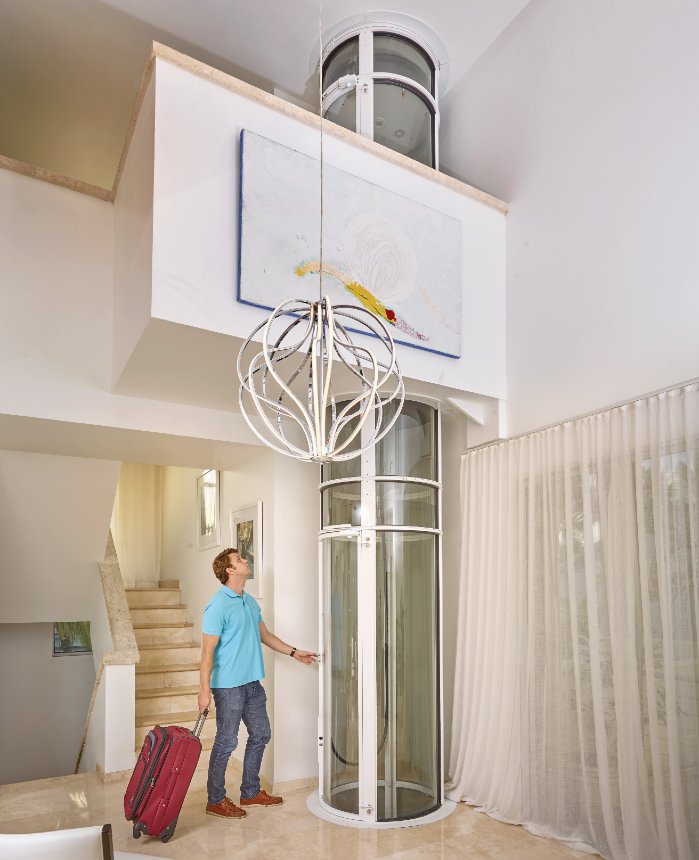
These warning signs often appear after 15–25 years of service but can emerge earlier in heavily used or poorly maintained systems. One sign alone may not be definitive, but when several appear together-frequent repairs plus obsolete parts plus safety concerns-a full replacement usually makes practical and financial sense. Keep a simple log of service calls and repair invoices over 12–24 months to see trends clearly.
Elevators over 20 years old often require frequent repairs. If your elevator gets stuck between floors, doors failing to open or close suggest sensor malfunctions, or error messages appear repeatedly on the control system, reliability has likely declined beyond what minor upgrades can fix. Malfunctioning control panels require immediate attention. Frequent breakdowns indicate a need for elevator replacement.
Industry guidelines suggest that more than four to six service calls per year beyond routine service points to systemic wear. Signs for replacing a home elevator include a system age of 20 to 30 years combined with recurring faults. If the same fault codes and leveling errors keep returning, multiple key components are failing simultaneously. Reliable performance is a top priority for anyone with mobility challenges.
As older systems age out, manufacturers discontinue specific motors, control boards, and door operators. Replacement parts may be difficult to find for older elevator models, with lead times stretching six to twelve weeks or longer. Labor costs climb when certified technicians must troubleshoot around outdated components rather than installing straightforward replacements.
A full elevator replacement is necessary when maintenance costs are high and climbing year over year. Condition, safety, and maintenance history are critical for evaluating elevator replacement decisions. Modernized elevators often require fewer repairs and less maintenance. Switching to a modern system with widely supported parts-or to a design with fewer moving parts-greatly reduces the risk of future difficulty finding replacement parts.
Many older elevators can still be operated safely, but they may lack modern safety features required by current codes like ASME A17.1. Older elevators may not meet current safety standards, and older elevators may lack modern safety updates such as emergency communication systems.
Modern home elevators commonly include safety features like battery-powered lowering systems, enhanced door interlocks, updated emergency brakes, and refined control system diagnostics. New elevators include the latest safety features for passenger protection. If a recent inspection flags non-compliant clearances, outdated safety locks, or recommends significant upgrades, evaluate whether those investments belong in an aging system or a new one that meets current safety regulations from day one.
Everyday signs of declining performance include jerky starts or stops, unusual noises, and slower travel between the first floor and top floor. Jerky movement often signals issues with the motor or hydraulic system. Unusual noises indicate potential mechanical wear. Uneven leveling with the floor may indicate a calibration problem.
Aging hydraulics, worn out components, and dated control logic lead to rougher rides and higher energy consumption. Older systems may lack energy efficiency features found in modern elevators. If you have already tried performance upgrades without major improvement, this points toward a complete replacement. Newer air-driven residential elevators provide smoother acceleration, quieter operation, and better performance noticeable to daily users.
Homeowner needs change over time-aging in place, accommodating a wheelchair, or welcoming an aging parent. Older home elevators may have narrow doors, a small elevator cab, or lack features like low-mounted controls and panoramic visibility.
When the elevator no longer comfortably fits current mobility devices, it may be more practical to install a modern model designed for accessibility. A well-chosen replacement allows safe, independent access between floors. Some modern systems, including wheelchair-accessible vacuum home elevators, are designed with spacious cabins and minimal structural requirements, making them suitable for retrofit projects in existing houses with limited space.
An older, worn-looking elevator cab with faded panels, scratched doors, and yellowed lighting can impact perceived home value-especially in renovated or luxury homes. Elevator modernization improves safety, reliability, and appearance, but there is a point where many homeowners prefer a new, modern design over refreshing outdated parts.
A sleek, panoramic, or glass-style elevator can become a design focal point, increasing enjoyment for current owners while supporting resale value. Modernized systems look and feel current, but a full modernization on an outdated structure may still fall short of what a new elevator delivers in both function and appearance.
Large renovations-adding new floors, reconfiguring layouts, or undertaking a whole-home remodel-are ideal moments to reassess the existing system. Relocating an elevator structure, expanding a cabin, or improving clearances is far easier when construction is already underway.
Modern, shaftless, self-supporting home elevators simplify residential modernization projects by avoiding deep pits, separate machine rooms, or bulky hoistways. Coordinating elevator replacement with a major renovation creates a cleaner, more integrated design and minimizes overall disruption.
Elevator replacement is an investment that delivers concrete improvements. Modernized elevators can improve safety and performance significantly, with a new control system, drive technology, and door equipment providing smoother, quieter rides and fewer repairs.
Updated, code-compliant systems simplify future inspection and maintenance. Annual professional maintenance is highly recommended for home elevators, and annual professional inspection and servicing are essential for elevator safety and efficiency-both become more predictable and affordable with new components. The lifestyle benefits are tangible: easier aging in place, confidence hosting guests with mobility needs, and a home that operates smoothly for the next stage of life.
Pneumatic Vacuum Elevators (PVE) manufactures modern, air-driven home elevators designed for residential use and retrofit projects. The elevator cab moves inside a transparent tube using air pressure differences-no cables, counterweights, pits, or machine room needed.
For replacement scenarios, PVE offers distinct advantages:
Homeowners considering elevator replacement often compare vacuum elevators to familiar hydraulic or traction mechanical systems. PVE units require no deep pit or overhead machine room, feature panoramic design versus an enclosed shaft, and install faster with less structural disruption.
PVE’s modular, plug-and-play installation reduces disruption compared to tearing out and rebuilding a traditional hoistway. These elevators are safety-certified and used worldwide. Consider vacuum elevators especially when existing hoistways are undersized, damaged, or inconveniently located-PVE units can often be placed in new, more practical locations within the home.
Yes, many homeowners can replace an older hydraulic home elevator with a vacuum elevator, depending on the home’s layout, available space, and existing structural conditions. A professional evaluation is needed to determine whether the current hoistway can be reused, modified, or bypassed with a new elevator location.
For homeowners replacing a hydraulic system, Pneumatic Vacuum Elevators offer several retrofit advantages. PVE elevators are self-supporting and do not require a deep pit, machine room, or hydraulic equipment. Because they operate using air pressure rather than cables, counterweights, or hydraulic fluid, they can often be installed with less construction than many traditional replacement options.
This makes a vacuum elevator especially appealing when an existing hydraulic elevator is outdated, difficult to repair, or no longer fits the homeowner’s accessibility needs. A PVE dealer can inspect the home, review the existing elevator setup, and recommend the best replacement approach.
The decision between elevator modernization and full replacement should rest on objective information, not guesswork. Schedule a professional evaluation that reviews elevator age, repair history, ride quality, part availability, and current safety features. Request a side-by-side estimate comparing continued modernization over the next 5–10 years versus a new elevator, including installation, maintenance, and likely repair costs.
Think about long-term plans-aging in place, caregiving needs, or potential resale-so your choice supports future requirements.
Ready to explore your options? Contact Pneumatic Vacuum Elevators or an authorized local dealer for a complimentary consultation to discuss replacement options, site conditions, and model selection.
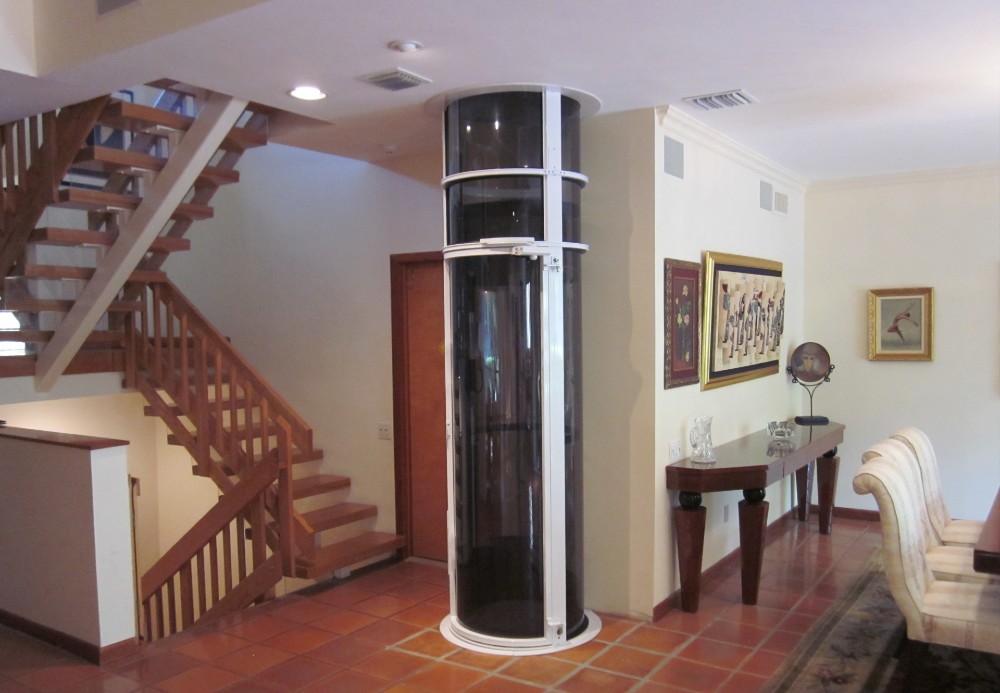
These FAQs address practical questions that come up once homeowners begin seriously considering elevator replacement.
Timelines range from several days to a few weeks depending on the project scope. PVE installations are often completed in two to three working days after framing and electrical preparation. More extensive construction-such as removing an old shaft or reconfiguring walls-extends the timeline. A site visit provides an accurate schedule tailored to your home.
In most residential projects, homeowners remain in the house during replacement. There will be periods of noise and limited access around the work area, so plan temporary adjustments like alternate entrances. Those who rely on the elevator for daily mobility should discuss interim access solutions with their installer. Vacuum elevators require less invasive structural work, which often means shorter, more contained disruption.
The elevator company typically removes major elevator components-the cab, rails, drive equipment, and doors-for proper disposal or recycling. Some existing structures like hoistway walls may be reused if compatible with the new system. Confirm in writing whether removal and disposal are included in the proposal. When switching to a shaftless system, the old hoistway space can sometimes be repurposed for storage or closets.
Standard homeowners insurance usually does not cover replacement due to normal wear, but may help if damage results from a covered event like a storm. Existing manufacturer warranties on very old elevators are typically expired by the time replacement is considered. New components from manufacturers like PVE generally come with warranties on major components, plus optional extended coverage through dealers.
How do I know which replacement elevator is right for my house?
Start with a professional site evaluation reviewing available space, number of floors, electrical capacity, and structural considerations. List your priorities-wheelchair accessibility, minimal construction, panoramic design, energy efficiency, or quick installation. PVE and its authorized dealers can propose specific models tailored to your home’s layout and your family’s needs. Request product literature, project photos, and references through the PVE video gallery and dealer network to choose confidently.
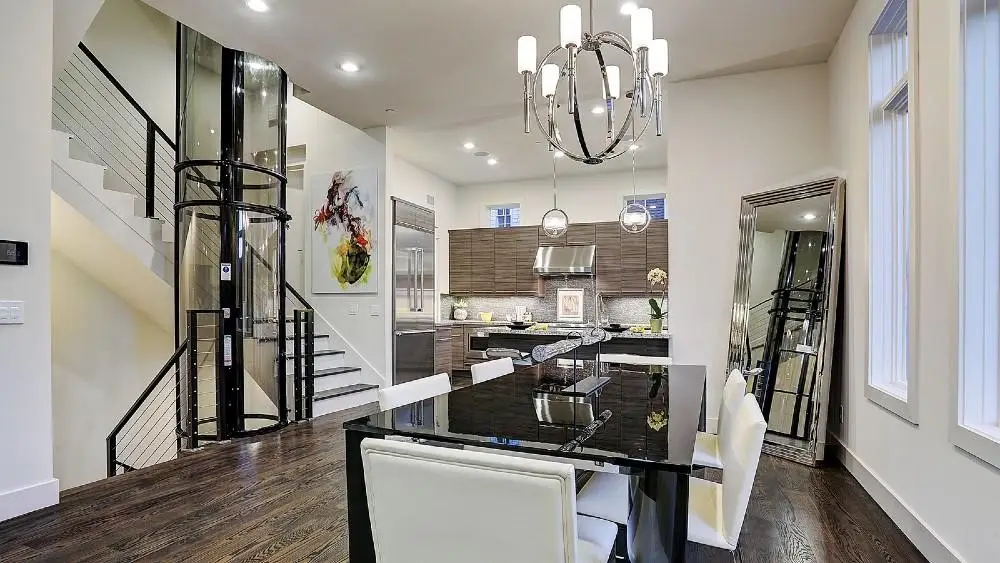
Many homeowners assume adding an elevator means tearing into walls, building a shaft, and living through weeks of construction. Fortunately, modern home elevator technology has changed that. Today’s pneumatic and shaftless systems can often be installed with minimal structural modifications, making accessibility upgrades far less disruptive than many people expect.
Many homeowners picture commercial-style elevator shafts and months of renovation when they first consider a home elevator. That mental image comes from traditional elevators-systems that were designed for commercial buildings and later adapted for residential use.
The most common concerns include:
These worries are valid for older, commercial-derived systems. But newer residential technologies, including pneumatic vacuum elevators, reduce or eliminate heavy construction entirely.
Yes. The required construction depends heavily on the elevator type and the home’s layout. Shaftless and self-supporting options, such as PVE’s air-driven vacuum elevators, are designed for retrofit installations with no traditional elevator shaft, pit, or machine room required. Pneumatic elevators require minimal construction because they use air pressure for compact installation and sit directly on the existing ground floor.
By contrast, traditional hydraulic elevators and traction systems usually need deeper structural changes and dedicated space. Home elevator solutions that utilize pneumatic or shaftless technology sidestep those demands.
For example, a two-stop PVE vacuum elevator can often be installed between a main floor and second-floor landing in just a few days, using standard household power and without foundation excavation. Pneumatic elevators can be installed on concrete slab floors without excavation – no jackhammering, no foundation work.
“No major construction” still means some work-a clean floor cut-out, minor framing, and electrical preparation-but it avoids extensive construction like foundation changes and demolition.
The scope of work is dictated by both elevator technology and the existing home’s structure. Key factors include:
Factor | More Construction | Less Construction |
Elevator type | Hydraulic, traction | Pneumatic, shaftless |
Shaft needed? | Yes (hydraulic/traction) | No (vacuum/through-floor) |
Pit depth required | Several feet (hydraulic) | None (vacuum/shaftless) |
Machine room required | Often yes (hydraulic) | No (vacuum/MRL) |
Number of floors | More stops = more framing | Home elevators can service multiple floors with modular designs |
Electrical requirements | 3-phase commercial power | Standard 220V household circuit |
Many modern elevators do not require a separate machine room, which alone eliminates a significant chunk of construction. Full-shaft systems demand more demolition and framing, while self-supporting pneumatic elevators sit on the finished floor and pass through a simple framed opening.
Existing home layout matters too. Vacuum elevators can be placed freestanding near stairs, in great rooms, or next to landings. Local building codes, structural load-bearing walls, ceiling heights, and headroom requirements all influence how invasive the installation process will be.
Not all home elevators are built the same. Some are optimized specifically to avoid heavy construction in existing homes. Below is a breakdown of the main categories, with a focus on which deliver minimal disruption.
Pneumatic vacuum elevators are panoramic, air-driven home elevators that form a self-supporting cylinder. PVE has manufactured these systems since 2002, and they remain the world’s only true vacuum elevators.
Key features that minimize construction:
Pneumatic elevators use air pressure for compact installation. During ascent, turbines create a pressure differential that lifts the elevator cab. Descent uses gravity and controlled air release-consuming no electricity. Vacuum elevators automatically descend during power outages, and pneumatic vacuum elevators provide automatic emergency descent during power outages through a built-in mechanical safety system.
PVE offers multiple models: the single-passenger PVE30, the multi-passenger PVE37, and the wheelchair-accessible PVE52 with a weight capacity of 525 lbs. Pneumatic elevators are eco-friendly and energy-efficient, using no oils or hydraulic fluids.
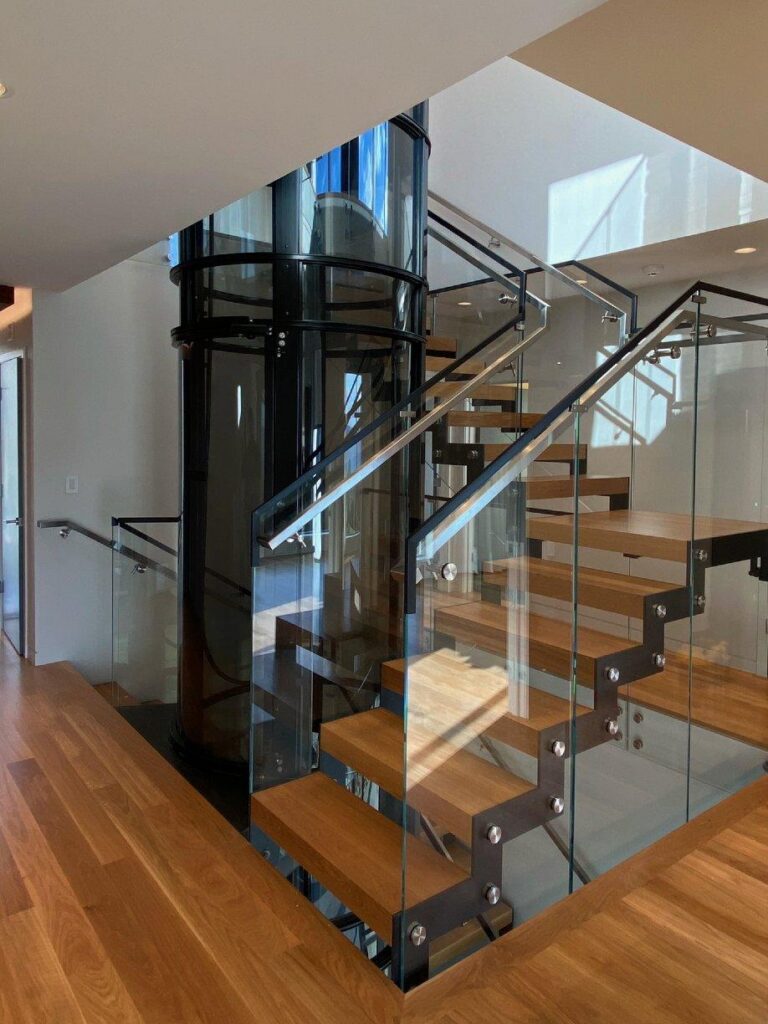
Shaftless or through-floor elevators are compact lifts that travel between two floors through a simple opening in the ceiling and floor, without a full elevator shaft. Through-floor lifts eliminate the need for traditional shafts. Shaftless elevators can be installed in just 2–3 days in many cases, and shaftless elevators require minimal construction for installation.
These units generally require only a framed opening between floors, anchoring to a load-bearing wall or self-supporting tower, and basic electrical connections. They work well for aging-in-place plans where users primarily need easy access between a main floor and bedroom level. Vertical platform lifts are ideal for short vertical travel of a single story.
Typical limitations include smaller platform size compared with full elevators and travel usually limited to two floors, which can affect wheelchair access in some configurations.
Traditional hydraulic home elevators offer a full elevator cab and customizable finishes but typically demand the most construction work:
These requirements can mean relocating plumbing, electrical, or HVAC lines and reinforcing the foundation. Hydraulic elevators are often better suited for new construction or major remodels where the shaft and mechanical spaces are designed from the outset. While they provide smooth and quiet operation and high weight capacity, they are not the first choice for homeowners specifically trying to avoid heavy construction.
Traction and machine-room-less home elevators are cable-driven systems where the machinery is integrated into the top of the shaft rather than a separate room. MRL designs remove the dedicated machine room but still require a full elevator shaft and precise headroom requirements at the top landing.
Construction complexity is lower than hydraulic elevators with separate machine rooms, but still significantly higher than shaftless or pneumatic options. These systems fit scenarios where homeowners are already planning substantial interior renovations. Compared to traditional traction setups, other models in the MRL category reduce less space demands for machinery but not for the shaft itself.
Yes. Thousands of existing homes built long before 2000 have successfully been retrofitted with home elevators. Modern home elevators can be installed in existing homes regardless of when the house was originally built-provided ceiling heights, structural support, and electrical access meet minimum requirements.
Common retrofit locations include beside a staircase, in a corner of the living room, through a closet stack, or between a family room and bedroom level. Elevators can be placed in corners or unused spaces to minimize layout disruption. PVE systems arrive in modular pieces small enough to carry through standard doorways, allowing installation even in tight spaces.
An in-home consultation and measurements are essential early steps to confirm structural support, electrical access, and headroom requirements before any home elevator installation begins.
For homeowners unsure whether their layout can support an elevator, a professional site assessment is the best next step. PVE’s authorized dealer network can help evaluate placement options, structural requirements, and local code considerations.
This is where the difference between elevator types becomes dramatic:
Elevator Type | Typical On-Site Timeline |
Pneumatic vacuum elevator | 2–3 days |
Shaftless / through-floor lift | Several days to 2 weeks |
Full hydraulic or traction (new shaft) | 6–12+ weeks |
Installation typically takes 2–3 days for pneumatic elevators because much of the planning and fabrication happens off-site. Installation of modern elevators can be completed with minimal disruption-homeowners usually stay in the house throughout.
Minor finishing work like paint touch-ups, trim, and flooring around the cut-out may add a few extra days but does not require moving out. Always ask any provider for a clear timeline that distinguishes between elevator assembly and separate contractor work.
Many homeowners hesitate because they worry an elevator will consume valuable living space. With compact, shaftless, and self-supporting elevators, that concern is largely eliminated.
They have a compact footprint, with some models as small as 30 inches in diameter-the PVE30 takes up roughly the same area as a small end table. They offer a compact design suitable for limited space. Even the wheelchair-accessible PVE52 requires only about 52.7 inches of exterior diameter.
The absence of a pit and machine room allows flexible placement without major layout changes. The transparent, panoramic design of vacuum elevators can visually open up a room rather than closing it off-a space saving option that appeals in modern and luxury homes. For more ideas, explore space-saving home elevator configurations.
Before committing to any model, review these practical points with an elevator specialist:
The process is modular and staged, designed to minimize disruption:
Clean job-site practices, dust control, and protection of existing finishes are standard for experienced retrofit installers. Choose providers with a track record in retrofit projects, not just new construction.
Reduced construction is not just about convenience-it affects cost, stress, and long-term livability.
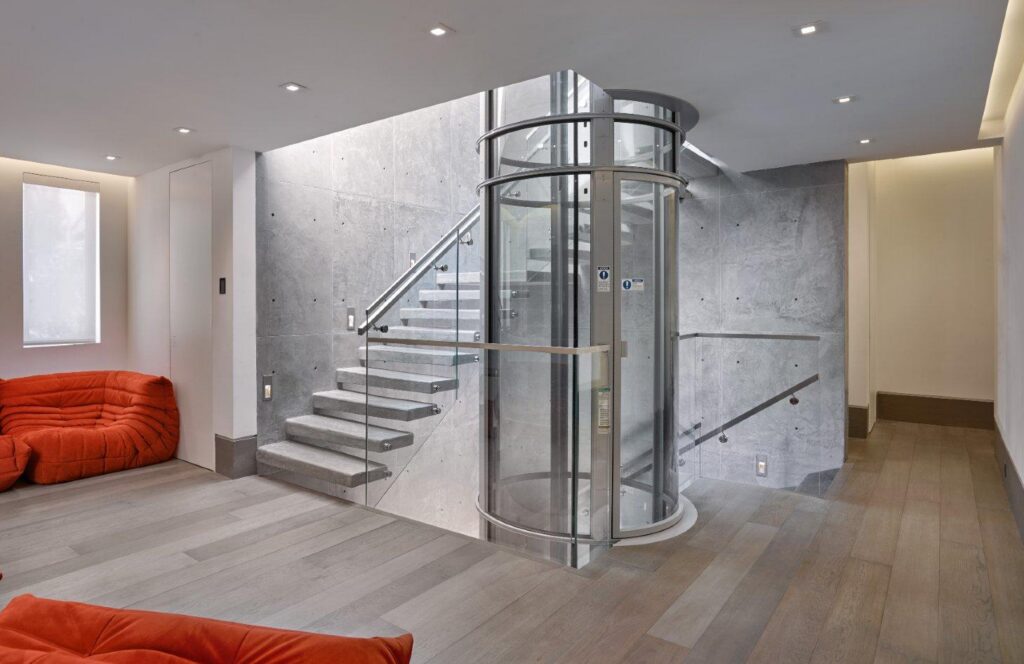
Low-construction home elevators appeal to homeowners who want accessibility without turning their house into a major renovation zone. Benefits include faster installation timelines, less disruption to daily routines, fewer structural changes, and more flexibility in finished homes.
For aging-in-place plans, these systems can also make a multilevel home safer and more convenient without forcing homeowners to relocate or remodel large portions of the property.
These questions address common concerns not fully covered above, especially around shafts, pits, and ongoing maintenance.
No. Shaftless and pneumatic vacuum elevators are designed to operate without a traditional elevator shaft. Self-supporting cylindrical designs sit directly on the existing floor, eliminating the need for a framed hoistway. This difference is one of the main reasons vacuum and shaftless elevators are popular for residential use in existing homes where stacked space for a shaft is limited.
Many modern home elevators, including PVE’s vacuum models, require no pit or separate machine room. The absence of a pit means no excavation into the foundation, a major advantage in finished or older homes. Compact drive and control systems are integrated into the elevator structure itself. Traditional hydraulic systems, by contrast, still often need both a pit and external machine room space.
For a pneumatic or shaftless elevator, expect minimal construction-primarily a framed floor opening (roughly 30–55 inches depending on model), a dedicated electrical circuit, and minor trim work. There is no need for foundation excavation, shaft framing, or wall demolition. Most homeowners describe the process as comparable to a small weekend construction project rather than a full renovation.
Pneumatic vacuum elevators are widely considered the easiest to install. Pneumatic elevators can be installed in 2–3 days with no shaft, pit, or machine room. Their modular design means components fit through standard doorways. For single-flight needs, stair lifts are budget-friendly and installed in a single day, though they do not provide the same level of accessibility as a full elevator.
Yes. PVE’s smallest model has a footprint of just 30 inches in diameter, fitting comfortably in corners, hallways, or beside staircases. Through-floor platform lifts also work well in tight spaces. For guidance on whether your space qualifies, review the residential elevator dimensions guide or schedule a free in-home consultation.
Yes. Many modern home elevators can be installed while homeowners remain in the house. Because shaftless and vacuum elevators require minimal demolition, installation can often be completed with limited disruption to daily life.
Most home elevators can operate for 20–30 years or more with proper maintenance, but there is no guaranteed lifespan for every model. Some systems may need modernization around the 20-year mark, while well-maintained elevators with quality components may continue operating longer.
With exceptional care, high-quality components, and strategic modernization, some residential lifts can safely last 35 years or more. Elevators rarely break down all at once; instead, individual parts age on separate timelines, making partial modernization at the 20-year mark a cost-effective solution.
PVE vacuum home elevators are designed for long-term residential use and can last for many years with proper maintenance. Because PVE systems are air-driven, self-supporting, and do not require a pit, elevator shaft, hydraulic oil, or machine room, they avoid several issues that shorten traditional equipment life.
An elevator’s life expectancy is not based on age alone. Several factors work together, and two identical units can age very differently.
Understanding these factors helps you plan ahead for maintenance, budgeting, and eventual modernization before major issues appear.
Different technologies age differently, and the life of your elevator depends heavily on the drive system.
| Elevator Type | Lifespan Considerations | Maintenance Notes | Best For |
| Pneumatic / Vacuum | Designed with fewer traditional wear items; seals, controls, and turbines need periodic review | No hydraulic oil, cables, counterweights, pit, or traditional machine room | Retrofits, panoramic design, compact residential spaces |
| Hydraulic Elevators | Often used for long-term residential service, but oil, seals, valves, and pit conditions can affect lifespan | Hydraulic fluid, seals, valves, leaks, and pit conditions require attention | Homes needing strong lifting capacity |
| Traction Elevators | Can provide long service life when ropes, pulleys, controls, and brakes are maintained | Ropes, sheaves, bearings, brakes, and controls need scheduled service | Taller homes and smooth ride priorities |
| Screw Drive / Traditional Systems | Lifespan depends heavily on lubrication, alignment, usage, and part availability | Lubrication, alignment, nut wear, and vibration checks matter | Compact retrofits and smaller residential settings |
These are general rule observations, not guarantees. Actual elevator lifespan depends on the brand, installation, daily use, and service history.
PVE elevators use air pressure in a vertical tube to move the elevator cab, rather than cables or hydraulic pistons. Their self-supporting, shaftless design can install on an existing floor with minimal structural modification.
Because there is no hydraulic oil, buried cylinder, counterweight system, or traditional machine room, PVE removes several common sources of long-term failure. Still, PVE elevators require routine maintenance, seal checks, inspections, and authorized service technician support.
Hydraulic systems use a pump to move oil into a cylinder. With proper maintenance and modernization, many hydraulic systems can operate 20–25+ years before major overhaul or replacement is considered.
Common wear points include oil degradation, leaks, seals, valves, and corrosion around pits. Environmental rules and code changes may also affect older underground hydraulic equipment.
Traction elevators use ropes, pulleys, a motor, and counterweights. As a general rule, traction systems can have a long life expectancy, often 25–30 years or more.
They require precise alignment and frequent maintenance of ropes, sheaves, bearings, doors, and controls. Traditional hydraulic, traction, machine-room-less, and pneumatic vacuum elevators each have different maintenance needs and component timelines. Actual lifespan depends on the specific model, installation quality, usage, environment, and service history.
Screw drive systems use a motor-driven screw and nut assembly. They can be compact and easy to install, but vibration, misalignment, and lack of lubrication can shorten life expectancy.
Machine-room-less (MRL) elevators, which do not require a separate room for machinery, have an average life expectancy of 20-25 years and are suitable for homes with limited space.

Think of a home elevator like a car: two systems from the same year can age very differently depending on how often they are used, where they are installed, and how consistently they are maintained.
Annual professional inspections and routine maintenance can help catch minor component wear before it becomes a larger repair. For elevator systems that require it, regular lubrication can also help reduce friction and wear on moving parts.
Following these habits can help extend the lifespan of a home elevator and keep it operating more reliably for aging in place, daily mobility, and long-term residential use.
Early warning signs can keep minor issues from turning into larger repairs. If your home elevator starts behaving differently, it is worth scheduling a professional inspection before the problem becomes more expensive or affects safety.
Watch for signs such as:
Modernization may be appropriate when service calls become more frequent, electronics are unsupported, replacement parts are harder to find, or safety features no longer meet current expectations.
Replacement may be worth discussing if the elevator has significant corrosion, obsolete equipment, repeated breakdowns, or repair estimates that begin to rival the cost of a new elevator. An authorized technician can help determine whether the issue calls for a simple repair, a larger modernization, or full replacement.
Elevator equipment does not expire on one fixed date. The right decision depends on safety, reliability, repair costs, parts availability, and your long-term plans for the home.
Repair usually makes sense for isolated issues when replacement parts are available and the rest of the elevator system is in good condition.
Modernization may be a better option when major components are aging, but the full elevator does not need to be replaced. This can include updating controllers, door operators, fixtures, safety circuits, or drive components to help extend the elevator’s useful life.
Replacement may be worth discussing when major components are near the end of their service life, parts are unavailable, repairs are becoming frequent, or the elevator no longer supports the household’s mobility, accessibility, or aging-in-place needs.
For some homeowners, replacing an older system with a compact PVE vacuum elevator may offer a fresh look, lower-maintenance design, and less construction disruption than some traditional elevator replacements. An authorized PVE dealer can help determine whether repair, modernization, or replacement is the best fit for the home.
Use this checklist between professional visits:
Following these steps can help extend the elevator’s lifespan and keep a mechanical device dependable for aging in place.
Pneumatic Vacuum Elevators has designed and manufactured air-driven residential elevators since 2002. PVE models use patented vacuum technology in a panoramic tube and are supported by authorized dealers.
For lifespan and maintenance planning, the key advantage is simplicity: no oil to change, no cables to re-rope, no counterweights, and no pit or traditional machine room. PVE elevators use power mainly when traveling up, making them energy-efficient for many residential uses.
PVE is not maintenance-free, and no elevator is perfect for every building. But for homeowners comparing a new home elevator, replacing older elevator equipment, or evaluating a home’s elevator system during renovation, a PVE dealer can explain model-specific service needs.
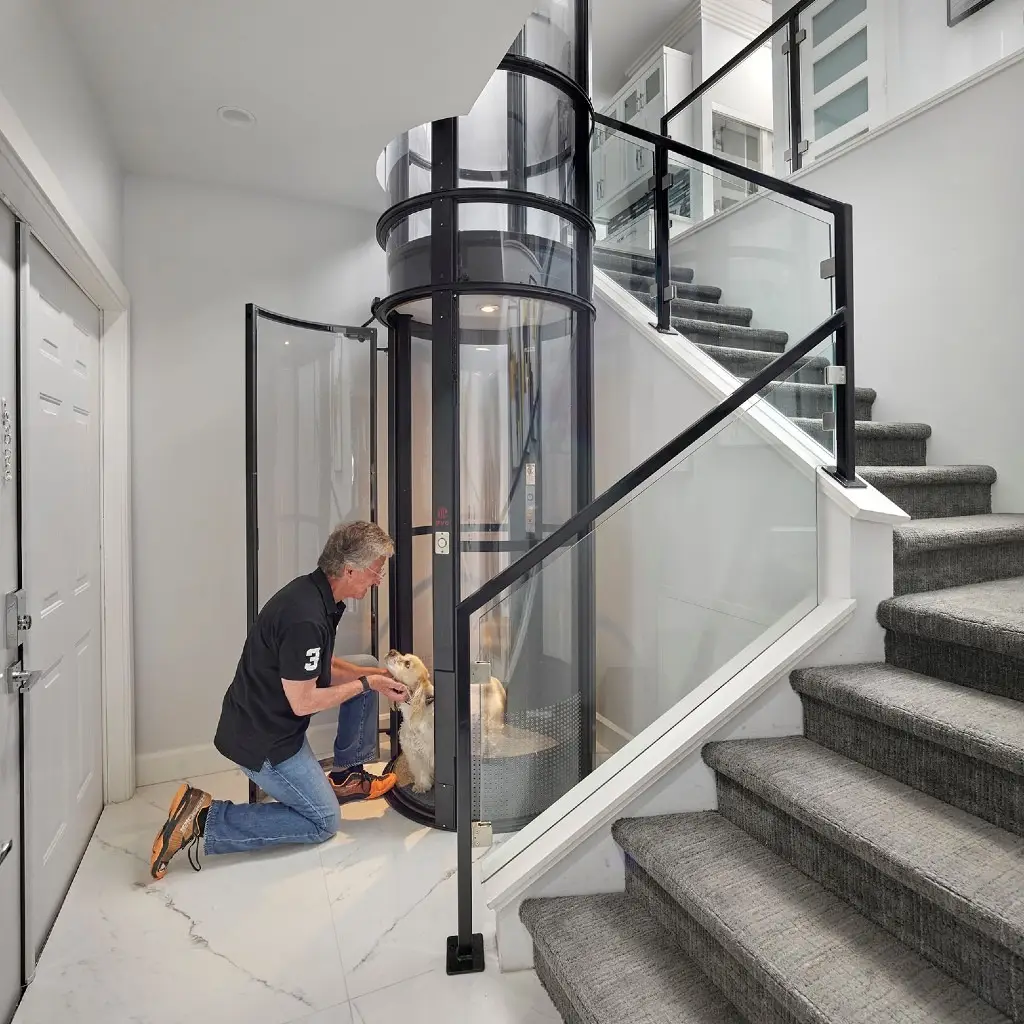
Many home elevators can last 20–30 years or more with proper maintenance, but lifespan varies by elevator type, installation quality, usage, environment, and service history. An authorized technician can help assess the condition of an older residential elevator and whether repair, modernization, or replacement makes sense.
Many manufacturers recommend at least annual service for lightly used home elevators. Heavier-use systems may need semi-annual or more frequent maintenance. Always follow the model-specific schedule from the manufacturer.
Modernization can extend the life of many residential elevators by updating controls, doors, fixtures, and selected drive components. Replacement is not always better; compare both options with a qualified technician.
A residential elevator can be attractive in aging-in-place, luxury, and multigenerational homes, but resale impact varies by market. Some insurers may request inspection or service records, so confirm requirements with your provider.
Yes. Keep the elevator clean, avoid overloading, watch for unusual noises, and report changes quickly. Do not adjust safety systems, controls, or drive equipment yourself.
Consider PVE if an older system has recurring leaks, damp pit issues, bulky machinery, or rising service needs. An authorized PVE dealer can evaluate your home, budget, and accessibility goals.
How long does a home elevator last depends on technology, maintenance, installation, environment, and use. Regular maintenance can significantly extend the lifespan of a home elevator, allowing it to function efficiently for decades beyond its average lifespan.
Before calling, gather service records and note recurring problems. Then contact Pneumatic Vacuum Elevators or an authorized PVE dealer to discuss maintenance, modernization, repair, replacement, or whether a new elevator is the right investment for your home.
Backup power planning matters when a home elevator supports aging in place, multigenerational living, or daily access between floors. It can matter even more in storm-prone areas where power outages may affect lighting, safety, and emergency egress.
Pneumatic Vacuum Elevators, or PVE, is the designer and manufacturer of the world’s only vacuum elevators since 2002. PVE builds air-driven, shaftless home elevators with patented vacuum technology designed for efficient residential use.
This article explains when a backup generator for home elevator planning may be useful, how battery backup and emergency lighting fit into an outage plan, and when a whole-home generator may make sense. Before making final decisions, homeowners should review their elevator model, local requirements, and electrical setup with a licensed electrician and an authorized PVE dealer.
Not every home elevator needs a dedicated backup generator. The right backup power plan depends on the elevator type, home electrical setup, outage frequency, local requirements, and the homeowner’s mobility needs. PVE elevators are power outage ready because they are designed to descend safely to the lowest landing during a power interruption using gravity-assisted descent. Homeowners who want broader power support during extended outages should speak with an authorized PVE dealer and a licensed electrician about generator options.
Different elevators behave differently when power is lost. Traditional traction and hydraulic elevators may stop between floors unless they include automatic rescue equipment, while vacuum systems use air pressure and gravity differently.
Common responses include:
After power restoration, follow the manufacturer’s reset instructions or contact an authorized technician before turning the system back to regular use.
Backup power can mean several different things. It does not always mean a gas-powered or whole-home generator.
There are two main types of standby power supplies for elevators: generators and battery backup systems. Generators are typically preferred for buildings that require significant power, as they can provide longer-lasting power during outages.
Backup power requirements vary by jurisdiction, elevator type, and project scope. Some commercial, hospital, multifamily, or high-rise buildings may have specific emergency power requirements, but those rules do not always apply the same way to single-family homes. Homeowners should confirm requirements with the local authority having jurisdiction, a licensed electrician, and an authorized PVE dealer.
The table below compares the most common backup choices so homeowners can understand the difference between emergency descent, battery-supported features, and generator-backed power.
| Backup Option | What It Does | Best For |
| Built-in emergency descent | Helps the elevator descend safely so passengers can exit | Safe egress during an unexpected outage |
| Battery backup | May support controls, lighting, alarms, or limited emergency functions | Short interruptions and emergency features |
| Dedicated elevator generator | Provides backup power for the elevator when properly sized and installed | Homes where continued elevator use is a priority |
| Whole-home standby generator | Powers selected circuits or the full home during outages, depending on the system design. | Storm-prone homes or households with broader backup power needs |
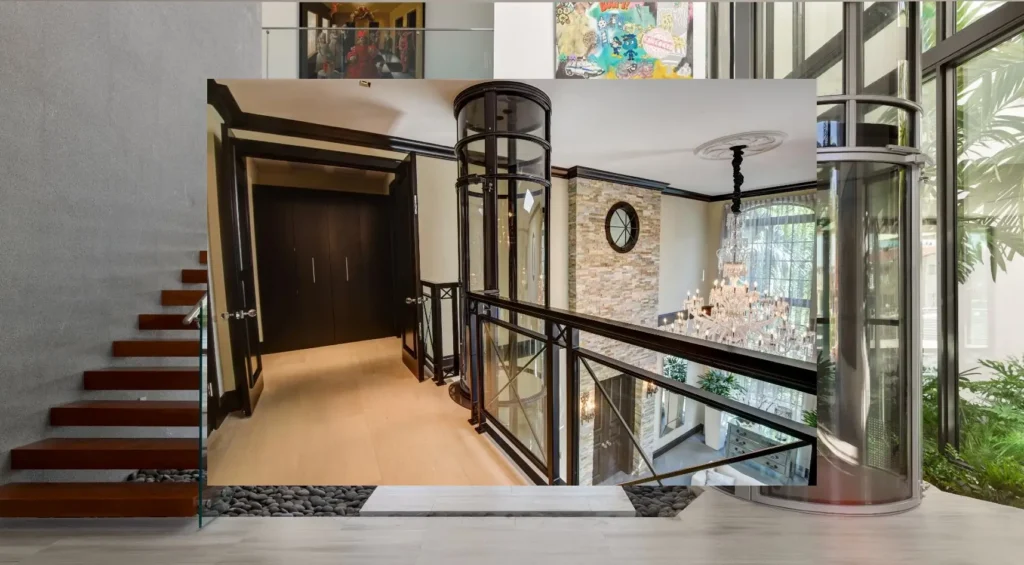
Some homeowners may still want a dedicated or whole-home standby generator, especially if they want more than emergency descent during an outage. A generator may support continued elevator use when it is properly sized, installed, and connected, but it does not make a home elevator completely outage-proof.
A backup generator may be worth discussing if:
Electrical requirements vary by elevator model, home layout, generator type, and local code. A licensed electrician should confirm panel capacity, circuit requirements, transfer switch setup, and generator sizing before any backup power system is installed.
PVE manufactures air-driven vacuum elevators for residential use. Turbines create air pressure to move the cab upward; downward travel uses gravity-assisted descent, valves, and airflow, helping reduce energy use.
In a power outage, a properly installed PVE elevator is designed to descend to the lowest landing. Emergency lighting supports visibility, and controls and door functions are managed so passengers can exit when the cab has stopped. PVE elevators are not intended to operate “as usual” on battery-only power; the focus is safe descent and egress, not continuous service.
Additionally, ask an authorized PVE dealer for current technical literature before code discussions.
When planning a backup generator for home elevator use, homeowners should think beyond the elevator itself and consider the home’s full safety plan.
Key steps:
Portable generators vary in power quality and are not always appropriate for sensitive elevator equipment. Before connecting any elevator to backup power, a licensed electrician should confirm that the generator, transfer switch, grounding, and power output are suitable for the elevator system.
This sort of planning helps homeowners understand what the system can handle before an emergency.
Before deciding whether you need a backup generator for your home elevator, ask your authorized PVE dealer:
Ask your licensed electrician:
Keeping these answers documented can help homeowners, caregivers, and service professionals understand what to do before, during, and after an outage.
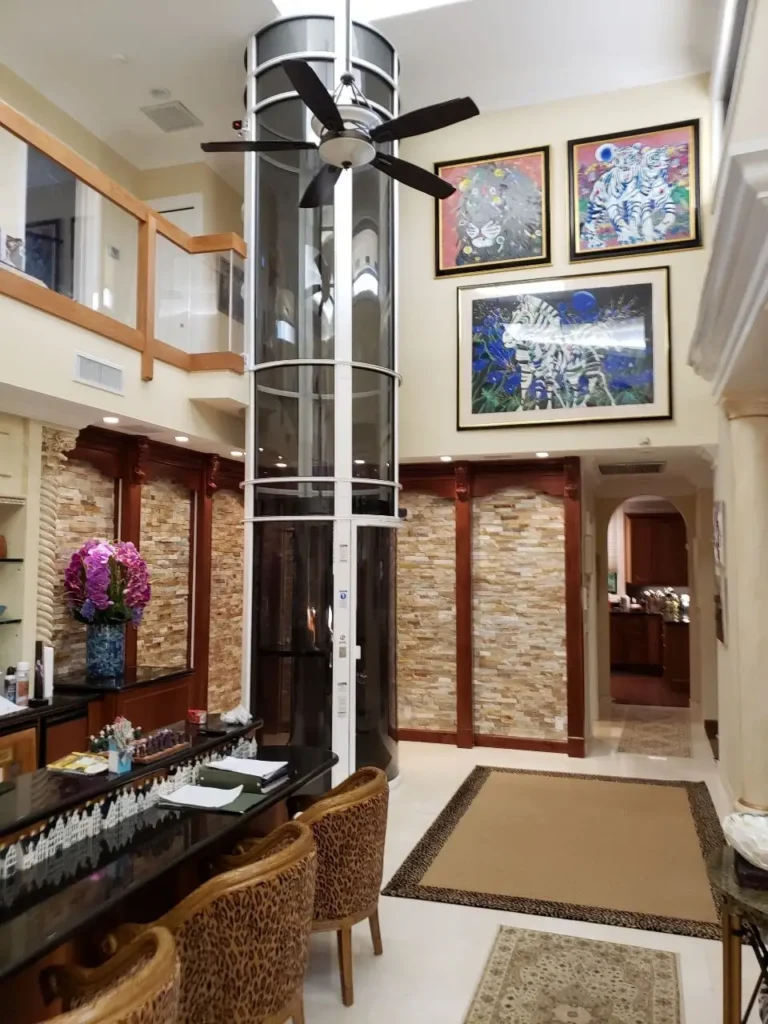
Sometimes, but only if the portable generator, transfer switch, wiring, grounding, and power output are approved for that purpose. Never plug an elevator into a random outlet or extension cord. A licensed electrician should confirm whether any portable generator setup is appropriate for the elevator system.
Often, yes. Options may include adding the elevator circuit to a standby generator or upgrading emergency lighting, depending on panel space, equipment specifications, and site conditions.
Duration varies by manufacturer and battery capacity. Review the user manual and test lighting according to maintenance guidelines.
No. A generator reduces downtime, but transfer delays, maintenance issues, or equipment faults can still occur. Keep a charged phone nearby and maintain a safe stair route.
Start with an authorized Pneumatic Vacuum Elevators dealer. For new construction, also involve your architect, builder, and licensed electrician early.
In some homes, yes. Whether a home elevator can run on a backup generator depends on the elevator system, generator size, transfer switch, electrical panel, and local requirements. A licensed electrician should confirm the setup.
Yes. A backup generator should be sized based on the specific elevator type, electrical setup, and other home systems you want it to support. Some homeowners only need emergency descent to help the elevator reach the lowest landing or ground level, while others want a generator that can help the elevator start and operate during a longer outage. Local code requirements, including IBC-related requirements where applicable, may vary by project and location.
A backup generator for a home elevator may be helpful in some homes, but it is not automatically required for every residential elevator. For many homeowners, the more important question is what level of backup power they want: safe emergency descent, limited emergency features, continued elevator operation, or broader whole-home power support.
PVE elevators are designed to be power outage ready through gravity-assisted descent, helping passengers exit safely during a power interruption. To choose the right setup for your home, speak with an authorized PVE dealer and a licensed electrician about your elevator model, electrical system, outage risk, and long-term mobility needs.
When mobility starts to affect how someone moves through the home, the right accessibility solution can make daily life safer, easier, and more comfortable. But many homeowners are unsure whether they need a full home elevator or a platform lift.
The difference matters. A platform lift can be a practical solution for a short rise, such as a porch, garage entry, deck, or split-level area. A home elevator is usually better suited for long-term access between multiple floors, especially for aging in place, multigenerational living, and everyday convenience.
This guide compares home elevator vs platform lift options so you can better understand space requirements, travel distance, design, safety, cost considerations, and which solution may fit your home best.
A home elevator is usually better for long-term accessibility across multiple floors. A platform lift is often the cost-effective choice for one floor change, especially when ramps require too much space.
Modern shaftless residential elevators like PVE can often be added without the elevator shaft, pit, or machine room of a traditional elevator. The rest of this guide helps prospective lift customers choose the right accessibility solution.
| Factor | Home Elevator | Platform Lift |
| Best for | Multi-floor access, aging in place, daily convenience | Short vertical travel, entryways, decks, garages, split-level areas |
| Travel distance | Serves multiple floors | Usually handles one short rise or limited vertical travel |
| Ride experience | Fully enclosed cabin with a more comfortable, finished feel | Open or semi-enclosed platform, often more utilitarian |
| Accessibility | Supports riders, groceries, luggage, and some wheelchair-accessible needs depending on model | Helps wheelchair users remain in their mobility device for targeted access |
| Space needs | Traditional systems may need a shaft, pit, or machine room; PVE models are shaftless and self-supporting | Often fits tighter spaces with fewer structural modifications |
| Design impact | Can blend into the home as a design-forward feature | More functional in appearance, especially outdoors or near stairs |
| Long-term use | Better suited for whole-home accessibility and aging in place | Better suited for solving one specific access barrier |
| Maintenance | Requires inspection and proper maintenance based on model and local requirements | Simpler system, but outdoor lifts may face weather-related wear |
A home elevator, or residential elevator, is a fully enclosed system designed to move people and belongings vertically inside a home. Home elevators are typically used for multi-floor travel, while platform lifts are often more compact and may be open on top, making them suitable for short vertical travel.
A platform lift, also called a wheelchair lift, uses a platform with rails or gates. Vertical platform lifts can be installed in a variety of locations and are designed to accommodate specific mobility needs without extensive remodeling, making them suitable for many existing homes. Vertical platform lifts allow wheelchair users to remain in their wheelchairs while traveling between levels, providing greater independence compared to stairlifts.
Inclined platform lifts use a platform on rails along the stairs. Searches for terms like “residential elevator platform lifts” or “residential elevator platform” often mix categories, but these accessibility products serve different mobility needs.
Daily use matters. A traditional home elevator can include custom finishes, lighting, and a more enclosed cab experience. Home elevators often include features such as automatic doors, emergency stop buttons, and backup power systems, enhancing safety and accessibility for users with limited mobility or mobility issues.
PVE designs and manufactures the world’s only vacuum elevators. These pneumatic vacuum elevators use patented air-driven technology, simple physics, and innovative materials. Their panoramic cylinder offers 360-degree views, a smaller footprint, less space impact, and smooth vertical travel. For many homeowners with limited space, that makes the elevator an architectural feature rather than an appliance.
A vertical platform lift is more utilitarian: open or semi-enclosed, often with constant-pressure controls requiring either the rider or a helper to hold a button. An enclosed platform lift adds protection, but still feels different from a fully enclosed cabin. Inclined platform lifts fold beside the stairway and can visually affect the staircase.
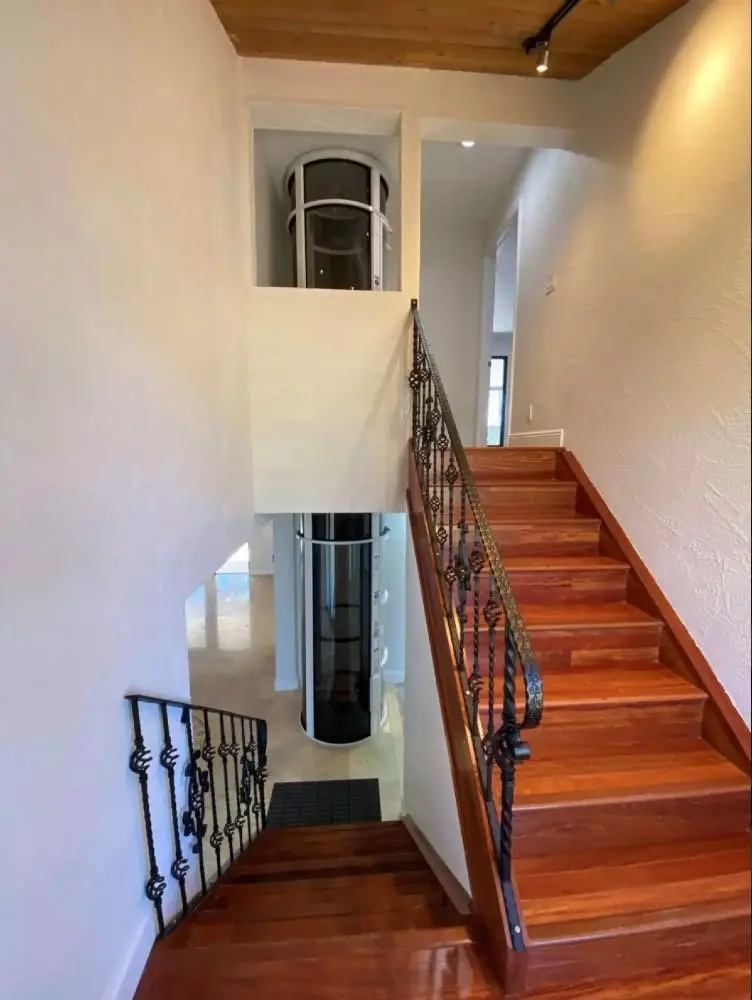
The clearest comparison is location. Home elevators are often the better fit if you need to span three or more floors comfortably. Elevators are ideal for aging-in-place designs, handling groceries, luggage, and multiple passengers simultaneously.
PVE shaftless home elevators can fit near a stairwell, in an atrium, or in a living-room corner, depending on structural requirements and local review.
Platform lifts are strongest at targeted barriers: porch steps, decks, garage entries, or a short rise where a ramp would consume square footage. Platform lifts can be installed in various locations, including outdoor settings, and are designed with weather-resistant materials to ensure reliable operation in inclement weather. Most outdoor platform lifts should use a weather-resistant model, appropriate grade drainage, and specially designed covers to prevent moisture entry; ignoring moisture entry can risk damaging internal components.
Many homeowners assume an elevator needs too much space. That is true for some systems, but newer designs change the conversation.
Home elevators typically require a shaft, pit, and dedicated space within the home’s structure, which may involve extensive planning and construction for installation. The installation of a home elevator usually requires more extensive structural modifications, such as a shaft and pit, while platform lifts often need fewer modifications and can be installed in tighter spaces. Home elevators often require significant structural modifications, such as building a shaft or pit, which can add to the overall installation costs.
PVE residential elevators are self-supporting and require no pit or machine room. Once site preparation is complete, installation may be measured in days rather than weeks, but every home requires verification.
Platform lifts typically require less construction than a traditional elevator shaft and may not require sacrificing space for a full hoistway. Platform lifts, especially shaftless models, often require fewer structural modifications and can be installed in tighter spaces, making them a practical option for retrofitting existing homes.
Both elevators and lifts are engineered with safety features, but daily reliability becomes an important consideration when planning to age in place.
Residential elevators may include interlocked doors, emergency stops, backup lowering, and regional safety-standard compliance. PVE vacuum elevators use mechanical and air-pressure-based safety features, along with built-in emergency descent capability if power is lost. Exact certifications should be verified for your location.
Vertical platform lifts use gates, guard rails, under-platform sensors, and constant-pressure controls. Inclined platform systems use safety edges but can be more exposed to objects left on stairs.
For heavy daily use across multiple floors, many homeowners prefer the enclosed ride, privacy, and reliability of a residential elevator.
The costs of elevators vary by home, model, region, installer, site conditions, and code requirements, so homeowners should confirm numbers with an authorized dealer before budgeting. In general, platform lifts may be more cost-effective for a single short rise, while home elevators require a larger investment but can provide more complete long-term access across multiple floors.
PVE’s shaftless design may reduce some construction scope compared with conventional elevators, but detailed quotes are essential.
Maintenance requirements differ. Elevators should be inspected and properly maintained; platform lifts are simpler, but outdoor units face weather-related wear. Vacuum elevators are designed for efficient operation, with energy output mainly during ascent and less energy output on descent than many conventional drive approaches.
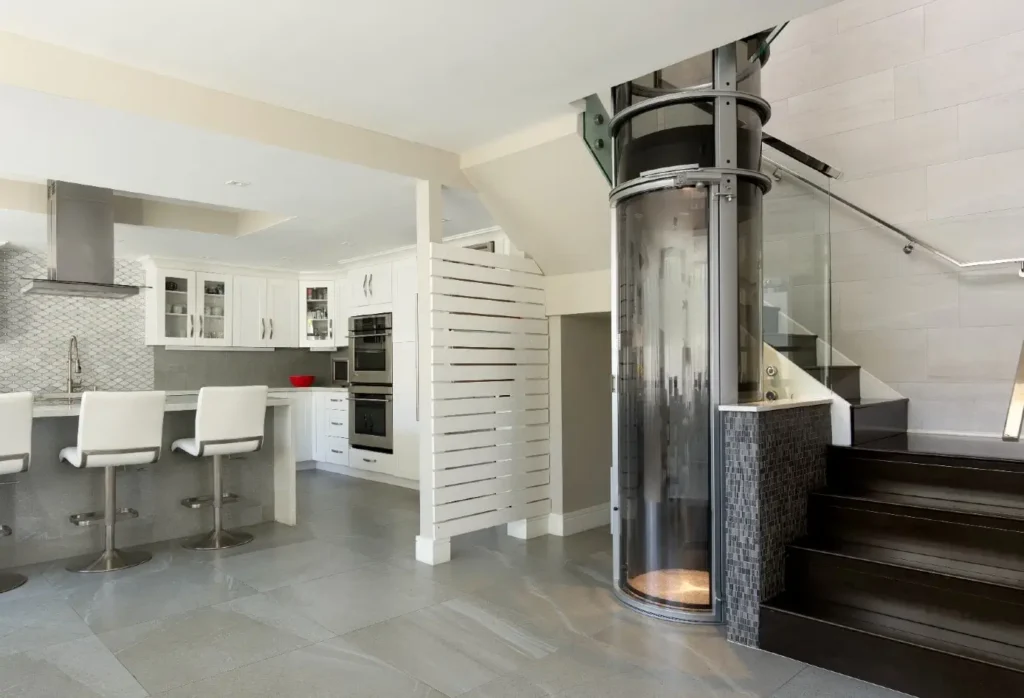
There is no one-size-fits-all answer. Start with use, then evaluate space, cost, and comfort.
Ask:
If you want expert guidance, compare PVE models, request a quote, or speak with an authorized dealer about the right solution for your home.
Often, yes. PVE elevators are designed for retrofit flexibility because they are self-supporting and do not require a pit or machine room, but each home still needs a site assessment.
No. They are designed around wheelchair accessibility, but some models may also serve standing riders or people using walkers, depending on the equipment, site conditions, and local requirements.
A platform lift is usually the cost-effective alternative for one short barrier. A home elevator is often the better long-term choice when multiple floors, comfort, and resale appeal matter.
Yes. Outdoor platform lifts should be weather-resistant, protected from inclement weather, and serviced regularly to reduce corrosion and moisture-related problems.