Skip to content >

- Key Takeaways
- Introduction: Backup Power and Home Elevators
- Quick Answer: Do You Need a Backup Generator for a Home Elevator?
- How Home Elevators Behave During a Power Outage
- Types of Backup Power and Safety Features for Home Elevators
- Backup Power Options for Home Elevators
- When a Dedicated Backup Generator Might Make Sense
- How PVE Vacuum Elevators Handle Power Outages
- Planning Backup Power for Your Home Elevator
- Questions to Ask Your Elevator Dealer and Electrician
- FAQ: Backup Generators and Residential Elevators
- Final Thoughts: Backup Power Starts With the Right Elevator Plan
Key Takeaways
- Not every residential elevator needs a dedicated backup generator; the requirement depends on elevator type, local code, outage risk, and mobility needs.
- PVE elevators are power outage ready: they are designed to descend to the lowest level using gravity-assisted technology if utility power is lost.
- Backup power may mean emergency descent, emergency lighting, a battery lowering system, a standby generator, or a whole-home system.
- In storm-prone locations, discuss standby power, lighting, and egress planning with a licensed electrician and authorized PVE dealer.
Introduction: Backup Power and Home Elevators
Backup power planning matters when a home elevator supports aging in place, multigenerational living, or daily access between floors. It can matter even more in storm-prone areas where power outages may affect lighting, safety, and emergency egress.
Pneumatic Vacuum Elevators, or PVE, is the designer and manufacturer of the world’s only vacuum elevators since 2002. PVE builds air-driven, shaftless home elevators with patented vacuum technology designed for efficient residential use.
This article explains when a backup generator for home elevator planning may be useful, how battery backup and emergency lighting fit into an outage plan, and when a whole-home generator may make sense. Before making final decisions, homeowners should review their elevator model, local requirements, and electrical setup with a licensed electrician and an authorized PVE dealer.
Quick Answer: Do You Need a Backup Generator for a Home Elevator?
Not every home elevator needs a dedicated backup generator. The right backup power plan depends on the elevator type, home electrical setup, outage frequency, local requirements, and the homeowner’s mobility needs. PVE elevators are power outage ready because they are designed to descend safely to the lowest landing during a power interruption using gravity-assisted descent. Homeowners who want broader power support during extended outages should speak with an authorized PVE dealer and a licensed electrician about generator options.
How Home Elevators Behave During a Power Outage
Different elevators behave differently when power is lost. Traditional traction and hydraulic elevators may stop between floors unless they include automatic rescue equipment, while vacuum systems use air pressure and gravity differently.
Common responses include:
- The cab stops and switches to emergency lighting.
- A battery lowering system or automatic rescue device may lower elevators to a nearby level so passengers can exit.
- Doors unlock only when safe.
- PVE elevators use gravity-assisted descent to bring the cab to the lowest floor during a power outage, with backup support for lighting and door functions, not continuous normal travel.
After power restoration, follow the manufacturer’s reset instructions or contact an authorized technician before turning the system back to regular use.
Types of Backup Power and Safety Features for Home Elevators
Backup power can mean several different things. It does not always mean a gas-powered or whole-home generator.
- Built-in emergency descent: Uses gravity, valves, or controlled airflow to lower the cab.
- Battery backup: Can provide power for controls, alarms, emergency lighting, and limited rescue functions; these systems are also known as automatic rescue devices.
- Dedicated elevator generator: Sized specifically to support elevator operation.
- Whole-home standby generator: Powers selected circuits or the full home during outages, depending on the system design. Some standby generators can activate automatically through a transfer switch, but timing and performance vary by equipment and installation.
There are two main types of standby power supplies for elevators: generators and battery backup systems. Generators are typically preferred for buildings that require significant power, as they can provide longer-lasting power during outages.
Backup power requirements vary by jurisdiction, elevator type, and project scope. Some commercial, hospital, multifamily, or high-rise buildings may have specific emergency power requirements, but those rules do not always apply the same way to single-family homes. Homeowners should confirm requirements with the local authority having jurisdiction, a licensed electrician, and an authorized PVE dealer.
The table below compares the most common backup choices so homeowners can understand the difference between emergency descent, battery-supported features, and generator-backed power.
Backup Power Options for Home Elevators
| Backup Option | What It Does | Best For |
| Built-in emergency descent | Helps the elevator descend safely so passengers can exit | Safe egress during an unexpected outage |
| Battery backup | May support controls, lighting, alarms, or limited emergency functions | Short interruptions and emergency features |
| Dedicated elevator generator | Provides backup power for the elevator when properly sized and installed | Homes where continued elevator use is a priority |
| Whole-home standby generator | Powers selected circuits or the full home during outages, depending on the system design. | Storm-prone homes or households with broader backup power needs |

When a Dedicated Backup Generator Might Make Sense
Some homeowners may still want a dedicated or whole-home standby generator, especially if they want more than emergency descent during an outage. A generator may support continued elevator use when it is properly sized, installed, and connected, but it does not make a home elevator completely outage-proof.
A backup generator may be worth discussing if:
- your home experiences frequent or extended outages
- you live in a storm-prone, coastal, rural, or remote area
- someone in the home cannot safely use stairs
- the elevator is essential for daily access between bedrooms and main living areas
- your home already uses backup power for medical equipment, refrigeration, lighting, or security systems
- your builder, architect, electrician, inspector, or local authority recommends a backup power plan
Electrical requirements vary by elevator model, home layout, generator type, and local code. A licensed electrician should confirm panel capacity, circuit requirements, transfer switch setup, and generator sizing before any backup power system is installed.
How PVE Vacuum Elevators Handle Power Outages
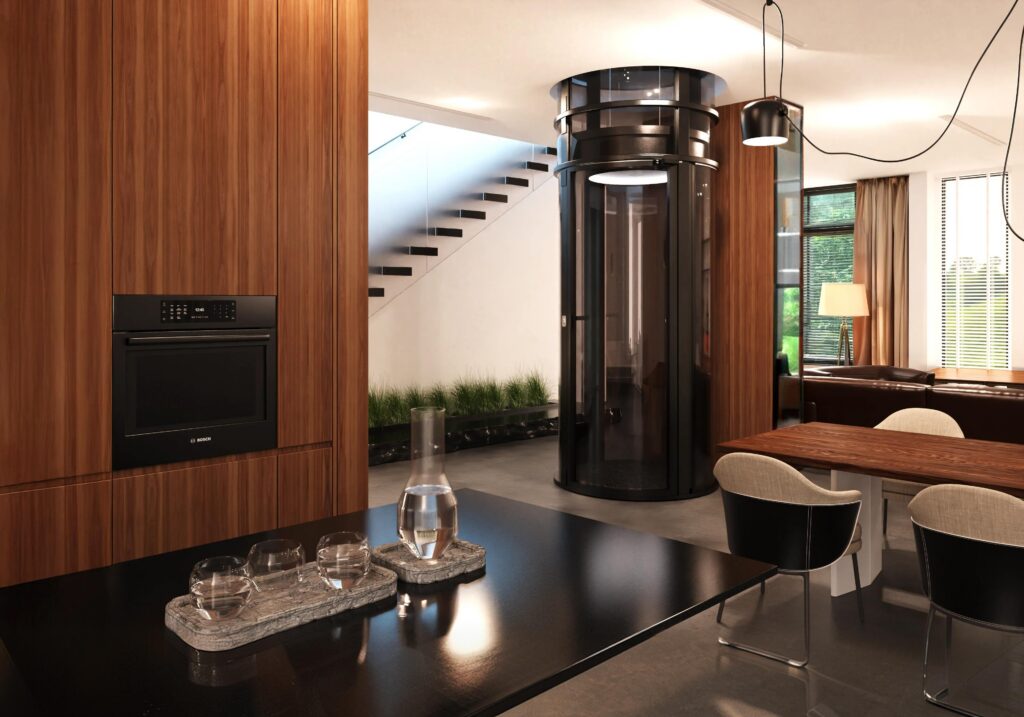
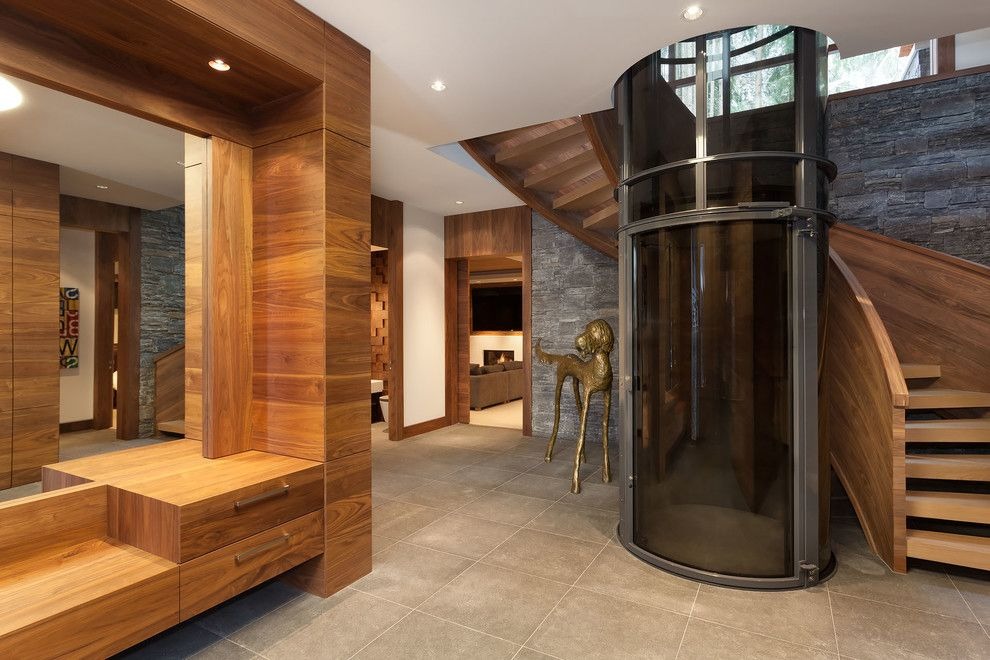
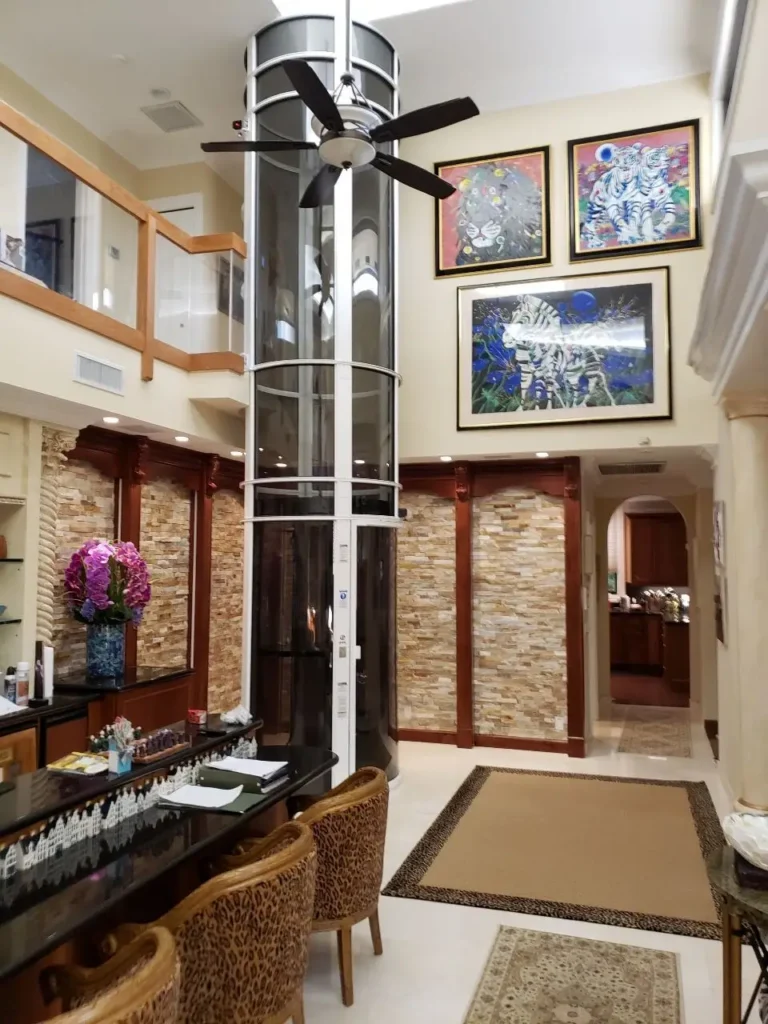
PVE manufactures air-driven vacuum elevators for residential use. Turbines create air pressure to move the cab upward; downward travel uses gravity-assisted descent, valves, and airflow, helping reduce energy use.
In a power outage, a properly installed PVE elevator is designed to descend to the lowest landing. Emergency lighting supports visibility, and controls and door functions are managed so passengers can exit when the cab has stopped. PVE elevators are not intended to operate “as usual” on battery-only power; the focus is safe descent and egress, not continuous service.
Additionally, ask an authorized PVE dealer for current technical literature before code discussions.
Planning Backup Power for Your Home Elevator
When planning a backup generator for home elevator use, homeowners should think beyond the elevator itself and consider the home’s full safety plan.
Key steps:
- Ask an electrician to review service size, panel capacity, and existing generators.
- Decide whether the elevator should connect to backed-up circuits.
- Compare a whole-home standby generator, a smaller backup generator, a UPS system, or no generator.
- Add lighting in halls, stairs, and near elevator entrances for safer egress.
- Test fuel, batteries, transfer switches, and simulated outage behavior.
Portable generators vary in power quality and are not always appropriate for sensitive elevator equipment. Before connecting any elevator to backup power, a licensed electrician should confirm that the generator, transfer switch, grounding, and power output are suitable for the elevator system.
This sort of planning helps homeowners understand what the system can handle before an emergency.
Questions to Ask Your Elevator Dealer and Electrician
Before deciding whether you need a backup generator for your home elevator, ask your authorized PVE dealer:
- How does this elevator model respond to a sudden power outage?
- What emergency descent or safety features are included?
- Does this model require any special backup power planning?
- What should I do after power is restored?
- Are there model-specific maintenance or testing recommendations?
Ask your licensed electrician:
- Can my electrical panel support a standby generator?
- Which circuits should be backed up?
- Should the elevator be connected to a generator circuit?
- What transfer switch setup is appropriate?
- Are there local electrical or inspection requirements for this installation?
Keeping these answers documented can help homeowners, caregivers, and service professionals understand what to do before, during, and after an outage.
FAQ: Backup Generators and Residential Elevators
Can I run my home elevator from a portable generator during a power outage?
Sometimes, but only if the portable generator, transfer switch, wiring, grounding, and power output are approved for that purpose. Never plug an elevator into a random outlet or extension cord. A licensed electrician should confirm whether any portable generator setup is appropriate for the elevator system.
Can backup power be added to an existing home elevator installation?
Often, yes. Options may include adding the elevator circuit to a standby generator or upgrading emergency lighting, depending on panel space, equipment specifications, and site conditions.
How long will the emergency lighting in my elevator last during an outage?
Duration varies by manufacturer and battery capacity. Review the user manual and test lighting according to maintenance guidelines.
Will a backup generator make my elevator completely outage-proof?
No. A generator reduces downtime, but transfer delays, maintenance issues, or equipment faults can still occur. Keep a charged phone nearby and maintain a safe stair route.
Who should I contact first about planning backup power for a new PVE elevator?
Start with an authorized Pneumatic Vacuum Elevators dealer. For new construction, also involve your architect, builder, and licensed electrician early.
Can a home elevator run on a backup generator?
In some homes, yes. Whether a home elevator can run on a backup generator depends on the elevator system, generator size, transfer switch, electrical panel, and local requirements. A licensed electrician should confirm the setup.
Does my backup generator need to be sized based on the type of home elevator I have?
Yes. A backup generator should be sized based on the specific elevator type, electrical setup, and other home systems you want it to support. Some homeowners only need emergency descent to help the elevator reach the lowest landing or ground level, while others want a generator that can help the elevator start and operate during a longer outage. Local code requirements, including IBC-related requirements where applicable, may vary by project and location.
Final Thoughts: Backup Power Starts With the Right Elevator Plan
A backup generator for a home elevator may be helpful in some homes, but it is not automatically required for every residential elevator. For many homeowners, the more important question is what level of backup power they want: safe emergency descent, limited emergency features, continued elevator operation, or broader whole-home power support.
PVE elevators are designed to be power outage ready through gravity-assisted descent, helping passengers exit safely during a power interruption. To choose the right setup for your home, speak with an authorized PVE dealer and a licensed electrician about your elevator model, electrical system, outage risk, and long-term mobility needs.