Skip to content >

- The Basics of Elevator Operation
- Backup Power Systems for Elevators
- Pneumatic Vacuum Elevators and Power Outages
- How Pneumatic Elevators Work
- Advantages of Pneumatic Elevators During a Power Outage
- Safety Features of Pneumatic Elevators
- Traditional vs. Pneumatic Elevators During a Power Outage
- Elevator Safety During Power Outages
- Understanding Elevator Control Systems
- How Emergency Power Helps During an Outage
- Regulatory and Safety Standards
- Future Improvements in Elevator Reliability
- Conclusion
- Frequently Asked Questions About Elevators During a Power Outage
Most elevators do not continue normal operation during a power outage unless they are connected to a backup power system. When the main power is interrupted, many modern elevators are designed to stop safely, activate emergency lighting, and either remain in place or move to a designated landing so passengers can exit.
For homeowners, the exact response depends on the elevator type, backup power system, and safety features included with the model. Traditional elevators may rely on generators, batteries, or UPS systems, while pneumatic vacuum elevators use air pressure and gravity-assisted descent to help lower the cab safely during a power interruption.
The Basics of Elevator Operation
Elevators operate through a combination of mechanical and electrical systems. These may include a motor, controls, cab, doors, safety systems, and the components that move the cab between floors.
Electricity powers the systems that control movement, lighting, communication, and other key functions. When the main power is interrupted, standard elevator operation usually stops unless the elevator is connected to a backup power source or emergency lowering system.
This is why power outage performance can vary widely from one elevator type to another.
Backup Power Systems for Elevators
Most modern elevators, including home elevators, are equipped with backup power systems. These can include generators, batteries, and uninterruptible power supplies (UPS). These backup systems ensure that the elevator can function, at least temporarily, during a power outage.
Generators
Generators are one backup power option for elevators. They may be powered by diesel, natural gas, or propane and are often used when longer backup power is needed.
When properly sized and connected, a generator may allow the elevator to complete travel, move passengers to a safe floor, or continue limited operation during an outage. Homeowners should confirm generator compatibility with the elevator manufacturer or authorized installer.
Batteries and UPS
Battery backup systems provide short-term power during an outage. In many residential elevators, battery backup is designed to lower the cab to a safe landing rather than keep the elevator running continuously throughout the outage.
A UPS, or uninterruptible power supply, can also support critical elevator functions such as controls, lighting, and communication. These systems can help reduce the risk of passengers being left without visibility or a way to call for assistance.
For homeowners, the key question is what the backup system is designed to do: continue full operation, complete the current trip, or lower the cab safely for exit.
Pneumatic Vacuum Elevators and Power Outages
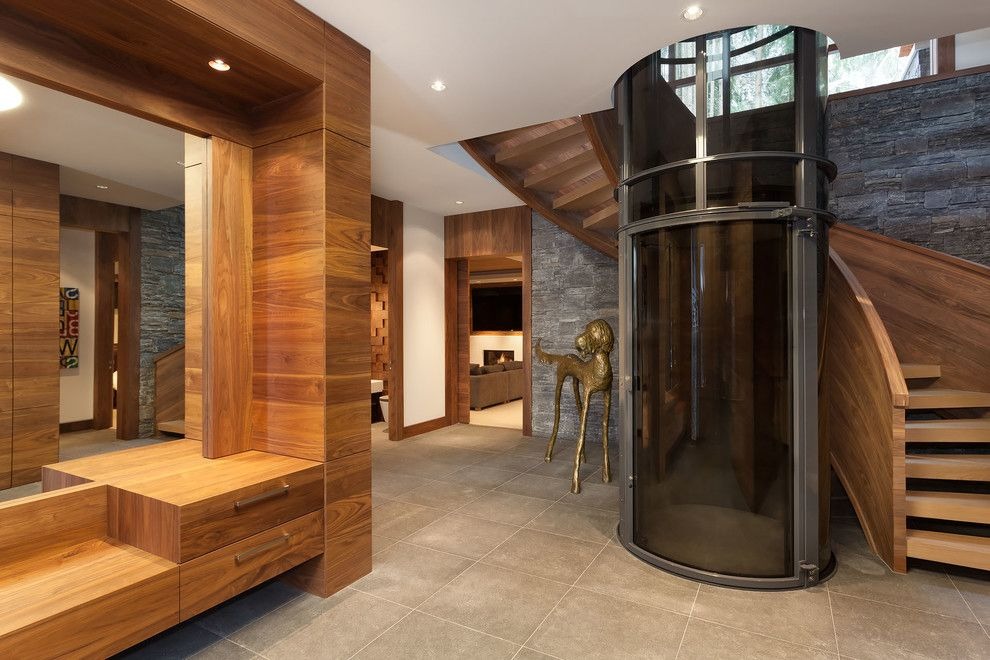
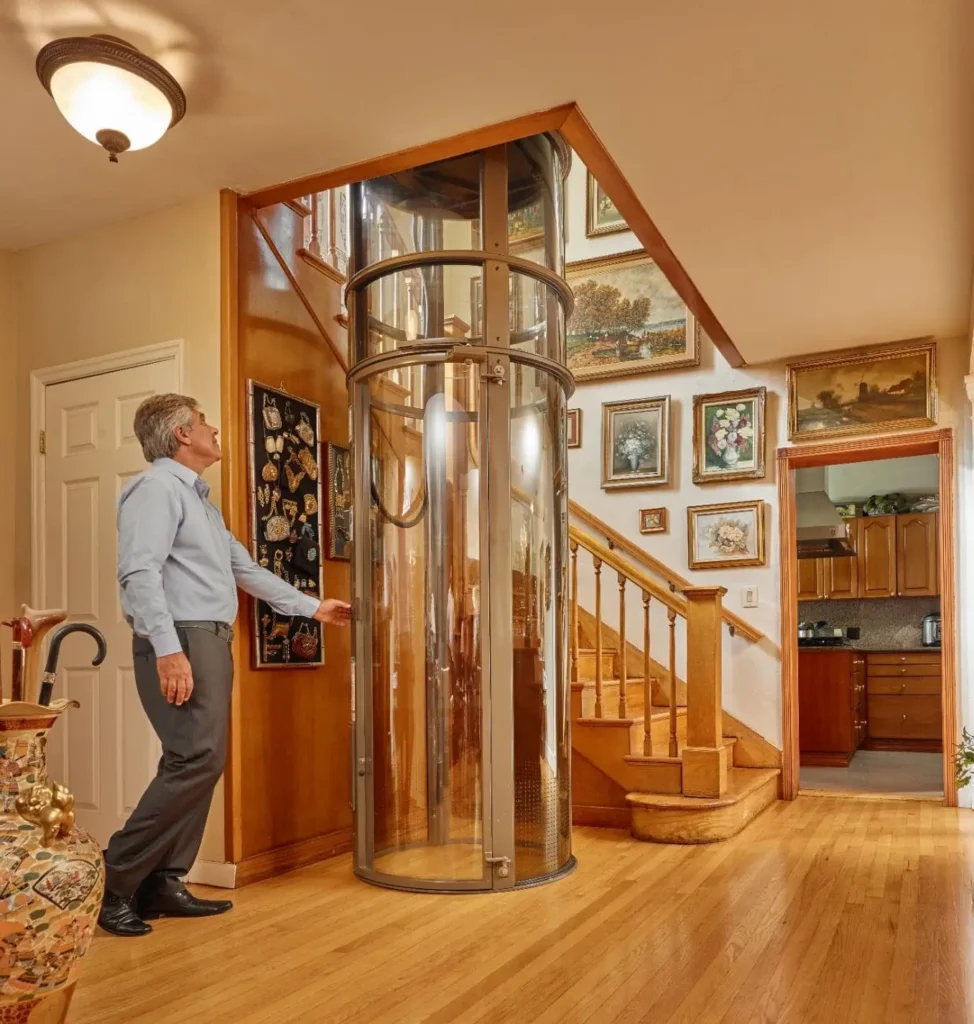
Pneumatic vacuum elevators use a different design from many traditional elevator systems. Instead of relying on a conventional shaft, pit, machine room, cables, or counterweights, they use air pressure to move the cab inside a self-supporting cylinder.
This compact, air-driven design can be especially useful for existing homes because it requires less structural space than many traditional elevators. It also supports faster installation with minimal disruption, making pneumatic elevators a practical option for homeowners planning a retrofit.
PVE residential models, including the PVE30, PVE37, and PVE52, use this patented vacuum technology to provide safe, efficient vertical mobility for a range of home layouts and accessibility needs.
How Pneumatic Elevators Work
Pneumatic elevators operate using a vacuum system. The cab moves inside a vertical cylinder, and air pressure is used to control movement between floors.
To lift the cab, the system reduces air pressure above it, creating a pressure difference that moves the cab upward. To descend, air is gradually reintroduced into the system, allowing the cab to lower in a controlled way with the help of gravity.
Because descent is gravity-assisted, pneumatic elevators require less energy to go down than to go up. This design is one reason pneumatic vacuum elevators are known for energy-efficient residential operation.
Advantages of Pneumatic Elevators During a Power Outage
One of the main advantages of pneumatic elevators during a power outage is their lower reliance on electricity compared with many traditional elevator systems.
Pneumatic vacuum elevators require power for normal upward travel, but descent is gravity-assisted and requires minimal energy. If power is interrupted, the system is designed to release air pressure and allow the cab to descend safely to a designated landing, depending on the model and installation.
This design helps reduce the risk of passengers being stranded between floors during a temporary outage. For homes with older adults, family members with mobility challenges, or multigenerational households, this safe descent response can be an important part of emergency planning.
Safety Features of Pneumatic Elevators

Pneumatic elevators are designed with built-in safety features for normal operation and emergency situations. In a power outage, the cab is designed to descend safely to a designated landing so passengers can exit.
PVE elevators also include mechanical safety systems that help prevent uncontrolled movement if air pressure is compromised. These safety systems work with the air-pressure design to provide controlled movement and added protection during a power interruption.
Additional safety features may include backup lighting, emergency communication, door safety systems, and manual controls.
Traditional vs. Pneumatic Elevators During a Power Outage
Here is a simple comparison of how traditional elevators and pneumatic vacuum elevators may respond during a power outage:
| Feature | Traditional Elevators | Pneumatic Vacuum Elevators |
| Movement system | Motor-driven system with cables, hydraulics, traction components, or counterweights | Air pressure and gravity-assisted descent |
| Main power need | Typically higher | Lower, especially during descent |
| Backup power options | Generator, battery backup, or UPS system | Emergency lowering, battery support, or manual controls depending on model |
| Power outage response | Depends heavily on the backup power system | Designed to descend safely when power is interrupted |
| Installation requirements | Often requires more structural planning | No shaft, pit, or machine room required |
| Retrofit suitability | Varies by home and elevator type | Compact, self-supporting, and retrofit-friendly |
| Maintenance | More components may require regular service | Fewer moving parts and low maintenance design |
| Safety features | Emergency brakes, backup lighting, communication systems | Controlled descent, mechanical safety systems, backup lighting, communication features |
Elevator Safety During Power Outages
Safety is the primary concern when an elevator loses power. Modern elevators are designed with systems that help protect passengers and prevent unsafe movement during an outage.
Common safety features may include:
- Emergency brakes to help prevent uncontrolled movement
- Backup lighting so passengers are not left in the dark
- Communication systems so passengers can call for help if needed
- Battery backup or emergency lowering to help move the cab to a safe landing
- Manual controls or service access for trained technicians
For homeowners, these features are especially important when an elevator is used for aging in place, accessibility, or multigenerational living. A residential elevator should not only fit the home physically; it should also support safe use during everyday operation and unexpected power interruptions.
Understanding Elevator Control Systems
To fully grasp how elevators work during a power outage, it’s essential to understand their control systems.
Elevators rely on sophisticated control systems to manage their operations, from simple up-and-down movements to complex multi-car configurations in high-rise buildings.
These control systems include:
- Relay Logic Controllers (RLCs): Used in older elevators, RLCs use electromechanical relays to control elevator functions. They are robust but less flexible and harder to maintain compared to modern systems.
- Programmable Logic Controllers (PLCs): Modern elevators use PLCs, which are digital computers that control the electrical systems. PLCs are more adaptable and easier to troubleshoot and maintain.
- Microprocessor-Based Controllers: These controllers offer advanced features, such as self-diagnostics and predictive maintenance alerts. They ensure smooth operation and can interface with building management systems for integrated control.
How Emergency Power Helps During an Outage
Emergency power systems are designed to support safe elevator behavior when the main power supply is unavailable. Depending on the elevator, this may include powering the controls, lighting, communication system, or emergency lowering function.
Some systems are designed only to help the cab reach a safe landing. Others, such as properly sized generators, may support longer operation.
Regulatory and Safety Standards
Elevators are subject to stringent regulatory and safety standards to ensure the safety of passengers during normal operations and emergencies, including power outages.
International Standards
- ISO 22559: Provides guidelines for the safety of elevators and escalators.
- EN 81-20 and EN 81-50: European standards that cover safety rules for the construction and installation of elevators.
- ASME A17.1/CSA B44: North American standards for elevator and escalator safety.
Safety Features
- Emergency Brakes: Activated automatically if the elevator car exceeds a certain speed or if there’s a failure in the hoisting mechanism.
- Backup Lighting: Ensures visibility inside the car during a power outage.
- Communication Systems: Allow passengers to communicate with building management or emergency services.
Future Improvements in Elevator Reliability
Elevator technology continues to improve with smarter controls, better energy efficiency, and more advanced monitoring systems. These improvements can help elevators respond more effectively during outages and make maintenance easier over time.
For homeowners, however, the most important factor remains the elevator’s current safety design. Before choosing a system, ask how it responds during a power outage, whether emergency lowering is included, and what backup power options are available.
Conclusion
So, do elevators work in a power outage? In most cases, elevators do not continue normal operation without backup power. However, many modern systems are designed to respond safely by stopping the cab, activating emergency features, or moving passengers to a safe landing.
Traditional elevators may rely on generators, batteries, or UPS systems for outage support. Pneumatic vacuum elevators offer a different approach by using air pressure for lift and gravity-assisted descent to help lower the cab safely when power is lost.
For homeowners, the best elevator choice depends on the home layout, mobility needs, backup power plan, and desired safety features. Understanding how an elevator responds during a power outage can help you choose a system that supports long-term accessibility, comfort, and safety.
Frequently Asked Questions About Elevators During a Power Outage
Do elevators work in a power outage?
Most elevators do not continue normal operation during a power outage unless they are connected to backup power. Many modern elevators include emergency systems that stop the cab safely, activate backup lighting, or lower the cab to a safe landing.
What happens if you are inside an elevator during a power outage?
Most modern elevators are designed to stop safely and activate emergency lighting or backup systems. In many cases, the elevator will move to the nearest floor so passengers can exit safely.
Do home elevators have battery backup?
Many residential elevators include battery backup systems that allow the cab to lower to the nearest floor during a power interruption. Backup capability depends on the elevator model and control system.
Can pneumatic elevators operate during a power outage?
Pneumatic elevators require electricity for normal upward travel, but they are designed to descend safely during a power outage. Because they use air pressure and gravity-assisted descent, the cab can lower to a designated landing when power is interrupted.
Do pneumatic elevators need electricity to go down?
Pneumatic vacuum elevators use minimal energy during descent because gravity helps lower the cab. Power is primarily needed during ascent, which supports energy-efficient residential operation.
Can a pneumatic elevator freefall during a power outage?
Pneumatic vacuum elevators are designed to prevent uncontrolled descent. They use air pressure to move the cab and include mechanical safety systems as an added layer of protection. If power is interrupted, the system is designed to lower the cab safely rather than leave it suspended between floors.
Will an elevator restart automatically after power returns?
Some elevators may resume normal operation automatically after power is restored, while others may require a manual reset or inspection. The exact process depends on the elevator model, control system, and manufacturer guidelines.
Are pneumatic elevators a good option for homes with seniors?
Pneumatic elevators can be a practical option for aging in place because they have a compact footprint, require no shaft, pit, or machine room, and support safe movement between floors. Their controlled descent during a power outage is also useful for homeowners concerned about mobility and emergency access.