Skip to content >

- Quick Answer: Home Elevator vs Platform Lift
- Home Elevator vs. Platform Lift: Quick Comparison
- Understanding the Options: Home Elevators and Platform Lifts
- Design & Ride Experience: What It Feels Like to Use Each
- Where Each Works Best in a Home
- Space, Construction & Installation Considerations
- Safety, Reliability & Long-Term Accessibility
- Cost, Maintenance & Everyday Operating Considerations
- How to Choose: Home Elevator vs Platform Lift for Your Situation
- Frequently Asked Questions: Home Elevators and Platform Lifts
When mobility starts to affect how someone moves through the home, the right accessibility solution can make daily life safer, easier, and more comfortable. But many homeowners are unsure whether they need a full home elevator or a platform lift.
The difference matters. A platform lift can be a practical solution for a short rise, such as a porch, garage entry, deck, or split-level area. A home elevator is usually better suited for long-term access between multiple floors, especially for aging in place, multigenerational living, and everyday convenience.
This guide compares home elevator vs platform lift options so you can better understand space requirements, travel distance, design, safety, cost considerations, and which solution may fit your home best.
Quick Answer: Home Elevator vs Platform Lift
A home elevator is usually better for long-term accessibility across multiple floors. A platform lift is often the cost-effective choice for one floor change, especially when ramps require too much space.
- Travel: Elevators span several levels; a vertical platform usually handles short vertical travel.
- Location: outdoor platform lifts work well at entries; indoor counterparts can serve split-level areas.
- Comfort: a home elevator has a fully enclosed cabin; a platform may be open on top.
- Accessibility: platform lifts help wheelchair users stay in mobility devices; elevators provide more space for riders, groceries, and luggage.
- Design: residential elevators usually blend better with interior design.
Modern shaftless residential elevators like PVE can often be added without the elevator shaft, pit, or machine room of a traditional elevator. The rest of this guide helps prospective lift customers choose the right accessibility solution.
Home Elevator vs. Platform Lift: Quick Comparison
| Factor | Home Elevator | Platform Lift |
| Best for | Multi-floor access, aging in place, daily convenience | Short vertical travel, entryways, decks, garages, split-level areas |
| Travel distance | Serves multiple floors | Usually handles one short rise or limited vertical travel |
| Ride experience | Fully enclosed cabin with a more comfortable, finished feel | Open or semi-enclosed platform, often more utilitarian |
| Accessibility | Supports riders, groceries, luggage, and some wheelchair-accessible needs depending on model | Helps wheelchair users remain in their mobility device for targeted access |
| Space needs | Traditional systems may need a shaft, pit, or machine room; PVE models are shaftless and self-supporting | Often fits tighter spaces with fewer structural modifications |
| Design impact | Can blend into the home as a design-forward feature | More functional in appearance, especially outdoors or near stairs |
| Long-term use | Better suited for whole-home accessibility and aging in place | Better suited for solving one specific access barrier |
| Maintenance | Requires inspection and proper maintenance based on model and local requirements | Simpler system, but outdoor lifts may face weather-related wear |
Understanding the Options: Home Elevators and Platform Lifts
A home elevator, or residential elevator, is a fully enclosed system designed to move people and belongings vertically inside a home. Home elevators are typically used for multi-floor travel, while platform lifts are often more compact and may be open on top, making them suitable for short vertical travel.
A platform lift, also called a wheelchair lift, uses a platform with rails or gates. Vertical platform lifts can be installed in a variety of locations and are designed to accommodate specific mobility needs without extensive remodeling, making them suitable for many existing homes. Vertical platform lifts allow wheelchair users to remain in their wheelchairs while traveling between levels, providing greater independence compared to stairlifts.
Inclined platform lifts use a platform on rails along the stairs. Searches for terms like “residential elevator platform lifts” or “residential elevator platform” often mix categories, but these accessibility products serve different mobility needs.
Design & Ride Experience: What It Feels Like to Use Each
Daily use matters. A traditional home elevator can include custom finishes, lighting, and a more enclosed cab experience. Home elevators often include features such as automatic doors, emergency stop buttons, and backup power systems, enhancing safety and accessibility for users with limited mobility or mobility issues.
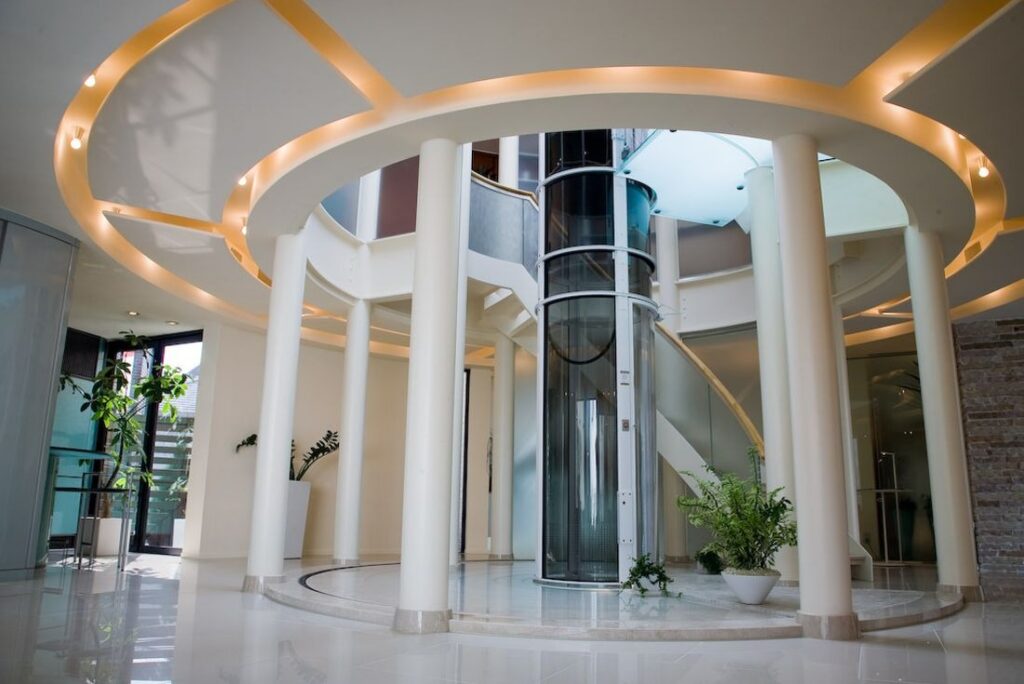
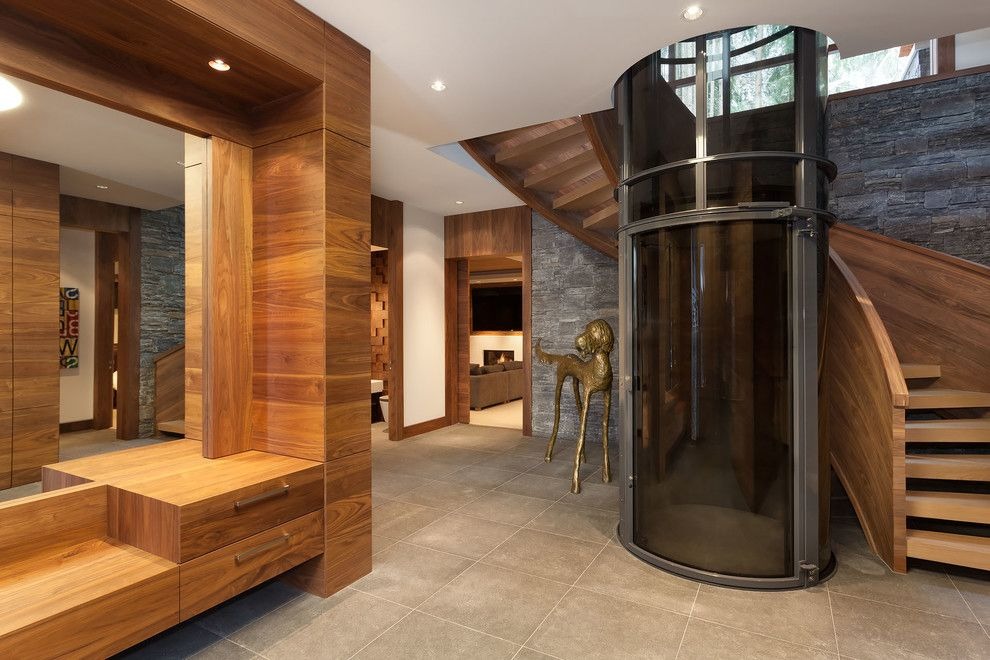
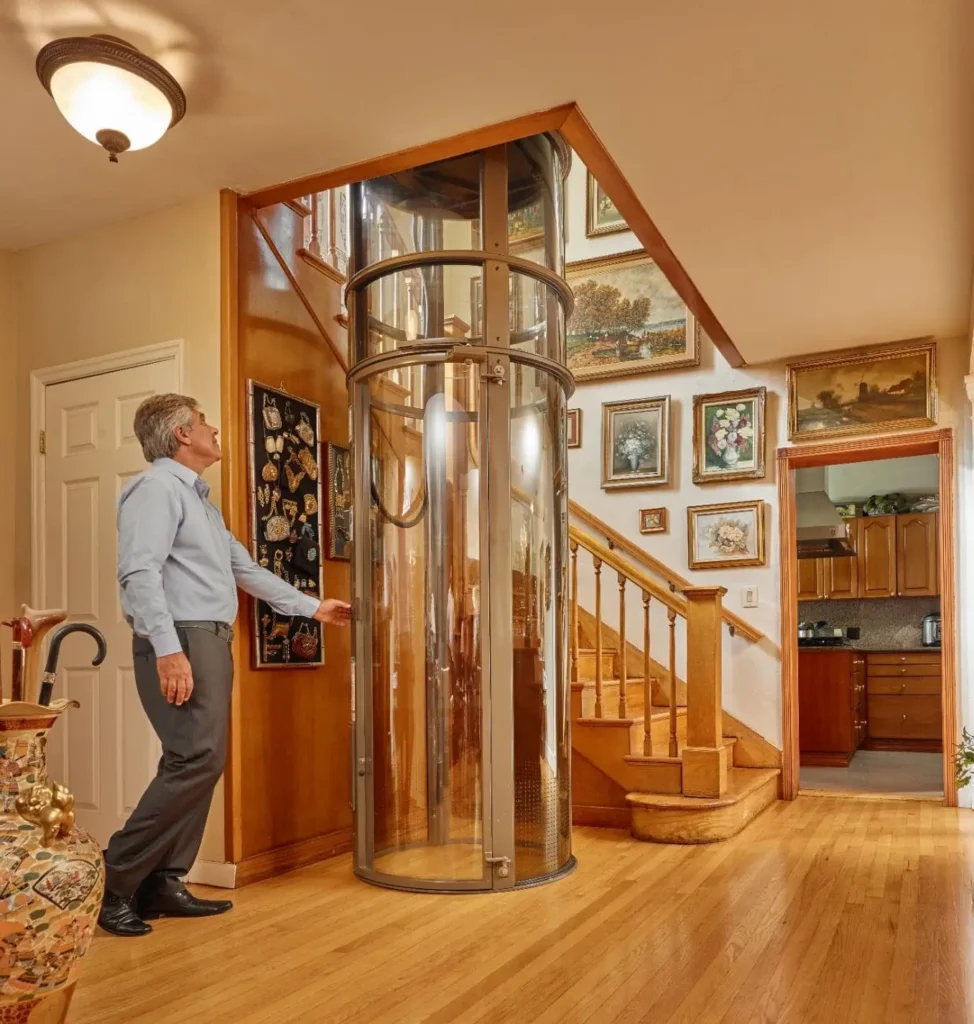
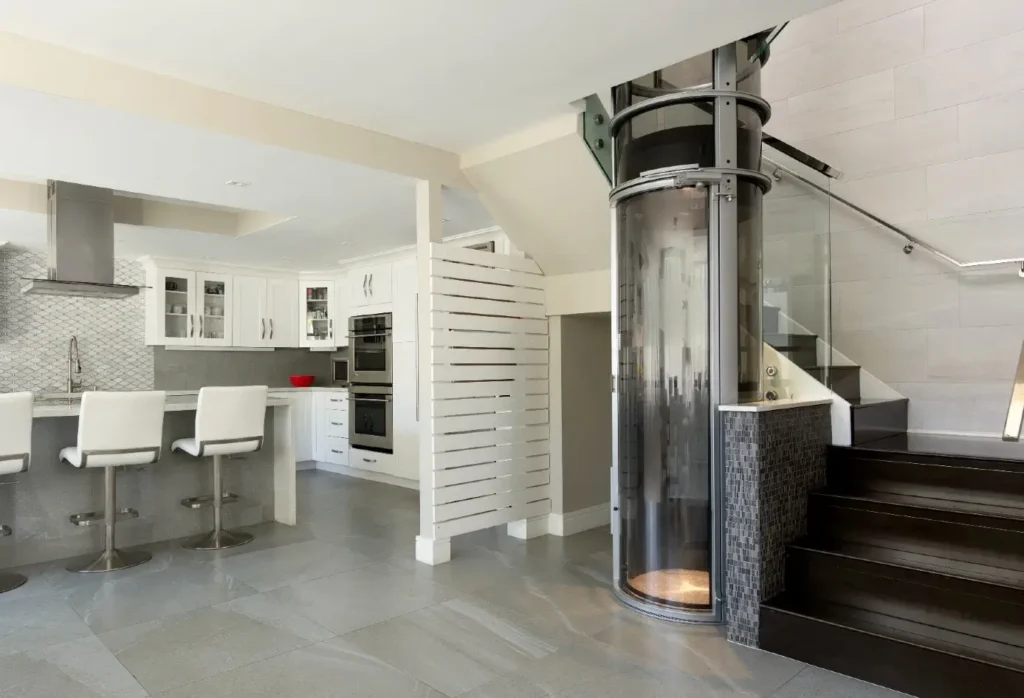
PVE designs and manufactures the world’s only vacuum elevators. These pneumatic vacuum elevators use patented air-driven technology, simple physics, and innovative materials. Their panoramic cylinder offers 360-degree views, a smaller footprint, less space impact, and smooth vertical travel. For many homeowners with limited space, that makes the elevator an architectural feature rather than an appliance.
A vertical platform lift is more utilitarian: open or semi-enclosed, often with constant-pressure controls requiring either the rider or a helper to hold a button. An enclosed platform lift adds protection, but still feels different from a fully enclosed cabin. Inclined platform lifts fold beside the stairway and can visually affect the staircase.
Where Each Works Best in a Home
The clearest comparison is location. Home elevators are often the better fit if you need to span three or more floors comfortably. Elevators are ideal for aging-in-place designs, handling groceries, luggage, and multiple passengers simultaneously.
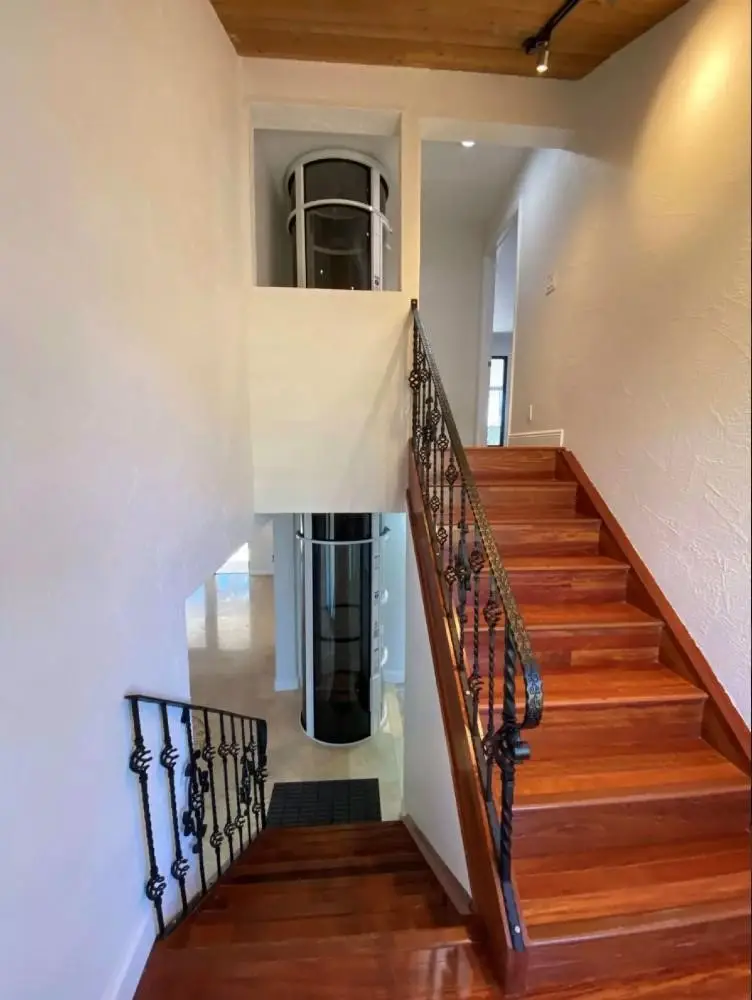
PVE shaftless home elevators can fit near a stairwell, in an atrium, or in a living-room corner, depending on structural requirements and local review.
Platform lifts are strongest at targeted barriers: porch steps, decks, garage entries, or a short rise where a ramp would consume square footage. Platform lifts can be installed in various locations, including outdoor settings, and are designed with weather-resistant materials to ensure reliable operation in inclement weather. Most outdoor platform lifts should use a weather-resistant model, appropriate grade drainage, and specially designed covers to prevent moisture entry; ignoring moisture entry can risk damaging internal components.
- If the goal is full-home, long-term accessibility, residential elevators are often the strongest choice.
- If the goal is one specific barrier at a front door or deck, a lift may be sufficient.
Space, Construction & Installation Considerations
Many homeowners assume an elevator needs too much space. That is true for some systems, but newer designs change the conversation.
Home elevators typically require a shaft, pit, and dedicated space within the home’s structure, which may involve extensive planning and construction for installation. The installation of a home elevator usually requires more extensive structural modifications, such as a shaft and pit, while platform lifts often need fewer modifications and can be installed in tighter spaces. Home elevators often require significant structural modifications, such as building a shaft or pit, which can add to the overall installation costs.
PVE residential elevators are self-supporting and require no pit or machine room. Once site preparation is complete, installation may be measured in days rather than weeks, but every home requires verification.
Platform lifts typically require less construction than a traditional elevator shaft and may not require sacrificing space for a full hoistway. Platform lifts, especially shaftless models, often require fewer structural modifications and can be installed in tighter spaces, making them a practical option for retrofitting existing homes.
- Home constraints: Is there room for a shaft, or would a shaftless system reduce installation complexity and additional construction?
- Codes, permits, and structural conditions should always be verified locally; standards such as ASME A17.1 and A18.1 may apply depending on the system and region.
Safety, Reliability & Long-Term Accessibility
Both elevators and lifts are engineered with safety features, but daily reliability becomes an important consideration when planning to age in place.
Residential elevators may include interlocked doors, emergency stops, backup lowering, and regional safety-standard compliance. PVE vacuum elevators use mechanical and air-pressure-based safety features, along with built-in emergency descent capability if power is lost. Exact certifications should be verified for your location.
Vertical platform lifts use gates, guard rails, under-platform sensors, and constant-pressure controls. Inclined platform systems use safety edges but can be more exposed to objects left on stairs.
For heavy daily use across multiple floors, many homeowners prefer the enclosed ride, privacy, and reliability of a residential elevator.
Cost, Maintenance & Everyday Operating Considerations
The costs of elevators vary by home, model, region, installer, site conditions, and code requirements, so homeowners should confirm numbers with an authorized dealer before budgeting. In general, platform lifts may be more cost-effective for a single short rise, while home elevators require a larger investment but can provide more complete long-term access across multiple floors.
PVE’s shaftless design may reduce some construction scope compared with conventional elevators, but detailed quotes are essential.
Maintenance requirements differ. Elevators should be inspected and properly maintained; platform lifts are simpler, but outdoor units face weather-related wear. Vacuum elevators are designed for efficient operation, with energy output mainly during ascent and less energy output on descent than many conventional drive approaches.
How to Choose: Home Elevator vs Platform Lift for Your Situation
There is no one-size-fits-all answer. Start with use, then evaluate space, cost, and comfort.
Ask:
- How many levels must be accessible now and later?
- Is the user walking independently, using a walker, or using a wheelchair?
- Will the system be used daily or occasionally?
- Is the main need a porch lift, or whole-home access?
- Does the home have enough square footage for a traditional system, or is a compact PVE model more practical?
If you want expert guidance, compare PVE models, request a quote, or speak with an authorized dealer about the right solution for your home.
Frequently Asked Questions: Home Elevators and Platform Lifts
Can a PVE elevator fit in an existing home?
Often, yes. PVE elevators are designed for retrofit flexibility because they are self-supporting and do not require a pit or machine room, but each home still needs a site assessment.
Are platform lifts only for wheelchair users?
No. They are designed around wheelchair accessibility, but some models may also serve standing riders or people using walkers, depending on the equipment, site conditions, and local requirements.
Which option is more cost-effective?
A platform lift is usually the cost-effective alternative for one short barrier. A home elevator is often the better long-term choice when multiple floors, comfort, and resale appeal matter.
Do outdoor lifts need special protection?
Yes. Outdoor platform lifts should be weather-resistant, protected from inclement weather, and serviced regularly to reduce corrosion and moisture-related problems.