
- Home Elevator Dimensions: How Much Space Do You Need?
- Space Requirements by Elevator Type
- Standard Cab and Shaft Dimensions
- PVE Model Dimensions: Technical Specifications
- How to Measure Your Home for an Elevator
- Where to Install a Home Elevator
- Building Codes and Accessibility Standards
- How to Choose the Right Elevator Size
- Frequently Asked Questions
- Conclusion
Most home elevators require between 12 and 25 square feet of floor space, depending on the elevator type, number of floors, and how the system is installed. Pneumatic vacuum elevators are typically designed with a much smaller overall footprint, as little as 7 to 9 square feet, because they don’t need a machine room, elevator shaft, or pit.
This guide covers standard residential elevator dimensions, cab size and shaft space requirements, pit depth, overhead clearance, and how to determine the final size that fits your home.
Home Elevator Dimensions: How Much Space Do You Need?
The space needed for a home elevator depends on the system you choose. A residential elevator requires room for the cab itself, entry clearance at each landing, and, for traditional systems, a hoist way, pit, and sometimes a separate elevator machine room.
Most residential elevators require a minimum of 5 feet by 5 feet (25 square feet) of floor space for the shaft and cab combined. Compact models can work in smaller areas. Pneumatic elevators, for example, rest on the existing ground floor and require no shaft construction, which means they can often be installed where there isn’t enough space or ample room for a traditional system.
Standard residential elevator cab dimensions are approximately 36 inches wide by 48 inches deep, housed inside a hoistway of at least 4 feet by 5 feet. Smaller cabs — around 36 by 36 inches — exist but may not comfortably accommodate a wheelchair user or multiple passengers.
The total available space in your home, including clearance around the elevator and room for door swing, determines which elevator models will fit.
Space Requirements by Elevator Type
Not all residential elevators require the same amount of space. The table below compares the four main elevator types across key dimensions so you can quickly identify which systems fit your available space.
| Space Factor | Pneumatic / Vacuum | Hydraulic | Shaftless / Platform | MRL (Machine-Room-Less) |
| Minimum floor space | 7–9 sq ft (circular) | 20–25 sq ft | 12–16 sq ft | 15–20 sq ft |
| Pit required? | No (pit-less) | Yes, 8″ minimum | Yes, 6–8″ | Yes, 6–12″ |
| Machine room required? | No | Yes, separate room | No | No (in-shaft) |
| Shaft / hoistway required? | No — self-supporting tube | Yes | Yes | Yes |
| Overhead clearance | 80″ above top floor | 92″+ | 80–90″ | 80–90″ |
| Minimum cab size | 30″ diameter (PVE30) | 36″ × 48″ typical | 36″ × 36″ typical | 36″ × 48″ typical |
| Guide rails / wall mounting | No | Yes, with guide rails | Corner walls | Yes, with guide rails |
| Best for | Existing homes, retrofits, tight spaces | New construction, high load capacity | Corner alcoves, small homes | Mid-range retrofits |
Pneumatic Vacuum Elevators
Pneumatic elevators require a footprint between 30 and 52 inches wide, depending on the model. They operate using air pressure rather than cables, pulleys, or hydraulic pistons, which eliminates the need for an elevator machine room, elevator shaft, or pit.
Because the system is self-supporting, it doesn’t require guide rails or load-bearing walls for mounting. This makes pneumatic elevators one of the most space-efficient options for most homeowners, particularly those retrofitting an elevator into an existing home where there isn’t much space to work with.
These systems can serve two to five floors with a maximum travel height of 50 feet, which covers most residential settings including homes up to six story homes in certain configurations.
Hydraulic Elevators and the Elevator Machine Room
Hydraulic elevators are typically designed for new construction and higher weight capacity applications. They use a fluid-driven piston system and require a dedicated elevator machine room, a constructed elevator shaft, and a pit depth of at least 8 inches.
The minimum floor space is around 20 to 25 square feet. These systems use guide rails mounted to the shaft walls to keep the cab aligned during travel. Because of the additional space needed for the machine room and shaft, hydraulic elevators are generally better suited for homes being built from the ground up where the elevator can be planned into existing floor plans from the start.
MRL (Machine-Room-Less) Elevators
MRL elevators place the drive system inside the shaft itself, eliminating the need for a separate machine room. This saves additional space compared to hydraulic systems while still offering strong load capacity and smooth operation.
They still require a constructed shaft with guide rails, a pit (typically 6 to 12 inches), and overhead clearance of 80 to 90 inches. Floor space requirements vary depending on the model but generally fall between 15 and 20 square feet.
Shaftless and Platform Lifts
Shaftless elevators and platform lifts are typically designed for homes with limited space where a full shaft isn’t feasible. These systems travel on a track and can often fit into corner alcoves or along walls. They require less floor space — around 12 to 16 square feet — but are usually limited to two floors and lower weight capacity.
Standard Cab and Shaft Dimensions
Understanding the relationship between cab dimensions and shaft space is essential for planning. Typical elevator dimensions vary depending on the system, but standard elevator dimensions for residential use follow established guidelines. The cab is the interior space passengers ride in, while the elevator shaft (or hoistway) is the surrounding structure that houses the cab, guide rails, and mechanical components.
Cab Dimensions by Occupancy
Standard residential elevator dimensions follow the ANSI A17.1 standard, which sets minimum cab sizes based on how many people the elevator needs to accommodate:
- Single occupant: 36 inches wide by 48 inches deep, enough for one person with basic mobility needs.
- Wheelchair user or multiple passengers: At least 48 inches wide by 60 inches deep. ADA guidelines suggest elevator cab sizes of at least 48″ W x 60″ D for wheelchair access. Wheelchair-accessible residential elevators typically require a cab depth of at least 51 inches.
- Compact solutions: Some models offer cabs as small as 36 by 36 inches (9 square feet), but these cannot accommodate a wheelchair or more than one person comfortably.
The final size you choose should factor in how many people will use the elevator regularly, whether anyone needs wheelchair access, and whether you plan to transport items like groceries, luggage, or mobility aids between floors.
Elevator Shaft and Hoistway Dimensions
Residential elevators typically require a hoistway footprint of 5′ x 5′ for traditional systems. The shaft must provide enough room around the cab for guide rails, safety mechanisms, and clearance during travel.
General guidelines for shaft space:
- Minimum shaft size: 4 feet wide by 5 feet deep for most residential systems.
- Additional clearance: Add 6 to 8 inches on each side of the cab for equipment, guide rails, and safe operation.
- Maximum travel height: 50 feet (approximately 4 to 5 stops), though some systems can accommodate more floors.
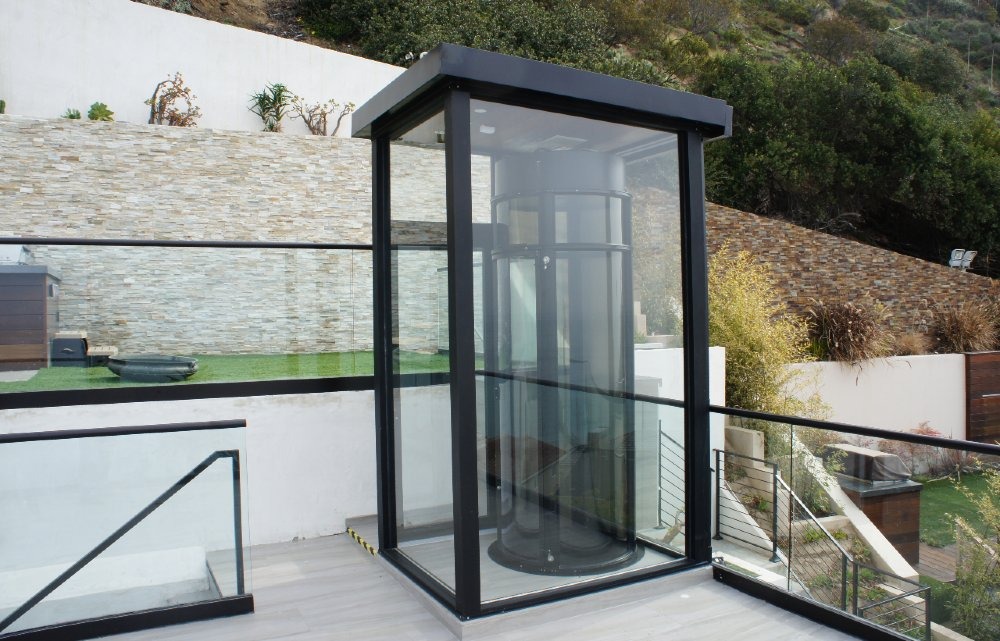
For pneumatic elevators, no traditional shaft is needed. The self-supporting tube serves as both the shaft and the cab enclosure, which dramatically reduces the overall footprint and eliminates construction work for shaft walls.
Door Width and Types
A standard door opening for elevators is usually 32 to 36 inches wide. A standard elevator door width is about 36 inches for full accessibility. Local building codes in most areas mandate a minimum doorway width of 32 inches.
The main door types for residential elevators are:
- Swing doors: Most common in residential settings, with standard width around 32 to 36 inches.
- Sliding doors: Space-saving option that eliminates door swing, though they require track space within the shaft.
- Telescopic doors: Offer wider openings for wheelchair access but add mechanical complexity and may require additional space.
Your door choice affects both the cab size and the amount of floor space needed at each landing for safe entry and exit.
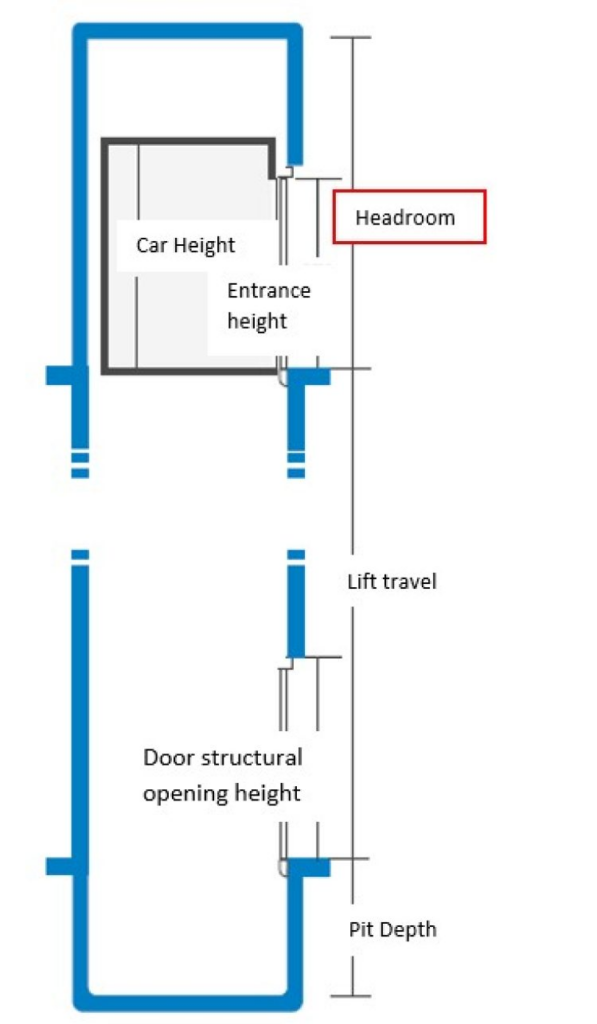
Pit Depth and Overhead Clearance
Pit depth varies depending on the elevator type:
- Pneumatic elevators: No pit required, as they rest directly on the existing ground floor.
- Hydraulic and cable systems: Typically require a pit depth of 8 inches to accommodate mechanical components beneath the cab.
- MRL systems: Usually need 6 to 12 inches of pit depth.
If your home doesn’t allow for digging a pit — for example, if the ground floor is a concrete slab — pit-less pneumatic models are your best option.
Overhead clearance is the distance from the finished top floor to the ceiling or roof structure above. Overhead clearance of 8 to 10 feet is required above the highest landing for most residential elevators. Hydraulic systems typically need 92 inches or more, while pneumatic and MRL elevators generally require 80 to 90 inches.
PVE Model Dimensions: Technical Specifications
Pneumatic Vacuum Elevators (PVE) offers four elevator models, each typically designed for different capacity and space needs. All models operate without a machine room, shaft, pit, or guide rails.
| Specification | PVE30 | PVE37 | PVE52 | The Cube |
|---|---|---|---|---|
| Exterior diameter | 750mm (30″) | 933mm (37″) | 1316mm (52″) | 1316mm (52″) |
| Interior diameter | 521mm (20.5″) | 813mm (32″) | 1150mm (45.3″) | — |
| Standard door width | 534mm (21″) | 534mm (21″) | Wider options available | — |
| Floor stops | 2–5 | 2–5 | 2–5 | 2 |
| Weight capacity | 350 lbs (159 kg) | 450 lbs (205 kg) | 525 lbs (238 kg) | 450 lbs (205 kg) |
| Passengers | 1 | 2 | 2–3 | 2 |
| Wheelchair accessible | No | No | Yes | No |
| Pit required | No | No | No | No |
| Machine room | No | No | No | No |
Residential elevators typically have a weight capacity of 750 to 1,000 pounds for traditional systems. PVE models are designed for residential use with lower weight capacities that accommodate typical household needs: one to three passengers per trip.

Which PVE Model Fits Your Space?
Choosing the right elevator size depends on your primary use case:
- PVE30: Best for single-passenger use where space is extremely limited. The 30-inch exterior diameter makes it the smallest residential elevator available. It’s an ideal choice when you need enough room for one person but don’t have the floor space for a larger system.
- PVE37: Accommodates two passengers with a 37-inch exterior diameter. This model suits most homeowners who want a balance between cab size and overall footprint.
- PVE52: The only wheelchair-accessible model in the PVE lineup. With a 52-inch exterior diameter and 45-inch interior, it provides enough space for a wheelchair user or up to three standing passengers. If wheelchair access is a requirement, this is the model to specify.
- The Cube: A two-floor alternative with the same exterior dimensions as the PVE52 but limited to two stops. It’s typically designed as a more affordable option for homes that only need to connect two levels.
PVE offers custom options including transparent or opaque cabins, different door styles, interior finishes, and customization options to match your home’s design. These design options let most homeowners personalize the elevator to blend with their existing decor.
How to Measure Your Home for an Elevator
Before contacting a dealer or requesting a quote, take these measurements. Having this information ready will help determine which elevator models fit your home and will speed up the site assessment.
Pre-Installation Measurement Checklist
- Floor-to-floor height: Measure from finished floor to finished floor on each level the elevator will serve. This determines travel height and how many floors the system needs to cover.
- Available footprint: Mark out the area you’re considering. Note width and depth in feet and inches. Minimum target: 20 to 25 square feet for traditional systems; pneumatic models require much space less; as little as 7 square feet.
- Wall availability: Identify which walls can bear a mounting rail or guide rails. Note the width of each wall and whether it’s load-bearing. Load bearing walls are especially important for traditional systems that mount guide rails to the shaft structure.
- Overhead clearance at top floor: Measure from the finished top floor to the ceiling or roof structure above. Most systems require 80 to 100 inches.
- Pit availability: Check whether a pit can be dug at the base level (typically 8 inches). If not, note this: pit-less pneumatic options may be your best fit.
- Entryway clearance: Measure doorway openings near the planned installation location. Wheelchair access requires a door width of at least 32 to 36 inches.
- Electrical panel location: Note where your main panel is and the distance to the planned elevator area. This affects wiring cost and may require additional space for routing.
- Existing HVAC and plumbing: Identify any ducts, pipes, or wiring in the walls of your target area. These may need to be rerouted, which affects both cost and available space.
- Number of stops: Count every level the elevator will serve: basement, ground floor, upper floors, attic, and loft all count. Most residential elevators accommodate up to four stops.
- Primary user needs: Note whether the primary user requires wheelchair access, uses a walker, or needs general mobility assistance. This determines the minimum cab size you should specify.
New Construction vs. Retrofit
New build: If you’re building a new home, you have the most flexibility. The elevator can be planned into existing floor plans from the start, with the shaft location, pit depth, and overhead clearance designed around the system you choose. Your architect and elevator installer can coordinate early to ensure enough space is allocated without compromising the home’s layout.
Retrofit: Installing an elevator in an existing home is more constrained. You’ll need to work within the available space, check structural integrity for shaft support, and potentially reroute HVAC or plumbing. Pneumatic elevators are the most popular choice for retrofits because they don’t require shaft construction, a pit, or a machine room. Home installation can occur through existing floor openings with minimal structural impact.
In either case, consult with a qualified elevator professional early in the process. They can assess your home’s structure and recommend the best placement and elevator size for your situation.
Where to Install a Home Elevator
The best placement depends on your home’s layout, available space, and how the elevator integrates with daily traffic flow. Here are the most common locations:
Next to an Existing Staircase
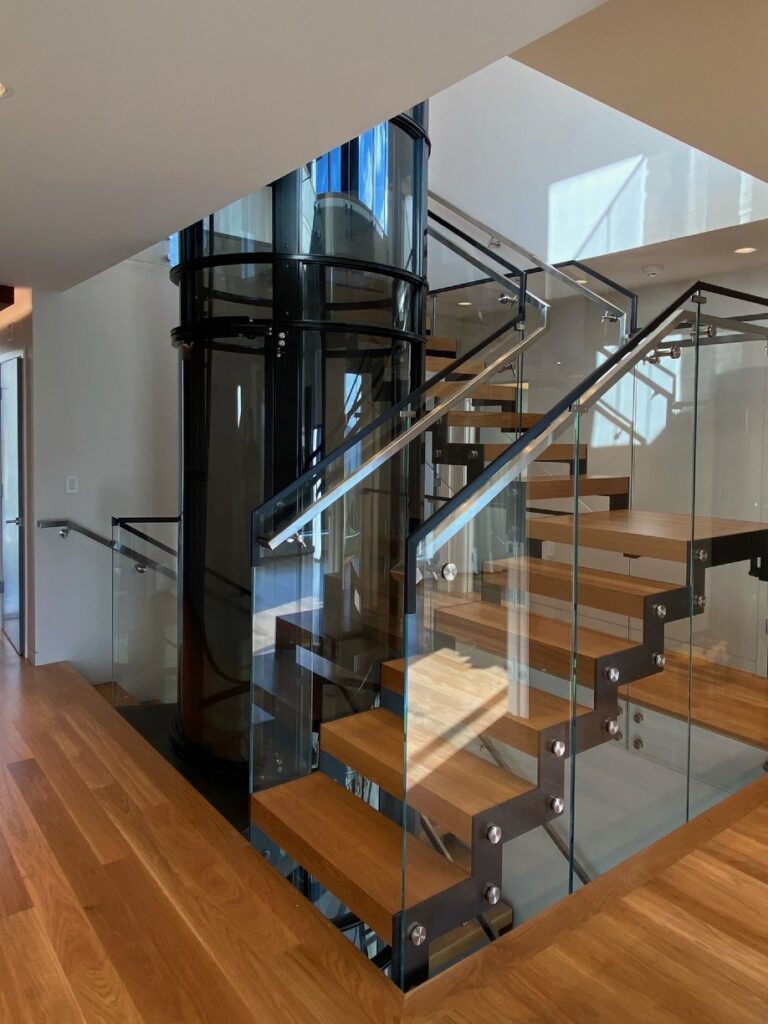
A staircase already connects your floors and sits in a location your architect chose for optimal flow. Installing an elevator adjacent to the staircase takes advantage of this, as it provides access to all floors without disrupting the home’s layout. Many pneumatic elevators are installed in the center of a spiral staircase, using space that would otherwise go unused.
In a Closet or Alcove
Stacked closets can sometimes be converted into an elevator shaft for traditional systems. This approach uses space that’s already allocated in existing floor plans and minimizes the impact on room layouts. Pneumatic models can fit into even smaller alcoves since they don’t require shaft construction.
Garage Access.
The garage is a practical location for homeowners who want easy access from their car to upper floors. It’s especially useful for transporting heavy items. Keep in mind that the space above your garage must be suitable for the elevator to reach, and that garage installations may need materials that withstand temperature variation.
Center of a Room.
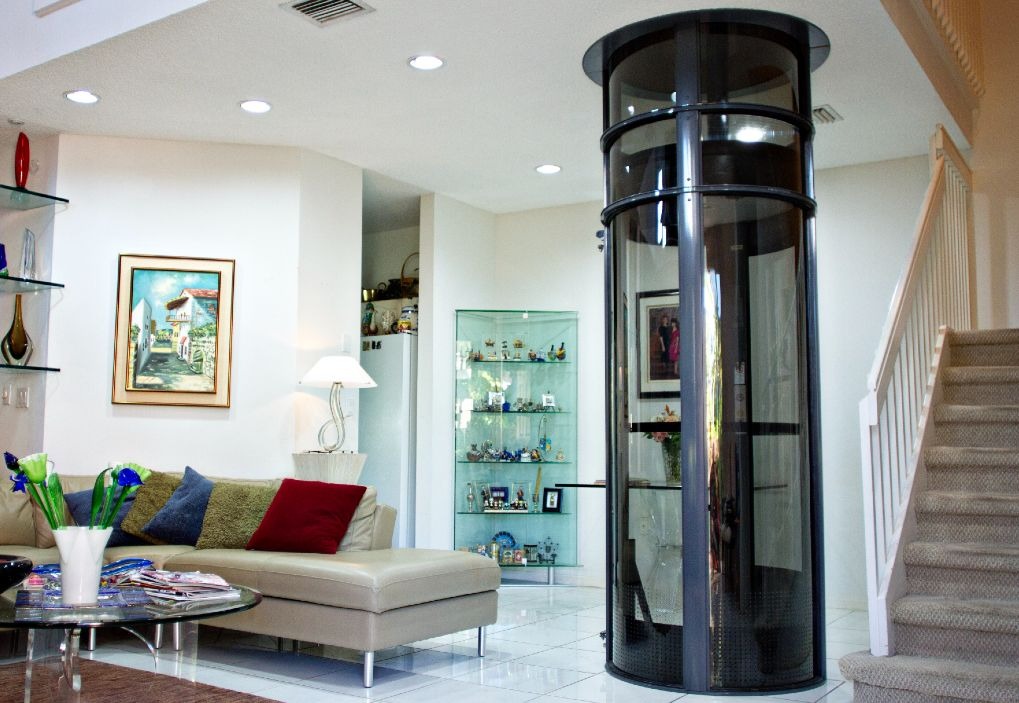
Self-supporting elevator models, including pneumatic elevators, can be placed in the center of a room rather than against a wall. This gives most homeowners greater flexibility in layout and design, and the transparent cab can become a design element rather than a hidden feature.
Building Codes and Accessibility Standards
Residential elevators must comply with several codes and standards that directly affect dimensions:
ASME A17.1 / A17.7: Sets safety and performance standards for residential elevators. Under this code, residential elevator cabs are limited to a maximum of 18 square feet. Most PVE elevators are A17.7 code compliant.
Local building codes: Requirements vary depending on your area and may specify minimum door width, pit depth, overhead clearance, and fire ratings for elevator doors. Always check with your local building department before installation. Local building codes may also dictate minimum shaft space and structural requirements for load bearing walls.
ADA and Accessibility: ADA guidelines suggest elevator cab sizes of at least 48″ W x 60″ D for wheelchair access, with a door width of at least 36 inches. Note that PVE residential elevators are designed as residential elevators and are not ADA compliant — they follow the A17.7 residential code. However, the PVE52 model does accommodate wheelchair users within its residential classification.
Fire Code: Elevator doors in a residential setting must typically be self-closing and may need to be fire-rated depending on local requirements. Consult local building codes for specifics.
How to Choose the Right Elevator Size
Work through these questions to determine the best elevator size for your home:
- How many people will use it? One person daily requires a different cab size than a family with frequent guests. For a single user, a compact PVE30 may provide enough room. For two or more, consider the PVE37 or larger.
- Does anyone need wheelchair access? If yes, the PVE52 or a traditional cab with at least 48″ × 60″ dimensions is required.
- How many floors will it serve? More floors mean longer travel height. Count every stop including basement and attic. Most residential elevators serve two to five floors.
- How much space is available? Measure your available space carefully, including clearance on all sides. If you have limited floor space, pneumatic models offer the smallest footprint.
- New build or retrofit? New construction allows for any elevator type. Retrofits favor pneumatic systems due to minimal construction.
- What are your local code requirements? Involve your local building department early. Code requirements affect shaft space, pit depth, overhead clearance, and door width.
- What’s your budget? Elevator costs vary depending on the system, number of floors, custom options, and installation complexity. For a detailed cost breakdown, see our home elevator cost guide.
The right elevator size balances your space constraints, mobility needs, and budget. When in doubt, choose a slightly larger cab. It’s much easier to install a bigger elevator during construction than to upgrade later.
Frequently Asked Questions
What is the minimum space needed for a home elevator?
Most residential elevators require at least 5 feet by 5 feet (25 square feet) of floor space for the shaft and cab. Pneumatic vacuum elevators need much less — as little as 7 to 9 square feet — because they don’t require a shaft, pit, or machine room.
What are typical elevator dimensions for a residential cab?
Standard residential elevator dimensions include 36 inches wide and 48 inches deep for a single-occupant cab. These are the most common home elevator dimensions across the industry. Wheelchair-accessible cabs should be at least 48 inches wide by 60 inches deep. The maximum cab size allowed under ASME A17.1 is 18 square feet.
Do all home elevators require a pit?
No. Pneumatic vacuum elevators are pit-less by design and rest directly on the existing ground floor. Traditional hydraulic and cable elevators typically require a pit depth of 8 inches. If you can’t dig a pit, pneumatic models are the best option.
What size elevator is needed for wheelchair access?
Wheelchair-accessible residential elevators typically require a cab depth of at least 51 inches and a width of at least 48 inches. The door opening should be 32 to 36 inches wide. The PVE52 is the only pneumatic model that accommodates wheelchair users, with an interior diameter of 45.3 inches.
How much overhead clearance is required?
Overhead clearance of 8 to 10 feet is required above the highest landing for most residential elevators. Pneumatic and MRL elevators generally need 80 to 90 inches, while hydraulic systems require 92 inches or more.
Can I install an elevator in an existing home?
Yes. Retrofit installations are common, though your options depend on available space, structural support, and how many floors you need to connect. Pneumatic elevators are the most popular retrofit choice because they need no shaft construction, no pit, and no machine room. They can often be installed in a day with minimal disruption.
What door width meets accessibility requirements?
A standard door opening for elevators is usually 32 to 36 inches wide. For full wheelchair access, a 36-inch door is recommended. Some compact elevator models have doors as narrow as 21 inches, but these don’t accommodate wheelchairs or mobility aids.
How do drive systems affect space requirements?
Different drive systems need different amounts of space. Hydraulic elevators require the most room — including a separate elevator machine room. MRL elevators place the drive inside the shaft, saving additional space. Pneumatic elevators need no machine room at all, making them the most space-efficient option for most homes.
Conclusion
The right residential elevator starts with accurate measurements and a clear understanding of how much space each system requires. Whether you’re planning a new build or retrofitting an existing home, knowing your available footprint, overhead clearance, and pit options will narrow down which elevator types and models fit.
Pneumatic vacuum elevators offer the smallest footprint of any residential system, no shaft, no pit, no machine room, making them the most practical choice for homes where space is limited. With models ranging from the compact PVE30 to the wheelchair-accessible PVE52, there’s an option for nearly every layout and mobility need.
Ready to find out which model fits your home? Contact our team for a free consultation and an elevator specialist can walk you through your options based on your specific measurements and needs.