


Quick answer: A home elevator is worth considering because it adds resale value, supports aging in place, improves daily convenience, reduces fall risk, and fits almost any home thanks to compact, no-shaft designs. For most homeowners, the biggest payoff is long-term independence and safety, not resale price alone.
Picture the moment you’re finally ready to list your house, or the morning your knees make it clear that stairs aren’t getting any easier. Home elevators used to only come up in that conversation for people building custom estates from scratch. That’s changed. Compact, pit-free, shaftless designs now mean a home elevator can go into an existing home, whether that’s a two-story family home or a multi story house, without a construction project that takes over your life for months.
The reason any one homeowner installs one isn’t always the same. Some are thinking ahead to resale value and potential buyers. Others are planning for a parent who’s about to move in, or for themselves a decade from now. A few just want their Saturday grocery run to stop involving a flight of stairs. Here are the five reasons that come up most, and what each one actually looks like once the elevator is in your own home.
In many markets, yes. A home elevator is a premium accessibility feature that appeals to potential buyers planning for the future, including retirees, multigenerational families, and anyone with mobility needs. Like a renovated kitchen, it can widen your buyer pool and make a home stand out.
The size of that boost to home value depends on your local market and price point, so treat it as one factor among several rather than a guaranteed return. If resale value is your main driver, how a home elevator affects property value is worth understanding in more detail before you decide.
A home elevator removes stairs as a mobility barrier before that barrier becomes a problem. As physical needs change with age or after an injury, a trip up the stairs that once took no thought can become a real obstacle, especially in a multi story home where daily life happens across floors.
This matters for family homes with multiple generations under one roof, too. Grandparents, guests, and family members with limited mobility can move through the home independently, and unlike a stairlift, an elevator is a permanent, whole-home solution rather than a workaround for one staircase. Aging in place with a home elevator works best when it’s planned before mobility issues become urgent, not after.
Beyond long-term planning, a home elevator removes a daily hassle. Carrying groceries, laundry, luggage, or holiday decorations up and down stairs is one of the most overlooked chores in a multi story home, and an elevator cuts that time and effort to a single button press.
It’s also useful for busy family homes managing multiple schedules, or for anyone temporarily limited by an injury. Pneumatic models in particular are designed to be quiet, user friendly, and simple to operate, so they fit into daily routines without disruption.
Yes. A home elevator offers a stable, controlled way to move between floors, which lowers fall risk compared to stairs, especially for people managing arthritis, balance issues, or recovery from surgery.
Falls are a significant risk for older adults. The CDC reports more than 3 million older adults are treated in emergency departments each year for fall injuries. An elevator doesn’t eliminate that risk, but it removes one of the most common places falls happen in the home.
A common worry with elevators is what happens during a power failure. Pneumatic vacuum elevators are designed for this: if the power goes out, the cab descends gently on its own using gravity, so no one is left stuck between floors during a power outage.
Yes, in most cases. Today’s residential in-home elevators are compact and fully customizable, and many, including PVE’s pneumatic models, install without a shaft, pit, or dedicated machine room. That means less construction and more flexibility for retrofitting an existing home, even one built on a single floor plan that’s being expanded upward.
Customization options range from panoramic glass cabs to brushed metal and wood tones, so the aesthetic appeal can match your home’s design or stand out as a feature on its own. Several compact home elevator models are built specifically for homes with limited square footage, without sacrificing the shaft-free installation that makes retrofits possible.
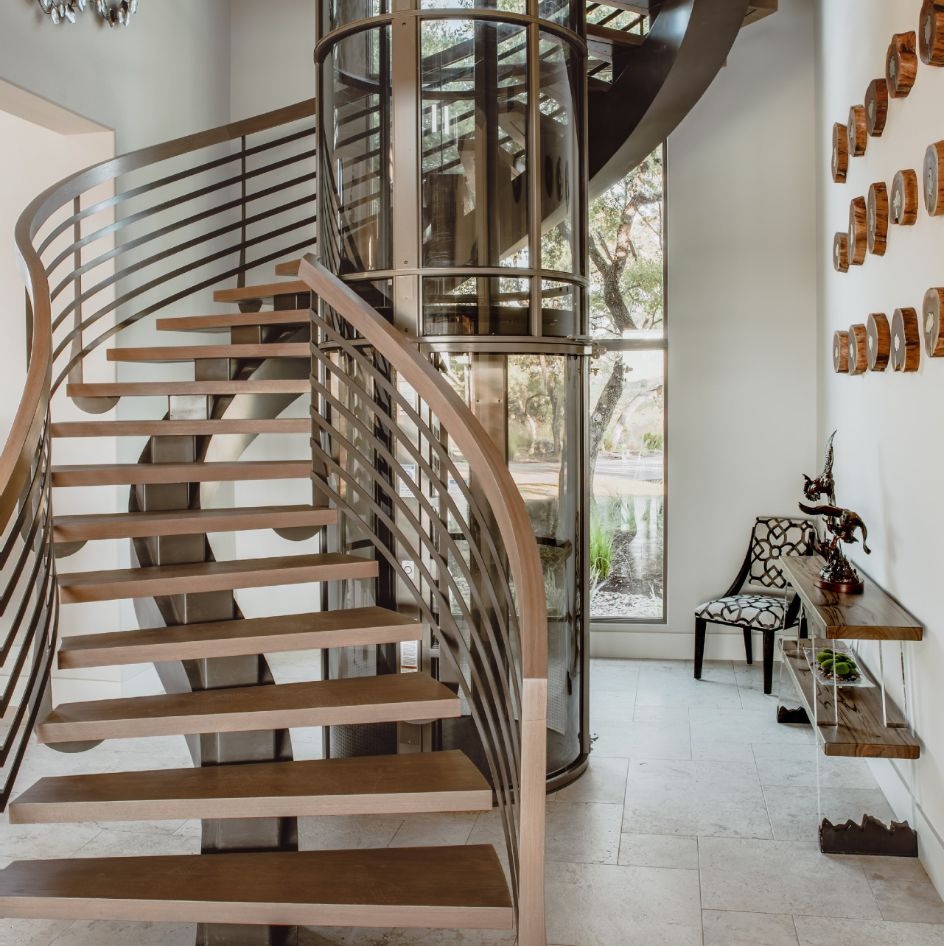
Home elevator installation is usually the part homeowners worry about most, and it’s often less disruptive than expected. Pneumatic vacuum elevators are pre-assembled and tested before they arrive on site, so installing an elevator this way typically takes two to three days rather than weeks of construction. There’s no shaft to build and no pit to dig, since the unit runs on air pressure differences instead of cables, a pump, or hydraulic fluid.
That means you can add an elevator to a house that was never designed for one, whether it’s a one floor ranch adding a second story or an existing home that already has three. Once installed, elevator maintenance is minimal compared to hydraulic or cable systems, since there’s no oil or hydraulic fluid to service. For most homeowners, this timeline and upkeep matter as much as the elevator itself when deciding whether the upgrade is realistic.
Most homeowners are motivated by more than one of these factors. Use this table to see which reason best fits your situation.
| Reason | What It Solves | Best For |
|---|---|---|
| Added home value | Appeals to potential buyers who prioritize accessibility and future-readiness | Homeowners who may sell within the next 5-10 years |
| Aging in place | Removes stairs as a mobility barrier as needs change over time | Homeowners staying long-term or caring for family members with limited mobility |
| Daily convenience | Cuts time and physical strain moving groceries, laundry, and belongings between floors | Busy family homes and multi story homes |
| Health and safety | Offers a stable, user friendly alternative to stairs | Anyone managing mobility issues, balance problems, or recovery from injury |
| Design flexibility | Installs without a shaft, pit, or machine room | Smaller homes, retrofits, and homes where major construction isn’t an option |
Whichever reason brought you here, resale, an aging parent, a bad knee, or just wanting the laundry to stop being a workout, the right model comes down to your home’s layout, floor count, and budget. PVE builds four pneumatic models, from compact single-story lifts to larger multi-floor systems, and every one installs in two to three days without a shaft or pit.
Compare models to see which size and finish fit your space, or schedule a free consultation and a PVE specialist will walk through your home’s layout with you and recommend a model, no obligation.
It can. A home elevator is a premium accessibility feature that appeals to potential buyers planning for the future, which can widen your buyer pool. The size of the impact on home value depends on your local market.
It offers a stable, user-friendly way to move between floors instead of using stairs, which is especially helpful for older adults, people with mobility challenges, or anyone recovering from an injury.
It removes stairs as a mobility barrier, letting homeowners move between floors independently as their needs change, without relying on a stairlift or moving to a single-story home.
Many models can, though cab size varies by manufacturer and model. If accessibility for wheelchair users is a requirement rather than a nice-to-have, confirm interior cab dimensions and door width against the wheelchair before choosing a model.
Home elevator cost depends most on the model and any structural work your home needs, so it varies by size and level of customization.
For pneumatic vacuum elevators, installation typically takes two to three days, since the unit is pre-assembled and tested before it arrives and doesn’t require a shaft or pit to be built.
Yes. Compact pneumatic models are designed to fit in small homes or existing layouts with minimal construction, since they don’t require a shaft, pit, or machine room.
Stairs can be a major barrier to healing.
If you’re recovering from surgery, coping with an injury, or living with chronic pain, moving between floors in your home can become one of the most painful and dangerous parts of your day.
For many people, navigating stairs isn’t just uncomfortable—it can actually slow recovery or lead to reinjury.
Enter the home elevator—a smart solution that promotes comfort, safety, and independence. More than a luxury feature, home elevators are proving to be a powerful tool in both short-term recovery and long-term wellness.
Whether you’ve recently had a knee replacement, live with arthritis, or are healing from an accident, a home elevator for injury recovery can take pressure off your body and allow you to move with ease.
Differing from traditional mobility aids, elevators provide a full-body solution, removing the need to rely on sore joints or unsteady limbs.
And because modern home elevators, especially vacuum models, require minimal space and construction, installation is faster and less disruptive—ideal for those needing urgent relief.
In this blog, we’ll explore the health benefits of home elevators for injury recovery, chronic pain, and overall mobility support. You’ll learn why skipping the stairs might be the smartest step you can take.
While stairs may seem harmless to the average person, they pose a significant risk for those recovering from surgery or injury.
Ascending stairs requires strength, balance, and flexibility—qualities that are often compromised after procedures like hip replacements, spinal surgeries, or leg fractures.
Descending is even more dangerous, demanding precise coordination and joint control. A single misstep can result in a serious fall, delaying healing or causing further injury.
According to the CDC, more than one million Americans are injured annually on stairs, with a high percentage of incidents involving individuals recovering from medical procedures.
For these individuals, every trip up or down becomes a challenge—and often, a source of anxiety.
This is where a post-surgery home elevator comes into play. Rather than forcing someone to rely on painful, unstable movement, an elevator provides a smooth, safe ride between floors.
It eliminates the need to navigate stairs entirely, which can dramatically reduce the likelihood of reinjury or falls. It also promotes autonomy, allowing recovering individuals to move independently rather than relying on caregivers or family for assistance.
In many cases, people limit their movement during recovery to avoid stairs, which can contribute to muscle weakness, poor circulation, and reduced morale.
By removing the physical barrier of stairs, elevators make it easier to move freely and more frequently—key components of a successful recovery.
Whether you’re recovering from orthopedic surgery or managing limited mobility due to injury, installing a home elevator can make a meaningful difference in both physical and emotional healing.
The benefits of a home elevator for injury recovery extend far beyond just convenience.
For individuals healing from surgeries, accidents, or trauma, elevators serve as a low-impact way to remain mobile throughout the home—without compromising safety or comfort.
One of the primary health benefits is reduced physical strain. Using an elevator takes pressure off sensitive joints, muscles, and healing tissues.
For those who’ve undergone knee, hip, or spine procedures, even a few stairs can be incredibly painful or even dangerous. With an elevator, movement becomes pain-free and predictable—both critical for successful healing.
Another key advantage is independence. Injury recovery often comes with feelings of vulnerability or frustration, especially when basic movements require help.
Elevators return control to the individual, restoring a sense of confidence and autonomy. This boost in morale has been linked to faster recovery times and improved mental health.
Home elevators contribute to safe, consistent mobility, which is essential in preventing stiffness or complications due to inactivity.
Even short trips—like going from a bedroom to a living room—can feel insurmountable during recovery. A residential elevator, including models like PVE30, PVE37, and PVE52, eliminates that hurdle, encouraging regular movement without fear.
Finally, investing in a home elevator isn’t just a short-term solution—it’s a long-term investment in your health and home.
Many people keep their elevators long after recovery, appreciating the added accessibility and peace of mind.
For individuals with chronic conditions like arthritis, multiple sclerosis, fibromyalgia, or degenerative disc disease, the daily effort of climbing stairs can be both painful and exhausting.
Unlike temporary injury recovery, chronic pain is an ongoing reality that requires thoughtful, long-term solutions. That’s where a home elevator designed for mobility support can make a life-changing difference.
Stairs demand repeated joint movement, weight-bearing, and balance—all of which can aggravate chronic pain symptoms. With each step, there’s strain on the knees, hips, spine, and supporting muscles. Over time, this daily grind can worsen inflammation, increase fatigue, and limit a person’s ability to live fully in their own home.
A home elevator changes that equation entirely. It removes one of the biggest pain triggers: stairs.
Instead of planning your day around where you can or can’t go in your house, a vacuum elevator offers easy access to every level—painlessly. That kind of freedom can drastically improve quality of life.
Because vacuum elevators have fewer mechanical parts, they’re also incredibly quiet and low maintenance—ideal for individuals who want support without the stress of complicated systems.
Many models are compact, sleek, and easily blend into the home environment without sacrificing aesthetics.
Most importantly, a home elevator empowers people living with chronic pain to stay in their homes longer, more comfortably, and with greater confidence.
Whether you’re managing a condition or caring for someone who is, the benefits of a home elevator go well beyond convenience—they support safety, dignity, and daily wellbeing.

Recover safely and live comfortably with a home elevator built for mobility support.
Whether you’re healing from surgery, managing long-term pain, or planning ahead, our residential elevator solutions are designed with your health in mind.
We offer models that are easy to install, energy-efficient, and beautifully designed to fit any home—without extensive construction.
Let us help you create a safer, more accessible living space.
Schedule a consultation or contact us today to explore your options.
Experience the difference a post-surgery home elevator can make.
Yes, modern home elevators especially vacuum elevators are extremely safe and require minimal physical effort, making them ideal for post-operative mobility.
Absolutely. Many homeowners install elevators during recovery and choose to keep them for long-term accessibility and peace of mind.
Yes. Elevators reduce joint strain and pain caused by stairs, offering daily relief and improved comfort for people with arthritis and other mobility conditions.
Some models can be installed in as little as 2–3 days, making them perfect for urgent recovery timelines. Vacuum elevators require minimal construction and disruption.
Yes, pneumatic elevators are designed to descend safely during a power outage. Because the cab is lifted by air pressure and lowered by gravity, the system can release air back into the chamber when power is interrupted and lower the cab to a designated landing in a controlled way: no electricity required for descent. Built-in safety features including mechanical brakes, safety locks, backup lighting, ventilation, and emergency communication add further protection.
When considering a home elevator, many homeowners ask what happens if the power goes out while someone is inside. For households in areas prone to storms, blackouts, or grid instability, power outage safety can be an important part of choosing the right elevator.
Pneumatic elevators are designed to support safe descent during a power outage. Unlike many traditional elevators, pneumatic vacuum elevators do not rely on cables, pulleys, or counterweights to move the cab. Instead, they use air pressure for lift and gravity-assisted descent to lower the cab in a controlled way.
When power is interrupted, this air-driven design allows the cab to descend safely to a designated landing, depending on the model and installation. Built-in safety features such as mechanical brakes, safety locks, backup lighting, ventilation, and emergency communication provide additional protection for passengers.
In this article, we’ll explain how pneumatic elevators work, what happens during a power outage, and which safety features homeowners should understand before choosing a residential elevator.
Key Takeaways
Pneumatic elevators, also known as vacuum elevators, use air pressure to move the cab between floors. Unlike traditional elevator systems, they do not require cables, pulleys, counterweights, a machine room, or a traditional elevator shaft.
To move upward, the system reduces air pressure above the cab, creating lift. To descend, air is gradually reintroduced into the chamber, allowing the cab to lower in a controlled way with the help of gravity.
This design is important during a power outage because pneumatic elevators rely less on electricity than many traditional elevator systems. Power is primarily needed for upward travel, while descent is gravity-assisted and requires minimal energy.
From a structural standpoint, pneumatic vacuum elevators are compact and self-supporting. Because they do not require a pit, hoistway, or machine room, they can often be retrofitted into existing homes with less construction and disruption than many conventional elevator systems.
PVE residential models, including the PVE30, PVE37, and PVE52, use this air-driven design to support different home layouts, passenger needs, and accessibility goals.
During a power outage, pneumatic elevators are designed to lower to a designated landing. Because the cab is lifted using vacuum pressure, the system can release air back into the chamber when power is interrupted. This equalizes the pressure and allows the cab to lower in a controlled way with the help of gravity.
This design helps reduce the risk of passengers being stranded between floors during a temporary outage. Instead of relying on continuous electrical power for descent, the elevator uses its air-pressure system and gravity-assisted movement to bring the cab down safely.
Pneumatic elevators also include safety systems that help control movement during an outage. Depending on the model and installation, these may include emergency brakes, locking mechanisms, backup lighting, ventilation, and emergency communication.
For homeowners, this outage response is especially important in homes with older adults, children, or family members with mobility challenges. A pneumatic elevator’s controlled descent feature can provide added confidence when planning for storms, blackouts, or unexpected power interruptions.
Pneumatic elevators are designed with multiple safety features that support normal operation and emergency response. During a power outage, these systems help control cab movement, support visibility, and provide ways to communicate if assistance is needed.
Key safety features may include:
These features are especially important for households with seniors, children, or family members with mobility challenges. For homeowners planning to age in place, a pneumatic vacuum elevator can provide reliable access between floors while supporting safer use during unexpected power interruptions.
Pneumatic elevators are also designed and installed according to applicable elevator safety requirements. Homeowners should work with an authorized dealer or qualified installer to confirm the correct model, configuration, and safety features for their home.
Pneumatic elevators are designed to support safe movement during everyday use and during unexpected power interruptions. Because they use air pressure for upward travel and gravity-assisted descent to lower the cab, they can support safe descent to a designated landing when power is interrupted.
For homeowners, this design can be especially valuable when planning for aging in place, multigenerational living, or improved accessibility. Built-in features such as mechanical brakes, safety locks, backup lighting, ventilation, and emergency communication add further protection during an outage.
If you are comparing residential elevator options, consider how each system responds when the power goes out. A pneumatic vacuum elevator offers a compact, self-supporting, and energy-efficient option for homes where safety, space, and retrofit flexibility matter.
To learn more, explore PVE’s residential elevator models or contact an authorized PVE dealer to discuss which configuration best fits your home, mobility needs, and outage-planning concerns.
Yes. Pneumatic elevators are designed to support safe descent during a power outage. They use air pressure for upward travel and gravity-assisted descent to lower the cab to a designated landing when power is interrupted.
When power is lost, the pneumatic elevator releases air back into the chamber, which equalizes pressure and allows the cab to descend in a controlled way. This helps passengers exit safely instead of remaining between floors.
Pneumatic elevators are designed to reduce the risk of passengers being stranded during a power outage. The cab is designed to descend safely to a designated landing, and safety features such as backup lighting, ventilation, and emergency communication provide additional support.
Pneumatic elevators require electricity for upward travel, but descent is gravity-assisted and requires minimal energy. This is one reason pneumatic vacuum elevators are considered energy-efficient for residential use.
Pneumatic elevators may include mechanical brakes, safety locks, backup lighting, ventilation, emergency communication, and controlled descent features. These systems help protect passengers and support safe exit during a power interruption.
Yes. Pneumatic elevators can be a practical option for aging in place because they provide access between floors with a compact, self-supporting design. They also require no shaft, pit, or machine room, which makes them easier to retrofit into many existing homes.
No. Pneumatic vacuum elevators do not require a traditional elevator shaft, pit, or machine room. Their self-supporting cylindrical design makes them a practical option for homes where space or structural changes are a concern.
A pneumatic elevator may be a good option for homeowners concerned about power outages because it is designed to support safe descent when power is interrupted. Homeowners should also ask about backup lighting, emergency communication, and installation requirements before choosing a model.
There are numerous advantages of installing a residential elevator at home.
Adding a residential elevator to your home increases accessibility, comfort, and property value.
Essential details include knowing specific dimensions and other technical specifications concerning a home elevator, whether that involves an application for aging-in-place, upgrading your mobility, or simply one of luxury.
You want to understand all the basics; whether that’s key measurements to space required and considerations of installation, this guide will walk you through choosing the best home elevator for your needs.
A home elevator consists of two main components:
Both elements must be carefully planned to ensure seamless integration into your home’s design.
The size of a residential elevator cab depends on its intended use.
Pro tip: The size will be determined by the usage rate of the elevator, whether it will be accommodating mobility aids,and even aesthetic preferences for a roomier experience.
The shaft surrounding the cab ensures smooth movement and allows space for necessary mechanical components.
Ensuring proper entry and exit is essential for accessibility.
Some elevator models require a pit below the ground floor to accommodate counterweights and machinery.
The ceiling height inside the elevator must provide ample space for passengers.
Traction elevators use a rope counterweight system, offering smooth and energy-efficient performance. These are also popular choices in multi-storey homes and require a dedicated enclosed shaft.
Geared traction lifts use a gearbox attached to the motor for movement, while in gearless traction lifts, this gearbox is eliminated, offering higher speeds and better energy efficiency.
Hydraulic elevators operate using fluid-powered pistons to lift and lower the cab. They are ideal for homes with adequate space for a machine room and pit.
Hydraulic models are affordable and reliable, though they may require more space and maintenance than traction models.
Shaftless elevators have proven to be effective and efficient for space-limited homes with very minimal construction. Their ideal usage would be in a two-story home and retrofits when a full elevator shaft is impractical.
Shaftless residential elevators provide an accessible and cost-effective solution for homeowners looking to improve mobility while maximizing space.

One of the most innovative modern home elevators, vacuum elevators depend on air pressure instead of cables or pulleys. Self-supporting in design, they are perfect for retrofitting into existing homes.
Vacuum elevators are energy-efficient, requiring no pit or machine room, and their sleek, panoramic design adds a luxury aesthetic to any home.
Selecting the right home elevator involves evaluating multiple factors:
Safety & Accessibility: Prioritize features such as automatic doors, emergency stop buttons, and backup power systems.
Space Availability: Consider shaft size, pit depth, and headroom before installation.
Budget Considerations: Compare installation, maintenance, and energy efficiency costs for different models.
Customization Options: Choose an elevator with finishes and features that complement your home’s design.
Maintenance Requirements: Some elevators require more frequent servicing than others.
The installation of a home elevator is an investment in convenience, comfort, and property value.
Whether you’re looking for a traditional hydraulic elevator, an efficient traction system, or a modern vacuum elevator, choosing the right size and design ensures seamless integration into your home.
Let’s talk about creating personalized solutions to meet your home and lifestyle needs.
Start your journey in residential elevators today and experience the ease of vertical mobility at home!
As home design evolves, so do solutions for accessibility and mobility.
Residential elevators have grown from a luxury to a practical investment in aging-in-place, multi-story convenience, and adding long-term value to homes.
In 2025, house owners have more options than ever: from compact, space-saving designs to highly advanced smart technologies that make life easier.
But with such a vast selection, it may be daunting to choose the appropriate elevator brand and type.
It takes an in-depth look at the best brands offering residential elevators for 2025, reviews recent emerging residential trends, and hones in on the world’s only air-powered residential elevator: the Pneumatic Vacuum.
If you’re considering a home elevator, it’s essential to understand the different types available.
Each system has distinct space, energy, and installation requirements, so choosing the right one depends on your home layout, budget, and mobility needs.
Among the options, Pneumatic Vacuum Elevator is slowly becoming the favorite of compact homeowners seeking an eco-friendly and easy-to-install elevator system.
The industry for residential elevators is growing further, with a host of innovative technology, energy-efficient features, and accessible features being thrown in by leading brands.
The following are the top manufacturers of home elevators in 2025:
Unlike traditional hydraulic or traction systems, PVE is unique in space-saving, air-powered design, making it an ideal choice for modern residential elevator solutions.
With more owners incorporating elevators within their homes, the industry is finding that the following are the key trends that shape the market today:
AI and IoT technology integrated for predictive maintenance. Touchless controls and voice activation for added convenience.
Regenerative energy systems to reduce power consumption. Materials that prioritize sustainability and eco-conscious home design.
Compact elevators like PVE do not require extensive home modifications. Glass and panoramic cabins blend into modern homes.
Elevators are designed for mobility challenges, with wider doors and wheelchair access.
More homeowners install elevators proactively to ensure long-term usability.
To the homeowner in search of the latest in state-of-the-art, space-saving home elevators, PVE is one of the most innovative choices on the market. Here’s why:
No machine room, shaft, or pit is required; hence, it is ideal for any existing home. Compact cylindrical shape to fit into any home layout.
Utilizes air to go up and gravity to come down, hence consuming very little electricity. No oil or hydraulic fluid is used in this, making it environmentally friendly.
Modular design allows installation in 2-3 days. No major home renovations are required.
Built-in braking and locking systems provide for smooth, safe operation. Battery backup systems ensure operation in case of a power outage.
Allows panoramic, 360-degree glass design for an aesthetic, sleek, modern appearance.
Increases the value of the home with functional access.
Unlike old systems that would involve much change in the homes, PVE provides a modern, space-conscious, energy-efficient solution to residential homeowners in the year 2025.

When selecting the right elevator for your home, it’s important to consider proven and reliable options. PVE30, PVE37, and PVE52 are popular residential elevator models known for their space-efficient design, smooth performance, and suitability for different accessibility needs, making them strong choices for modern homes.
Consider your needs for the following when choosing an elevator for your home:
Does one have room for a traditional elevator, or is a space-saving solution, like the PVE?
Aging-in-place, convenience, or luxury-each has a different model of elevator.
Do you need wheelchair accessibility?
Pay more upfront or over the long term.
Low-maintenance options, like PVE, require fewer components.
Preferring energy-efficient models also cater to sustainable home trends.
Go for smart elevators that come with tech features for better long-term usability.
As residential elevators increasingly become a feature in residential design, 2025 brings new developments relating to technology, efficiency, and style.
For homeowners looking for a modern, space-saving, energy-efficient elevator, the PVE provides an unparalleled combination of innovation, safety, and aesthetics for a residence.
Ready to take your home to new heights?
Discover vacuum elevators’ range of modern, green-residential elevator solutions today!