Skip to content >

- How Tube Elevators Work?
- Benefits of Tube Elevators for Homes
- What to Consider Before Choosing a Tube Elevator
- Tube Elevators vs. Traditional Home Elevators
- Tube Elevator Installation: What Homeowners Should Expect
- Tube Elevator Maintenance and Safety
- Final Thoughts: Is a Tube Elevator Right for Your House?
- Frequently Asked Questions About Tube Elevators
A tube elevator, also called a pneumatic vacuum elevator, is a compact residential elevator that moves through a clear, self-supporting cylinder. For homeowners, this type of elevator can offer a practical way to improve access between floors without the shaft, pit, or machine room required by many traditional elevator systems.
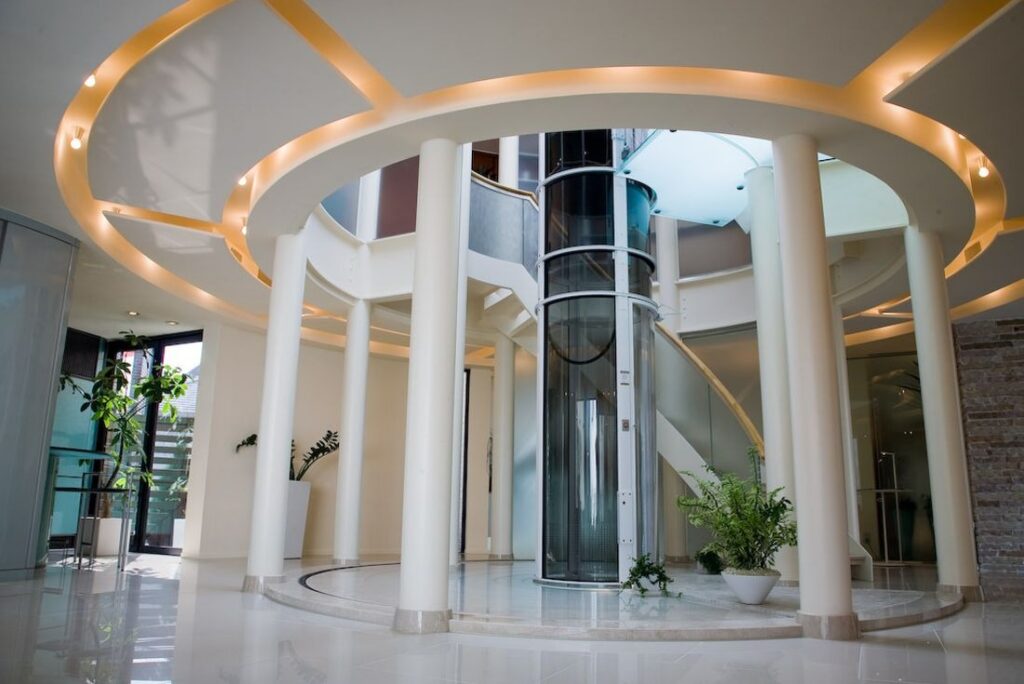
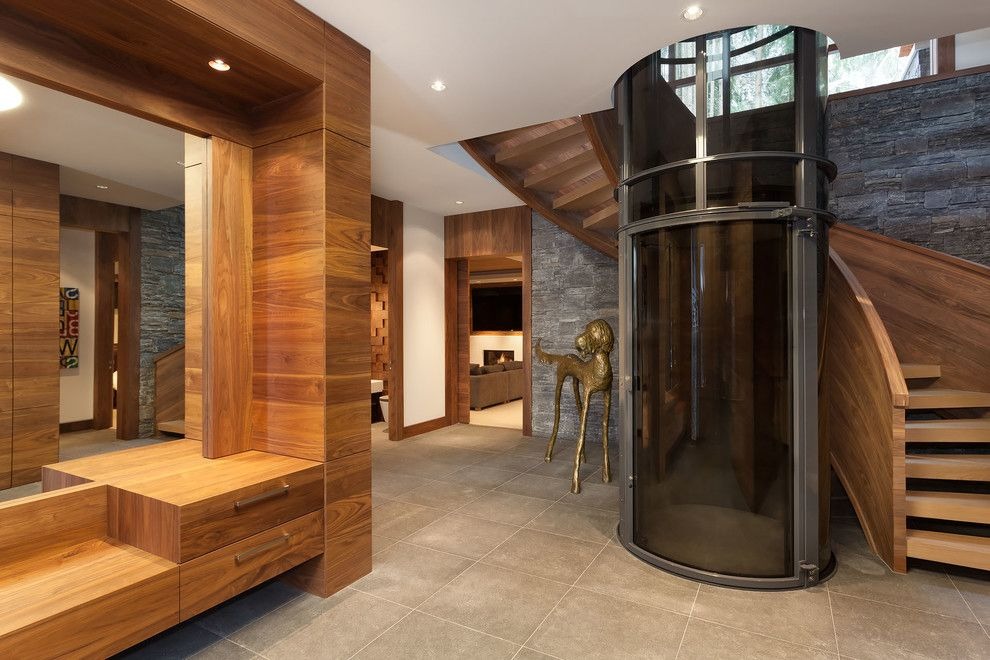
Tube elevators are often considered for existing homes where space, construction disruption, and accessibility are important concerns. Their panoramic design also makes them visually open, which can help the elevator feel integrated into the home rather than hidden behind walls.
This guide explains how tube elevators work, what benefits they offer, what to consider before choosing one, and how they compare with traditional home elevators.
How Tube Elevators Work?
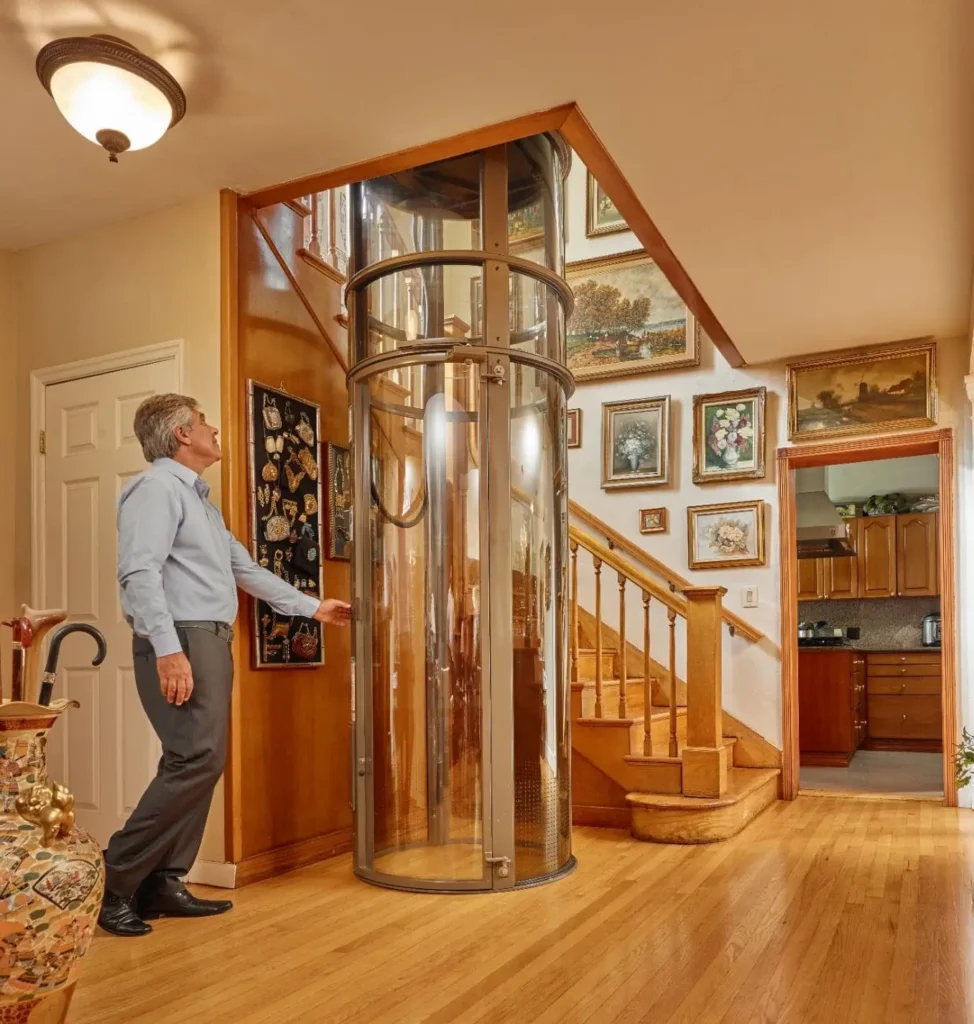
A tube elevator, also called a pneumatic vacuum elevator, uses air pressure to move the elevator cab between floors. Instead of traveling inside a traditional elevator shaft, the cab moves within a clear, self-supporting cylindrical tube.
To travel upward, turbines create a pressure difference above the cab, helping lift it through the tube. To descend, controlled valves allow air back into the system so the cab lowers smoothly. This air-driven system eliminates the need for hydraulic oil, a traditional pit, or a separate machine room.
Key components include:
- Controls: User controls that allow the elevator to be called, sent, and operated safely.l.
- Transparent tube: The clear, airtight cylinder that supports the elevator and guides the cab.
- Cab: The passenger compartment, sized according to the selected model.
- Air pressure system: The system that creates the pressure difference needed for upward travel.
Benefits of Tube Elevators for Homes

Tube elevators can be a practical option for homeowners who want accessibility, convenience, and a compact residential elevator design.
Key benefits may include:
- Accessibility options: Depending on the model, tube elevators can support single-passenger, two-passenger, or wheelchair-accessible needs.
- Compact footprint: Tube elevators require less structural space than many traditional elevator systems.
- No traditional shaft, pit, or machine room: Their self-supporting design can reduce construction complexity in many homes.
- Retrofit-friendly installation: Tube elevators can be a strong fit for existing homes where major structural changes are a concern.
- Panoramic design: The clear tube keeps the elevator visually open and can integrate into modern home layouts.
- Energy-efficient operation: PVE elevators use power primarily during ascent, while descent is assisted by gravity and controlled airflow.
What to Consider Before Choosing a Tube Elevator
Before choosing a tube elevator for your home, homeowners should review the home layout, available space, number of floors, accessibility needs, and local code requirements.
Important factors include:
- Space requirements: Tube elevators are compact, but they still need a clear vertical path and proper landing access.
- Weight capacity: Choose a model that fits the number of users and any mobility needs.
- Number of stops: The number of floors served can affect model selection and installation planning.
- Accessibility needs: Wheelchair access requires the right elevator model and enough room around landings.
- Design fit: The transparent tube becomes part of the home’s interior, so placement and visibility matter.
- Maintenance expectations: Homeowners should follow PVE’s recommended maintenance schedule and work with an authorized dealer or trained technician.
- Permits and local requirements: Building permits and inspections may be required depending on location.
Tube Elevators vs. Traditional Home Elevators
| Factor | Tube Elevator | Traditional Home Elevator |
| Structure | Self-supporting tube | Often requires shaft or hoistway |
| Pit / machine room | No traditional pit or machine room required | May require pit, shaft, or equipment space |
| Space needs | Compact footprint | Usually requires more structural space |
| Retrofit fit | Often practical for existing homes | May require more construction planning |
| Design | Panoramic cylindrical style | More traditional enclosed cab options |
| Capacity | Best for limited residential passenger needs | May offer larger capacity options depending on system |
A tube elevator may be a strong option when space, construction disruption, and modern design are priorities.
Tube Elevator Installation: What Homeowners Should Expect
Tube elevator installation usually begins with a professional review of the home layout, available space, number of stops, electrical requirements, and local code requirements. The installer will confirm where the elevator can be placed and whether permits or inspections are needed.
Because PVE pneumatic vacuum elevators are self-supporting and require no traditional shaft, pit, or machine room, installation can involve less structural disruption than many traditional elevator systems. However, every home is different, so the timeline and preparation work depend on the site conditions and model selected.
After installation, the system should be inspected, tested, and reviewed with the homeowner so they understand proper operation, safety features, and maintenance recommendations.
Tube Elevator Maintenance and Safety
Tube elevators require routine maintenance to support safe and reliable operation. Homeowners should follow the manufacturer’s recommended service schedule and work with an authorized PVE dealer or trained technician.
A service visit may include checking door operation, seals, controls, safety systems, electrical components, and overall ride quality. PVE elevators may also include safety features such as emergency controls and controlled descent during a power outage.
Routine service is especially important for homeowners who rely on the elevator for accessibility, aging in place, or daily movement between floors.
Final Thoughts: Is a Tube Elevator Right for Your House?
A tube elevator can be a good fit for homeowners who want a compact, modern residential elevator with less structural disruption than many traditional elevator systems. Because PVE pneumatic vacuum elevators require no traditional shaft, pit, or machine room, they can be especially useful in existing homes where space and construction planning matter.
The right choice depends on your home layout, number of floors, accessibility needs, available space, and long-term goals. Before choosing a model, schedule a professional evaluation to confirm fit, code requirements, installation needs, and the best elevator option for your household.
Frequently Asked Questions About Tube Elevators
What size tube elevator do I need for my home?
The right tube elevator size depends on how the elevator will be used. A single-passenger model such as the PVE30 may work well for compact spaces and individual use. A two-passenger model such as the PVE37 can support an additional rider, while the PVE52 is designed for wheelchair-accessible needs.
A professional evaluation can confirm the best model based on available space, number of stops, landing layout, and accessibility goals.
Do tube elevators need a shaft, pit, or machine room?
No. PVE pneumatic vacuum elevators are self-supporting and do not require a traditional elevator shaft, pit, or machine room. This can make them a practical option for existing homes where space or construction disruption is a concern.
Are tube elevators energy-efficient?
Yes. Tube elevators use power primarily during ascent, while descent is assisted by gravity and controlled airflow. Because they do not rely on hydraulic oil or large machine-room equipment, they can be an energy-efficient residential elevator option.
Can a tube elevator be customized?
Tube elevators offer some customization options, depending on the model. Homeowners may be able to choose finishes, colors, door orientations, and other design details so the elevator fits more naturally with the home’s layout and interior style.
Is a building permit required for a tube elevator installation?
Permit requirements vary by location. In many areas, a residential elevator installation may require permits, inspections, or local code review. Homeowners should confirm requirements with their authorized dealer, installer, or local building department before installation begins.
How is a tube elevator maintained?
Tube elevators require routine maintenance to support safe and reliable operation. A service visit may include checking door operation, seals, controls, safety systems, electrical components, and overall ride quality. Homeowners should follow PVE’s recommended maintenance schedule and work with an authorized dealer or trained technician.
Can a tube elevator be installed outdoors?
Tube elevators are generally designed for indoor residential use. Outdoor installation may not be appropriate unless the model, site conditions, and weather exposure are specifically reviewed and approved by the manufacturer or authorized dealer.
Are tube elevators good for wheelchair accessibility?
Yes, depending on the model. The PVE52 is designed to support wheelchair-accessible use, while smaller models are better suited for single-passenger or two-passenger travel. A professional evaluation can confirm whether the elevator model, landing space, and home layout meet the user’s accessibility needs.