

Home
Elevators
Compare PVE residential elevators for your home
Make every floor easier to reach. Explore home elevator options for an existing house or a new build, compare PVE models, and find the right starting point for your space and the people who will use it.
Discover the possibilities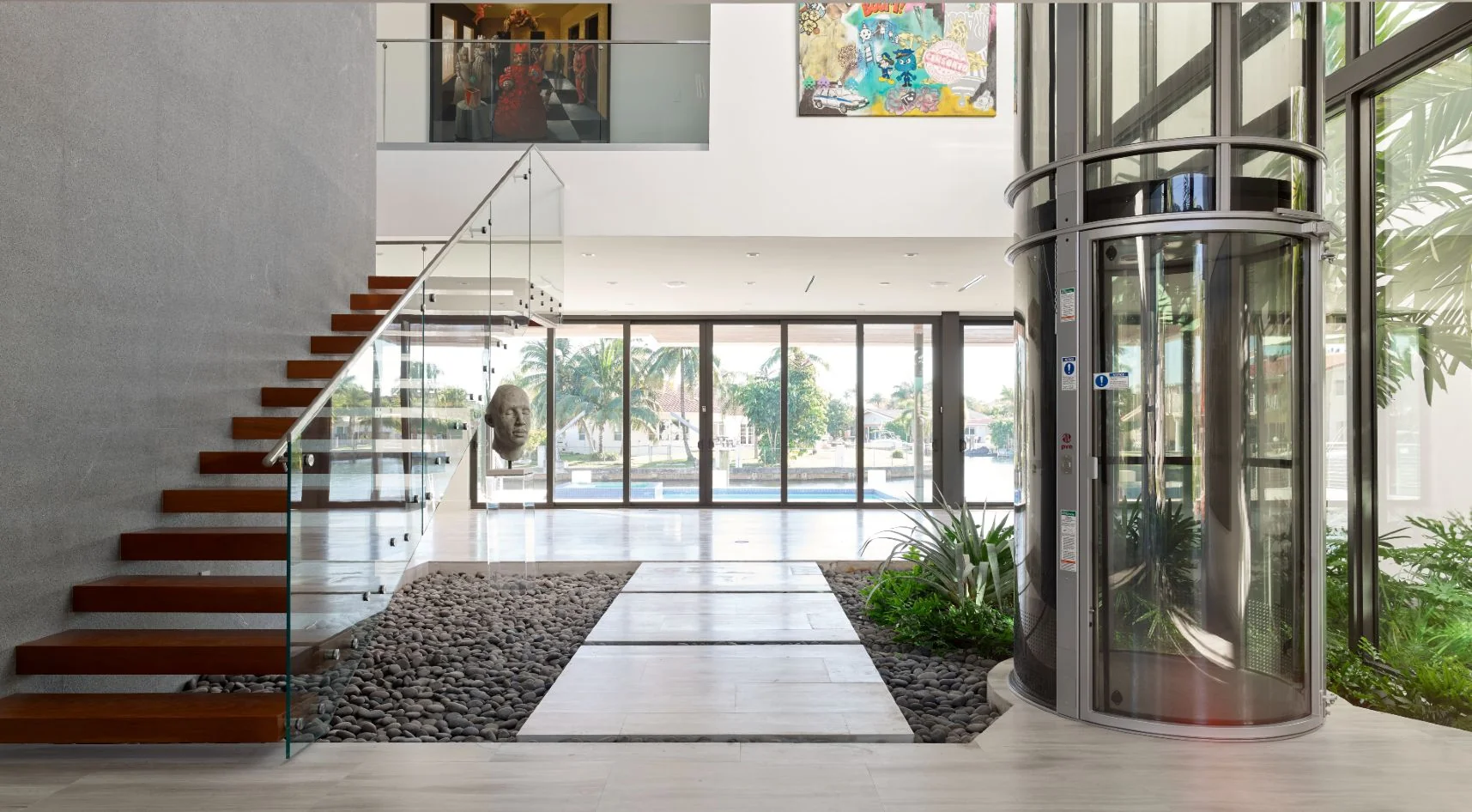
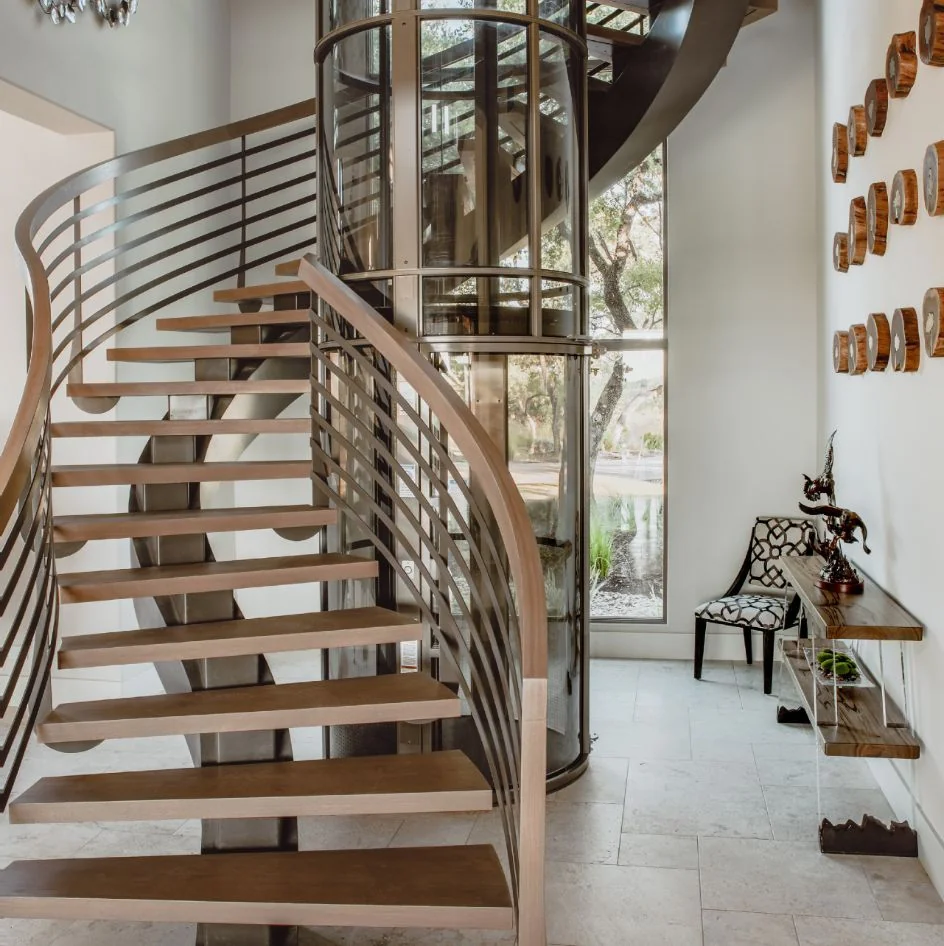
A new level of comfort and design.
A home elevator brings a new dimension to everyday living, combining convenient access between floors with a distinctive addition to your home.
Designed around you
Add a design feature that complements your home and personal style.
Everyday ease
Enjoy convenient access between floors throughout the day.
Part of your plans
Include an elevator in a renovation or new-home design.
For the years ahead
Enjoy your home for years to come, with easier access as your mobility needs change.
Whether you are creating your ideal home or enhancing the one you already love, explore a model that suits your space and the way you want to live.
Which type of home elevator fits your project?
Compare the space, construction and everyday use each system requires. Requirements vary by product, so check the specific model as well as the elevator type.
Hydraulic
Consider this option when your plans can accommodate a hoistway and the equipment the selected system requires. Ask about the pit, equipment location, cab size and site work.
Cable or traction
Compare these systems when an enclosed hoistway can be included in the project. Check overhead, pit and machinery requirements for the proposed model.
Through-floor or shaftless
These lifts travel through a floor opening without a conventional enclosed hoistway. Compare the stops, capacity, controls and wheelchair suitability of the specific product.
Pneumatic vacuumPVE
PVE’s air-powered models use a self-supporting enclosure without a conventional built hoistway or pit. Compare model size, landing access and equipment placement against your home’s layout.
What each system asks of your home.
Look beyond the elevator itself. Compare the space, preparation and equipment each system may need.
Scroll across to compare all four systems.
| Home requirement | Hydraulic | Cable or traction | Through-floor | Pneumatic vacuumPVE |
|---|---|---|---|---|
| Conventional enclosed hoistway | Required | Required | Not required — travels through a floor opening | Not required — self-supporting enclosure |
| Pit below the lowest landing | Ask about the pit for the selected system | Check pit requirements for the proposed model | Not required | Not required |
| Equipment placement | Pump unit; confirm equipment location | Overhead machinery or machine space | Drive built into the unit; confirm controls | Compare equipment placement against your layout |
| Enclosure format | Built hoistway, cab size varies | Built hoistway, overhead varies | Open platform or small cabin | Round or square enclosure, four model sizes |
| What to check | Pit, equipment location, cab size, site work | Overhead, pit, machinery | Stops, capacity, controls, wheelchair suitability | Model size, landing access, equipment placement |
Requirements vary by product and manufacturer. Check the specific model as well as the elevator type; this chart describes system types, not named brands.
Four models. Your way of living.
Which PVE model fits your home?
Start with who will ride, whether a mobility device needs to fit, and the shape of the space available. Compare the models below, then explore the one that best matches your needs.
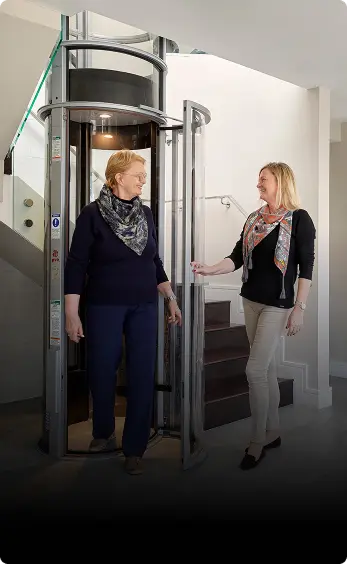
PVE30
Compact living
- Passengers
- 1 rider
- Rated capacity
- 350 lb
- Exterior size
- 30 in diameter
- Format
- Compact round design
Start here for one rider when conserving floor space is a priority.
Explore PVE30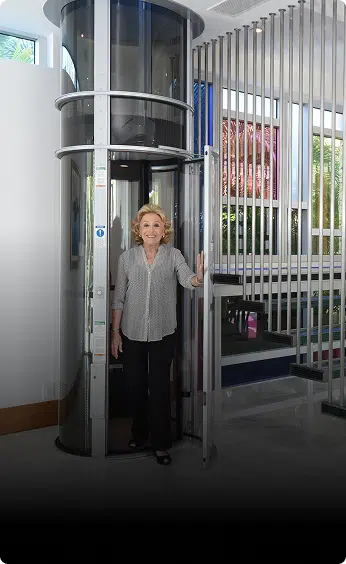
PVE37
Room for two
- Passengers
- 2 riders
- Rated capacity
- 450 lb
- Exterior size
- 37 in diameter
- Format
- Round design
Compare this round model when you want room for two riders within its rated capacity.
Explore PVE37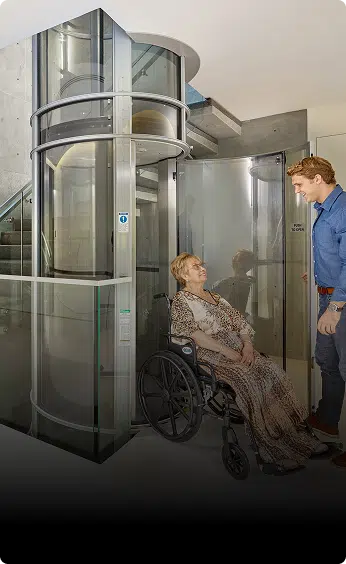
PVE52
Wheelchair-fit assessment
- Passengers
- Up to 3 riders
- Rated capacity
- 525 lb
- Exterior size
- See technical drawing
- Format
- Larger round design
Start here when wheelchair access is a project requirement. Confirm the chair, rider, door opening and cabin fit together.
Explore PVE52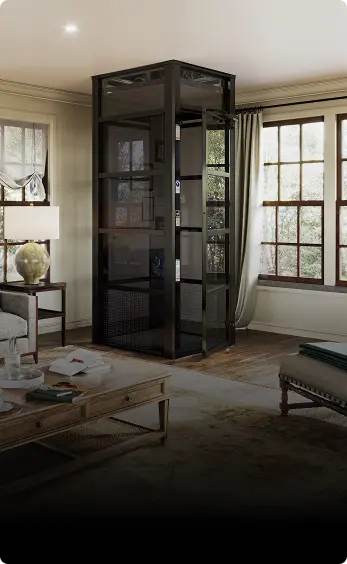
The Cube
A different perspective
- Passengers
- 2 riders
- Rated capacity
- 450 lb
- Exterior size
- 36 × 36 in
- Format
- Square design
Consider this square model for a two-person layout, including potential corner placement after a site review.
Explore The CubePVE52 wheelchair suitability depends on the individual chair and user. Residential wheelchair access does not mean ADA compliance or approval for commercial use. Exterior size describes the enclosure, not the complete installation space. Confirm the floor opening, landing and door clearances with the current technical drawings.
Need help choosing?
Tell us about your home and who will use the elevator.
Can a home elevator fit your existing home?
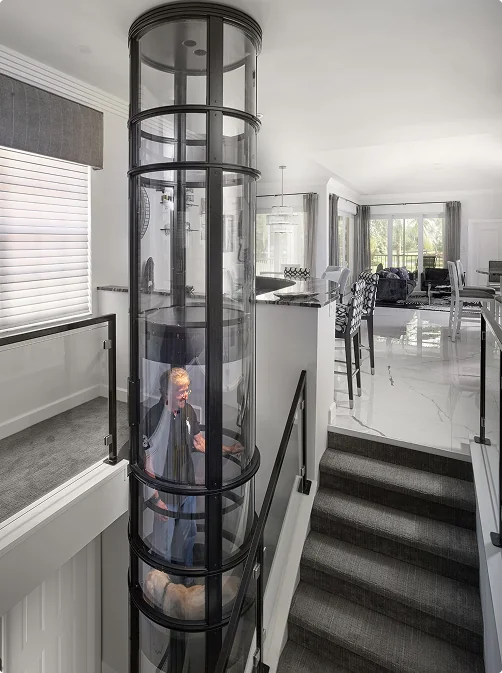
An existing house may have a workable location for a residential elevator, but the enclosure’s footprint is only part of the assessment. A site review connects your preferred model with the structure and access on every floor.
- Available floor space and the route between levels.
- Number of stops and floor-to-floor heights.
- Door orientation, landing access and room to approach the elevator.
- Wheelchair or mobility-device dimensions, where relevant.
- Structural openings, electrical supply and equipment placement.
For a new build, bring the elevator into the plans early. For a retrofit, share floor plans or photos of possible locations so the team can identify what needs a closer look.
What happens during installation?
Your installation plan should cover the work before the elevator arrives as well as assembly and testing.
- 01
Review the home
Confirm the layout, the people using the elevator and the levels it needs to serve.
- 02
Confirm the model and location
Check dimensions, landing access and the requirements for the selected configuration.
- 03
Prepare the site
Complete the agreed structural and electrical work and arrange the required permits and inspections.
- 04
Install and hand over
Assemble and test the elevator, complete required approvals, and explain operation and ongoing care.
Timing depends on site preparation, the selected model and local requirements. Ask for a project schedule that separates preparation from the elevator installation itself.
Review the installation checklistWhat does a home elevator cost?
The total includes more than the elevator itself.
Model choice, the number of stops and the work needed in your home all affect the installed price. An itemized quote helps you understand what is included and compare proposals on the same basis.
For what shapes the price before you talk to us, read our guide to home elevator cost.
Request a QuoteAsk your quote to account for:
- 01The elevator, selected finishes and options.
- 02Delivery and installation.
- 03Structural preparation and electrical work.
- 04Permits, inspections and finishing work.
- 05The service arrangements and warranty that apply to your model.
Share your location, number of floors and preferred model, if you have one, to start a pricing conversation.
Safety and care for everyday use.
Choose an elevator with a clear explanation of its safety systems, power-outage behavior and service requirements. These details should be part of your model review and handover.
Safety features
PVE models include door interlocks and emergency braking features. Ask the team to explain the protections and operating instructions for your selected model.
Explore home elevator safetyPower outages
PVE describes controlled emergency descent to the lowest landing during a power loss. Emergency descent lets passengers exit; it does not mean the elevator continues normal travel without mains power.
Understand power-outage operationMaintenance
Follow the current maintenance instructions for your model and the requirements that apply to your installation. Confirm the inspection schedule, service provider and replacement items before purchase.
Home elevator or stairlift?
A seated stairlift
A seated stairlift may suit someone who can transfer into and out of its chair and needs help along an existing staircase. Check the staircase layout, transfers and space available at each end.
A residential elevator
A residential elevator may suit a household seeking a separate route between floors, space for more than one rider, or a model that accommodates a wheelchair. Compare the required floor space, site work and the needs of everyone using it.
The right choice depends on how you move through the home today
and what you want it to support in the years ahead.
Why choose PVE for your home?
PVE brings several model choices together with a self-supporting design that avoids a conventional built hoistway and pit. Compare round and square formats, explore real installations, and work with the team to confirm the model and configuration for your home.
“I thoroughly enjoy riding in my PVE elevator as its extremely comfortable… I would unhesitatingly, recommend it to people who are confined to a wheelchair like myself, to me it’s that good and reliable!”
 Tamara & Ben Gordon
“My house was built in 1925 and it was hard to get something to fit in with the décor of my home, but the PVE fit in perfectly. I am thrilled with the design, engineering, and reliability of the elevator by PVE.”
 Stan & Linda Barth
“Highly recommend. Working with PVE was such an incredible experience! From our very first meeting they were so professional, time efficient & helpful. Couldn’t be happier. Our elevator is heaven sent. Thank you PVE & team.”
 Kim Klotz




Home elevator FAQs.
Get a clearer idea of the fit, installation and everyday experience.
How do I choose a home elevator model?
Start with the people using it, the space available and the levels it needs to serve. Compare the PVE models above, then confirm the fit and site requirements before choosing a configuration.
Can a home elevator be added to an existing house?
It may be possible. A site review needs to confirm the location, floor openings, structure, electrical supply and access at each landing. PVE offers self-supporting models for consideration in retrofit projects.
Which PVE model should I consider for a wheelchair?
Start with PVE52, then confirm the wheelchair dimensions, door opening, cabin space and combined load with the team. Not every wheelchair fits, and residential wheelchair suitability is different from ADA compliance.
Does the exterior diameter tell me how much space I need?
No. The enclosure size does not include every clearance, floor-opening or landing requirement. Use the current technical drawings and a project-specific assessment.
How much will my installation cost?
The installed price depends on the model, stops, finishes and work required in your home. Request an itemized quote that includes site preparation, installation and any other project costs.
How long does the project take?
Site preparation, permits, delivery and installation each affect the schedule. Ask the team for a timeline for your home rather than relying on an assembly-time estimate alone.
What happens if the power goes out?
PVE describes controlled emergency descent to the lowest landing so passengers can exit. Confirm the exact behavior and emergency instructions for the model and configuration you select.
What maintenance will I need?
Follow the current service and inspection requirements for the selected model. Ask who provides service in your area and which routine checks and replacement items apply.
How many floors can it serve?
The number of stops depends on the model, travel height and configuration. Provide the floor-to-floor heights and the levels you want to reach so the team can confirm a suitable option.
How do I request a quote?
Use the quote form below and share your location and the basic details of your home. If you are unsure which model fits, include your mobility and space requirements.
Request a quote for your home.
Tell us where you are planning to install an elevator and what you need it to do. Share the number of floors, whether the home is already built, and any mobility or space requirements.
Not sure which model to choose? Let us know, and the team can help you compare your options.
Your home. Your plans.
A model that fits both.
