- What Is a Platform Lift?
- What Is an Inclined Platform Lift?
- How Inclined Platform Lifts Work
- Inclined Platform Lifts vs. Vertical Platform Lifts
- Benefits of Platform Lifts
- Types of Inclined Platform Lifts
- Factors to Consider When Choosing a Platform Lift
- Platform Lift Installation: What Homeowners Should Expect
- Pros and Cons of Platform Lifts
- Platform Lift vs. Stairlift vs. Home Elevator
- When a Residential Home Elevator May Be a Better Long-Term Option
- Final Thoughts on Platform Lifts for Home Accessibility
-
Frequently Asked Questions About Platform Lifts
- What is the weight capacity of a typical platform lift?
- What is the difference between an inclined platform lift and a vertical platform lift?
- Can platform lifts be used outdoors?
- Do I need a permit to install a platform lift?
- How is a platform lift maintained?
- Are platform lifts safe?
- When is a home elevator better than a platform lift?
Platform lifts can help wheelchair users and people with limited mobility move safely between levels when stairs, porches, garages, decks, or split-level layouts create access barriers.
The right lift depends on the home layout, travel distance, available space, indoor or outdoor location, and the user’s mobility needs. Some homes may be better suited for an inclined platform lift that follows the staircase. Others may need a vertical platform lift for short-rise access at a porch, deck, or garage entry.
This guide explains how both types of platform lifts work, the key differences between them, benefits and limitations, installation considerations, and when a residential home elevator may be the better long-term option.
What Is a Platform Lift?
A platform lift is an accessibility lift designed to move a person standing or using a wheelchair, scooter, or mobility device between levels. Unlike a stairlift, which carries one seated rider on a chair, a platform lift uses a flat platform that can accommodate mobility devices.
Platform lifts are often used where stairs, raised entries, porches, garages, decks, or short changes in elevation make access difficult. The two common residential options are inclined platform lifts and vertical platform lifts.
What Is an Inclined Platform Lift?
An inclined platform lift is a motorized accessibility lift that carries a person or wheelchair along a staircase on a platform. The lift travels diagonally on a track installed alongside the stairs.
Inclined platform lifts can be useful when a wheelchair user needs access along an existing stair path and there is enough stair width, landing space, and structural support for the system.
How Inclined Platform Lifts Work
Most inclined platform lifts include four main components:
- Platform: The flat surface that carries the user and mobility device. Many platforms fold up when not in use to preserve stair access.
- Track: The rail system installed alongside the staircase to guide the platform.
- Drive system: The motorized system that moves the platform along the track.
- Controls: Usually located on the platform and at each landing so the lift can be called, sent, and operated safely.
Inclined Platform Lifts vs. Vertical Platform Lifts
| Lift Type | Best For | Key Consideration |
|---|---|---|
| Inclined platform lift | Moving along an existing staircase | Requires enough stair width, landing space, and rail clearance |
| Vertical platform lift | Moving straight up between two nearby levels | Often used for porches, garages, decks, or short-rise access |
| Residential home elevator | Full floor-to-floor access inside the home | Better for long-term whole-home accessibility and daily use across multiple levels |
Inclined and vertical platform lifts both support accessibility, but they solve different layout challenges. An inclined lift follows the stairs. A vertical platform lift moves straight up and down between levels.
Benefits of Platform Lifts
Platform lifts can improve access in homes where stairs or raised entries limit mobility. Key benefits may include:
- Wheelchair access: Platform lifts can accommodate many wheelchair users without requiring transfer to a seated chair.
- Improved independence: Users may be able to move between levels with less assistance.
- Reduced stair-related strain: Platform lifts can reduce the need for caregivers to help users navigate stairs.
- Access to raised entries: Vertical platform lifts can be useful for porches, decks, garage entries, or short elevation changes.
- Stairway access: Inclined platform lifts can help users follow an existing stair path where the layout allows.
- Aging-in-place support: Platform lifts can help address specific access barriers in a home.
Types of Inclined Platform Lifts
Inclined platform lifts come in different configurations to suit different stairway layouts and user needs:
- Straight inclined lifts: For single, straight flights of stairs. A straightforward design with a smooth diagonal travel path.
- Curved inclined lifts: For staircases with bends or curves. These feature a more complex track system that follows the curvature of the stairs.
- Two-landing lifts: For staircases with intermediate landings. The track incorporates a platform that folds out at the landing, allowing users to enter or exit at that level.
Factors to Consider When Choosing a Platform Lift
Choosing the right platform lift depends on the home layout, user needs, and installation requirements. Homeowners should review:
- Staircase or access point: Determine whether the lift needs to follow a staircase or move vertically between two levels.
- Weight capacity: Choose a lift that can support the user and mobility device.
- Platform size: Make sure the platform fits the wheelchair, scooter, or mobility device comfortably.
- Indoor vs. outdoor use: Outdoor lifts may require weather-resistant materials and placement planning.
- Safety features: Ask about emergency stop controls, obstruction sensors, gates, guardrails, and overload protection.
- Ease of use: Controls should be accessible and simple for the user.
- Space requirements: Review stair width, landing space, platform clearance, and turning space.
- Code and permits: Local building codes, permits, and inspection requirements may apply.
Platform Lift Installation: What Homeowners Should Expect
Platform lift installation usually starts with a site assessment. A qualified lift specialist should review the staircase or access point, available space, landing areas, structural conditions, power needs, and local code requirements.
After the assessment, the installer can recommend the appropriate lift type and any customization needed for the home. Installation should be completed by a qualified technician according to manufacturer instructions and applicable local requirements.
Homeowners should also receive basic training on safe operation, weight limits, emergency controls, and maintenance recommendations.
Pros and Cons of Platform Lifts
Platform lifts can improve stair access for wheelchair users and people with limited mobility, but they also have limitations to consider.
Pros
- Enhanced independence: Users may be able to move between levels with less assistance.
- Improved safety: Compared with navigating stairs with a mobility device, a platform lift can provide a more stable way to travel.
- Reduced caregiver strain: Platform lifts may reduce the need for caregivers to physically assist someone on the stairs.
- Space-saving design: Many inclined platform lifts fold up when not in use, helping preserve stair access for others.
- Accommodates different mobility needs: Platform size and weight capacity can vary, with some models designed for wheelchairs, scooters, or power chairs.
- Indoor and outdoor options: Some platform lifts are designed for outdoor use, depending on the model and installation location.
Cons
- Space requirements: Platform lifts need enough stair width, landing space, and clearance for safe use.
- Visual impact: The track and platform are often visible in the home, and some models are open on top rather than fully enclosed.
- Installation requirements: Professional installation is needed, and some homes may require additional preparation depending on the layout.
- Maintenance: Routine service is important to keep the lift operating safely and reliably.
- Limited fit for some homes: Very narrow, steep, or complex staircases may not be suitable for an inclined platform lift.
- Single-point access: A platform lift solves one access barrier. It does not provide whole-home accessibility across multiple floors.
In short, platform lifts can solve specific stair-access challenges, but they may not be the best fit when the home needs full floor-to-floor access or a more flexible long-term accessibility solution.
Platform Lift vs. Stairlift vs. Home Elevator
| Option | Best For | Key Limitation |
|---|---|---|
| Stairlift | One seated user who can transfer safely | Usually does not support wheelchair use without transferring |
| Platform lift | Wheelchair or scooter access over stairs or short vertical distances | May be limited by stair width, travel height, or landing space |
| Residential home elevator | Full floor-to-floor access inside the home | Requires more planning than a targeted lift solution |
A platform lift can be a practical solution for a specific access barrier such as a stair run, porch, deck, or garage entry. If the goal is comfortable daily access between multiple floors, a residential home elevator may offer more long-term flexibility. For a deeper comparison, see our guide on home elevators vs. platform lifts.
When a Residential Home Elevator May Be a Better Long-Term Option
Platform lifts solve one access barrier at a time. When mobility needs are likely to change over the years, or when daily access between multiple floors matters more than a single stair run or porch, a residential home elevator is usually the better investment.
A home elevator offers a few things a platform lift can’t:
- Whole-home access, not just one barrier. A platform lift covers a staircase or a short rise. An elevator moves people, mobility devices, groceries, and luggage between every floor.
- A fully enclosed cabin. Platform lifts are often open on top and can feel exposed. An elevator cabin is enclosed, quieter, and more comfortable for daily use.
- Better integration with the home. Elevators generally blend more naturally into interior design than a track-and-platform system installed along a staircase.
- Long-term flexibility. As mobility needs change, an elevator continues to serve the whole household. A platform lift is fixed to the one barrier it was installed for.
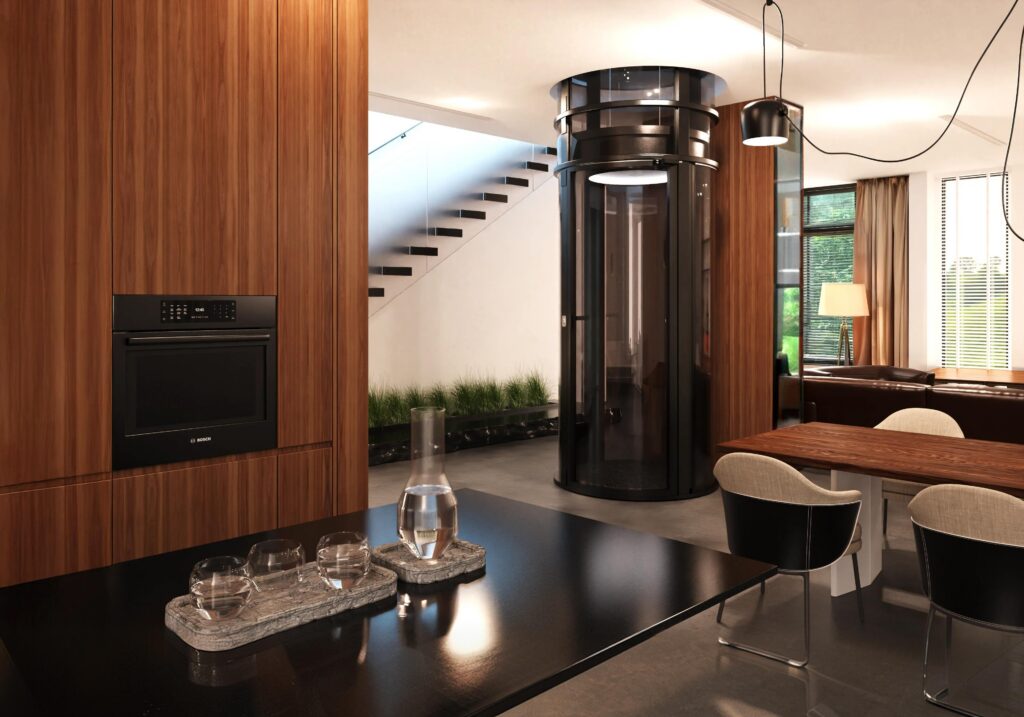
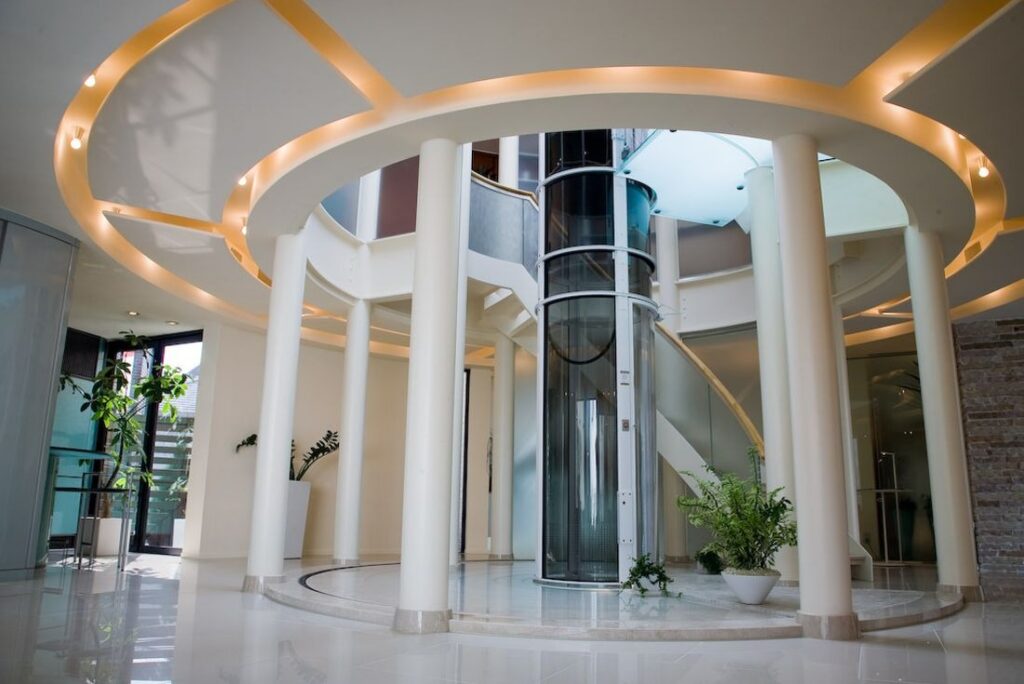
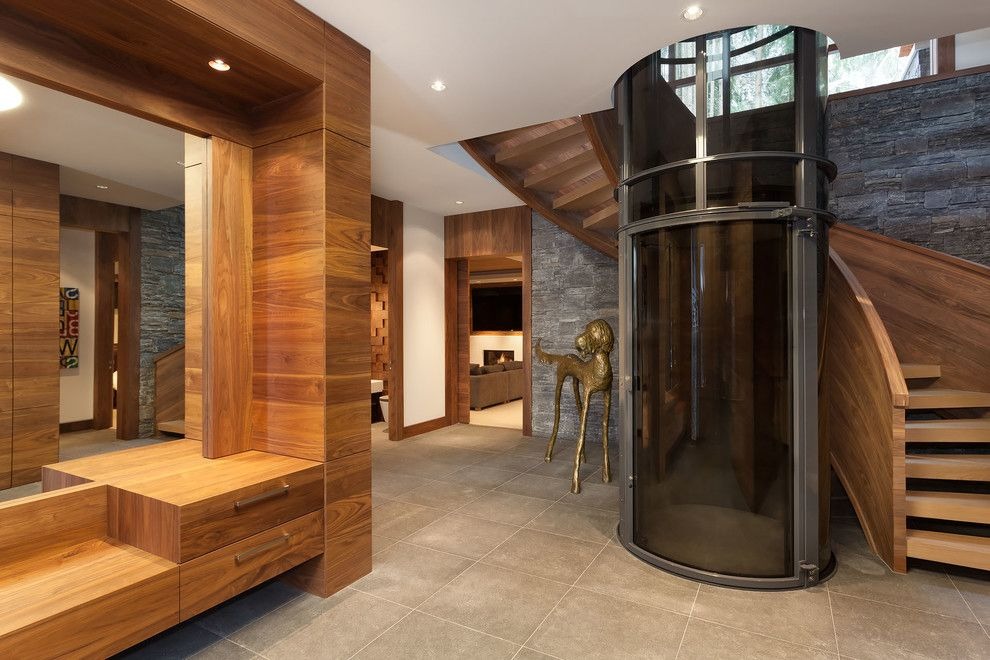
PVE pneumatic vacuum elevators are compact, self-supporting residential elevators that require no traditional shaft, no pit, and no machine room. That makes them well suited to existing homes where major construction or space loss would be a barrier to installing a traditional elevator.
Depending on the model, a PVE elevator can support:
- Single-passenger use — the PVE30, the most compact option
- Two-passenger use — the PVE37, our most popular residential model
- Wheelchair accessibility — the PVE52, which accommodates a wheelchair user and a companion
If you’re weighing a platform lift against a home elevator, schedule a consultation to walk through your home layout and long-term accessibility goals with a PVE specialist.
Final Thoughts on Platform Lifts for Home Accessibility
Platform lifts can be a practical accessibility solution when stairs, raised entries, garages, decks, or short elevation changes make movement difficult. Inclined platform lifts work along a staircase. Vertical platform lifts move straight up and down between levels.
The right choice depends on the user’s mobility needs, home layout, available space, travel distance, and local code requirements. For some homes, a platform lift solves a specific access challenge. For others, especially where full floor-to-floor access matters, a residential home elevator offers more long-term flexibility.
Before choosing a lift, schedule a professional assessment to review your layout, accessibility goals, safety needs, and installation options.
Frequently Asked Questions About Platform Lifts
What is the weight capacity of a typical platform lift?
Weight capacity varies by model. The right capacity depends on the combined weight of the user and their wheelchair, scooter, or mobility device. Confirm the required capacity with a qualified lift specialist before choosing a model.
What is the difference between an inclined platform lift and a vertical platform lift?
An inclined platform lift travels along a staircase on a rail system. A vertical platform lift moves straight up and down between nearby levels, such as a porch, deck, garage entry, or short-rise access point. The right choice depends on the home layout, travel height, available space, and user needs.
Can platform lifts be used outdoors?
Yes. Some platform lifts are designed for outdoor use with weather-resistant materials and safety features suited for exterior conditions. The best option depends on the installation location, exposure to weather, landing space, and local code requirements.
Do I need a permit to install a platform lift?
Permit requirements vary by location and local building codes. Before installation, consult a qualified lift specialist or your local building department to confirm whether permits or inspections are required.
How is a platform lift maintained?
Regular maintenance helps keep a platform lift operating safely and reliably. Maintenance needs vary by model but may include periodic inspections, approved lubrication, adjustments, and safety checks by a qualified technician. Follow the manufacturer’s recommendations and the user manual.
Are platform lifts safe?
Platform lifts are designed with safety features such as emergency stop buttons, obstruction sensors, and overload protection. Safe use also depends on proper training, following weight capacity limits, keeping the path clear, and maintaining the lift as recommended.
When is a home elevator better than a platform lift?
A platform lift is useful for a specific access barrier such as stairs, a porch, a deck, or a garage entry. A residential home elevator is usually better when the homeowner needs enclosed floor-to-floor access, regular daily use between multiple levels, or a solution that will still work as mobility needs change over time.