

Residential Elevator Troubleshooting: Everyday Fixes and When to Call a Pro

On this page
Quick Answer
Most home elevator problems trace back to a few simple causes: a tripped circuit breaker, a door or gate that is not fully closed, or an emergency stop button that has been pressed. Homeowners can safely check these, restore power, and remove any excess weight from the cab. If the elevator is completely unresponsive or stops for no clear reason, stop there and contact your authorized PVE dealer, because internal resets and repairs should be handled by a trained technician.
Living in a multi-story home with a residential elevator adds everyday convenience, but like any mechanical system, regular use can occasionally lead to performance issues. Understanding the most common warning signs, and knowing when professional service is needed, can help prevent minor problems from becoming larger repairs. This guide covers pneumatic vacuum elevators like PVE’s, along with the checks that apply to most home elevators.
Key Takeaways
- Most home elevator problems come from a few simple causes: power, doors, sensors, or an activated stop button.
- PVE’s pneumatic vacuum design has few moving parts, so many issues are easy to check at home before calling for help.
- Run the quick checklist first: doors closed, breaker on, stop button released, call buttons working.
- When home checks are not enough, contact your authorized PVE dealer; internal resets and repairs are a technician’s job.
How a Home Elevator Works (and Why It Matters for Troubleshooting)
Knowing how your elevator moves the cab makes troubleshooting far easier, because it tells you what can and cannot go wrong. PVE elevators use pneumatic vacuum technology, which works differently from the systems most people picture.
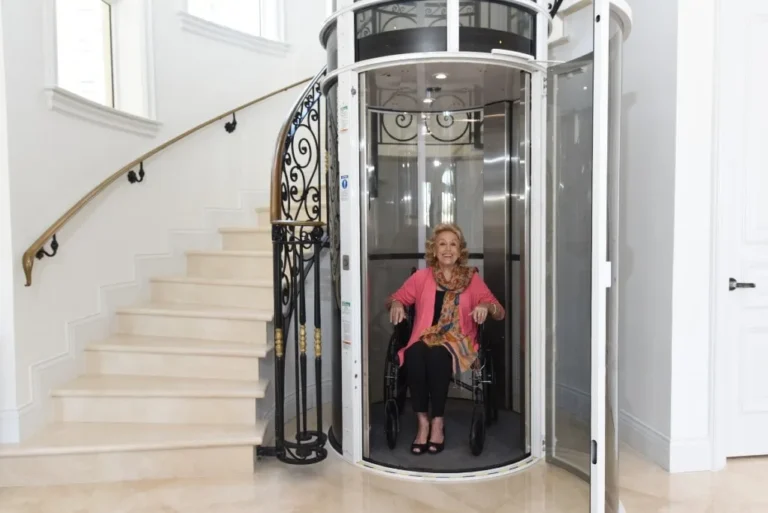
- Pneumatic vacuum elevators: These move the cab using air pressure inside a sealed cylinder rather than cables, pistons, or a counterweight. With very few moving parts and no hydraulic oil, there is less to wear out, so many issues come down to power, doors, or sensors rather than complex mechanical failures. Compact models like the PVE30 and PVE37 serve single-passenger homes, while the larger PVE52 offers wheelchair access.
- Hydraulic and traction elevators: If you have an older or conventional home elevator, it may use a piston and pressurized fluid (hydraulic) or a hoisting rope and counterweight (traction). These have more moving parts and different service needs. Check your owner’s manual to confirm which type you have.
For a pneumatic vacuum elevator, most of the everyday problems below come back to a handful of causes you can check safely at home.
Quick Troubleshooting Checklist
Before anything else, run through these basic checks. They resolve a large share of home elevator stoppages:
- Check all doors and gates to confirm they are fully closed.
- Check whether the dedicated elevator breaker has tripped at the breaker panel.
- Check whether the emergency stop button has been activated.
- Inspect call buttons for sticking or damage.
- Review the owner’s manual for any manufacturer-specific reset procedure.
The tips below apply to most residential elevators, whether you have a PVE30, PVE37, or a larger PVE52.
Common Home Elevator Problems and How to Fix Them
1. The Elevator Won’t Move
- Check for power issues: Confirm the home has electricity and the elevator’s dedicated circuit breaker has not tripped.
- Inspect the doors and sensors: Make sure the landing doors and the car gate are fully closed, latched, and their safety sensors are unobstructed. Most elevators will not move unless every door is secured, and a misaligned door is a common cause of a stall.
- Check the emergency stop: If the stop button has been pressed, release it by twisting or pulling it back to its off position.
- Examine the call buttons: Verify the buttons respond and have not become stuck.
If the elevator still will not move after these checks, see How to Reset a Home Elevator below.
2. The Elevator Jerks or Makes Unusual Noises
- Clean the tracks and rollers: Dirt and debris can cause rough movement. Use a soft cloth and appropriate cleaning products to remove grime.
- Check for guidance issues: On pneumatic elevators, listen for where the sound is coming from. Grinding or scraping is worth reporting to your dealer rather than diagnosing yourself.
- Note the type of sound: Identifying whether it is a grind, squeak, or knock helps a technician diagnose the cause faster.
3. The Elevator Door Won’t Open or Close Properly
- Clear obstructions: Check for objects blocking the door’s path or interfering with the sensors.
- Inspect the door rollers and tracks: Make sure these components are clean and free of debris.
- Use the manual door release with care: If your elevator is equipped with one, use it only in emergencies and follow the manufacturer’s instructions.
4. The Lights Inside the Elevator Are Flickering or Not Working
- Check the bulbs: Replace them with compatible replacements as specified in your manual.
- Inspect the fixtures: Look for loose connections or damage to the light fixtures.
- Consider the power source: If the bulbs and fixtures seem fine, the issue may lie with the dedicated electrical circuit.
5. The Emergency Call Button or Phone Isn’t Working
- Test the button: See whether it feels loose or unresponsive.
- Consult your manual: It will explain how to test the emergency communication system for your model.
- Do not ignore this issue: Even if the elevator otherwise works, a failed emergency call system is a serious safety concern. Contact your PVE dealer promptly to restore it.
How to Reset a Home Elevator
Home elevators do not have a single universal reset button, and the right step depends on why the elevator stopped. On a PVE pneumatic vacuum elevator, several situations resolve on their own or with a simple owner check:
- After an emergency stop: If the stop button has been pressed, the elevator will not move until it is released. Twist or pull the stop button back to its off position, then try normal operation.
- After an overload: If the cab was carrying too much weight, a PVE elevator re-anchors at the landing, sounds an alarm, and pauses for a short period. Once the extra weight is removed, it resets and returns to operation on its own.
- After a power interruption: Confirm the home has power and the elevator’s dedicated circuit breaker has not tripped. Restoring power resolves many stoppages.
If the elevator is completely unresponsive with no panel lights, or it stopped without an obvious cause, do not attempt an internal reset yourself. On PVE elevators, control-panel and in-shaft resets are meant to be handled by an authorized PVE dealer or technician, and the system may need inspection before it is safely restarted.
When to Call a Professional
Your safety comes first. Some basic checks are fine to do yourself, but the following situations call for an authorized PVE dealer or qualified technician:
- Anything involving electrical components: Attempting to fix electrical problems yourself is dangerous and should be left to qualified professionals.
- Complex or internal issues: If the problem involves internal components you are not familiar with, or the cause is not obvious, seek professional help.
- Recurring problems: If an issue keeps returning even after a temporary fix, it points to an underlying problem that needs professional attention.
- Frequent floor-skipping: If the elevator regularly skips or overshoots floors, it needs professional diagnosis.
- Repeated error codes: If a code keeps appearing and will not clear, call a technician.
- Water damage: If the elevator has been exposed to flooding, have it professionally inspected before using it again.
- Safety concerns: Any situation that compromises safety, such as doors not closing securely or the cab stopping between floors, needs immediate professional intervention.
When Troubleshooting Isn’t Enough: Contact Your PVE Dealer
When home checks do not resolve the issue, professional service protects your safety, restores operation, and helps prevent larger problems. PVE elevators are serviced through an authorized dealer network, so your local dealer is the right first call for diagnosis, parts, and repairs specific to your model. You can find your nearest PVE showroom or dealer to arrange service. Staying on a regular maintenance schedule also helps prevent many of the issues above before they start, and can lower your long-term home elevator repair and service costs. For most home elevators, professional service is scheduled once or twice a year, though some systems may need it more often.
Residential Elevator Troubleshooting FAQs
How do you troubleshoot a residential elevator?
Start with the basics: confirm the power is on, make sure all doors and gates are fully closed, check that the emergency stop button has not been pressed, inspect the call buttons, and verify the dedicated circuit breaker has not tripped. If the elevator still does not respond, contact your authorized PVE dealer rather than attempting internal repairs.
What are common faults in home elevators?
- Doors or gates not fully closed
- Power interruptions or a tripped breaker
- An activated emergency stop button
- Jerky movement or unusual noises
- Call button or emergency phone failures
How do you reset the elevator in your house?
There is no universal reset button. On a PVE elevator, releasing a pressed stop button, removing excess weight after an overload, or restoring power after a tripped breaker will resolve many stoppages. If the elevator is unresponsive or stopped for no clear reason, a control-panel or internal reset should be done by an authorized PVE dealer, not the homeowner.
Why are the buttons on my elevator not working?
Button problems are often caused by stuck components, worn contacts, faulty wiring, or control board issues. Check first for a pressed emergency stop or an open door, which can make buttons seem unresponsive. If the buttons remain dead, a qualified technician should inspect the system.
What happens if you press multiple buttons in an elevator?
Modern elevator systems handle multiple requests automatically, prioritizing stops based on the cab’s travel direction and the system’s programming. Pressing several buttons will not harm the elevator.
Was this article helpful?
Get in touch to schedule a call back
One of our lift experts will answer all of your questions.
Prefer to talk now? (877) 691-0357