Skip to content >

- Outdoor Elevator vs. Outdoor Split-Unit Machinery
- Enclosures Required for Outdoor Installations
- Where Outdoor Home Elevators Are Installed
- Temperature-Controlled Enclosures
- Easy-to-Install Home Elevators
- Frequently Asked Questions
- What is an outdoor elevator?
- Can a coastal outdoor elevator resist rust and corrosion?
- What safety features do outdoor home elevators have?
- Can an outdoor elevator improve accessibility and home value?
- How much weight can an outdoor home elevator carry?
- Are outdoor elevators for homes space-saving?
- Can an outdoor home elevator be adapted to different building styles?
- Are PVE's outdoor elevators made of glass?
- Seeking More Information for Residential Elevator Cost
Homeowners deciding where to install an outdoor home elevator often weigh the same few factors: how much interior space is available inside the existing home, how the elevator fits the home’s aesthetic, and whether the desired location is actually feasible to build in. When interior space is limited or a layout simply doesn’t accommodate a lift system indoors, an outdoor installation gives homeowners reliable access between floors without sacrificing convenience. A local contractor can review the property to confirm there’s enough space and no obstacles preventing the elevator from being installed in the desired location.
Quick Answer: Yes, PVE home elevators can be installed outdoors, but the elevator needs a fully enclosed, temperature-controlled structure to protect it from the elements. This is different from the Outdoor Split-Unit machinery option, which relocates only the machinery outside while the elevator cabin itself stays inside the home.
Outdoor Elevator vs. Outdoor Split-Unit Machinery
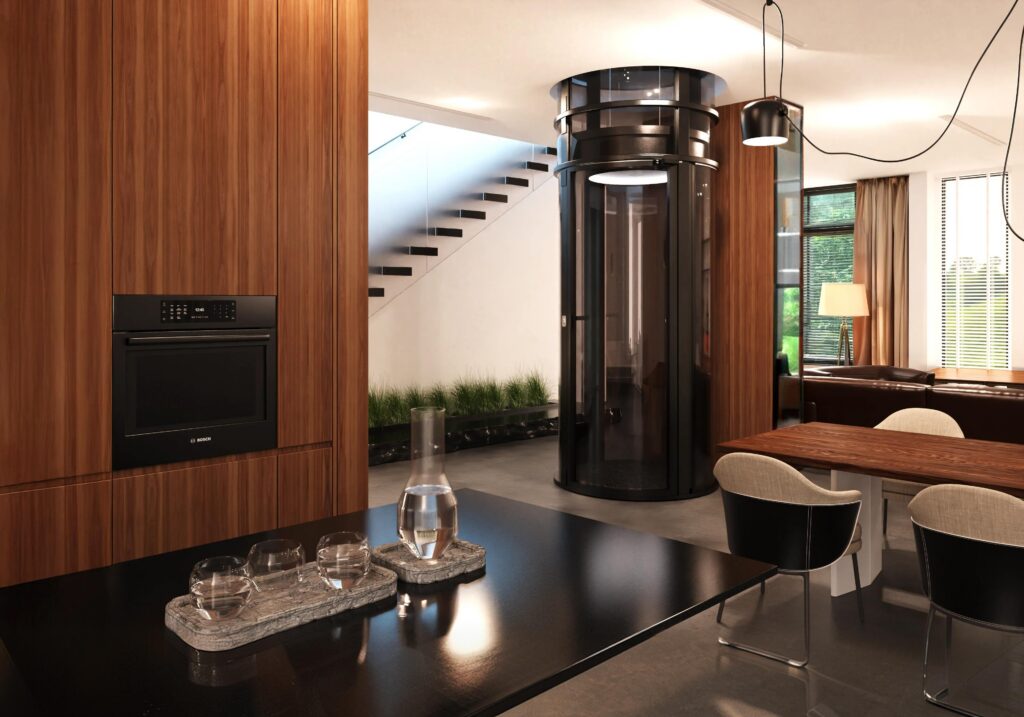
These are two different things, and it’s worth being clear on the difference before planning an installation. An outdoor elevator means the entire elevator, cabin and all, is installed in an exterior location such as a rooftop deck, balcony, or the side of the home, inside its own enclosure. The Outdoor Split-Unit machinery option is a different feature entirely: the elevator cabin stays inside the home as usual, and only the machinery (turbines and control components) is relocated outside to reduce operating noise. A home can use one, both, or neither depending on the layout and goals.
Enclosures Required for Outdoor Installations
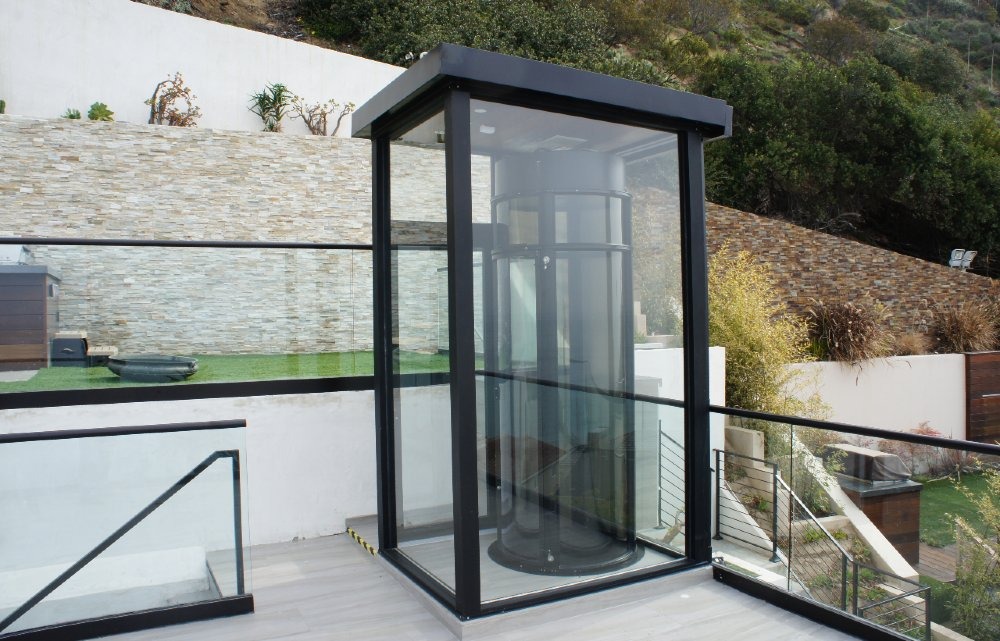
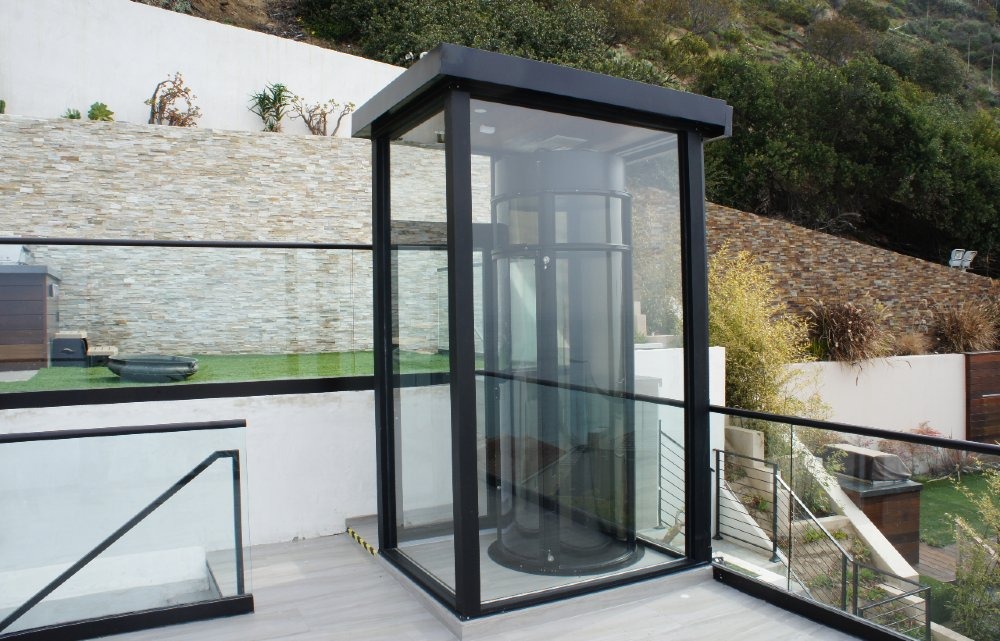
When installing a home elevator by PVE, such as the PVE30, in an exterior application, an enclosure is needed to fully protect the elevator from outdoor environments. These self-supporting lifts are often installed on rooftop decks or against the exterior of a home, but they need to be fully enclosed to ensure the long-term operation of the equipment isn’t affected by weather exposure. Homeowners have built enclosures using glass to take advantage of the panoramic visibility offered by models like the PVE37. For exterior installations against a corner or flush against two walls, The Cube‘s square cabin can simplify the enclosure design compared to a round unit. Several options exist for enclosure materials and layout, and a contractor can help weigh installation complexity against the home’s architecture before construction begins.
Where Outdoor Home Elevators Are Installed
Outdoor lifts are commonly installed on decks, porches, rooftop terraces, and along the exterior of homes with elevated entrances or multiple floors. For homeowners comparing a lift system against stairs, an outdoor elevator offers a safer, more convenient way to move between levels, especially for anyone facing mobility challenges or planning to age in place. Because the elevator sits outside the home’s existing footprint, it’s often a practical option for homes where limited interior space rules out installing a lift indoors.
Temperature-Controlled Enclosures
When building an enclosure for a home elevator by PVE, temperature control is one of the most important considerations. An enclosure without temperature regulation can reach extreme highs or lows depending on the season, which affects both passenger comfort and, over time, the long-term operation and durability of the equipment. Building an enclosure with the ability to regulate temperature helps ensure a consistent, comfortable ride, reduces maintenance needs over the life of the system, and protects the elevator’s longevity and the value of the property.
Easy-to-Install Home Elevators
Installing a lift outdoors may seem like the only option for some homes, but PVE’s space-saving residential elevators have a much smaller footprint than traditional home lifts, which often opens up interior placement options too. Without the need for a pre-construction shaft, pit, or machine room, these elevators simply rest on the existing ground floor. Requiring only a 220-volt power supply, a PVE elevator can be installed in as little as 2 to 3 days for a retrofit or new construction project.
Able to travel up to 5 stops or 50 feet in total rise, every home lift is custom built to the height of the home and designed for everyday home use, whether that means carrying heavy items and cargo between floors or providing wheelchair access for residents with mobility challenges. Each model has its own weight capacity, so choosing the right one depends on who will use the elevator and how. These panoramic lifts are available in four models, including the PVE37, PVE52, and The Cube. Assembled in the USA, each residential elevator meets strict quality and safety standards for residential or marine application.
What Should You Consider Before Buying an Outside Elevator for Your Home?
Start with the structure, not the elevator. Outdoor elevators and outdoor lifts both need protection from the weather, and a PVE home elevator installed outside needs a fully enclosed, temperature-controlled structure around it. Plan the enclosure, the elevator, and the permits together.
Before you choose an outside elevator, work through these questions:
- Where will the enclosure go? Most exterior installs connect a driveway, patio, or deck to an upper floor. The upper landing should line up with a door or balcony, and PVE’s Balcony Landing Attachment bridges the gap between the elevator and an upper balcony.
- How will you control the temperature? An enclosure without climate control can get very hot or cold, which affects rider comfort and the equipment over time.
- Who will ride it? The PVE30 carries one person, the PVE37 and The Cube carry two, and the PVE52 carries three or fits a standard wheelchair with an attendant.
- Do you need the elevator outside, or just the machinery? If your goal is a quieter elevator indoors, Split-Unit Outdoor Machinery keeps the elevator inside and moves only the machinery outdoors, up to 30 feet away.
- What will your local code require? Exterior structures usually need permits. An authorized PVE dealer can review your site and explain what applies where you live.
Frequently Asked Questions
What is an outdoor elevator?
An outdoor elevator is a home elevator installed outside a building to provide vertical access between levels, typically enclosed to protect it from the elements. It supports movement between indoor and outdoor living areas and is a practical option when interior space doesn’t accommodate an elevator.
Can a coastal outdoor elevator resist rust and corrosion?
Coastal and other harsh outdoor environments put extra demands on any exterior equipment. A fully enclosed, temperature-controlled structure is the primary way PVE protects an outdoor elevator from the elements. If corrosion resistance is a priority for a coastal property, for example, whether galvanized steel rails or other rust-resistant hardware are used, ask a PVE Sales Representative to confirm current specifications for your location before finalizing an installation.
What safety features do outdoor home elevators have?
PVE home elevators include multiple safety features regardless of whether they’re installed indoors or outdoors, including mechanical car locking devices at each floor, Type A safety brakes, and an in-cabin phone for emergencies. Outdoor installations add an enclosure as an additional layer of protection, helping the elevator operate safely and reliably in outdoor environments.
Can an outdoor elevator improve accessibility and home value?
Yes. An outdoor elevator can improve accessibility for residents facing mobility challenges, including wheelchair users, and make a multi-floor home safer and more convenient overall. Because it expands the pool of buyers who can comfortably use the home, particularly homes with elevated entrances or several floors, an outdoor elevator can also be a meaningful factor in home value.
How much weight can an outdoor home elevator carry?
Weight capacity depends on the model. PVE’s outdoor-installed elevators are built to handle everyday home use, from heavy items and cargo to full wheelchair access on the PVE52. Contact a PVE Sales Representative to confirm the weight capacity for the specific model and installation you’re planning.
Are outdoor elevators for homes space-saving?
Yes. PVE’s outdoor elevators don’t require a deep pit or separate machine room, and the self-supporting design allows for an above-ground installation with a shallow, well-drained base.
Can an outdoor home elevator be adapted to different building styles?
Yes. Outdoor home elevators can be customized in size, layout, and finish to fit a range of architectural styles, from modern to traditional residential design.
Are PVE’s outdoor elevators made of glass?
No. PVE elevator cabins use durable, see-through polycarbonate panels rather than glass, which holds up better to outdoor conditions while still offering panoramic visibility. Some homeowners choose to build a glass enclosure around the elevator itself for aesthetic reasons, but the elevator’s own panels are polycarbonate.
Seeking More Information for Residential Elevator Cost
With over 550 authorized distributors worldwide and over 20,000 successful installations globally, PVE is a leading choice for retrofitting a lift into an existing residence. As a business, PVE works with certified contractors to make sure every system is installed correctly and continues to operate safely for years. For a full breakdown of pricing, including what makes an outdoor installation more or less affordable, see the home elevator cost guide.
Contact us today to locate the closest authorized dealer to your residence and receive a free in-home consultation to see if an outdoor elevator is right for your project.