Skip to content >
- Quick Answer
- Why Home Elevator Safety Depends on Design, Installation, and Maintenance
- Safety Standards and Code Requirements
- Home Elevator Safety Features at a Glance
- Common Home Elevator Safety Features
- What Happens During a Power Outage?
- How PVE Pneumatic Vacuum Elevators Support Safety
- Home Elevator Safety Checklist for Homeowners
- Signs Your Home Elevator Needs Service
- Conclusion
- Frequently Asked Questions About Home Elevator Safety
Home elevators are designed with multiple safety systems to help protect passengers during everyday use, door operation, power interruptions, and emergency situations. Like any residential equipment, safety depends on proper design, professional installation, routine maintenance, and responsible use.
For homeowners considering a residential elevator, the most important question is not only “Are elevators safe?” but also which safety features are included, how the elevator is installed, and how it should be maintained over time.
This guide explains common home elevator safety features, what homeowners should look for, and how PVE pneumatic vacuum elevators are designed to support safe residential use.
Quick Answer
Home elevators can be safe when they are properly designed, installed, maintained, and used according to the manufacturer’s instructions. Key safety features may include door interlocks, emergency controls, overload protection, safety sensors, braking or speed-control systems, and emergency communication. PVE pneumatic vacuum elevators also include controlled descent during a power outage, allowing the cab to safely lower to the lowest landing so passengers can exit.
Why Home Elevator Safety Depends on Design, Installation, and Maintenance
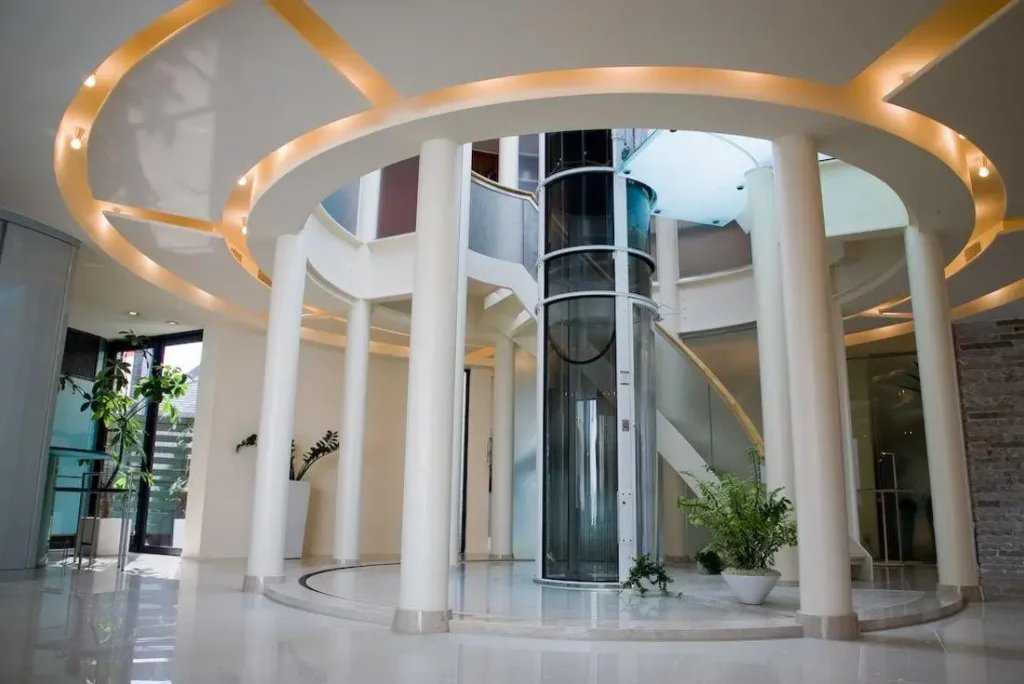
Elevator safety is not based on one feature alone. A safe residential elevator depends on the equipment design, required safety systems, correct installation, routine service, and proper use by passengers.
Homeowners should work with qualified installers and service providers, follow the manufacturer’s operating instructions, and schedule maintenance according to the recommended service plan. These steps help keep doors, controls, brakes, sensors, and emergency systems working as intended.
Safety Standards and Code Requirements
Home elevators should be designed, installed, and maintained according to applicable safety standards, manufacturer requirements, and local building codes. These requirements may address weight capacity, door operation, emergency controls, electrical systems, and inspection procedures.
Because codes and requirements vary by location, homeowners should work with a qualified installer or authorized dealer who understands local requirements for residential elevator installation and service.
Home Elevator Safety Features at a Glance
| Safety Feature | What It Helps Do |
| Door interlocks | Helps prevent elevator movement when doors are not properly closed |
| Emergency stop controls | Allows passengers to stop the elevator if needed |
| Overload protection | Helps prevent operation when the elevator exceeds its weight limit |
| Safety sensors | Helps detect obstructions or unsafe conditions |
| Braking or speed control systems | Help manage elevator movement during travel |
| Emergency communication | Allows passengers to call for help if needed |
| Power loss or emergency descent system | Helps passengers exit safely during a power interruption, depending on the elevator type |
Common Home Elevator Safety Features
Modern residential elevators may include several safety features designed to support safe use. Exact features vary by elevator type and model, but homeowners should ask about the features below. The safety features included with a specific elevator should also be reviewed with the manufacturer, installer, or authorized dealer before installation.
Door and Entry Safety
Door safety is one of the most important parts of residential elevator use. Many home elevators include door interlocks or related systems that help prevent the elevator from moving unless the doors are properly closed.
Homeowners should keep landing areas clear, avoid forcing doors open or closed, and stop using the elevator if doors stick, close unevenly, or behave irregularly. Any door issue should be reviewed by a qualified technician or authorized dealer before regular use continues.
Brakes, Speed Control, and Overload Protection
Residential elevators are designed with systems that help control movement and support safe operation. Depending on the elevator type, this may include braking systems, speed-control features, and overload protection.
Homeowners should always follow the posted weight limit for their specific model. Overloading an elevator can strain components and may prevent the system from operating as intended. If the elevator does not move, hesitates, or signals an overload condition, passengers should remove excess weight and follow the manufacturer’s instructions.
Emergency Controls and Communication
Many residential elevators include emergency controls, alarms, or communication devices so passengers can call for help if needed. Homeowners should know where these controls are located and make sure regular users understand how to use them.
For households with children, older adults, or guests, it is helpful to review basic elevator use and emergency procedures. Clear instructions can reduce panic and help everyone respond appropriately if the elevator stops unexpectedly.
Safety Sensors and Obstruction Detection
Safety sensors can help detect obstructions or unsafe conditions during operation. These systems may help prevent movement when doors are blocked, when an entry area is obstructed, or when the elevator is not ready to travel.
Homeowners should keep the cab, doorways, and landings free of clutter. If the elevator repeatedly stops, alarms, or behaves unexpectedly, it should be inspected before continued use.
Fully Enclosed Cabins and Passenger Protection
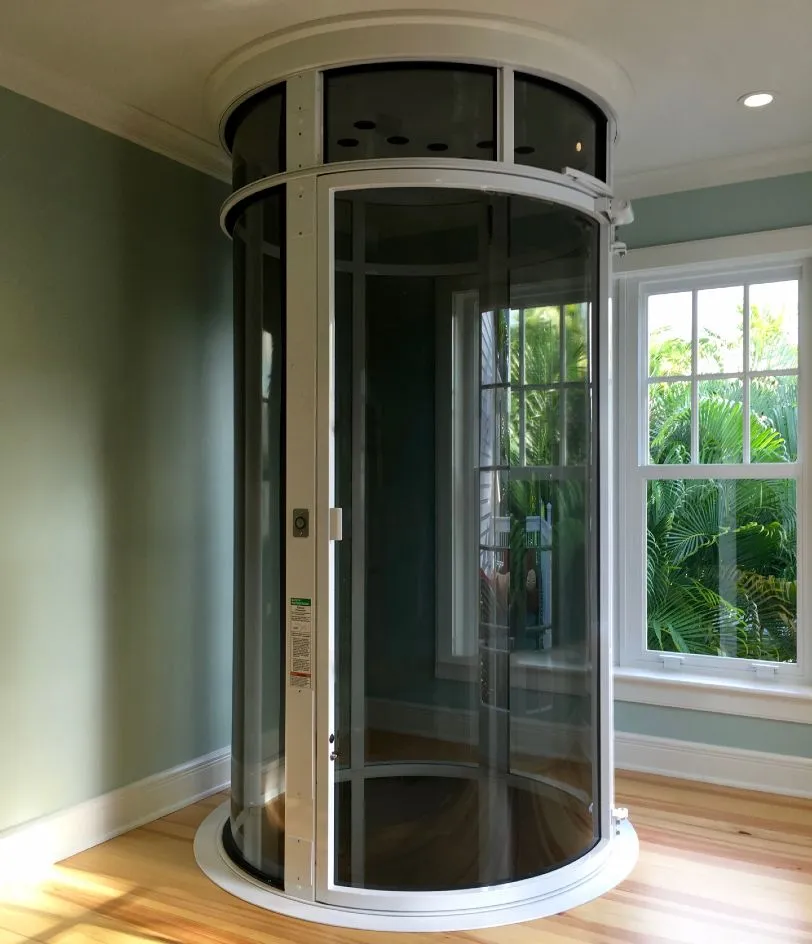
A fully enclosed elevator cab helps separate passengers from moving components during travel. This is especially important in residential settings where children, older adults, or mobility-limited users may rely on the elevator.
Homeowners should make sure passengers remain inside the cab during travel, avoid leaning on doors, and wait until the elevator has fully stopped before entering or exiting.
What Happens During a Power Outage?
Power-outage behavior depends on the elevator type and model. Some residential elevators include backup power, emergency lowering, or controlled descent features that help passengers exit safely if power is interrupted.
PVE pneumatic vacuum elevators are designed to descend safely to the lowest landing during a power outage using gravity and controlled airflow. This allows the passenger to exit once the cab reaches the landing.
Homeowners should ask their installer or authorized dealer how their specific elevator handles power interruptions and what emergency procedures should be followed.
How PVE Pneumatic Vacuum Elevators Support Safety
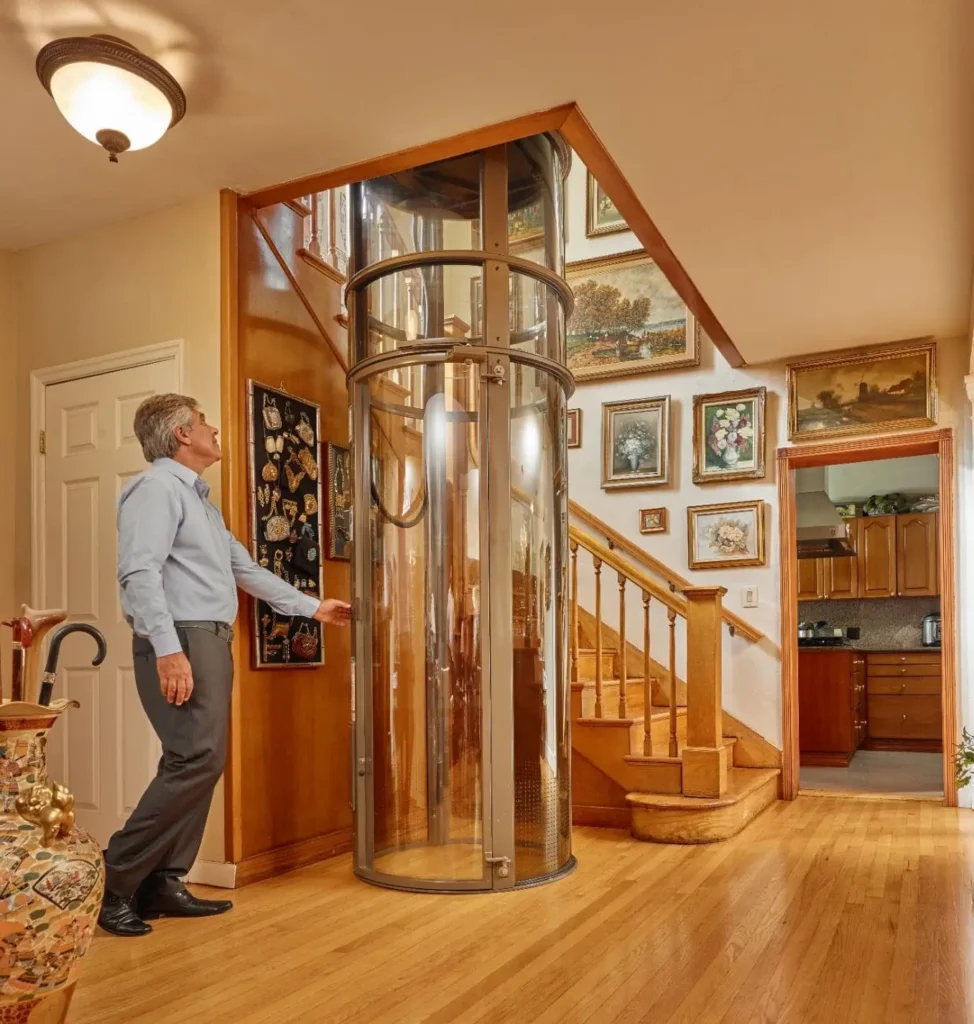
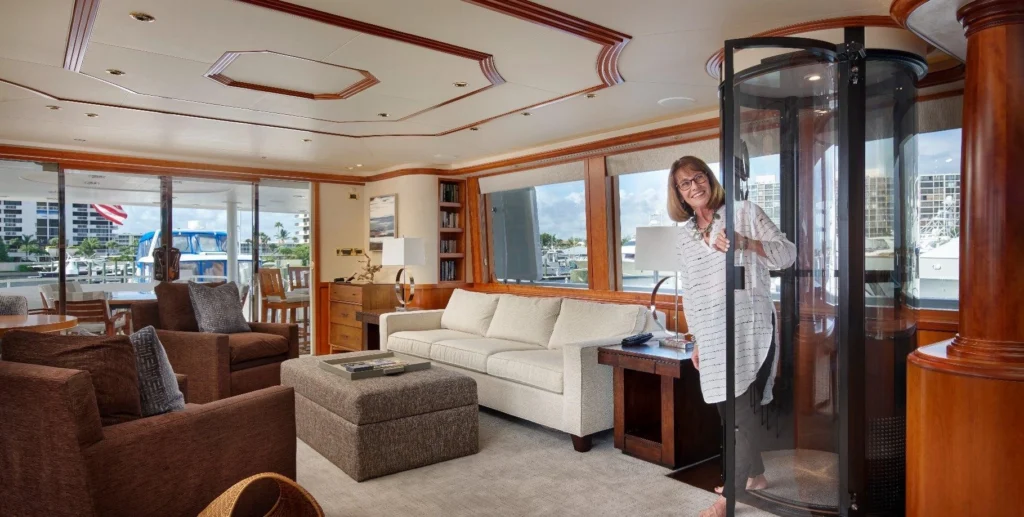
PVE pneumatic vacuum elevators are designed for residential passenger use and include safety systems for everyday operation and emergencies. Each elevator is manufactured and tested before shipment, helping ensure the system meets PVE’s quality and safety requirements before it arrives at the home.
Unlike many traditional elevators, PVE elevators use air pressure rather than hydraulic oil to move the cab. Their self-supporting cylindrical design keeps the elevator compact while enclosing passengers during travel.
During a power outage, PVE’s controlled descent system helps bring the cab to the lowest landing so the passenger can exit according to the elevator’s operating instructions.
Homeowners should follow PVE’s operating guidelines, respect the posted weight limit, and work with an authorized PVE dealer or trained technician for installation, inspections, and service.
PVE offers residential elevator models for different household needs, including the PVE30 single-passenger home elevator, PVE37 two-passenger elevator, and PVE52 wheelchair-accessible elevator.
Home Elevator Safety Checklist for Homeowners
Home elevator safety also depends on how the elevator is used and maintained after installation. Homeowners can support safe operation by following a few consistent habits:
- Schedule regular maintenance: Follow the manufacturer’s recommended service schedule and work with a service professional.
- Respect the weight limit: Never exceed the posted capacity for your specific elevator model. If the elevator signals an overload or does not move, remove excess weight and follow the user manual.
- Keep doors and landings clear: Make sure nothing blocks the elevator doors, landing areas, or cab entrance.
- Check door operation: If doors stick, close unevenly, or behave irregularly, stop using the elevator and contact a service professional.
- Teach household members safe use: Children, older adults, guests, and caregivers should know basic operating instructions and emergency procedures.
- Know the emergency controls: Make sure regular users know where the emergency stop, alarm, or communication device is located.
- Report unusual behavior: Unusual noises, vibration, hesitation, slow response, or irregular movement should be reviewed before regular use continues.
- Use authorized service: Mechanical, electrical, and safety-related repairs should be handled by an authorized dealer or trained technician.
Signs Your Home Elevator Needs Service
A home elevator should be inspected if it begins to operate differently than usual. Small changes in sound, movement, or door behavior can signal that the system needs attention.
Homeowners should contact a qualified technician if they notice:
- Unusual noises, vibration, or grinding sounds
- Slow response after pressing the controls
- Jerky, uneven, or hesitant movement
- Doors that do not open or close smoothly
- Warning lights, alarms, or repeated stops
- The elevator did not arrive at the landing level
- Visible damage, loose parts, or debris near doors and landings
- Any repeated irregularity in operation
Until the issue is reviewed, homeowners should avoid regular use of the elevator. Reporting problems early can help prevent larger repairs and support safer operation over time.
Conclusion
Home elevators can be safe when they are properly designed, installed, maintained, and used according to the manufacturer’s instructions. The most important safety factors are not just the elevator model, but also the safety features included, the quality of installation, routine service, and how the elevator is used day to day.
PVE pneumatic vacuum elevators are designed for residential passenger use and include safety systems for everyday operation and emergencies, including controlled descent during a power outage. Homeowners should work with an authorized PVE dealer or trained technician, follow the user manual, respect weight limits, and schedule maintenance as recommended.
For homeowners considering a residential elevator, safety should be part of the planning conversation from the beginning. Ask about door safety, emergency controls, communication features, power-loss behavior, maintenance requirements, and the right model for your home and mobility needs.
Frequently Asked Questions About Home Elevator Safety
Are home elevators safe?
Yes, home elevators can be safe when they are properly designed, installed, maintained, and used according to the manufacturer’s instructions. Homeowners should review safety features, follow weight limits, schedule routine maintenance, and work with qualified installers or authorized dealers.
What safety features should a home elevator have?
Common home elevator safety features may include door interlocks, emergency stop controls, overload protection, safety sensors, braking or speed-control systems, emergency communication, and power-loss or emergency descent systems. Exact features vary by elevator type and model.
What happens if the power goes out while using a PVE elevator?
PVE pneumatic vacuum elevators are designed to descend safely to the lowest landing during a power outage using gravity and controlled airflow. Once the cab reaches the landing, the passenger can exit according to the elevator’s safety design and operating instructions.
How often should a home elevator be serviced?
Service frequency depends on the elevator type, model, usage, manufacturer recommendations, and local requirements. Homeowners should follow the recommended service schedule and contact an authorized dealer or qualified technician if they notice unusual operation.
Can children and pets use a home elevator?
Children and pets should be supervised around a home elevator. Children should understand basic safe-use rules, including not playing with doors, controls, or emergency buttons. Pets should be kept clear of doors and landings during operation.
Can a home elevator be overloaded?
Yes. Exceeding the posted weight limit can strain elevator components and may prevent the system from operating as intended. Homeowners should always follow the capacity listed for their specific elevator model.
What should I do if my home elevator behaves unexpectedly?
Stop using the elevator and contact an authorized dealer or qualified technician. Note what happened, including unusual sounds, movement, floor location, warning lights, or door behavior, so the service provider can better diagnose the issue.
Are PVE home elevators safe for people with mobility issues?
A properly installed and maintained PVE home elevator can support safer movement between floors for many people with mobility challenges by reducing reliance on stairs. The right model depends on the user’s mobility needs, available space, and whether wheelchair accessibility is required.