
- Quick Answer
- Key Takeaways
- Does a Standard Home Inspection Cover the Elevator?
- How Does an Elevator Change the Home-Buying Process?
- What Should You Notice During Showings?
- What Type of Elevator Is in the House?
- What Should You Ask the Seller About Age and Maintenance?
- How Do You Check Whether the Elevator Is Safe?
- Will the Warranty and Service Agreement Transfer to You?
- Should You Repair, Modernize, or Replace the Elevator?
- How Does an Elevator Affect the Property Value?
- When Does Replacing the Elevator With a Pneumatic Model Make Sense?
- Pre-Closing Checklist for Buying a House With an Elevator
- Frequently Asked Questions
Quick Answer
Before buying a house with an elevator, hire a qualified elevator technician to inspect it, because a standard home inspection does not cover elevators. Ask the seller for the installation date, model, permits, and service records. Measure the gap between the elevator car door and the landing door, and confirm whether the warranty and any service agreement will transfer to you after closing.
Key Takeaways
- A standard home inspection does not include the elevator. Book a separate evaluation with a qualified elevator technician before your inspection contingency expires.
- Ask for the elevator’s age, manufacturer, model, permits, inspection records, and full service history. Long gaps in service or repeated repairs to the same part are red flags.
- Check the gap between the car door and the landing door. The U.S. Consumer Product Safety Commission (CPSC) says it should be no more than four inches deep.
- Warranties do not always transfer. When they do, manufacturers usually require maintenance records and a written request within a set time after closing.
- Use inspection findings and written repair quotes to negotiate a credit or price reduction before you remove contingencies.
A home elevator can make a multi-story house easier to live in for decades. When you buy a house with an elevator, though, you also inherit a mechanical system with its own age, wear, and paperwork. It deserves the same scrutiny as the roof, the HVAC system, or the foundation.
This guide covers what to look for during showings, what to ask the seller, how to check safety, and what to settle before closing.
Does a Standard Home Inspection Cover the Elevator?
No. Most general home inspectors do not evaluate elevators, and the InterNACHI Standards of Practice list elevators among the items an inspector is not required to inspect. Plan for a separate elevator evaluation on top of the general home inspection, and schedule it before your inspection contingency runs out.
A qualified elevator technician can test the safety devices, door interlocks, emergency features, and controls to determine whether the lift will operate only when safety conditions are met. They can also check the drive system for leaks, wear, or corrosion, note whether local guidelines require emergency communication features in the cab, and confirm whether the unit should be inspected and serviced annually. Ask for a written report you can share with your real estate agent.
How Does an Elevator Change the Home-Buying Process?
An elevator adds one more major system to your due diligence list when purchasing a home with an elevator, alongside plumbing, electrical, and HVAC. Its condition can affect your offer, your contingencies, and your insurance.
A well-maintained, modern elevator with clear records supports the asking price. A dated, poorly documented system is a reason to ask for a repair credit or a lower price. Call your insurer before closing to determine whether the elevator will raise premiums because of liability exposure and how it affects your coverage.
What Should You Notice During Showings?
Even on a first walkthrough, you can spot warning signs and collect basic information. You don’t need to be an expert. You need to be observant.
Look for:
- Cab cleanliness, door operation, and interior lighting
- Rust or corrosion on door frames, thresholds, or call stations
- Water staining around the elevator entrance or at the lowest landing; check the garage too if the elevator serves that level, since water intrusion there can affect equipment
- Worn flooring or damaged walls inside the cab
Ride it. Ride the elevator at every showing. Listen for grinding, squealing, or a loud pump. Feel for jerky starts, abrupt stops, or a car that stops above or below the floor. A quiet ride with smooth, level stops is a good sign, and the cab should appear in good condition during showings.
Notice the fit. Does the elevator fit naturally in the floor plan, and does its location work with the home’s design while serving the floors you will actually use most, or does it look like a cramped retrofit squeezed into leftover space? An awkward installation can point to shortcuts in construction or code compliance.
Photograph the details. Take pictures of the control panel, the manufacturer’s data plate, the model and serial numbers, and any service company stickers. You will need this information to identify the manufacturer and find a qualified technician.
What Type of Elevator Is in the House?
The type of elevator tells you what kind of maintenance, risks, and replacement options come with the house. Most residential systems fall into one of three types.
| Type | How It Works | What It Needs | What to Check |
| Hydraulic | A fluid-driven piston lifts the car | Shaft, pit, and a machine room for the pump and fluid | Fluid leaks, pump noise, and whether the cylinder is installed in the ground |
| Traction or cable | A motor and drum unit operate the car with cables, sometimes with counterweights | Shaft and overhead space for machinery | Cable wear, unusual noise, and the condition of the machinery |
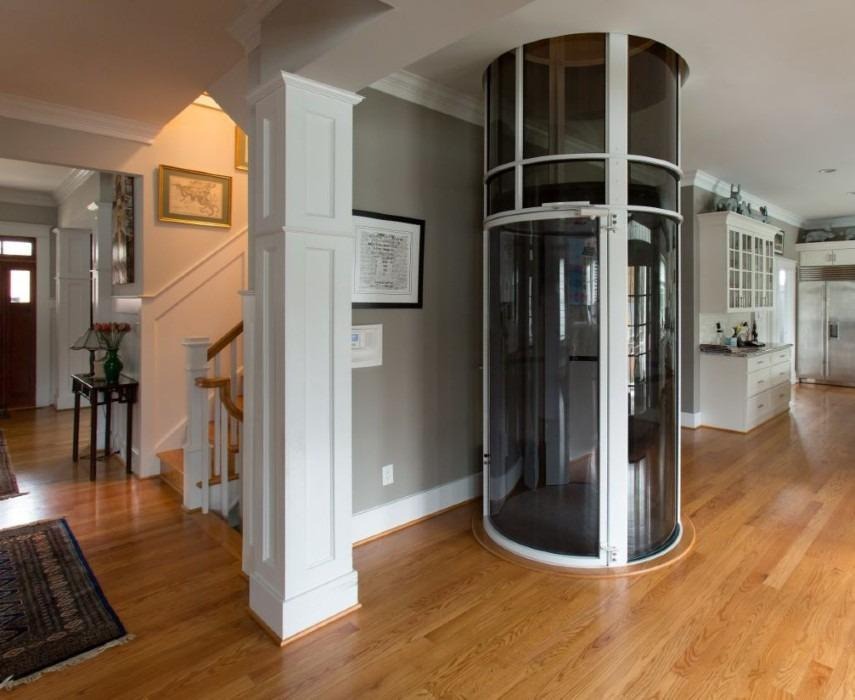
| Pneumatic vacuum | Air pressure differences move the car inside a sealed cylinder | No pit, shaft, or machine room; the unit is self-supporting | Smooth travel, seal condition, and service history |
The drive system will determine maintenance needs, space requirements, and replacement options. In practice, hydraulic elevators usually need more structural room because their equipment setup must fit the home’s available space.
What Should You Ask the Seller About Age and Maintenance?
When you buy the house, you inherit the elevator’s wear, age, and service habits. The seller’s answers and records help show whether it was maintained properly.
- What year was the elevator installed?
- What is the brand, model, and drive system (hydraulic, traction, or pneumatic)?
- Was it installed during original construction or added later?
- Who services the elevator, and is there an active service contract?
- Have any repairs, recalls, or safety upgrades been completed?
Records to request: maintenance history, repair invoices, inspection reports, permits, and any modernization or code upgrade records. Ask whether the unit was inspected on a recurring schedule. A seller who kept up with regular home elevator maintenance should be able to show it on paper.
Reading the records: Repeated repairs to the same component (doors, pump, controller) suggest a systemic problem rather than normal wear. Annual servicing is often expected for residential elevators, and long gaps can point to future maintenance costs.
Weighing the age: Most home elevators last 20 to 30 years with proper maintenance. When buying an elevator in an existing home, past upkeep matters as much as age. A unit nearing the end of that range may need major work soon, so factor its age into your offer and your budget.
How Do You Check Whether the Elevator Is Safe?
Confirm that the safety features work, that permits and inspections are on record, and that the gap between the car door and the landing door is no more than four inches deep.
Measure the Door Gap
The U.S. Consumer Product Safety Commission has warned about a dangerous gap in some residential elevators: the space between the inner car door or gate and the outer landing (hoistway) door. A child can step into that space and be crushed when the car moves. CPSC has reported deaths of children as young as 2 and as old as 12.
CPSC says the gap should be no more than four inches deep. If it is deeper, CPSC advises locking the elevator or its access doors so children cannot use it, having a qualified inspector evaluate it to the ASME A17.1 safety code, and installing space guards or an electronic monitoring device. CPSC has also announced recalls of residential elevators from several manufacturers over this hazard, so search the CPSC recalls database for the brand on the data plate.
Confirm the Safety Features
- Emergency stop and alarm button inside the cab
- Door interlocks that keep the car from moving unless the doors are securely closed, so it should not operate otherwise
- A phone, intercom, or other way to call for help from the cab
- A safe way to reach a landing during a power outage, such as battery backup on many conventional systems or controlled descent to the lowest landing on pneumatic models
Local guidelines may require specific emergency features, including an in-cab phone or other communication system, and missing or nonworking items can raise safety concerns during inspection.
Check Permits and Inspection Records
Ask for the original installation permit and any inspection certificates or operating permits. Requirements for private residence elevators vary by state and city. Some jurisdictions require periodic inspections, and others inspect only at installation. Your local building department can tell you what applies and whether the elevator’s records are current.
Residential elevators in the U.S. are generally designed and installed to ASME A17.1, the safety code for elevators, which includes a section for private residence elevators. Ask your inspector whether the unit meets the current edition or needs upgrades.
Will the Warranty and Service Agreement Transfer to You?
Sometimes. Some home elevator warranties transfer to a new owner and some do not, and transfers usually come with conditions.
When a manufacturer allows a transfer, it usually expects documented maintenance and a written request within a set window after closing. Missed maintenance, work by unauthorized technicians, and unapproved modifications are common reasons coverage is voided, so the seller’s service records matter here too. It helps to know what home elevator warranty coverage typically includes and excludes before you ask.
Before closing:
- Ask the seller for the warranty documents and the date coverage started.
- Contact the manufacturer or its authorized dealer with the model and serial number. Ask whether the warranty transfers, what paperwork is needed, and the deadline.
- Ask whether the current service agreement can be assigned to you or whether you will need a new one.
- Find out who can service the elevator in your area. If the original installer is out of business or the brand is hard to support locally, factor that into your offer.
Should You Repair, Modernize, or Replace the Elevator?
It depends on the elevator’s age, condition, and how well the elevator fits your needs, including available space, accessibility needs, and whether the current unit still fits the household. Use the inspection report to decide before you make your final offer.
| Situation | Likely Path | What It Means for Your Offer |
| Well maintained, clean inspection, parts available | Keep it and set up regular service | Little or no adjustment |
| Minor issues such as sensors, switches, or door operators | Repair | Request repairs or a credit based on written quotes |
| Older unit with outdated controls or safety features | Modernize controls and safety equipment | Negotiate a credit based on a written scope of work |
| Near end of life, parts hard to find, or a poor fit for your needs | Replace; a new home lift may improve access and offer more cab styles | Get a replacement quote before you remove contingencies |
Older or discontinued models can be harder and slower to repair because parts are scarce. If the inspection points toward replacement, the common signs it’s time to replace a home elevator can help you judge whether modernization still makes sense.
If you are already planning a major renovation, that can also be the right time to evaluate replacement or relocation. A newer unit may also provide better accessibility and more customization options through different cab styles.
Get written quotes from a qualified elevator company so any credit or price reduction is based on documented costs. Review them with your real estate agent before final negotiations.
How Does an Elevator Affect the Property Value?
A working, well-documented elevator can make a multi-story home more appealing, especially to buyers planning to age in place or living with someone who has limited mobility. A dated, noisy unit with missing records can read as a repair project instead.
As a buyer, pay for the elevator’s condition, not just its presence. Then keep every record from day one. Complete documentation is what helps the elevator count as an asset when you sell. How much a home elevator adds to property value depends heavily on its type, age, and condition.
When Does Replacing the Elevator With a Pneumatic Model Make Sense?
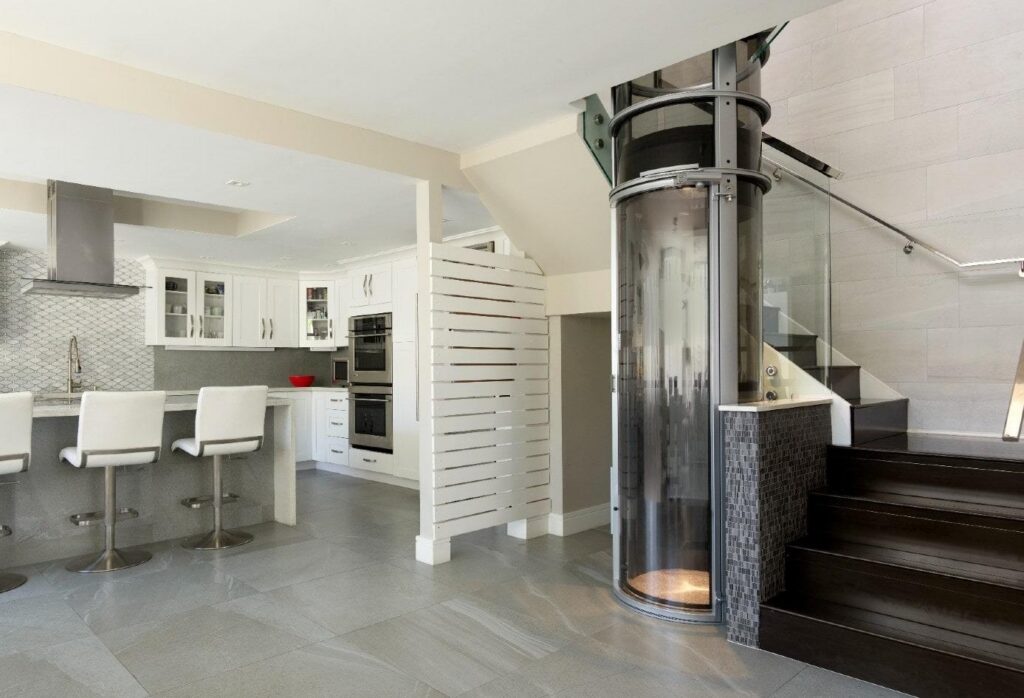
Some buyers purchase a house planning to replace an outdated elevator. A pneumatic vacuum elevator can be a practical replacement when the existing system has reached the end of its life, parts are hard to find, or it no longer fits the household.
PVE home elevators are self-supporting and need no pit, shaft, or machine room, so they can often go where a conventional elevator will not fit. Installation typically takes two to three days. PVE offers four models: the single-passenger PVE30, the PVE37, the PVE52, which is designed for wheelchair users, and the two-passenger Cube.
If you are weighing a replacement, talk with someone in PVE’s authorized dealer network before you finalize your offer. A dealer can look at the available space and best location for the unit, and help determine whether a replacement is cost effective based on your layout, needs, and total cost.
Pre-Closing Checklist for Buying a House With an Elevator
- Confirm the elevator type and drive system
- Record the manufacturer, model, and serial number from the data plate
- Get the installation date, permits, and inspection records
- Collect all maintenance and repair records from the seller
- Measure the gap between the car door and the landing door (four inches deep or less)
- Note whether it serves the floors your family members will use most, such as getting from the garage to the main living area
- Consider everyday convenience, including whether it can carry groceries and other household items or luggage between levels
- Schedule a separate elevator inspection with a qualified technician
- Get written quotes for any repairs the inspector recommends
- Confirm whether the warranty and service agreement transfer, and the deadline
- Find a qualified service provider in your area
- Ask your insurer how the elevator affects coverage and premiums
- Check local requirements for operating permits and recurring inspections
- Review findings and quotes with your agent before final negotiations
Don’t waive the elevator inspection, even in a competitive market. Repair or replacement after closing is your expense, not the seller’s.
Frequently Asked Questions
Should I hire an elevator inspector in addition to a home inspector?
Yes. General home inspectors are not required to inspect elevators and usually are not trained to test drive systems or safety devices. A qualified elevator technician can test emergency features, review the controls, and find problems like leaks or worn components.
How long do residential elevators last?
Most last 20 to 30 years with proper maintenance. Age alone does not decide condition, since usage, climate, maintenance quality, and elevator type all affect how long a unit lasts.
Can I renegotiate the price if the elevator needs repairs?
Usually, yes. Buyers can use inspection findings to request seller credits, repairs before closing, or a lower price, depending on local custom and contract terms. Written quotes from an elevator company make the request easier to support.
Is it a bad idea to buy a house with an older hydraulic elevator?
Not necessarily. An older hydraulic elevator that has been serviced regularly, passes a professional inspection, and still has parts available can keep working. Watch for fluid leaks, outdated safety controls, and long gaps in service.
Is a home elevator safe for young children?
It can be, if the safety features work and the gap between the car door and landing door is no more than four inches deep, as CPSC advises. If you have young children, measure the gap before move-in and keep the elevator locked out until any problem is fixed.
What if the existing elevator doesn’t fit my needs?
Factor the cost of replacing or relocating it into your renovation budget before you make your offer if the current setup does not support aging in place or daily accessibility needs. A better-placed replacement can also reduce physical strain from climbing stairs, especially for older adults or those with limited mobility. A shaftless pneumatic elevator can often be installed where a traditional hoistway system will not fit, or in a more convenient spot in the home with an elevator for family members over the long term.