
- Key Takeaways
- What Affects an Elevator’s Weight Capacity?
- Typical Elevator Weight Ranges
- How Much Weight Can a Vacuum Elevator Support?
- How Do You Find an Elevator’s Weight Limit?
- What Happens If You Exceed an Elevator’s Weight Limit?
- How Does Maintenance Affect Elevator Weight Limits?
- What Codes Govern Elevator Weight Limits?
- Conclusion: Using Your Elevator Safely
- Frequently Asked Questions About Elevator Weight Limits
- Where Can I Find the Weight Limit of an Elevator?
- What Happens If I Overload an Elevator?
- Is It Okay to Go Slightly Over the Weight Limit?
- How Much Does the Average Person Weigh for Elevator Capacity Calculations?
- How Much Weight Can a Home Elevator Hold?
- Can a Home Elevator Carry a Wheelchair?
- Can I Use an Elevator During a Fire?
Key Takeaways
- An elevator’s weight limit is its rated capacity, usually posted on a plate inside the cab.
- Commercial passenger elevators typically carry 2,500 to 5,000 lbs. Home elevators carry much less because their cabs are smaller and serve fewer riders.
- PVE vacuum elevators are rated from 350 lbs (PVE30) to 525 lbs (PVE52), depending on the model.
- Never exceed the posted limit. When a model is being chosen, match capacity to the number of riders and any wheelchair or mobility device.
Elevators are an essential part of modern life, transporting people and goods vertically in buildings. But have you ever wondered how much weight an elevator can safely hold? This seemingly simple question has a complex answer, and understanding elevator weight limits is crucial for both passengers and building managers.
This guide covers everything you need to know about elevator weight limits. We’ll explore the factors that determine capacity, safety implications of exceeding limits, how much a home vacuum elevator can support, and best practices for ensuring safe elevator usage.
What Affects an Elevator’s Weight Capacity?
Elevator weight capacity isn’t a one-size-fits-all number. Several factors influence how much weight an elevator can safely handle:
- Elevator Design and Construction: Larger elevators with sturdier materials naturally have higher capacities.
- Purpose and Location: Elevators in commercial buildings designed for high traffic typically have higher capacities than those in residential buildings.
- Number of Passengers: The average weight of passengers is factored into the design.
- Cargo Capacity: Freight elevators are built for heavier loads than passenger elevators.
- Lifting Mechanism: Hydraulic, traction, and pneumatic elevators have different weight limitations.
Typical Elevator Weight Ranges
While the exact weight limit varies depending on the factors mentioned above, here’s a general breakdown of typical elevator capacities:
- Residential Elevators: 350 lbs – 1,500 lbs (Suitable for a small family or individual use)
- Commercial Passenger Elevators: 2,500 lbs – 5,000 lbs (Accommodates multiple passengers with luggage)
- Freight Elevators: 5,000 lbs – 10,000 lbs (Designed for heavy loads like furniture or building materials)
Home elevators sit at the low end because they have smaller cabs and carry fewer riders at a time.
How Much Weight Can a Vacuum Elevator Support?
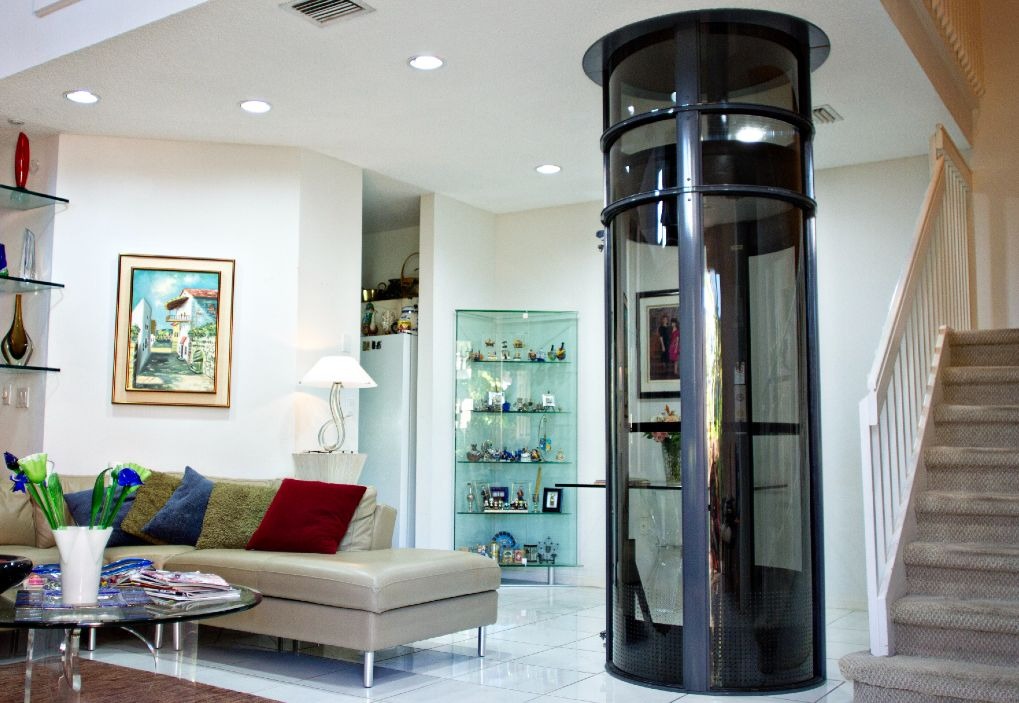
A vacuum elevator, also called a pneumatic vacuum elevator, supports 350 to 525 lbs depending on the model. PVE offers four home elevator models:
| Model | Passengers | Weight Capacity | Wheelchair Accessible |
|---|---|---|---|
| PVE30 | 1 | 350 lbs | No |
| PVE37 | 2 | 450 lbs | No |
| The Cube | 2 | 450 lbs | No |
| PVE52 | 3 | 525 lbs | Yes |
The PVE52 has the highest capacity and is the only wheelchair-accessible model. The right choice depends on how many people ride at once and whether a wheelchair or other mobility device will be used. Capacity and cab size go together, so residential elevator dimensions are worth reviewing alongside weight limits.
How Do You Find an Elevator’s Weight Limit?
There are several ways to determine the weight limit of a specific elevator:
- Weight Capacity Plate: Look for a metal plate inside the elevator cab that clearly displays the maximum weight capacity.
- Building Directory or Signage: Building management may post the weight limit information near the elevator entrance.
- Contact Building Management: If you can’t locate the weight limit information, don’t hesitate to contact building management for clarification.
- Home Elevators: For a residential elevator, the rated capacity is listed in the owner’s manual and the manufacturer’s model specifications.
What Happens If You Exceed an Elevator’s Weight Limit?
Ignoring elevator weight limits can have serious consequences:
- Safety Hazards: Overloaded elevators put undue stress on the motor and other components, increasing the risk of breakdowns and potential passenger injuries.
- System Strain: Exceeding weight limits can lead to premature wear and tear on the elevator system, resulting in expensive repairs and downtime.
- System Shutdown: Modern elevators have built-in safety features that may disable the elevator if the weight limit is exceeded, causing inconvenience and potential delays.
Respecting the posted capacity is one of the simplest parts of home elevator safety.
How Does Maintenance Affect Elevator Weight Limits?
Regular maintenance is crucial for ensuring that elevators operate safely and efficiently within their weight limits. Owners and building managers should:
- Schedule Regular Inspections: Qualified elevator technicians should perform routine inspections to identify potential issues and ensure proper operation of weight-bearing and safety components.
- Adhere to Maintenance Schedules: Follow the manufacturer’s recommended maintenance schedule for the specific elevator model to maintain optimal performance and capacity.
- Conduct Load Testing: Periodic load testing helps verify the elevator’s ability to handle its designated weight limit and identify any potential capacity reductions due to wear and tear.
- Invest in Modernization: Older elevators may have lower weight limits compared to current standards. Upgrading elevator components or replacing the entire system can improve capacity and safety features.
For home elevators, residential elevator maintenance should follow the manufacturer’s service schedule and be handled by an authorized dealer or trained technician.
What Codes Govern Elevator Weight Limits?
Elevator weight limits are not simply recommendations; they are legal requirements enforced by building codes and safety regulations. These regulations vary depending on location and building type. Common regulatory bodies include:
- American Society of Mechanical Engineers (ASME) A17.1 Safety Code for Elevators and Escalators
- ASME A17.7, the performance-based code PVE elevators are designed to meet
- International Organization for Standardization (ISO) Standards
Conclusion: Using Your Elevator Safely
Understanding and respecting elevator weight limits is a shared responsibility between passengers and building management. By working together, we can ensure safe, efficient, and reliable elevator usage for everyone. Passengers should be mindful of their weight and belongings, while building managers should maintain the elevator system and clearly communicate capacity information.
If you are choosing a home elevator, an authorized PVE dealer can help match model capacity to your household’s needs.
Frequently Asked Questions About Elevator Weight Limits
Where Can I Find the Weight Limit of an Elevator?
The weight limit of an elevator is typically displayed on a metal plate inside the elevator car. You can also find it in building directories or signage near the elevator entrance. If you can’t locate it, don’t hesitate to contact building management. For a home elevator, check the owner’s manual or the model specifications.
What Happens If I Overload an Elevator?
Exceeding the weight limit can put strain on the elevator’s motor and other components, increasing the risk of breakdowns and potential injuries. Additionally, safety features might disable the elevator, causing inconvenience and delays.
Is It Okay to Go Slightly Over the Weight Limit?
It’s best to avoid exceeding the weight limit altogether. Even a slight overload can put stress on the system. When in doubt, wait for the next elevator.
How Much Does the Average Person Weigh for Elevator Capacity Calculations?
Most elevator capacities are based on an average passenger weight of 150-200 pounds (68-91 kg).
How Much Weight Can a Home Elevator Hold?
Home elevators hold less than commercial elevators because they serve fewer riders. PVE vacuum elevators are rated from 350 lbs for the single-passenger PVE30 to 525 lbs for the PVE52.
Can a Home Elevator Carry a Wheelchair?
Only if the model is designed for it. Among PVE models, the PVE52 is the wheelchair-accessible option. The combined weight of the rider and the wheelchair must stay within the rated capacity.
Can I Use an Elevator During a Fire?
No. Do not use an elevator during a fire unless emergency personnel direct you to. Use the stairs and follow instructions from fire officials.