Skip to content >

- What Is a Stair Lift?
- What Is a Standing Stair Lift?
- Standing Stair Lift vs. Seated Stair Lift
- Types of Stair Lifts for Homes
- Who May Benefit From a Standing Stair Lift?
- Key Stair Lift Features to Consider
- Installation, Maintenance, and Long-Term Use
- Stair Lift vs. Platform Lift vs. Home Elevator
- When a Home Elevator May Be Better Than a Stair Lift
- Frequently Asked Questions About Stair Lifts and Home Accessibility
- Final Thoughts on Stair Lifts and Home Accessibility
Stair lifts can help people with limited mobility move between floors when stairs become difficult or unsafe to use. Common options include seated stair lifts, standing stair lifts, and straight or curved stair lift systems, depending on the staircase layout and the user’s mobility needs.
A standing stair lift may be helpful for someone who has difficulty bending their knees, sitting comfortably, or transferring into a seated position. However, it is not the right solution for every household. Some homeowners may need a platform lift or residential home elevator instead, especially when wheelchair access, multiple users, or long-term aging-in-place planning are priorities.
This guide explains how standing stair lifts work, when they make sense, what to consider before choosing one, and when a PVE home elevator may be a better long-term accessibility solution.
What Is a Stair Lift?
A stair lift, also called a chair lift, is a motorized accessibility device that carries a person up and down a staircase along a rail. Most stair lifts use a seated chair, footrest, armrests, safety belt, and controls so one user can travel between levels without climbing the stairs.
Stair lifts are often used in homes where stairs have become difficult because of reduced mobility, balance concerns, injury recovery, or aging-in-place needs. They can be installed on straight or curved staircases, depending on the home layout.
However, a stair lift is different from a residential home elevator. A stair lift follows the staircase and is usually designed for one seated rider who can transfer safely. A home elevator provides floor-to-floor access inside the home and may be better for wheelchair users, multiple passengers, or long-term accessibility planning.
What Is a Standing Stair Lift?

A standing stair lift is a type of stair lift designed for users who have difficulty sitting down, bending their knees, or transferring into a seated position. Instead of using a full seated chair, a standing stair lift typically includes a small platform or footrest with a partial seat or support so the user can travel while mostly upright.
Standing stair lifts can be helpful for people with certain mobility limitations, joint pain, or post-surgical restrictions. However, they still require the user to stand securely and maintain balance during travel, so they are not the right fit for every mobility need.
Standing Stair Lift vs. Seated Stair Lift
Standing stair lifts and seated stair lifts both help users move along a staircase, but they support different mobility needs.
| Stair Lift Type | Best For | Key Consideration |
| Seated stair lift | Users who can sit, transfer safely, and remain seated during travel | May not work well for users who have trouble bending their knees or standing up from a chair |
| Standing stair lift | Users who have difficulty sitting or bending but can stand securely | Requires balance, stability, and the ability to remain upright during travel |
| Platform lift | Wheelchair or scooter users who need to stay on their mobility device | Requires enough stair width, landing space, or vertical travel clearance |
| Home elevator | Users who need full floor-to-floor access, wheelchair accessibility, or support for multiple passengers | Requires more planning than a stair-mounted lift |
For some homeowners, a seated or standing stair lift may solve the immediate issue of using the stairs. For others, especially those planning for long-term mobility changes, a platform lift or home elevator may be a better fit.
Types of Stair Lifts for Homes

Stair lifts come in different configurations depending on the staircase layout, user needs, and where the lift will be installed.
- Straight stair lifts: Designed for a single, straight staircase without curves or landings. These are usually the simplest stair lift systems to plan for.
- Curved stair lifts: Designed for staircases with turns, landings, or more complex layouts. These typically require a custom rail that follows the shape of the staircase.
- Outdoor stair lifts: Designed for exterior stairs, such as porch steps, deck stairs, or entryways. Outdoor models should be built with weather-resistant materials and safety features suited for exterior use.
- Standing stair lifts: Designed for users who have trouble sitting, bending, or transferring into a seated chair but can still stand securely during travel.
- Seated chair lifts: Designed for one seated rider who can safely transfer onto and off the chair at the top and bottom of the staircase.
A stair lift can be useful when the main challenge is navigating a staircase. The right type depends on the staircase layout, user’s transfer ability, available space, and long-term mobility needs.
Who May Benefit From a Standing Stair Lift?
A standing stair lift may be useful for people who can stand securely but have difficulty sitting, bending, or transferring into a seated chair. It is designed for a specific mobility need, so the user’s balance, strength, and comfort level should be carefully considered before choosing this type of lift.
Common situations where a standing stair lift may help include:
- Joint pain or arthritis: Users who have trouble bending their knees or hips may find a standing or partially supported position more comfortable than sitting.
- Balance concerns: Some users may prefer upright support, though they must still be able to stand safely during travel.
- Post-surgical recovery: A standing stair lift may be a temporary option for people recovering from procedures that limit bending, sitting, or stair climbing.
- Limited staircase space: In some homes, a standing stair lift may take up less room than a larger seated system, depending on the staircase layout.
A standing stair lift requires the user to remain upright and balanced during the ride, so it may not work well for wheelchair users or anyone who cannot stand safely for the full trip. The right solution should be based on the user’s transfer ability, balance, mobility device, and long-term accessibility needs.
Key Stair Lift Features to Consider
When comparing stair lifts, homeowners should look beyond the basic model type. The right system depends on the user’s mobility, the staircase layout, and the features needed for safe daily use.
- Weight capacity: Choose a stair lift that can safely support the user. The installer should confirm the appropriate capacity during the home assessment.
- Seat or standing support: A seated chair lift may work well for someone who can sit and transfer safely. A standing stair lift may be considered when sitting or bending is difficult, but the user can stand securely.
- Swivel seat or transfer support: Many seated stair lifts include a swivel seat to help the user enter and exit more safely at the top or bottom landing.
- Folding footrest, armrests, or platform: Folding components can help reduce obstruction on the staircase when the lift is not in use.
- Safety sensors: Obstruction sensors can help stop the lift if something is detected on the stairs or rail path.
- Controls: Controls should be easy for the user to reach and operate. Some stair lifts also include call/send controls at the top and bottom landings.
- Power source and backup: Many stair lifts operate on battery power with a charging station, which may allow use during some power interruptions, depending on the model.
- Staircase fit: The staircase width, landing space, rail placement, and any turns or landings will affect what type of stair lift can be installed.
Installation, Maintenance, and Long-Term Use
Installing a stair lift usually starts with an in-home assessment. A qualified installer should review the staircase layout, measure the stairway, confirm landing space, and evaluate the user’s mobility needs before recommending a model.
For straight staircases, installation is usually more straightforward. Curved stair lifts or custom track systems require more planning because the rail must follow the shape of the staircase, including curves, turns, or intermediate landings.
After installation, the user and household members should receive basic training on how to operate the stair lift safely. This should include how to use the controls, fasten the safety belt, swivel or position the seat if applicable, fold the lift when not in use, and respond if the lift stops unexpectedly.
Regular maintenance is also important for safe, reliable use. Homeowners should follow the manufacturer’s recommended service schedule and contact a qualified technician if the lift makes unusual noises, moves unevenly, stops unexpectedly, or shows signs of wear.
For long-term planning, homeowners should also consider whether the stair lift will continue meeting the user’s needs if mobility changes. For long-term planning, homeowners should consider whether the stair lift will continue meeting the user’s needs if mobility changes over time.
Stair Lift vs. Platform Lift vs. Home Elevator
Stair lifts, platform lifts, and home elevators all improve access between levels, but they are designed for different needs.
| Option | Best For | Key Limitation |
| Stair lift | One seated or standing user traveling along a staircase | Usually requires the user to transfer and does not support wheelchair travel without leaving the chair |
| Platform lift | Wheelchair or scooter access over stairs, porches, decks, or short rises | Requires enough space and may be limited by layout or travel height |
| Residential home elevator | Full floor-to-floor access inside the home | Requires more installation planning than a stair-mounted lift |
A stair lift may be the right choice when one person needs help using a specific staircase. If the user needs wheelchair access, caregiver support, or daily access between multiple floors, a platform lift or residential home elevator may be a better long-term solution.
When a Home Elevator May Be Better Than a Stair Lift
A stair lift can work well for one person who can safely sit, stand, and transfer. However, it may not be the best long-term solution if the user needs wheelchair access, if multiple people need the lift, or if the household wants full floor-to-floor access inside the home.
A residential home elevator can provide more flexibility for aging in place, multigenerational living, and everyday movement between levels. It can also help with carrying groceries, laundry, luggage, or household items without relying on the stairs.
Frequently Asked Questions About Stair Lifts and Home Accessibility
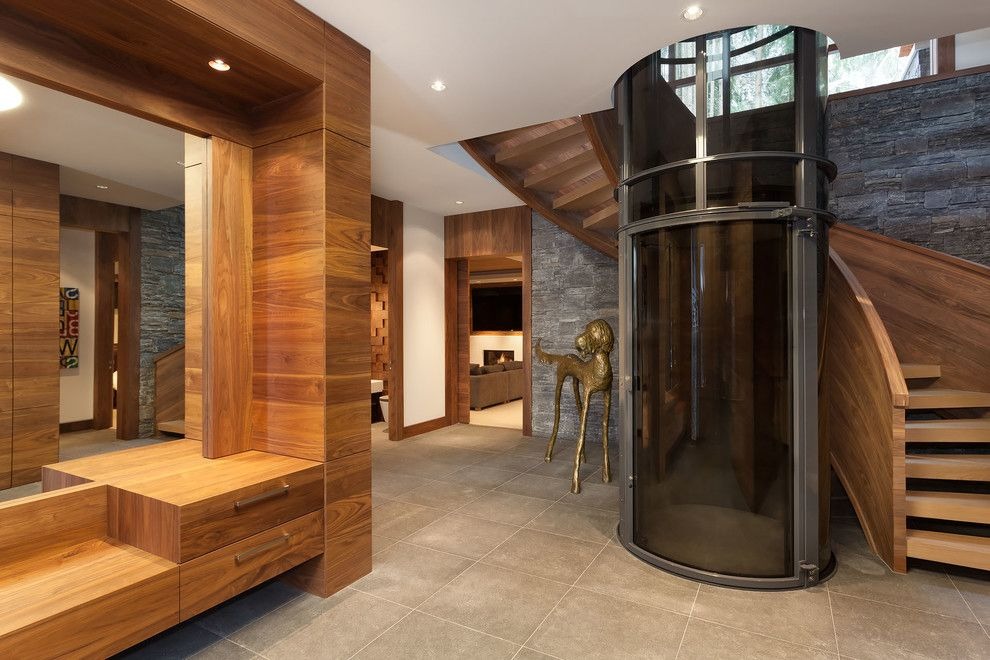
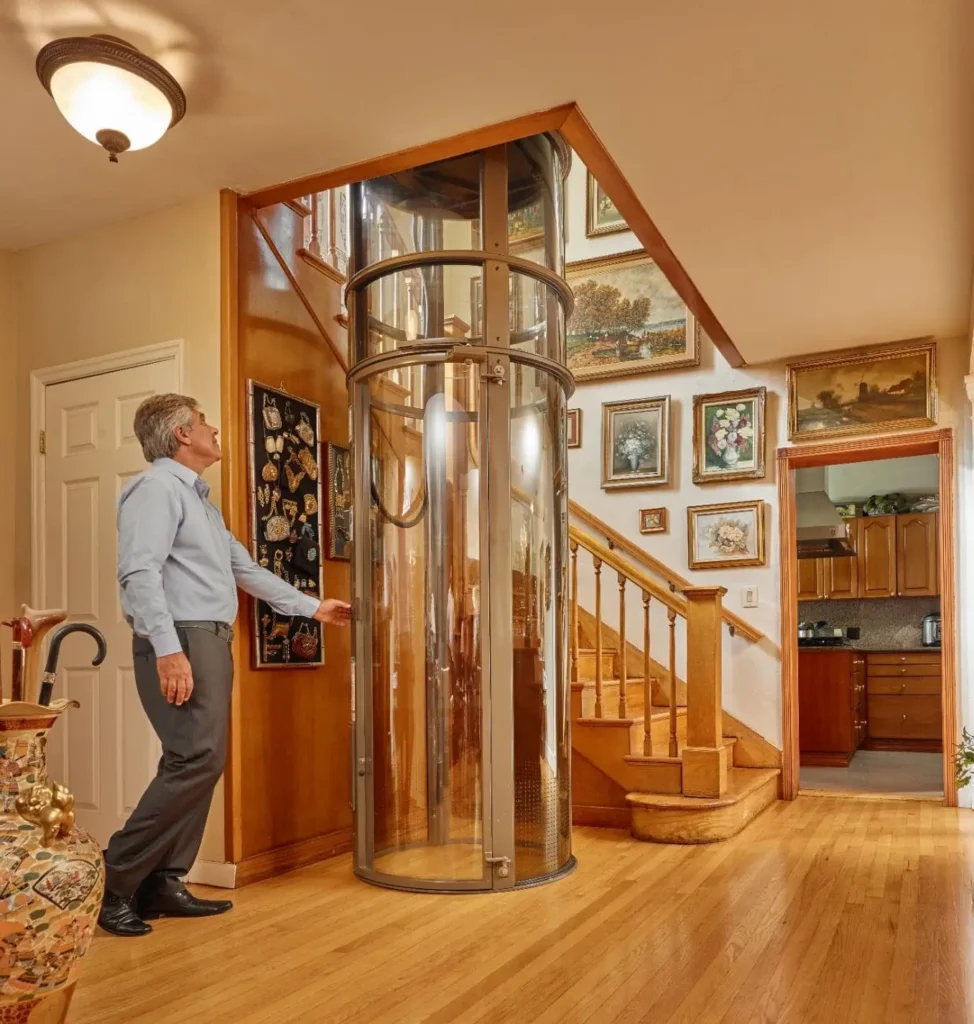
PVE pneumatic vacuum elevators can be a practical alternative for homeowners who want a compact residential elevator with no traditional shaft, pit, or machine room. The PVE30 supports single-passenger use, the PVE37 offers a two-passenger option, and the PVE52 is designed for wheelchair-accessible needs.
What is a stair lift?
A stair lift is a motorized accessibility device that carries a person up and down a staircase along a rail. Most stair lifts include a chair, footrest, armrests, safety belt, and controls for one seated rider.
What is the difference between a stair lift and a chair lift?
In most home accessibility conversations, “stair lift” and “chair lift” refer to the same type of device: a motorized chair that travels along a staircase. Some people use “chair lift elevator” informally, but a stair lift is different from a residential home elevator.
What is a standing stair lift?
A standing stair lift is a stair lift designed for users who have difficulty sitting, bending, or transferring into a seated position. It allows the user to travel mostly upright with support, but it still requires balance and the ability to stand securely.
Is a stair lift good for wheelchair users?
A standard stair lift is usually not ideal for wheelchair users because it requires transferring out of the wheelchair and onto the chair. A platform lift or wheelchair-accessible home elevator may be a better option for users who need to stay in their mobility device.
What is the difference between a stair lift and a home elevator?
A stair lift follows the staircase and is typically designed for one rider. A home elevator provides floor-to-floor access inside the home and may support multiple passengers, wheelchair accessibility, and easier transport of household items.
When should I choose a home elevator instead of a stair lift?
A home elevator may be the better choice when the household needs wheelchair access, multiple users, full floor-to-floor travel, or a long-term aging-in-place solution. Stair lifts can be useful for specific staircases, but they may become limiting if mobility needs change.
Final Thoughts on Stair Lifts and Home Accessibility
Stair lifts can be helpful for homeowners who need support using a specific staircase. Seated stair lifts, standing stair lifts, straight stair lifts, and curved stair lifts each serve different mobility needs and staircase layouts.
The right choice depends on the user’s balance, ability to sit or stand, transfer needs, staircase design, and long-term accessibility goals. A stair lift may solve a specific staircase challenge, while a residential home elevator may offer more flexibility when whole-home access or wheelchair accessibility is needed.
Before choosing a stair lift or elevator, schedule an in-home assessment to review the staircase, available space, user needs, safety features, and future mobility planning.