- Home Elevators for Seniors
- How Much Space Do Home Elevators Take Up?
- Residential Elevators vs Other Mobility Solutions
- Types of Home Elevators: Find Your Match
- Home Elevators Safe Operation and Features:
- Installation and Costs: What Seniors Need to Know
- Maintenance and Long Term Care for Senior Safety
- Choosing the Right Home Lift for Seniors
- Conclusion: Elevating Senior Independence
- Frequently Asked Questions About Home Elevators for Seniors
Margaret was 78 when she had hip surgery and thought she’d be stuck in her house, unable to get to her upstairs bedroom, feeling trapped. But then she found out about home elevators for seniors and everything changed. Now she can get to her sewing room, entertain her grandkids in the playroom upstairs and sleep in the master bedroom she shared with her late husband for 40 years. Home elevators are for seniors who want independence and accessibility.
Modern home elevators are no longer clunky and industrial – they can be fully integrated into the design of the house and even customized to match the home’s design, providing safe operation and really lifting the whole space. For seniors with mobility challenges, residential elevators are the perfect alternative to navigating dangerous stairs. Home elevators for seniors are increasingly viewed as essential aging-in-place solutions, helping older adults remain safe, mobile, and independent in multi-story homes without relying on caregivers or relocating.
Home Elevators for Seniors
A home elevator for seniors is a residential vertical transportation system designed to safely move individuals between floors while accommodating mobility aids such as walkers, wheelchairs, or scooters. Unlike stair lifts, home elevators provide full-cabin access, greater stability, and long-term usability as mobility needs change. When it comes to home elevators, seniors have different needs than commercial. A space-saving, unobtrusive elevator, like a pneumatic elevator, is what they’re after, which is very different from commercial systems.
Well known for prioritizing safety, some residential lifts come with textured, non-slip flooring and handrails cleverly positioned to reduce falls by 65%.
If installed, operated and serviced correctly, home elevators are safe and as long as guidelines are followed, they’ll be in perfect working order. Weight capacities for home lifts can range from 375 to 1,400 pounds. So depending one the residential elevator purchased, some can accommodate mobility scooters, wheelchairs and walkers and regular people, and because they’re designed for homes, we get lots of space and comfort we wouldn’t find in a traditional home lift. Home elevators also provide added convenience for seniors, particularly those with limited mobility, making daily routines easier and improving accessibility throughout the home.
Coming down the stairs can be a serious hazard. According to the Centers for Disease Control and Prevention (CDC), falls are the leading cause of injury-related hospitalizations among adults aged 65 and older, reinforcing the importance of stair-free mobility solutions in the home.14 million falls in the US each year and 25% of people over sixty five will have one. Home elevators are safety equipment, not luxuries, and are cost effective alternatives to stairs.
Key Benefits for Seniors:
- Reduce fall risks – Eliminate dangerous stair navigation
- Provide convenient access to all levels of the home
- Transport heavy items like laundry and groceries
- Wheelchair access throughout multi-level homes (for specific elevator models)
- Save energy for daily activities and social engagement
- Support long-term aging in place without costly home remodeling or forced downsizing
Increase daily confidence and reduce fear of moving between floors - Maintain psychological well-being Recent research shows 37% of falls result in injury, so prevention strategies are key. Home elevators have backup power systems, emergency communication features and safety standards to ensure reliable access in emergencies.
How Much Space Do Home Elevators Take Up?
Space is a big concern and different types of elevators have very different requirements when it comes to installing a home elevator for seniors. For those seeking a wheelchair accessible elevator, more space is required. Installation time can also vary depending on the elevator type, with some home elevator models offering quick and easy install processes. Understanding space requirements early helps homeowners avoid unnecessary structural changes and ensures the chosen home elevator aligns with both current and future mobility needs.
Pneumatic elevators can solve this issue due to their compact footprint, and no separate elevator shaft or dedicated machine room required, making them the perfect residential elevator for those with mobility issues. Shaftless elevators are another space saving option and are considered an ideal option for homes with limited space. Shaftless elevators are easy to install, require minimal construction and can often be installed in a matter of days. Small elevators are also excellent solutions for maximizing space in smaller homes while remaining an attractive option for homeowners.
Hydraulic elevators on the other hand require a lot more space, at least 5×5 feet plus a designated machine room. Though not as convenient and requiring longer installation time, hydraulic elevators offer great value for those who need to move larger loads or require a wheelchair accessible home elevator solution.
Old fashioned traditional elevators that involve a lift shaft take the most space but provide maximum capacity and the most durable long term solution for bigger houses. So when choosing the right elevator for your house it’s a good idea to consult with the experts and determine which is the best fit for your available space. Without requiring a dedicated machine room, shaftless elevators and small elevators are especially attractive for their space-saving features and small footprint.
Regardless of the complexity of installation, homeowners seeking the perfect alternative to stairs have a variety of styles and residential elevator options to choose from depending on their preferences and needs.
Residential Elevators vs Other Mobility Solutions
Home Elevators vs Stair Lifts
For homeowners comparing accessibility options, the decision often comes down to whether short-term affordability or long-term independence and adaptability is the priority. While stair lifts are an affordable mobility solution, home elevators offer more value for seniors. A stair lift is good for single person use but can’t accommodate wheelchairs or multiple family members. They are also not very attractive as they occupy the staircase and have to be navigated around while walking up the stairs. Stair lifts are only suitable for staircases which mean they’re bulky, intrusive and always in eyesight. Depending on the model, brand and size of the lift, home elevators can offer wheelchair accessible transport while also handling mobility equipment. As a cost effective solution to stairs, residential elevators are the better long term investment for aging in place and for homeowners with limited mobility. In 2025, the best home elevator options for seniors are likely to emphasize shaftless designs and safety features, such as battery backups and emergency lowering systems. For seniors planning to remain in their home long-term or anticipating progressive mobility limitations, home elevators provide greater adaptability than stair lifts, which often become inadequate as needs change.
Drive System Options for Senior Safety
Different drive systems offer varying benefits for home elevators for seniors:
Pneumatic Drive System: Uses air pressure for smooth, safe operation between floors. Offering a convenient installation with fewer pre-construction costs than a traditional elevator, the elevator car—the compartment that carries passengers or items—is lifted and lowered by changes in air pressure making these the most eco-friendly home elevator on the market for those seeking access to multiple floors.
Hydraulic Drive System: Offer a smooth ride for seniors and are ideal for those with joint pain or mobility issues that require more space and weight capacity. The elevator car is raised and lowered by hydraulic cylinders and pistons, suitable for handling heavier loads and reliable performance. How much space needed varies depending on the brand purchased and retrofitting this drive system into an existing house can incur additional costs.
Types of Home Elevators: Find Your Match
When considering home accessibility improvements, choosing the right elevator type can make all the difference in daily life. There are different types of home elevators and home lifts available for residential use, each with unique features and drive systems. Unlike a stair lift, a home elevator is the ideal mobility solution for houses and are designed to help people, especially seniors, move safely and independently across multiple floors. Home lifts can include small elevators, wheelchair lifts and specialized lifts for seniors, offering increased convenience and safety within the home.
Pneumatic Elevators: The Space-Saving Solution For Existing Homes
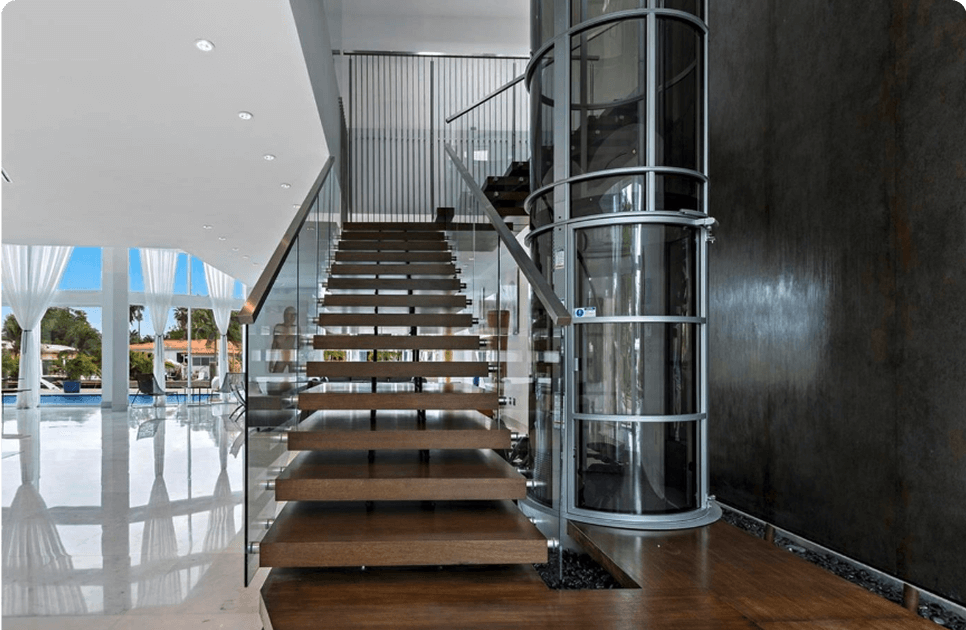
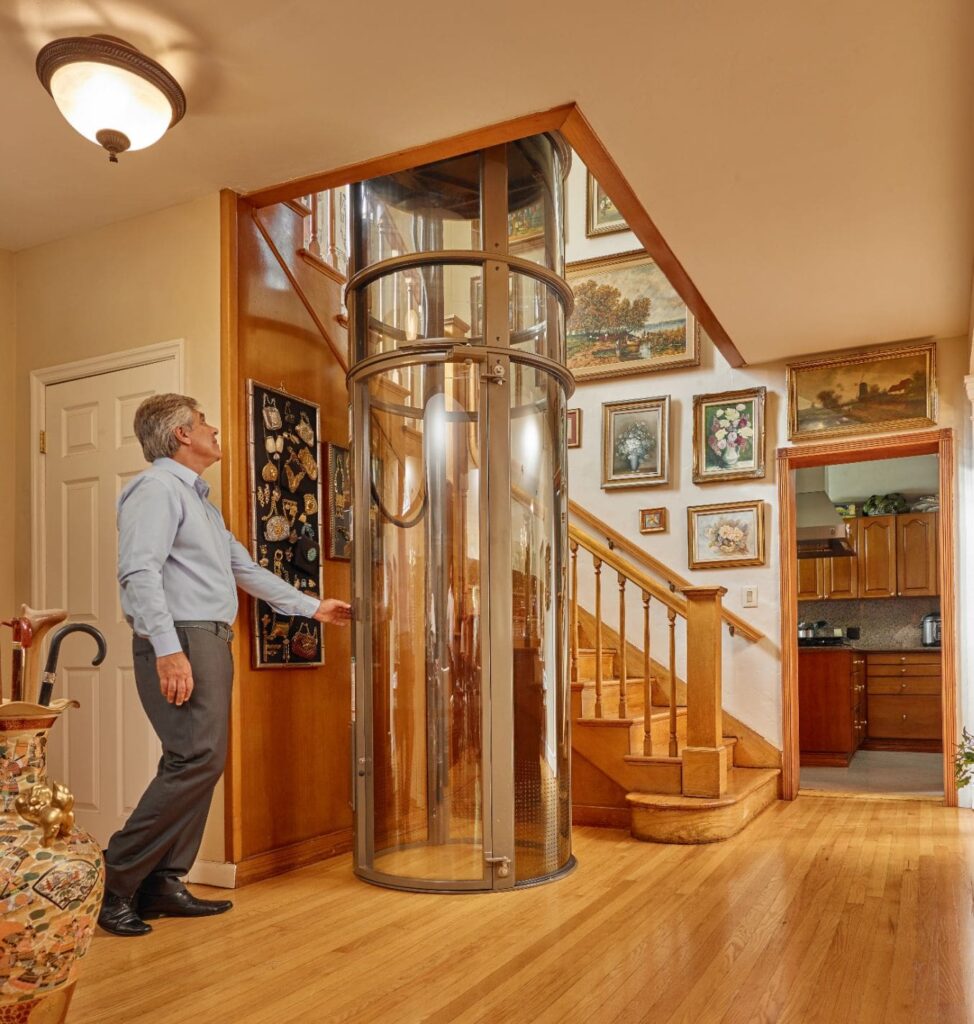
For lifting mobility-impaired seniors, pneumatic elevators are a great solution. Pneumatic Vacuum Elevators (PVEs) utilize air pressure for gentle travel and require no pit or shaft, making them ideal for tight spaces and wheelchair users. Offering a sleek, transparent design, they have a small footprint as they don’t require a machine room or a big elevator shaft, allowing them to be installed quickly with minimal disruption to the occupants. Because pneumatic home elevators do not require a pit, machine room, or overhead shaft construction, they are especially well-suited for retrofit installations in existing homes. For those in a wheelchair, PVE52 is spacious enough for a wheelchair and caregiver, does not require a pit or machine room, and descends automatically during power outages. But given the small footprint of this shaftless elevator, it is recommended to test your wheelchair prior to purchasing the lift to ensure it fits inside the elevator.
Pneumatic elevators are considered one of the safest and most reliable types of household elevators on the market, making them a popular choice for seniors. In addition, they are generally no louder than a household vacuum cleaner when in operation and depending on the residential elevator model purchased, can handle loads of up to 350-550 pounds. Depending on the mobility issues of the homeowner, this covers the weight of most seniors and their mobility aids. As a convenient and cost saving solution, pneumatic elevators are the go-to home lift for houses where a regular elevator won’t fit.
Hydraulic Elevators: Smooth Ride for Senior Comfort
Hydraulic elevators provide the smoothest, quietest elevator experience, perfect for seniors with joint pain or balance issues. They use fluid pressure to deliver a gentle ride that won’t jar joints or cause discomfort, handling heavy loads up to 1,400 pounds including wheelchairs, walkers and multiple passengers. Installing this drive system does incur more time and costs, particularly for retrofit applications.
While hydraulic systems require a separate machine room, the peace of mind and reliability make them worth considering for seniors who prioritize comfort and space.
Home Elevators Safe Operation and Features:
Safety first when installing home elevators for seniors. Modern residential elevators are built to comply with strict safety and accessibility standards, ensuring reliable operation even during power outages or emergency situations. Most residential elevators are designed to meet or exceed ASME A17.1/CSA B44 safety standards, which govern residential elevator construction, operation, and emergency performance. Pneumatic Elevators fall under ASME A17.7 code compliance due to their innovative technology. Every residential elevator should have:
Security features like emergency stop buttons and in-cabin telephones are a must for user safety and peace of mind.
Professional service including regular maintenance and repair support is key to keeping home elevators safe and functional.
Features:
- Emergency communication systems for help
- Door sensors for entry/exit safety
- Automatic leveling for floor alignment
- Emergency stop buttons for immediate halt of travel
- Safety standards compliance for accessibility
Safety features like emergency stops, sensors and communication devices ensure user safety and peace of mind for seniors and their families. Regular maintenance of your home elevator ensures continued safe operation, safety, reliability and longevity.
Installation and Costs: What Seniors Need to Know
Space Requirements and Home Value Impact
When adding a home elevator to an existing home there’s a lot to consider when it comes to space. Some home elevators like Pneumatic Elevators can fit into the tightest of spaces but other lift systems need significant structural modifications to accommodate the elevator shaft and the machine room. Home elevators can add up to 10-15% value to a property, so they’re not just about accessibility, they’re a smart investment for seniors who want to age in place. In addition to resale value, accessibility upgrades like home elevators often make properties more attractive to multigenerational families and aging-in-place buyers. They also make the home safer for seniors by reducing fall risks and supporting safety-related renovations.
Installation Process
- Pre-Installation Assessment
- Professional evaluation of structural requirements
- Space measurement and design consultation
- Local building code review
- Permits and Planning
- Obtain necessary building permits
- Finalize design specifications
- Schedule installation timeline
- Installation Timeline
- Hydraulic systems: 2-4 weeks
- Pneumatic systems: 2-3 days
- Final inspection and certification
Financial Considerations for Seniors
Benefits and Funding:
- Medical expense deductions in some states with proper documentation
- Alternative funding: Home equity loans, accessibility grants, veteran benefits
Installing a residential elevator is a big investment in safety, independence and long term quality of life for seniors and their families.
For more info about government grants, tax credits and eligibility requirements, click here.
Maintenance and Long Term Care for Senior Safety
Regular maintenance is key to keeping home elevators safe and reliable for years to come. Professional inspections every 6-12 months will ensure you catch any issues with your residential elevator before they become problems. Establishing a documented maintenance schedule also supports warranty protection and helps ensure continued compliance with local safety regulations over time.
Common Issues and Quick Fixes
Before calling a technician, seniors can check:
- Power supply – Is the elevator plugged in and circuit breakers not tripped
- Door alignment – Are the doors closed and latched
- Emergency stop button – Is it not engaged
- Weight limits – Am I not exceeding capacity
Long Term Planning for Aging in Place
Well maintained home elevators can serve seniors for decades with proper care. Transporting heavy items between floors is critical, and some seniors are unable to navigate their stairs, especially those in a wheelchair. So it is convenient to have your lift maintained properly, regardless of the cost. Major components like cables and motors typically need to be replaced every 10-15 years and control systems every 15-20 years. However, maintenance and replacement schedules can vary depending on the type of elevator, brand purchased and frequency of use. Prior to installing your home elevator, consult with your authorized distributor to verify frequency and costs for maintenance.
Choosing the Right Home Lift for Seniors
Selecting the right residential elevator early can prevent costly upgrades later and ensure continued independence as mobility needs evolve over time. The perfect solution depends on individual circumstances, home layout and budget. Among seniors, shaftless, hydraulic and pneumatic elevator models are a popular choice because of their ease of use, reliable features, ease of use and space saving designs.
Key Factors:
- Healthcare Professional Consultation – Discuss mobility needs with doctors or physical therapists for insight into current and future accessibility requirements
- Home Structure Evaluation – Assess home layout, electrical systems and structural integrity to ensure safe and effective integration
- Budget Alignment – Consider initial costs, ongoing maintenance, warranties and potential insurance coverage
- Family Input – Involve family members and caregivers in discussions to meet everyone’s needs and concerns
Residential Use
When it comes to navigating stairs, senior citizens have the option of a home elevator or a stair lift but the difference in flexibility can be huge. When looking into a cost effective solution for stairs, home elevators outshine stair lifts. Stair lifts are practical and space efficient way of climbing stairs but are largely ineffective when it comes to wheelchair accessibility and can’t accommodate multiple users and their mobility equipment. Depending on the brand, size and model purchased, home elevators can take on all the above challenges so they offer the total value that grows and develops with people’s changing mobility needs and style. Home elevators come in many styles so homeowners can choose designs and finishes that match their home’s aesthetic and create a seamless look while assisting with their limited mobility. Residential elevators have gone beyond their usual functions and have become an investment in dignity and very high quality of life.
Conclusion: Elevating Senior Independence
When designed correctly, a home elevator is not a luxury—it is a proactive investment in safety, dignity, and long-term independence for seniors who wish to age comfortably at home. When it comes to home elevators we see them as a luxury but they play a much bigger role in seniors lives. There are two main types, pneumatic systems for existing homes and hydraulic lifts for maximum comfort home elevators can be life changing for the elderly.
Elevators are for those who may be recovering from surgery, dealing with chronic conditions or planning for loss of mobility in the future. They enable multi-story home residents safe operation and easy access, basically they can live in their homes with dignity and enjoy a better quality of life.
If you have questions about how a home elevator can enhance your space and put your mind at ease, contact us.
Frequently Asked Questions About Home Elevators for Seniors
Are home elevators safe for seniors?
Yes. Modern home elevators are designed with multiple safety features, including emergency stop buttons, automatic leveling, door sensors, backup power options (for some models/brands), and emergency communication systems to ensure safe operation for seniors.
How much space is required to install a home elevator?
Space requirements vary by elevator type. Shaftless and pneumatic home elevators require significantly less space, while hydraulic elevators typically need a shaft and machine room. A professional assessment determines the best option.
Are home elevators better than stair lifts for seniors?
Home elevators offer greater flexibility, wheelchair accessibility, and long-term usability compared to stair lifts, making them a better solution for seniors planning to age in place or with progressive mobility needs.
Do home elevators increase home value?
Yes. Home elevators can increase property value by 10–15% while also making homes more attractive to aging-in-place buyers and multigenerational families.